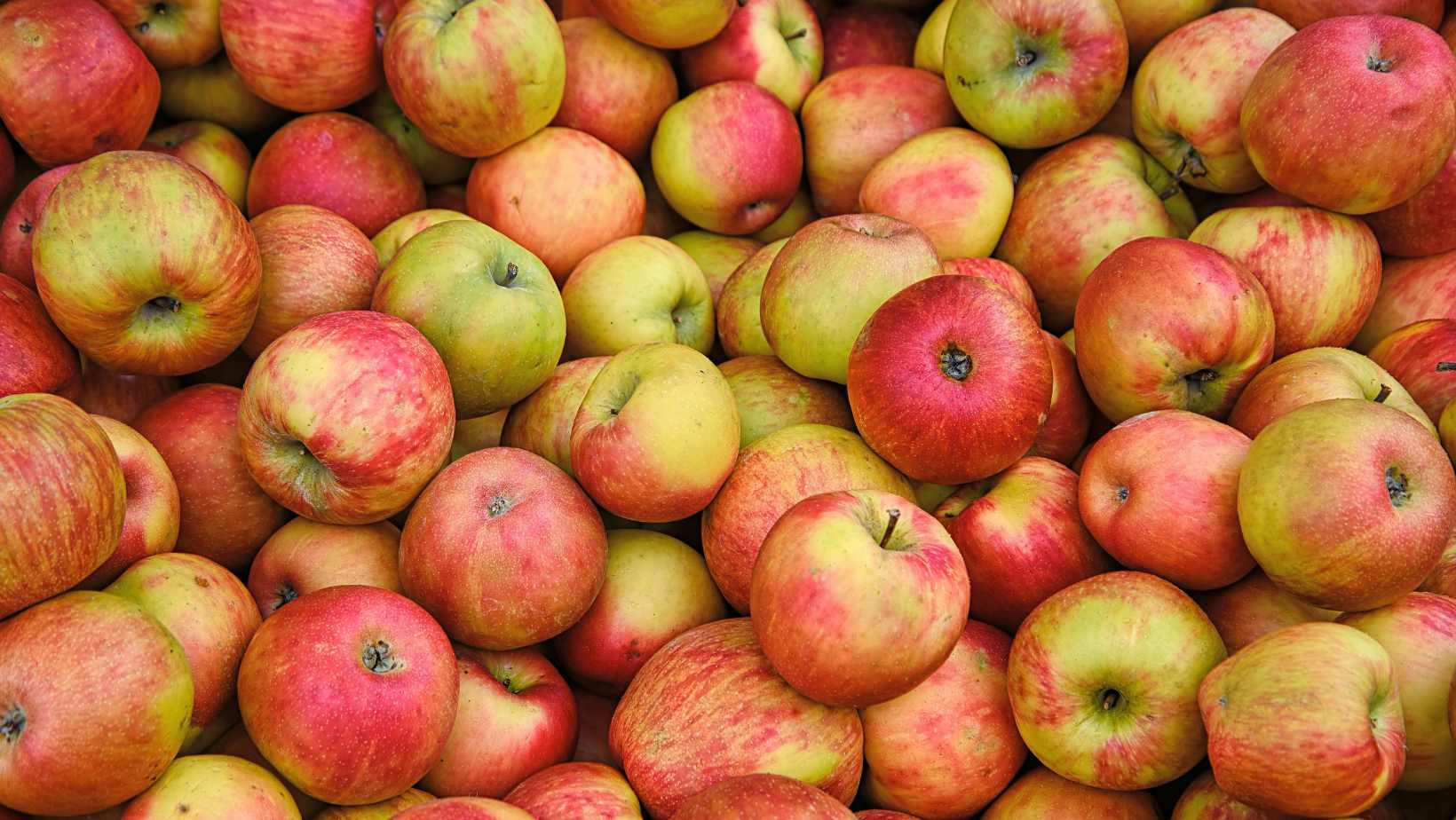

Laboratory tests have found that apples grown and sold in the Czech Republic contain some of the highest pesticide levels in Europe, with residues that may pose a risk to infants.
The findings come from a Europe-wide analysis coordinated by PAN Europe, a non-governmental organization focused on public health and environmental protection.
One Golden Delicious apple purchased in a Czech supermarket contained seven different pesticide residues. According to the analysis, several were present at concentrations considered unsafe for baby food. Foods containing pesticide residues above 0.01 milligrams per kilogram are regarded as unsuitable for infants under European rules.
In total, 59 apples from 13 European countries were tested. Only four samples, sourced from Denmark, Belgium, and Italy, met the criteria for use in infant food.
All five apples from the Czech Republic failed. On average, Czech samples contained 3.8 different pesticide substances, around 20 percent more than the European average. Only one apple from Luxembourg recorded a similarly poor result.
The testing focused on common varieties including Golden Delicious, Gala, Honeycrunch, and red apples.
The samples were purchased by the Czech environmental group Rainbow Movement in three major retail chains: Tesco, Lidl, and Billa. Retailers were contacted for comment. Lidl was the only chain to respond, stating that it requires suppliers to meet standards stricter than those set by law, with residue limits capped at roughly one third of the legal maximum.
Researchers identified neurotoxic pesticides in three of the five Czech samples. Scientific studies have linked these substances to neurological conditions such as anxiety disorders, depression, Parkinson’s disease, and Alzheimer’s disease.
One apple contained acetamiprid, an insecticide associated with impaired brain development in unborn children. The substance is also toxic to bees and birds and remains in the environment for extended periods.
Other pesticides detected in Czech apples included tebufenpyrad, lambda-cyhalothrin, pirimicarb, flonicamid, and difenoconazole.
One sample contained fludioxonil, classified as an endocrine disruptor and considered among the more toxic pesticides still permitted in Europe, with known risks to the liver and kidneys.
The findings come amid broader debate in Brussels over pesticide regulation. In December, the European Commission proposed changes that would allow pesticide approvals without fixed expiration dates and remove mandatory toxicity reassessments every 10 to 15 years.
The proposal would also give member states greater leeway to disregard newer scientific evidence when evaluating pesticide safety.
Would you like us to write about your business? Find out more
-
NEWSLETTER
 Subscribe for our daily news

Most Popular