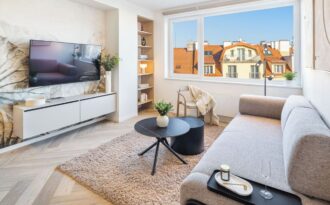
Nearly half of people in the Czech Republic spend more than 30% of their net income on housing, while around one in 10 spends more than half. Housing is generally considered financially burdensome when rent, utilities and other related costs exceed 30–40% of household income. The EU average is around 24%. The findings come from a survey by Česká spořitelna and Evropa v datech, conducted with Ipsos among 1,000 respondents in February. Housing affordability remains particularly difficult for young Czechs. Among people aged 18 to 29, 58% live with their parents at least part of the time, while 29% live with friends or a partner. The survey found that 60% of people under 30 who are dissatisfied with their housing situation have postponed a major life decision because of it. For around one-third, this has happened repeatedly. Starting a family is among the decisions affected by housing conditions. Homeowners were considerably more likely to be very satisfied than renters, with 41% of owners describing themselves as very satisfied compared with 18% of renters. Czechia still has the least affordable housing in the EU The Czech Republic improved by six places in this year’s housing conditions ranking, reaching 17th among the...
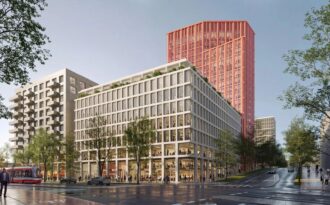
The area around Prague’s Nádraží Holešovice station is set for a major redevelopment after the international architectural competition for the site was won by Czech studio Chybík + Krištof. The winning proposal envisions turning the current transport hub and surrounding brownfield into a new urban district, with two public squares, improved connections between public transport services and a new high-rise building designed to become a landmark. The redevelopment covers roughly eight hectares around the station. Its aim is not only to add new buildings, but also to reorganise one of Prague’s important transport nodes and connect it more closely with the surrounding neighbourhood. The competition jury selected the proposal by Chybík + Krištof as the winning design. From transport hub to urban district Nádraží Holešovice is currently one of Prague’s major transport interchanges, but much of the surrounding area has traditionally been used primarily for transport and other infrastructure. The redevelopment is intended to change that. Alongside new construction, the project places emphasis on making transfers between different modes of public transport easier and fully accessible. The project forms part of the wider Nové Holešovice development, which brings together the Prague Public Transit Company and private investors. CPI Property, EP...
Prague has the highest rent-to-minimum-wage ratio among EU capitals, with the average two-bedroom apartment costing 185% of the gross minimum wage. Prague has become the European Union’s least affordable capital for minimum-wage earners looking to rent a home, according to a new analysis by the European Trade Union Confederation (ETUC). The average monthly rent for a two-bedroom apartment in the Czech capital reaches €1,710, compared with a gross monthly minimum wage of €924. This means rent alone amounts to 185% of the minimum wage. Lisbon follows in second place, with rent accounting for 168% of the gross minimum wage. Budapest ranks third at 159%, followed by Bratislava at 158%. Other capitals where average rent exceeds the gross minimum wage include Sofia (154%), Athens (153%), and Riga (151%). The figures highlight the pressure facing minimum-wage earners in cities where housing costs have risen significantly faster than incomes. How Prague Compares with Western Europe Prague’s position is particularly striking when compared with several Western European capitals. In Paris, average rent accounts for 138% of the gross minimum wage, while the figure stands at 125% in Madrid and 113% in Dublin. At the other end of the ranking, Brussels is the most affordable...
The EU has introduced a framework to support long-term rentals in tourist-heavy cities. Airbnb warns it creates regulatory uncertainty without improving long-term housing outcomes. The EU has announced an affordable housing plan aimed at encouraging long-term rentals and making housing more accessible for Europeans. Unveiled on Wednesday, the plan aims to create clarity and predictability in how rules are applied by local authorities, particularly in neighbourhoods popular with tourists where short-term rentals have displaced residents. “Lack of affordable housing is a matter of concern for so many of our European citizens,” European Commission President Ursula von der Leyen said in a press statement. “Essential workers and students cannot afford to live where they serve and study. But most importantly, it is about fairness. Today, we are delivering for all Europeans.” “The new rules are designed to help competent authorities identify ‘areas under housing stress’ using a common methodology,” a Commission press release explains. Housing in Europe is getting worse The latest data on access to accommodation across Europe are worrying, and have pushed the Commission to intervene. Recent Eurobarometer data shows that 50 per cent of European city dwellers think that housing is an urgent problem they experience. House prices...
A new seven-story residential building planned for Prague’s Smíchov district has moved closer to construction after securing a zoning decision. The project, known as Smíchovská Žehlička, is being developed by BPD Partners and Top Estates and is expected to be completed in 2029. The building will contain 66 apartments as well as eight commercial units for shops, services and restaurants. It will also include shared coworking and community spaces. The total gross floor area is expected to be close to 8,000 square meters. The project is planned for a wedge-shaped site between Kováků and Na Zatlance streets, directly below Mrázovka Park. The unusual shape of the plot and the significant difference in elevation between the two streets have made the site particularly difficult to develop. The project has been in preparation for more than a decade. BPD Partners, the investment group owned by Czech businessmen Vasil Bobel, Petr Pudil and Jan Dobrovský, began working with architect Patrik Hoffman on the scheme in 2010. Inspired by New York’s Flatiron Building The shape of Smíchovská Žehlička is largely determined by the site’s narrow, wedge-shaped plot and surrounding streets. The design also takes inspiration from New York’s Flatiron Building, whose distinctive triangular form...
The long-awaited reconstruction of Prague’s Invalidovna has officially begun. The Baroque complex in Karlín will undergo a major renovation costing CZK 2.15 billion, with work scheduled for completion in 2030. The project is the largest investment in the history of the National Heritage Institute (NPÚ). Alongside the restoration of the historic building, two new extensions will be constructed on the southern side of the complex. One will provide facilities for the Prague Philharmonic Choir, while the other will house technical infrastructure needed to operate the site. Much of Invalidovna will remain open to the public Once the reconstruction is complete, the NPÚ will use part of the complex for restoration workshops, laboratories, archives and study rooms. An underground garage with space for 50 vehicles is also planned. Around 80 percent of the complex is expected to remain accessible to the public. The restored site will include exhibition and conference spaces, visitor routes through the Baroque interiors, a café and facilities for children’s groups operated by Prague 8. A new multi-purpose hall in one of the extensions will be suitable for concerts, conferences and other events. The modern section will also contain technical facilities that cannot be accommodated inside the protected...
Prague’s short-term rental market has grown into a professional business but Airbnb accounts for only a small share of the city’s housing stock, according to a new analysis. In June 2026, around 7,878 entire apartments and houses in Prague were actively listed on Airbnb. With roughly 720,000 apartments across the capital, that represents about 1.1 percent of the total housing stock. The situation is very different in individual parts of the city. In Prague 1, Airbnb-listed properties account for around one-fifth of all apartments, according to the Prague Institute of Planning and Development (IPR). In Prague 2, the share is around 7 percent, while in some outer districts it is below 0.5 percent. The concentration of short-term rentals has also changed the nature of the market. IPR data show that hosts managed an average of two apartments in 2019. By 2024, that figure had risen to three, while more than half of Prague’s Airbnb listings were operated by hosts with at least five properties. This means short-term accommodation is increasingly being run as a business rather than as occasional home-sharing. Prague’s housing shortage is much larger Despite the impact Airbnb can have in central neighborhoods, the analysis points to a...
Former offices, commercial properties and industrial sites in Prague are being converted into apartments rather than demolished, giving developers another option in a city struggling to build enough new homes. The approach is sometimes described as “upcycling” — adapting ageing buildings for a new purpose while making use of structures and land that are already developed. One recent example is in Pankrác, near Vyšehrad, where an office building has been converted into the Mo-cha HOME residential complex. Developed by Cimex, the project opened this spring with 91 fully equipped apartments, most of them in the Czech 2+kk layout, consisting of a living room with a kitchenette and one separate bedroom. Existing buildings offer valuable locations Owners of older properties increasingly have to decide whether to renovate them, change their use or demolish them. Many were built for different needs and standards than those expected from buildings today. Their locations, however, can be a major advantage. Older properties are often close to public transport, shops and other services, making them attractive for residential conversion. Transforming an existing building can also be faster to prepare than developing a completely new project on a brownfield, although each property must be assessed individually. The...
Students looking for private accommodation in Czech university cities this year are facing higher rents, with prices for some types of housing up by as much as 14 percent compared with 2025. The increase comes as demand for student accommodation reaches its annual peak ahead of the winter semester. Data from several Czech property platforms show that the busiest period started earlier this year, meaning students who have not yet found accommodation may face a more limited and expensive selection in September. Those unable to secure a place in a student dormitory generally have three alternatives: renting a small apartment alone, taking a private room in a shared apartment, or renting a bed in shared accommodation. The most expensive option is usually a small one-bedroom apartment with a kitchenette, typically around 30 square meters. According to the REMAX network, monthly rents for these apartments range from more than CZK 7,000 in Ústí nad Labem to around CZK 14,000 in Prague. Prices have not increased evenly across the country. Brno recorded the sharpest rise, with rents for small apartments increasing by 12 percent year on year. Prague saw a 4 percent increase, while rents in Hradec Králové and Pardubice rose by...
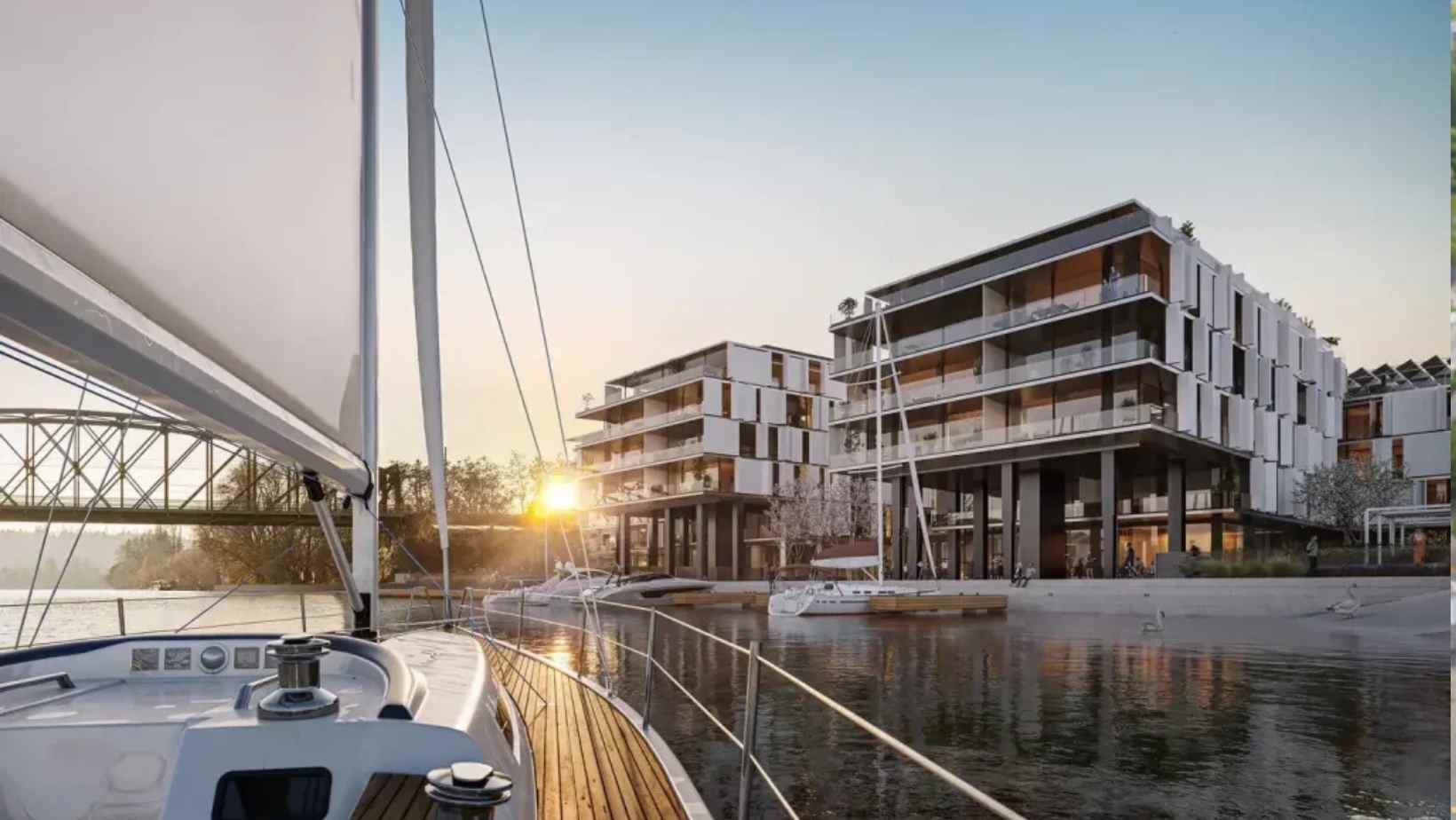
One of the last undeveloped riverfront plots in central Prague is set to become home to a new luxury residential project. Developer Daramis has unveiled plans for BAY55, a development featuring 114 high-end apartments on Hořejší nábřeží in Smíchov, just steps from the railway bridge and within walking distance of the city center. According to Daramis, BAY55 is designed to compete with premium residential developments in leading European and North American cities. The company says the project will emphasize architecture, technology, privacy and resident services alongside its prime location. The residence will include a wellness and fitness center covering roughly 600 square meters, a private residents’ lounge and hospitality facilities. A restaurant or café is also planned on the ground floor, serving both residents and visitors. The developer says the level of amenities is intended to match those found in luxury hotels. Designers have also focused on balancing density with comfort. Every apartment is planned to include either a spacious balcony or terrace, complemented by integrated shading systems intended to provide greater privacy despite the urban setting. Before construction of the residential complex can begin, significant work will be carried out along the riverfront. The existing Smíchov embankment will be...
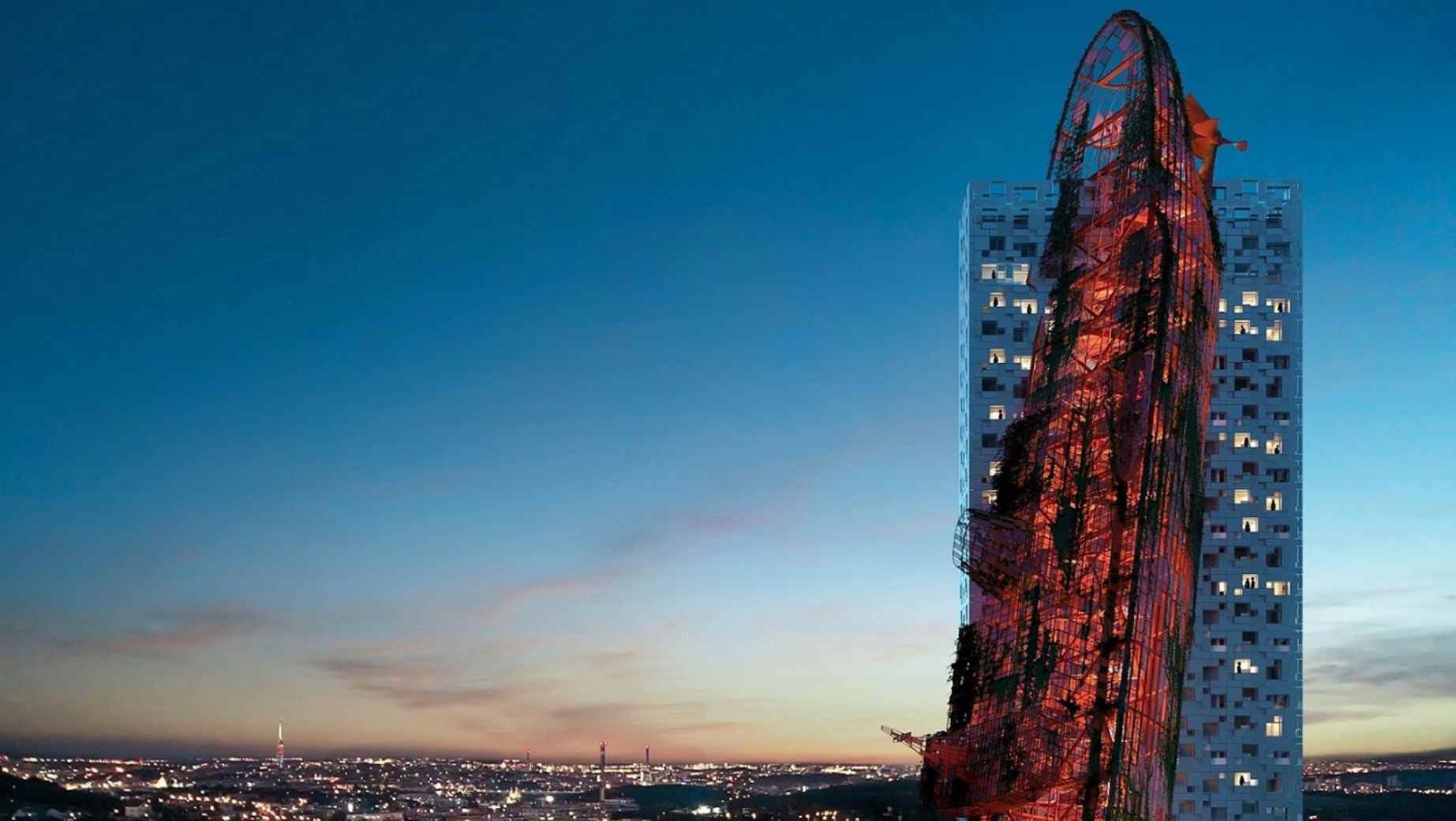
The planned Top Tower skyscraper in Prague’s Nové Butovice has received a building permit, clearing a major obstacle for the project that is expected to become the tallest building in the Czech Republic. The 126-metre tower, developed by Czech company Trigema, will feature a large architectural structure resembling the wreck of a ship leaning against the building. The unusual element was designed by artist David Černý together with architect Tomáš Císař. The exact construction start date has not yet been announced and will depend on further administrative procedures. The project is planned to include around 250 residential units, mainly designed as smaller apartments and shared housing options aimed at younger residents. According to the approved plans, Top Tower will have 44 floors, including 37 above-ground levels and seven underground floors. The underground section will include technical facilities and parking spaces for approximately 250 vehicles. The lower floors are planned to contain shops, cafés, a reception area, offices, a multifunctional hall, a rooftop terrace and a bar. The upper part of the building will focus on shared living spaces with smaller residential units and communal facilities. The highest levels will include observation areas, cafés and a luxury apartment. The most distinctive...
This article has been written by Finaram.cz, a Czech platform specializing in mortgages, home financing, and real estate advice. For many people buying property in Prague, one question comes up early in the search process: How much extra are you paying to live near a metro station? The answer is often: quite a lot. According to Valuo’s Metro Index 2026, apartment prices around Prague metro stations vary dramatically depending on location. The most expensive stations exceed CZK 250,000 per m², while the most affordable remain close to CZK 110,000 per m². How the Data Was Calculated This comparison focuses on apartments in personal ownership with a size of 65–95 m², either renovated or newly built, located within one kilometer of a Prague metro station. The analyzed period covers October to January 2026. Using the same criteria across all metro locations makes it possible to compare neighborhoods on a more like-for-like basis and identify where buyers are paying the highest — and lowest — prices for metro access. Which Metro Line Is the Most Expensive? Valuo’s data shows significant differences between Prague’s metro lines. Average apartment prices along each route stand at: Line A: CZK 171,200/m² Line B: CZK 144,400/m² Line C:...
Don’t have an account? Register
Already have an account? Log In
How Would You Like to Promote Your Business? PR ArticleDisplay bannersVideo productionNewsletter adsJob ListingsInfluencer Marketing
Your Email
We will come back to you within 24 hours with our proporsal