
Plans for new football stadiums are gathering pace across the Czech Republic, with several clubs either preparing full rebuilds or outlining long-term construction projects.
Brno
One of the most ambitious projects is taking shape in Brno. After years of uncertainty, Zbrojovka Brno’s prospects changed following the arrival of new owner Vojtěch Kačina. The club is now openly working toward a new stadium with a capacity of roughly 25,000 to 30,000 seats. The preferred location is the area behind Lužánky, where the club played its home matches until 2001.
In November, Brno city councillors approved the basic terms for a concession process linked to the stadium’s construction. Under the proposed model, a private investor would purchase the required land, finance the build, and operate the venue. The city plans to launch the concession procedure in August 2026, a timeline that has drawn criticism from civic groups advocating a faster return to the historic site.
Ostrava
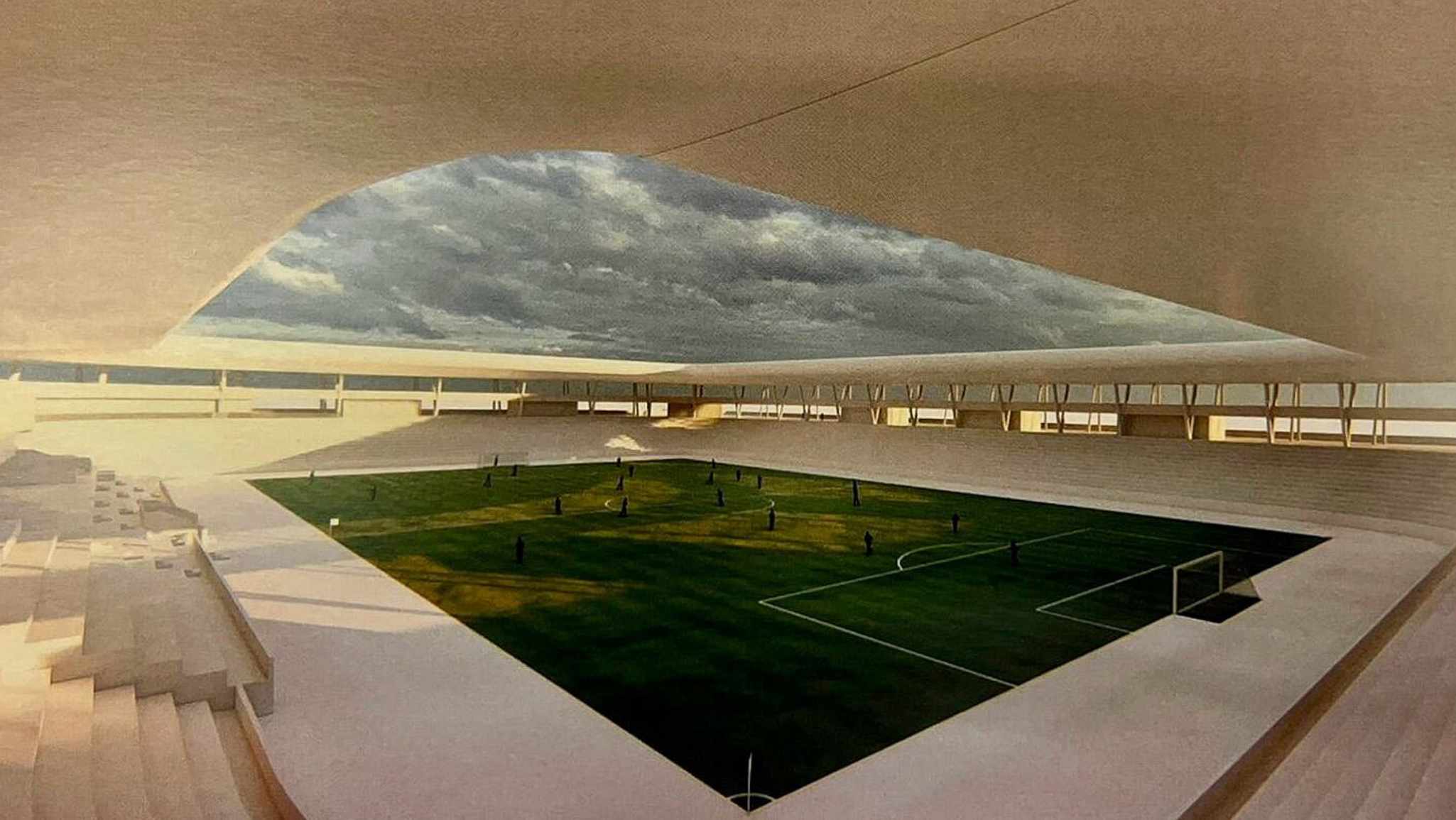
In Ostrava, attention has turned to the planned New Bazaly stadium. Early designs were unveiled in November, sparking interest among supporters who have long relied on the municipal stadium in Vítkovice. The proposed arena would hold around 20,000 spectators and is expected to cost approximately 2.5 billion crowns. If approvals and financing move smoothly, completion could come around 2030.
The project includes commercial spaces such as restaurants, fan shops, and a club museum. The design was prepared by Spanish studio L35 Arquitectos, which has worked on several high-profile stadium redevelopments in Europe.
Podívejte se, jak bude vypadat stadion Nové Bazaly, kde bude hrát Baník Ostrava. pic.twitter.com/ZU4OVncwZK
— Ondřej Holzman (@ondrejholzman) November 4, 2025
Teplice
Teplice is also preparing a major transformation of its Stínadla stadium. According to club officials, reconstruction could be completed within four years while matches continue to be played at the venue. The plan begins with the northern stand, followed by the main stand and later the remaining sections.
Once finished, the stadium is expected to seat around 14,000 fans. Although overall capacity will be slightly reduced, the redesign places greater emphasis on modern facilities, including VIP seating and corporate areas. If the schedule holds, Teplice could become one of the first Czech clubs to complete a full stadium overhaul in the current cycle.
V rámci první fáze přestavby a rekonstrukce teplických Stínadel bude zbourána nyní již nevyužívaná severní tribuna. Na jejím místě vyroste nová s velkoplošnou obrazovkou a dočasným zázemím pro hráče a rozhodčí.
S další etapou pak přijde na řadu i demolice hlavní tribuny. Ta nová… pic.twitter.com/g7g9hpkngz
— Sporťák (@SportakCZ) December 17, 2025
Bohemians
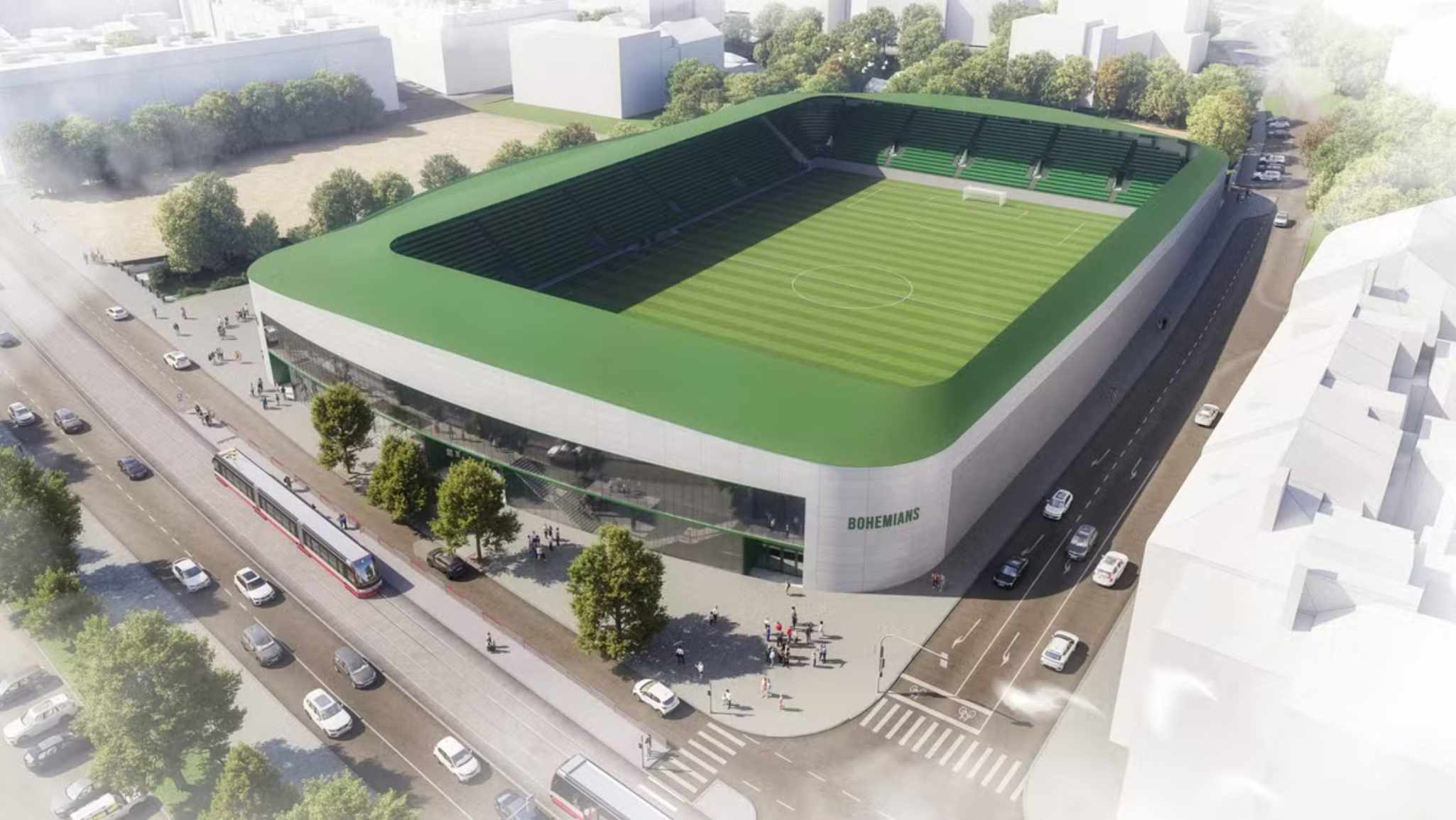
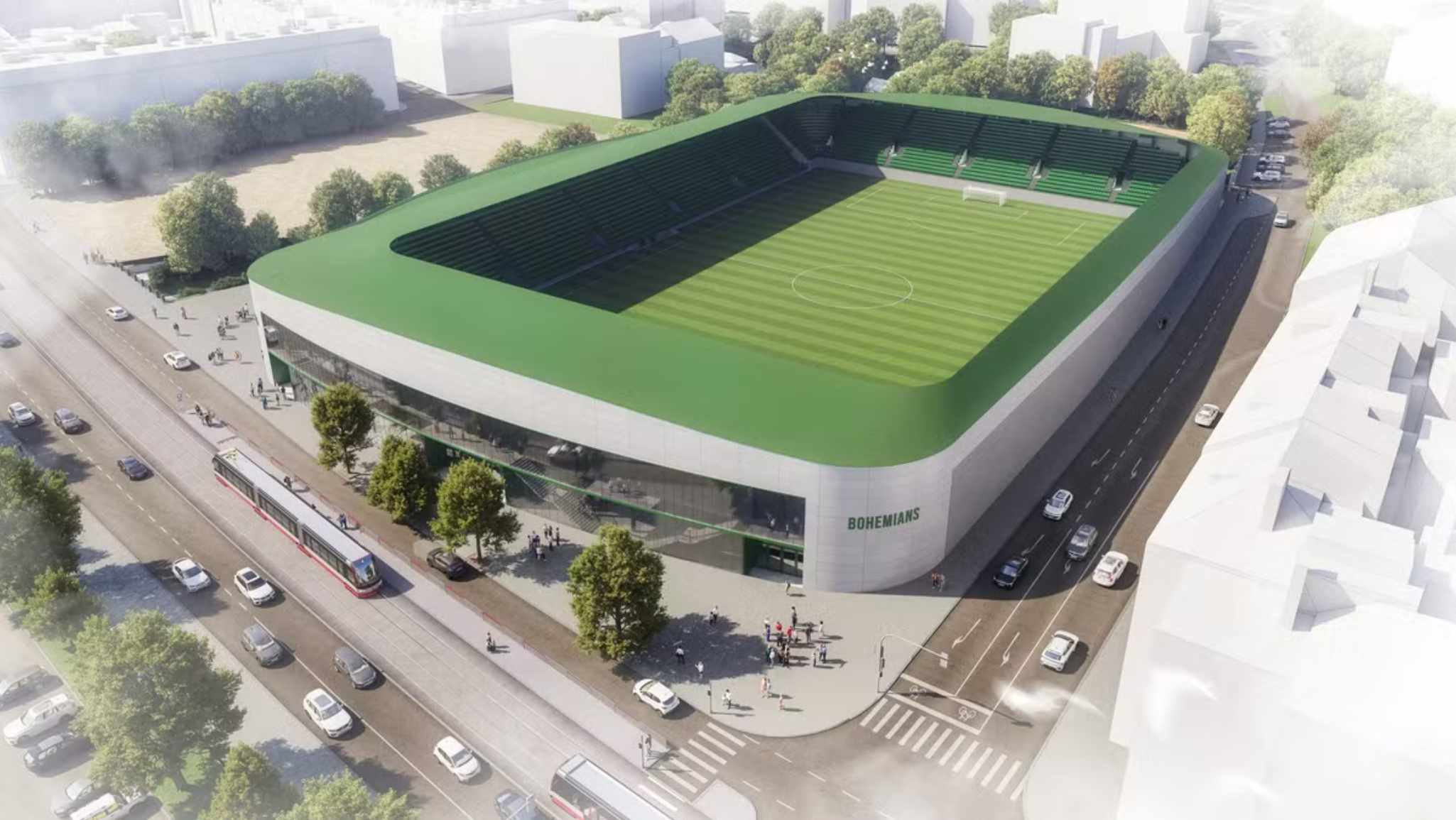
In Prague’s Vršovice district, Bohemians are pursuing a complete rebuild of the Ďolíček stadium. Despite its reputation for atmosphere, the venue no longer meets modern standards. The club has already presented visual concepts for a new arena, designed to fit into the limited space available.
The planned stadium would seat roughly 8,500 spectators and could be completed within five years. A distinctive eastern stand is central to the design, inspired by compact stadium solutions seen abroad.
Sparta Prague
The largest project under consideration belongs to Sparta Prague. The club is exploring a move from Letná to Strahov, where a new stadium with a capacity of around 35,000 seats could replace the ageing Evžen Rošický Stadium. If built, it would become the largest football venue in the country.
The project remains at an early stage. An architectural competition has yet to be launched, and obtaining permits alone could take several years. Construction costs are currently estimated at four to five billion crowns. Alongside design considerations, planners are assessing the stadium’s impact on transport and surrounding infrastructure, given its scale and location.
SK Slavia Prague
Despite already operating the largest and most up-to-date football stadium in the Czech Republic, Slavia Prague is considering a further expansion of Eden Arena. The discussion reflects sustained demand for tickets and the club’s long-term ambition to host major European matches.
Club leadership has indicated that any expansion would aim well beyond the current capacity. Internal planning is working with figures between 40,000 and 45,000 seats, allowing flexibility for future demand rather than limiting growth at an early stage. The intention is to avoid a scenario in which the stadium becomes insufficient again within a decade.
FK Pardubice
Pardubice’s football stadium is one of the newest in the country, yet discussions about further expansion have already begun. The venue was designed with future growth in mind, allowing the current capacity of 4,620 seats to be increased to nearly 9,000 if needed.
Until recently, such an expansion was largely theoretical. That changed following the arrival of owner Karel Pražák, whose ambitions have shifted expectations around the club’s development. Any move to complete the stadium would depend on consistent sporting success and a sustained rise in attendance.
Would you like us to write about your business? Find out more
-
NEWSLETTER
 Subscribe for our daily news

Most Popular