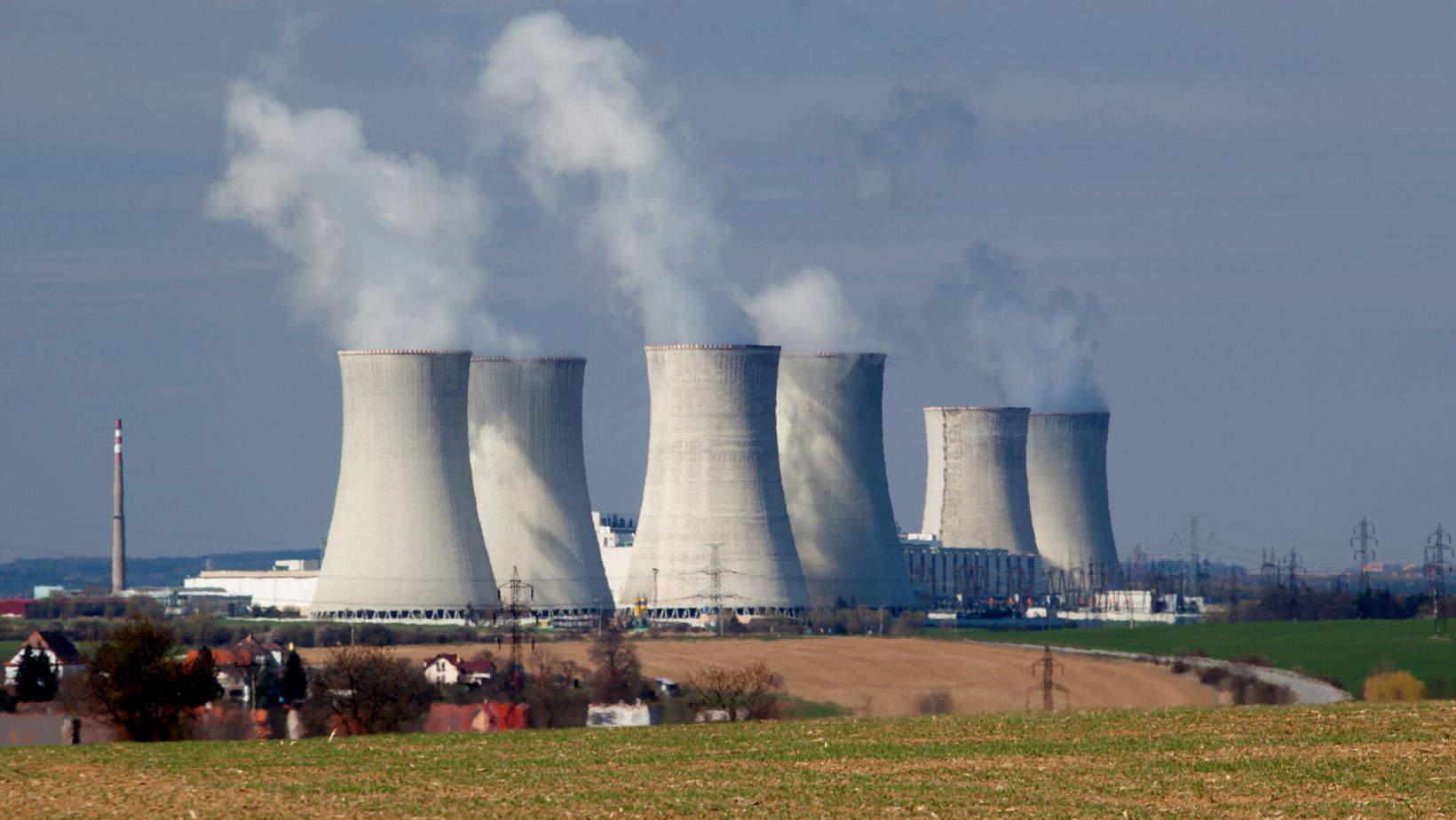

The Czech Republic is moving ahead with a $19 billion project to expand its nuclear energy capacity.
Two new reactors will be built at the Dukovany plant, more than doubling the country’s nuclear output and reducing dependence on coal and gas. South Korea’s KHNP won the contract over France’s EDF.
The reactors, each producing over 1,000 megawatts, are expected to begin operating in the second half of the 2030s.
The deal also allows for future expansion at the Temelín plant, which currently has two 1,000-megawatt reactors, and includes plans for small modular reactors.
Nuclear power currently supplies about 40% of the country’s electricity, with projections of 50–60% by 2050.
Officials say the expansion will ensure stable, low-emission electricity for households, data centers, and electric vehicles. Fuel supply contracts with Westinghouse and Framatome remove reliance on Russia.
While the plan has public support, environmental groups criticize its high cost and lack of permanent nuclear waste storage, and Austria continues to oppose Czech reactor projects.
The Czech project is part of a wider European nuclear revival. Countries including France, Hungary, Slovakia, and Poland are investing in new reactors, while Belgium and Sweden have canceled plans to phase out nuclear power.
The EU now recognizes nuclear energy as a low-carbon option, helping governments secure financing and meet climate targets.
The Dukovany and Temelín plants are located near the border with Austria, which abandoned nuclear energy after the 1986 Chernobyl nuclear explosion. In 2000, a dispute over the Temelín plant resulted in a political crisis and blocked border crossings for weeks.
Would you like us to write about your business? Find out more
-
NEWSLETTER
 Subscribe for our daily news

Most Popular