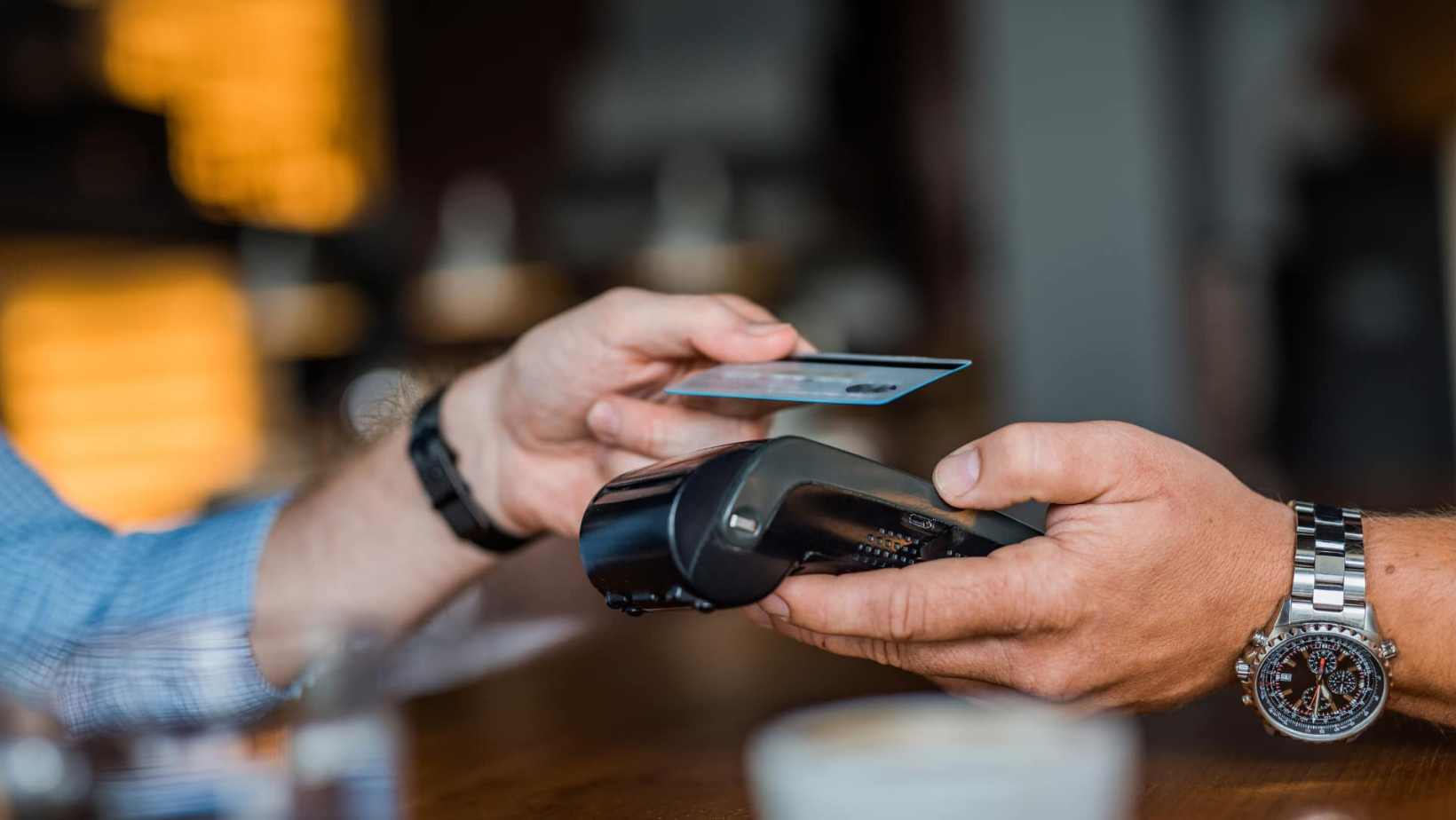

Paying in Czech shops and restaurants is no longer straightforward. While many customers now rely entirely on cards or mobile payments, others still expect to pay with banknotes and coins.
Tension arises when a business allows only one payment method. The question is simple: can a seller legally refuse cash?
The debate has divided customers for years. For some, cashless payment is faster and easier. A phone or card replaces a wallet. Others see cash as a way to stay in control of spending and avoid digital tracking. The conflict becomes visible at the checkout, when a sign says “card only” or “cash not accepted.”
The consumer organisation dTest has repeatedly warned that payment methods are not just a matter of preference. Some retailers refuse cards, citing fees and technical problems. Others go the opposite way and ban cash altogether. That is where legal obligations collide with business freedom.
From a business perspective, the reasons for avoiding cash are practical. Cash handling takes time. Staff must count it, store it safely, and deal with mistakes when giving change. There is also the risk of theft. Large retailers face additional costs when transporting daily takings to the bank.
Customers who insist on cash argue from a different angle. Cash works even when technology fails. Terminals go offline. Internet connections drop. Payment systems crash. None of that matters when money changes hands physically, as noted by the Czech business website Podnikatel.cz.
Privacy also plays a role. Card payments leave a record. Cash does not. Surveys show that many Czechs still see cash as the safest way to pay, precisely because it offers anonymity and independence from digital systems.
The legal situation is less clear than it appears. Czech law defines domestic banknotes and coins as legal tender. In principle, they must be accepted. There are exceptions. A seller can refuse payment with more than 50 coins. Cash payments above 270,000 crowns are also prohibited.
Despite this, enforcement is weak. The Czech National Bank, which supervises payment rules, has no power to fine a business that refuses cash. It can issue a warning, nothing more. There is no direct penalty written into the law.
This loophole has encouraged some businesses to stop accepting cash entirely. From a legal standpoint, the practice is questionable. In reality, it carries no consequences. The duty to accept cash exists on paper, but without sanctions, it functions more as a guideline than a binding rule.
For now, customers who want to pay with banknotes have little leverage. Unless lawmakers step in, the shift toward card-only payments will likely continue, one checkout at a time.
Would you like us to write about your business? Find out more
-
NEWSLETTER
 Subscribe for our daily news

Most Popular