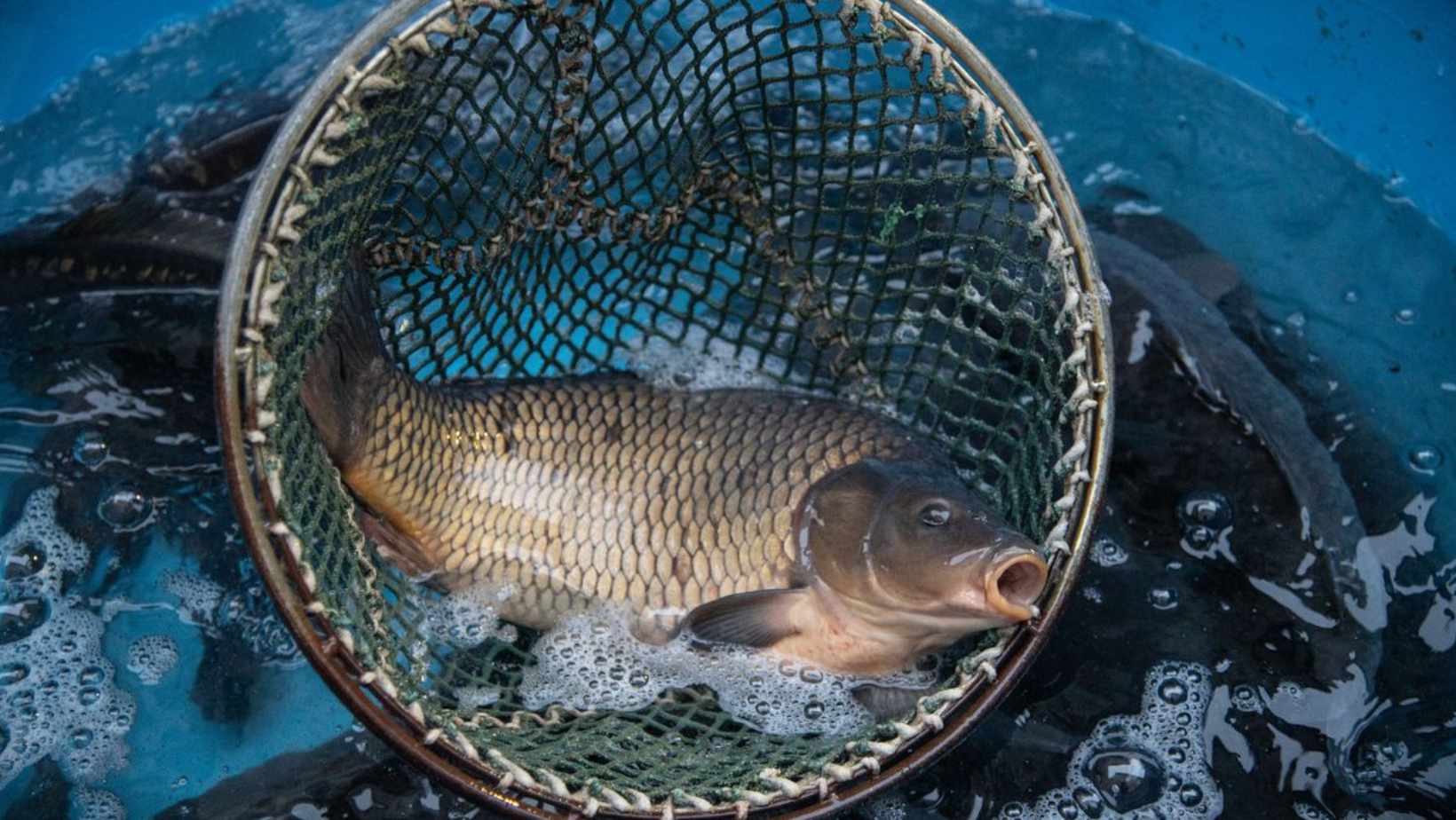

As the Christmas season approaches, Prague has renewed its call for more respectful and humane treatment of carp, a long-standing Czech holiday tradition.
The city is not trying to ban the purchase of carp, but rather to highlight the suffering many of these fish endure — from stressful transport to painful deaths in untrained home kitchens.
The campaign, visible across Prague until December 23, reminds buyers to avoid placing live carp in chlorinated bathtubs, returning them to rivers or ponds, or killing them at home without proper equipment.
Instead, the city encourages people to have the fish humanely slaughtered, gutted, and cut at the point of sale. By doing so, stress and suffering can be minimized, and the resulting meat handled safely.
“I believe most people aim to treat animals without causing harm and with compassion. Education and ethics go together,” said the Deputy Mayor for Culture, Tourism and Animal Welfare, stressing that a growing share of the public now recognises the suffering carp undergo when killed unprofessionally.
From several thousand carp stalls across the Czech Republic, about 200 are located in Prague. The city notes a gradual rise in the number of customers opting for professional slaughter at the point of sale — a sign that the campaign may be influencing behavior. “A well-planned initiative can make a real difference,” added the Deputy Mayor for Environment and Climate.
LATEST JOBS IN PRAGUE
The campaign explains why common practices cause distress. Transporting carp in plastic bags can leave them oxygen-deprived, with gills sticking together and at risk of physical injury. Placing them in chlorinated bathtub water often leads to temperature shock, irritation of gills and skin, severe stress and sometimes death.
Home killing without proper tools or skill prolongs suffering and can taint the meat if bile escapes, spoiling its taste.
The notion of releasing carp into rivers or ponds after purchase — once seen as a merciful choice — is also discouraged. After transport and the stress of captivity, a carp’s immune system may be weakened, its protective mucus layer damaged, and it may lack the energy to adapt to sudden temperature and environment changes. Such conditions make survival unlikely.
According to fisheries data, carp is the most consumed fish in the Czech Republic, with 16,046 tons caught in 2024 out of a total 18,685 tons of fish.
Would you like us to write about your business? Find out more
-
NEWSLETTER
 Subscribe for our daily news

Most Popular