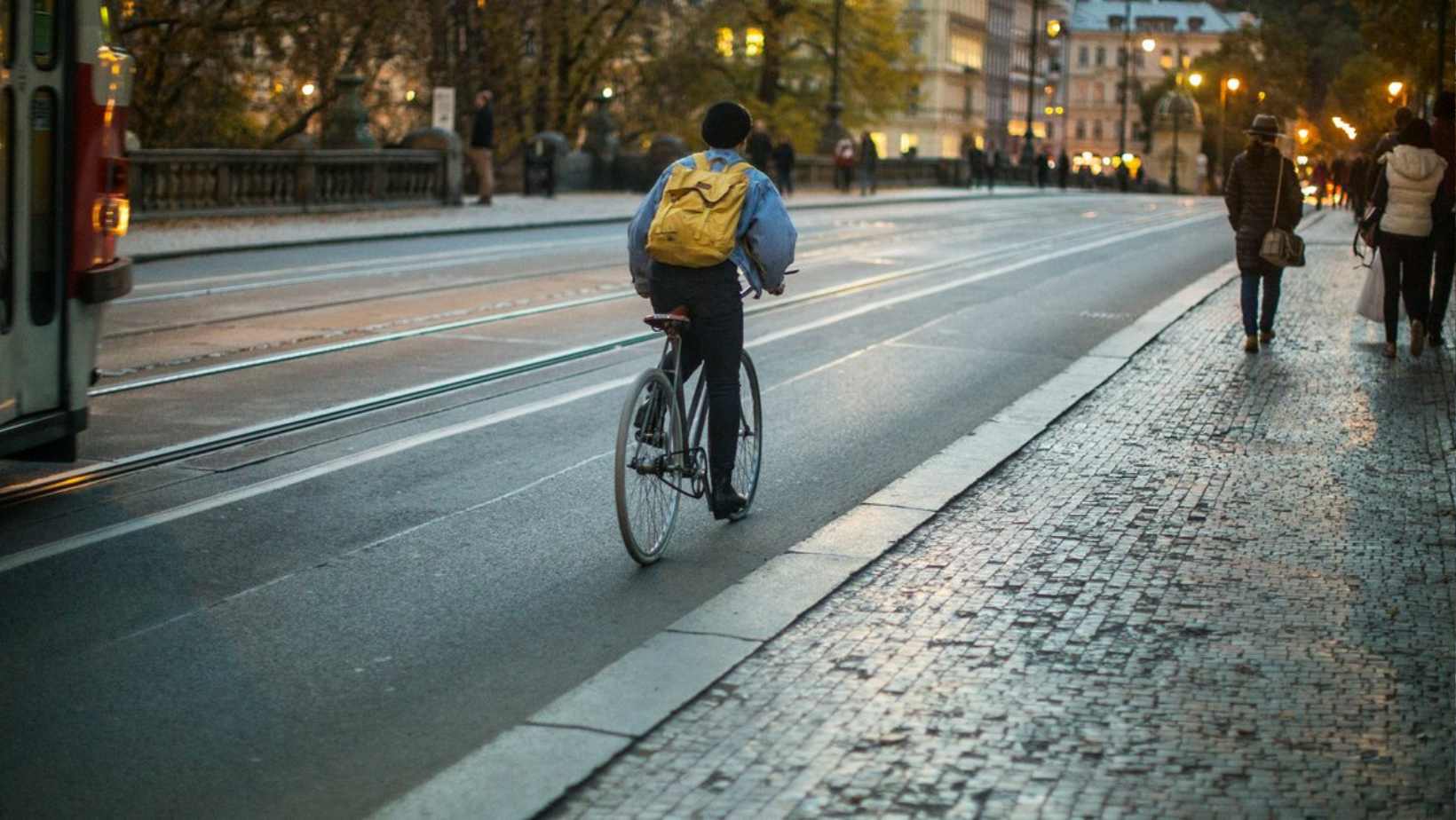

Cycling in Prague is on the rise. Last year, automatic counters across the city logged approximately 5.4 million bicycle trips, marking a 14% increase compared to 2023.
According to the latest Transport Yearbook released by the TSK, the busiest spot for cyclists was once again Modřany, where a counter near the intersection of Vltavanů and U Kina streets recorded 591,578 bicycles—nine times more than in the previous year.
This jump is attributed to the return of normal traffic flow after previous construction-related disruptions.
Meanwhile, on Povltavská Street near Troja Castle, counters registered 502,031 bicycles, a 9% year-on-year increase.
Not all areas followed the same trend. The lowest traffic was recorded at the Barrandov Bridge’s left-bank cycle path, where just 19,803 bicycles passed—a 68% drop, largely due to ongoing reconstruction.
Cycling activity peaked in July, making it the most bike-heavy month of the year.
Expansion of Two-Way Cycle Lanes and Safer Infrastructure
Prague’s cycling network continues to evolve. The length of marked cycle paths remained at 549 kilometers, the same as in 2023, but the structure of that network is shifting. The number of two-way cycle lanes—where bikes are allowed to ride against traffic on one-way streets—increased from 46.6 to 63 kilometers.
Prague 7 added over two kilometers of these lanes, joining Karlín and Petrovice as districts with citywide implementation.
Even Prague 2, typically slower to adopt such infrastructure, opened its first two-way bike lane on U Vodárny Street.
According to the report:
- 256 km of Prague’s cycle routes are completely separated from car traffic, with 8 km added last year.
- 154.3 km are designated or protective lanes located on roads shared with cars.
- 40.5 km are shared with buses in dedicated bus-bike lanes.
- 38.2 km feature cyclopictograms, or markings that alert drivers to frequent cyclist traffic without any dedicated lanes.
Thirty monitoring points are currently in operation throughout Prague.
These use induction loops or radar sensors, and in some cases, both. The system can also determine the direction of each cyclist, providing deeper insight into commuting patterns.
Would you like us to write about your business? Find out more
-
NEWSLETTER
 Subscribe for our daily news

Most Popular