The world is a more dangerous place than it was a decade ago. At least, it is for Europe, whose position looks increasingly precarious as the war in Ukraine threatens to spill beyond its borders.
Food security has returned to the centre of strategic thinking. As relations with neighbours become more hostile and global supply chains more fragile, the European Union must ensure it can rely on its own food production.
“Overall, there is a policy of Europe to increase its strategic autonomy,” explains Michiel Scheffer, president of the European Innovation Council (EIC). The EIC, a funding arm of the European Commission, is investing in technologies that promise greater resilience from plant-based protein research to new monitoring systems for soil and biodiversity. Scheffer argues that Europe must “create a production basis” for the companies it supports, so that innovation strengthens self-reliance rather than dependence. The same logic should apply to Europe’s food system as a whole.
Yet while the Commission funds satellites, sensors and “protein transition” startups, it continues to entertain a front-of-pack label, Nutri-Score, that weakens one of Europe’s most strategic assets: its diverse, decentralised, and culturally rooted food economy.
A useless label
Nutri-Score was launched in France with the aim of making nutrition easier to understand. Each product is assigned a grade from A to E, coded from green to red, based on its nutritional composition per 100 grams. It was presented as a public-health tool; in practice, it is a system that misunderstands food, culture, and context.
The algorithm measures numbers, not meaning. It takes no account of origin, seasonality, or how foods are eaten. A slice of whole-grain rye bread, a spoon of extra-virgin olive oil, or a serving of plain yogurt are not consumed like a packet of crisps, yet they are evaluated as if they were. The result is an incoherent scale that penalises products central to balanced diets across Europe.
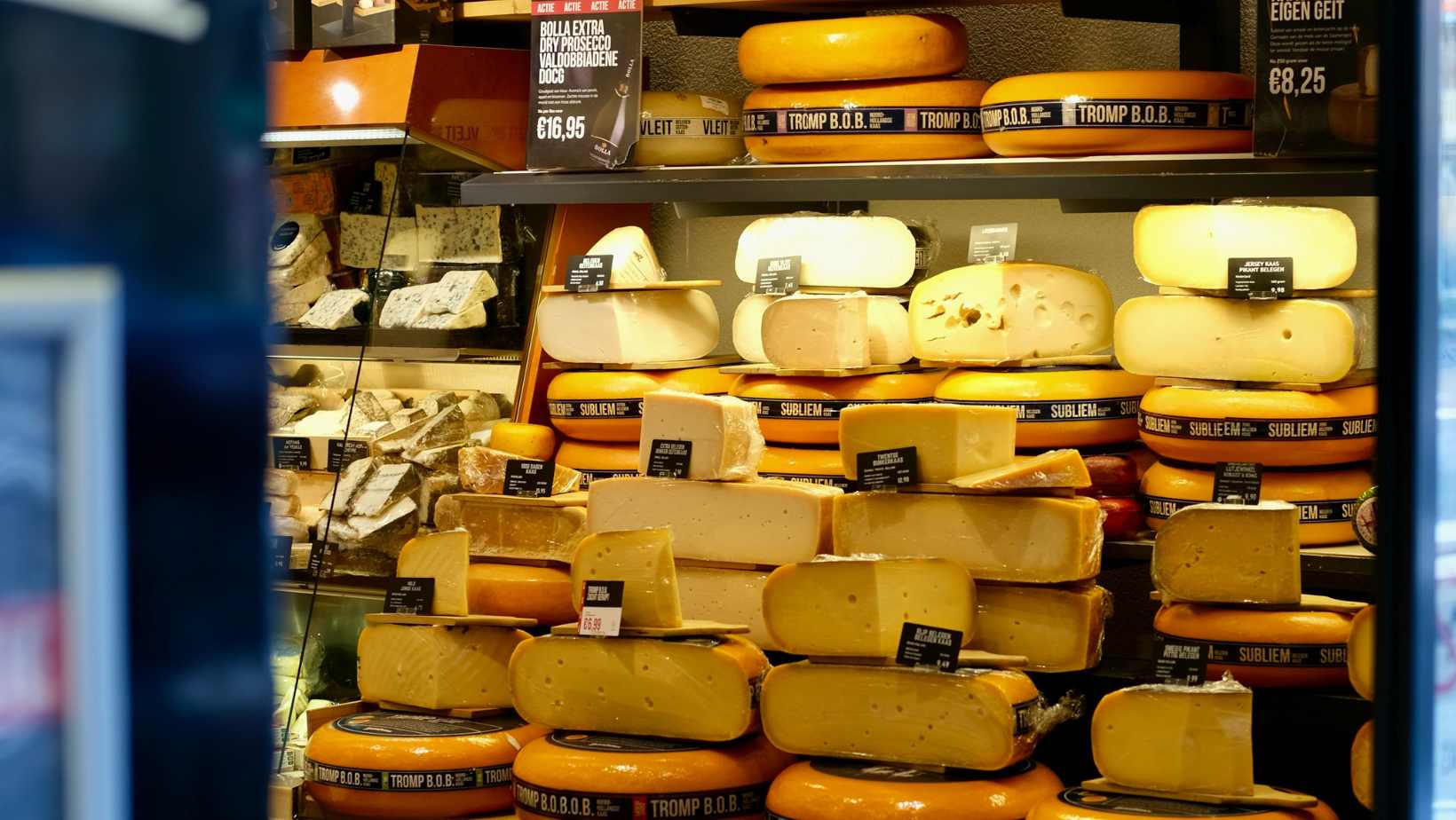
In the Czech Republic, traditional cheeses such as Olomoucké tvarůžky are rated poorly because of their salt content. In Greece, strained yogurt rich in protein and calcium often receives a lower grade than artificially sweetened drinks. What began as a public-health initiative has become a driver of standardisation, rewarding what can be reformulated and punishing what is authentic.
Mounting pressure
At first, Nutri-Score was voluntary. That is changing. In France, Carrefour has told suppliers they are expected to display the label. In the Netherlands, Albert Heijn has joined a coalition lobbying for EU-wide adoption. In Belgium, supermarkets are reportedly phasing out private-label products with low grades.
What was once optional is becoming mandatory through commercial pressure. Small and medium-sized producers — already squeezed by inflation and energy costs — are being pushed to conform. Reformulating recipes, redesigning packaging, or commissioning new nutritional analyses requires resources they often do not have. Those who refuse risk losing shelf space.
Even large firms are stepping back. In Switzerland, Nestlé decided to remove Nutri-Score from its products, joining Migros and Emmi. In Germany, Dr. Oetker publicly questioned the system’s usefulness after its muesli and dairy lines received conflicting ratings. These withdrawals were not political gestures but pragmatic ones: the label confuses consumers and damages trust. When entire categories of major producers abandon a supposedly harmonised scheme, it signals deeper flaws.
False promises
Nutri-Score was meant to simplify nutrition. Instead, it has blurred it. Shoppers often assume that a green label guarantees a healthy choice, unaware of the narrow metrics behind it.
The underlying idea is that food can be rationalised into a universal code. But eating is not a scientific act; it is a cultural one. Each recipe reflects geography and history. A sourdough from the Baltics, a pickled vegetable from Poland, or an Alpine butter made from summer pasture milk cannot be captured by a uniform formula. These distinctions are not inefficiencies to be corrected but expressions of Europe’s identity.
By enforcing uniform labelling, Europe risks encouraging uniform food. What fits the system will survive; what doesn’t will quietly disappear. The continent that once taught the world to celebrate variety could end up teaching itself to think in spreadsheets.
Romania’s teachable moment
Romania now has an opportunity to learn from others’ mistakes. The European Commission has formally warned Bucharest that its draft plan to introduce Nutri-Score could breach EU rules on trade and food labelling. The Commission cited a lack of transparency in the algorithm, no clear appeals procedure, and the risk of distorting competition within the single market, echoing long-standing scientific criticisms that the model ignores portion size, nutrient density, and overall diet context.
Rather than revising a flawed framework, Romania should put the project to rest once and for all. Doing so would place it alongside countries and companies that have recognised the limits of the system and would signal a preference for evidence-based, culturally aware policy over one-size-fits-all regulation.
Food diversity matters
Food is more than sustenance; it is part of Europe’s resilience. The diversity of its cuisine mirrors the diversity of its people and landscapes, a form of soft power that no algorithm can measure.
Nutri-Score claims neutrality but enforces uniformity. It speaks the language of science while ignoring the language of culture. Its spread across supermarket shelves is not progress but retreat from nuance, from identity, from the messy human reality of how people eat and live.
-
NEWSLETTER
 Subscribe for our daily news

Most Popular