
Every year on November 11, the Czech Republic marks St. Martin’s Day, one of the country’s most cherished autumn traditions.
It’s a celebration that blends food, fine wine, and good company – a perfect way to brighten the cold days when autumn slowly turns to winter. At the heart of these festivities is the St. Martin’s goose, a dish so symbolic that restaurants across the country, from Prague to Karlovy Vary, fill their menus with it.
Who Was St. Martin?
The holiday honors St. Martin of Tours, a Roman soldier born in what is now Hungary. Known for his compassion, he famously cut his cloak in half to share with a freezing beggar. His act of kindness made him one of Christianity’s most beloved saints and a symbol of generosity. St. Martin’s Day falls on November 11 – traditionally the time of post-harvest feasts and the start of Advent preparations.
Why a Goose?
The story behind the goose dates back to legend. When the humble Martin tried to avoid being appointed bishop, he hid among a flock of geese – but their loud honking gave him away. Since then, the goose has become an inseparable part of the celebration. Historically, this time of year also marked the end of the farming season, when workers were paid and families celebrated abundance after the harvest, making roasted goose a natural centerpiece of the feast.
The Feast Itself
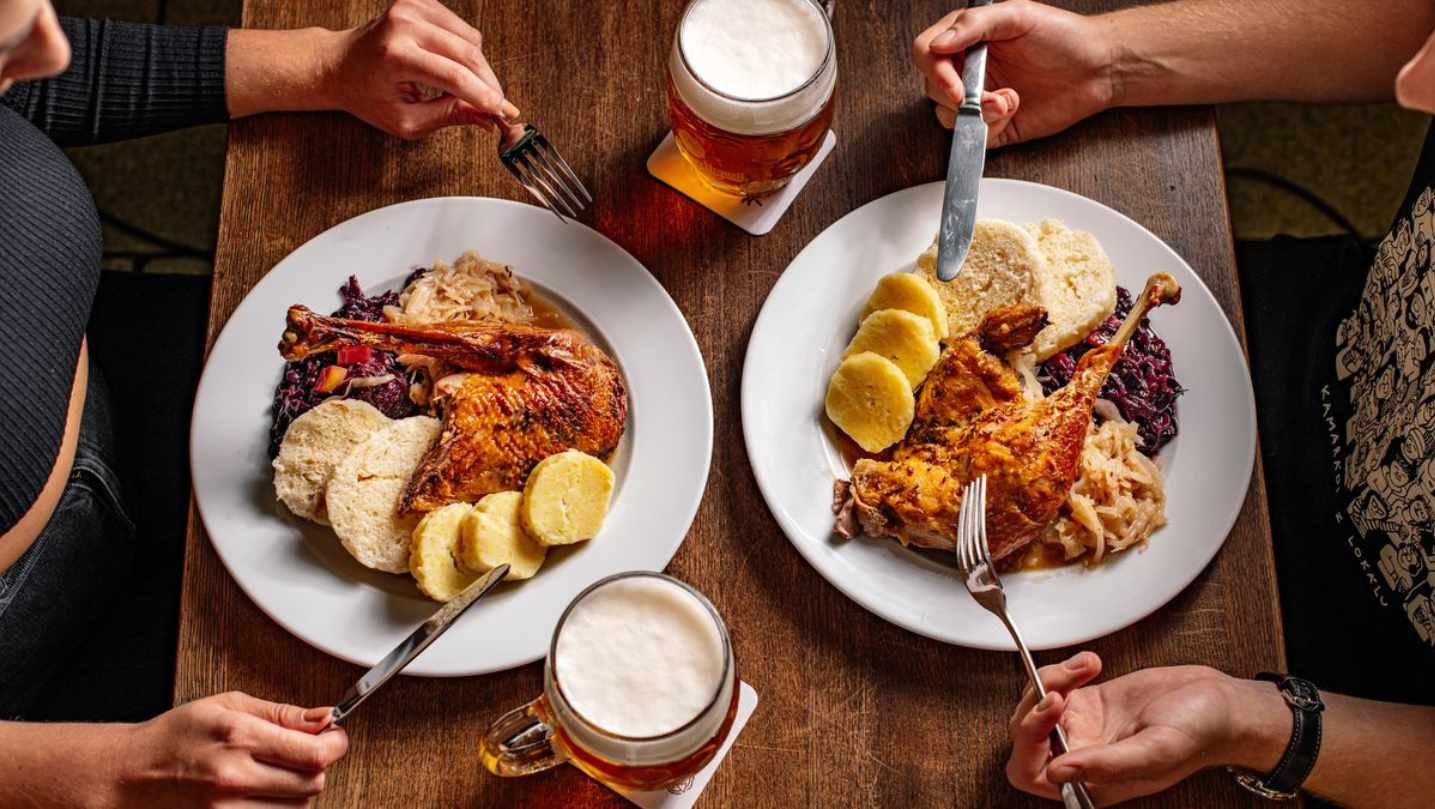
A traditional St. Martin’s goose is roasted slowly until the meat is tender and the skin perfectly crisp. It’s served with the classic trio of red and white cabbage and dumplings – whether bread, potato, or the Karlovy Vary style. Each restaurant prepares its own version, adding personal touches while keeping the comforting essence of this seasonal meal.
The First Wine of the Year
No St. Martin’s Day would be complete without St. Martin’s wine, the first young wine of the new harvest. At exactly 11:11 a.m. on November 11, winemakers across the country uncork their first bottles to celebrate the results of the season’s work. These wines are fresh, light, and slightly sparkling, with a lower alcohol content, reflecting the flavors of the late summer grapes.
This year, the official celebrations begin earlier than usual, starting on Friday, November 8, allowing people to enjoy the weekend festivities before the main event on Monday. The celebrations will continue across the country – in vineyards, restaurants, and wine cellars – giving everyone a chance to enjoy what this year’s harvest has brought.
Would you like us to write about your business? Find out more
-
NEWSLETTER
 Subscribe for our daily news

Most Popular