Love Sausages? Prague Has a New Bistro Serving Berlin-Style Currywurst
Partner article


Prague Morning
 Follow us on Google Discover
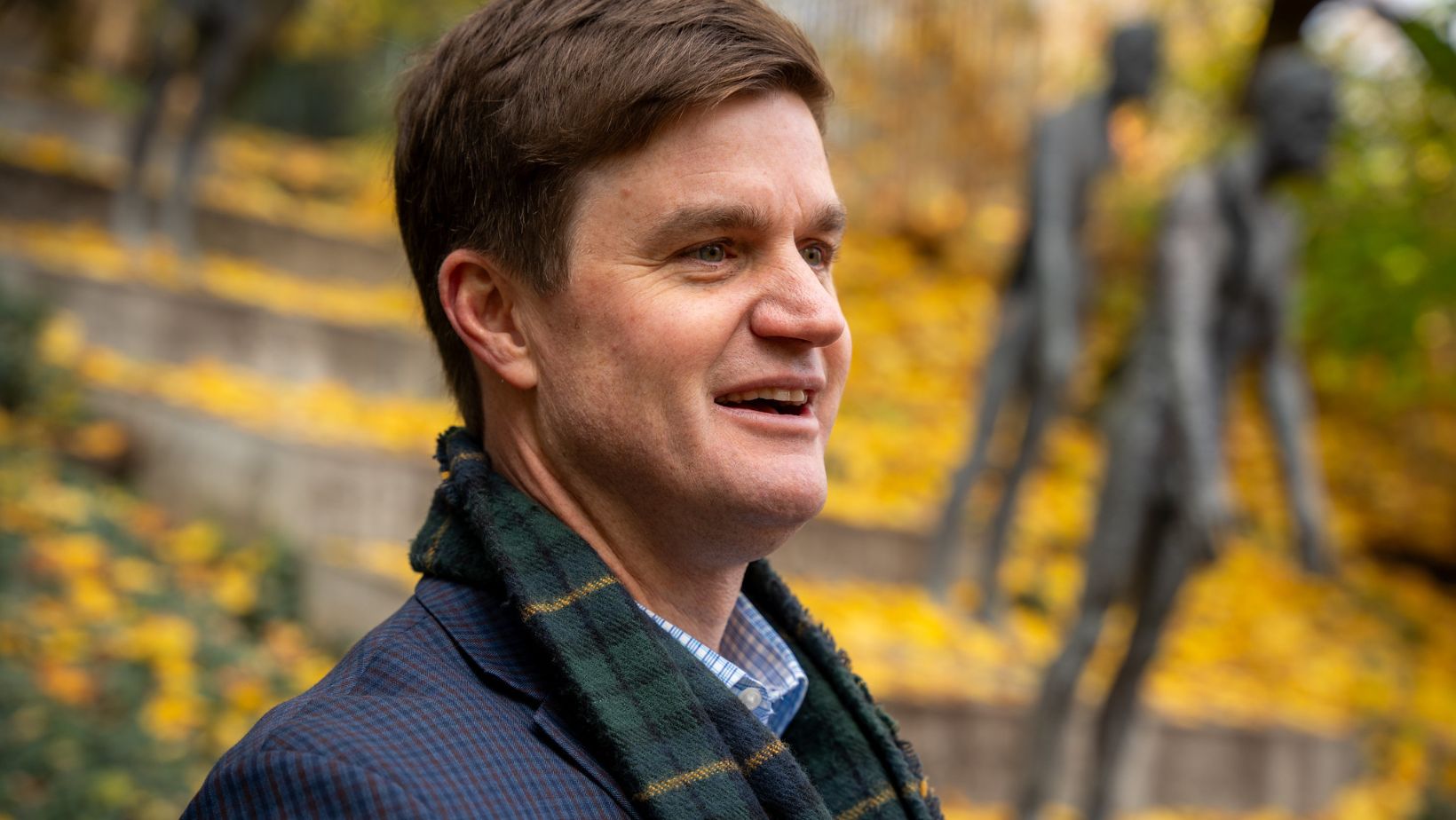

Seven years ago, Joshua Hayden swapped a secure career in Nashville for Prague, drawn by his research on Václav Havel and Charter 77. Today he teaches leadership at Anglo-American University, where Václav Havel, poetry and the spirit of 1989 are part of the curriculum.

Joshua Hayden, EdD, holds a doctorate in leadership from Vanderbilt University and taught at three universities around Nashville, Tennessee, before moving his family to Prague. At Anglo-American University (AAU), the country’s oldest private university founded in 1990, he is the Department Chair of Social Sciences, teaches the psychology of leadership, ethics and leadership, and a summer course on the Czech dissident tradition.
Ahead of November 17, we talked to him about teaching far from home, why small classes matter more than ever in the age of AI, and why Havel’s words still resonate with students today.
Before my family and I moved to Prague, I worked at three universities in and just outside Nashville, Tennessee. I earned my doctoral degree in leadership at Vanderbilt University in Nashville, and my wife and I really loved the city. After a lot of discernment and prayer, we decided to live a bigger story for our family and move to Prague, partly because of my research on Václav Havel and Charter 77.
During that year of transition, I was offered a job running a leadership program at a liberal arts college. It was in a small town in the US, so we had a choice between the risk of moving internationally in the hope of teaching leadership and the “sure thing” of running a program in the US. We chose the riskier option. What I remember most about that time is the assurance that we were making the right decision, come what may.
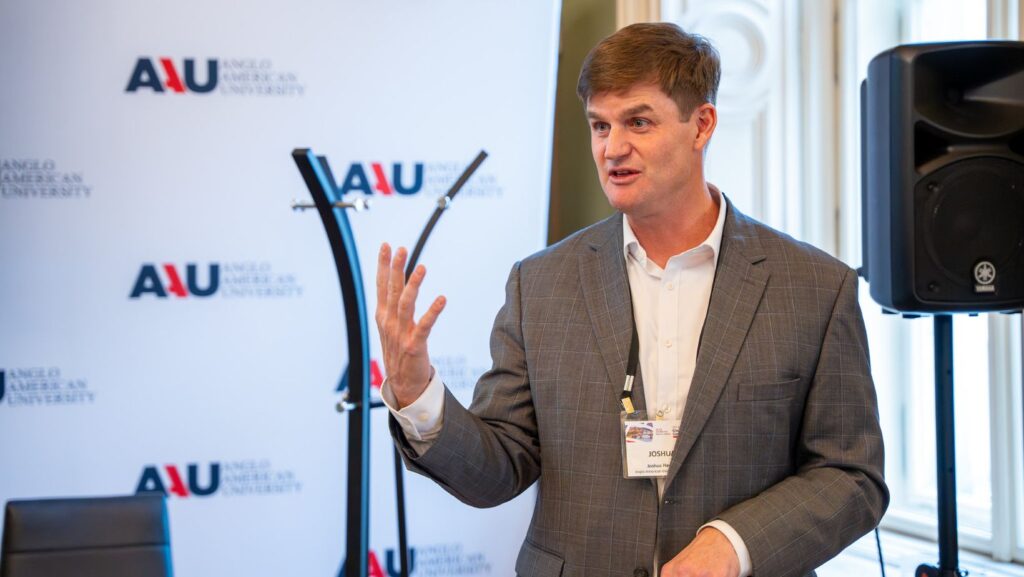
Teaching Far From Home
What’s it like to teach in a country that isn’t your own, to students who are often far from home too?
It’s just the kind of challenge I was looking for. I’ve learned so much in dialogue with students, and in many classes we end up talking about cross-cultural differences. The adjustment for me meant trading many of my American examples for international ones. I often ask students to share their cultural perspectives and interpretations of the research and data I share in class. On the other hand, for all the cultural differences, I am struck by the commonalities between cultures and the connections that can be made if we are open to them.
For example, I include poems in my class on the psychology of leadership. Poems and leadership? Yes! Poems have a way of expressing the human condition and the dynamics of change, power, resistance and critical engagement that are really at the heart of leadership. I include poems from different cultures around the world, and one day we used a Polish poem. A Polish student looked it up in her own language after reading it in English and showed us how the author used political and subversive terms. Our class had a great discussion about how language shapes our own and other people’s reality. She brought a cultural perspective that I did not anticipate, and it added so much to our class.
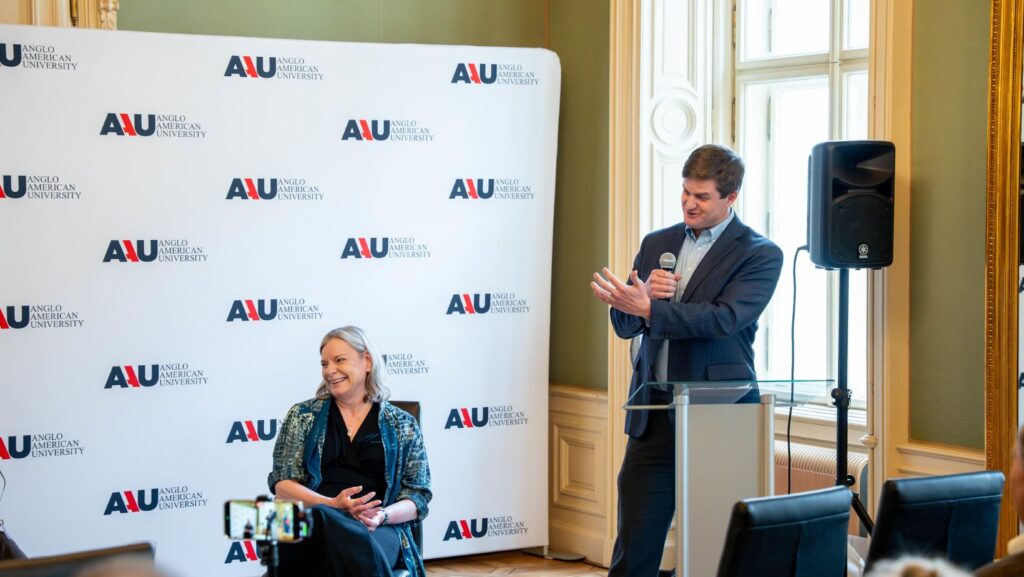
What happens in a small class that you’d never see in a big lecture hall?
Students learn at a much deeper and more active level. There are experimental studies showing that students in active-learning classes learn more than those in traditional lectures, even if they don’t feel they learned more. I’ve found that when I get students into groups working on problems and applying the course materials, they correct each other’s misunderstandings and get immediate feedback.
Written and verbal feedback is another thing that sets small classes apart from large ones, and the more frequent feedback students get on how they explain, apply and synthesize information, the more higher-order learning takes place. I think one misconception old-school professors tend to have is that if students enjoy discussing and working actively in the classroom, there must be less learning going on, because you aren’t covering as much material. But the evidence does not support this.
Especially in the AI-saturated world we all live in, practicing social and argumentative skills, problem-solving and critical thinking in the classroom is more important than ever. In my classes we have case studies, role plays, simulations and hands-on experiments, we go on field trips, and we have small-group discussions. Students are rarely distracted by technology if they are immersed in a problem, a group task or a deep discussion. I have the same challenges all professors do in the classroom, but the small, diverse classes we have are great environments for deeper learning.
If you could take one AAU class as a student, which would it be and why?
Take a colleague’s class? I would take Professor Ondřej Pilný’s course Theatre and Politics or Pavla Jonssonová’s Czech Culture in Film and Literature. They are both great teachers!
Do you stay in touch with former students? Is there one whose story surprised you?
Yes, I do stay in touch with former students, and I love to follow their lives and careers. One of my thesis advisees had a profound experience taking a course in South Africa, went on to write a great thesis, graduated and then pursued her passion for pottery. I gave her a copy of one of my favorite books, Let Your Life Speak by Parker Palmer, and she read it while working in a pottery studio in California. She wrote to me about it, and later she came to Prague and told me she was in the process of opening her own pottery studio.
Some of us take the necessary path of getting a job that works for the lifestyle we want, but I love it when former students take risks and go for something they are passionate about that also serves others.
You’ve spent years studying Václav Havel. How does he show up in your classes?
I teach a summer leadership course on the Czech dissident tradition. It starts with Jan Hus and ends with Václav Havel: his early life and absurdist theatre – we see his plays performed – and the context of communist Czechoslovakia in the 1950s and 1960s, his emergence as a “dissident” in the 1970s and 1980s, and finally his presidency. I am much more interested in taking a critical approach, discussing Havel in his social, economic and political context and in relation to artists, writers, former communists, rock bands and philosophers.
Havel also shows up in my Ethics and Leadership course, where we use ethical theories to examine the leadership of various historical and contemporary figures. I use Gabriel Marcel’s ethics of hope to look at Havel and others and their collaboration in starting Charter 77, VONS (the Committee for the Defense of the Unjustly Prosecuted) and other human rights groups. We read his Letter to Husák, The Power of the Powerless and the speech he gave as president when he received the Sonning Prize.
I’ve found Havel’s 1990 New Year’s Address helpful in other leadership courses I teach, such as Leadership and the Self. We look at the context of the speech and how he called on his listeners to take responsibility for their society after communism fell, instead of seeing themselves only as victims.
AAU was founded in 1990, right after the Velvet Revolution. Does that history still feel present at the university today?
It does, thanks to the initiative of our faculty and their desire for students to catch the spirit of the revolution: a love of freedom, democracy and dialogue – all great outcomes of a university education. My colleague Monika MacDonagh-Pajerová was literally one of the student leaders of ’89. She teaches a very popular course and weaves her experience and relationships into it.
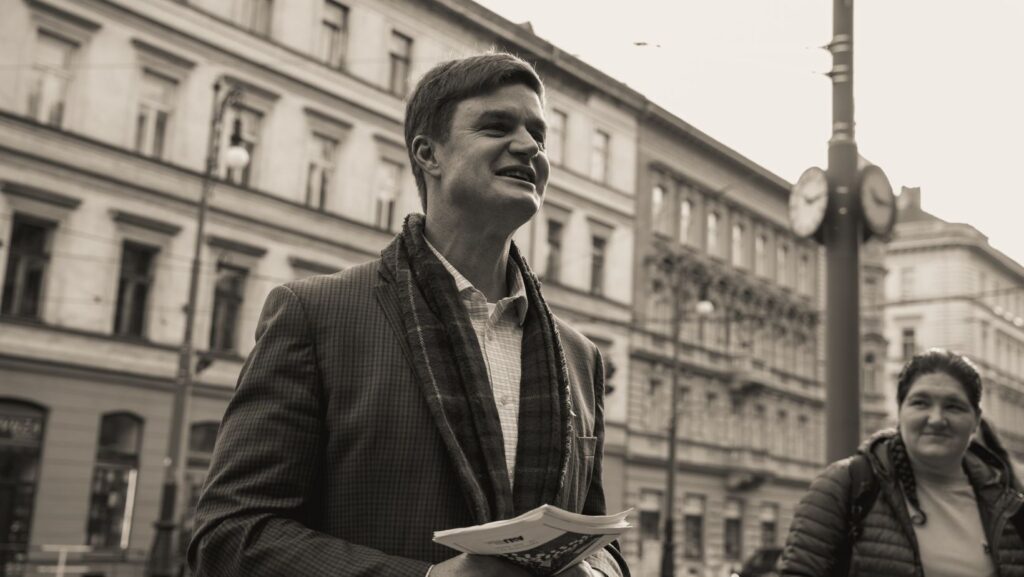
About six years ago, I created a walking tour of the Velvet Revolution for our students and staff, which takes place every November 17. Colleagues who remember the communist days usually join us, and some of them were actually there on Národní třída on November 17, 1989. Other colleagues teach courses that involve Havel and other Czech artists and dissidents.
We regularly have events and special guests that bring that history alive. A few colleagues and I are “screening” a radio play Havel wrote, Guardian Angel, and then discussing it with our students and faculty. This play captures so many themes highly relevant to us today: technology and humanity, the nature of trust, listening, and how the powerful understand the needs of others. Of course, it was written under communism in the 1960s – it’s history – but it also has a timeless quality to it.
If a student were choosing whether to study in Prague, what would you tell them?
I hope that a student would choose Prague to get immersed in its culture and history, not to live in a bubble. The Czech Republic has so much to offer. It is rich in history and beautiful, in and outside of Prague. It is also in the heart of Europe, so you can jump on a train and visit so many cultures and people. The city is safe and walkable, and it has a nice pace of life. After seven years, I never get tired of the sights, the streets to roam and the places to get good beer.
I think many students find it refreshing, especially those coming from large schools, that AAU is small and a close community. It is quite an intellectual place, so I see many students having deeper conversations in groups than I had ever seen in the places I’ve worked before. If you are coming from far away, it is a transformative experience to be a foreigner and live in such a different culture. You’ll never be the same. In a good way.
Founded in 1990, Anglo-American University (AAU) is the oldest private university in the Czech Republic and offers bachelor’s and master’s programs taught entirely in English. It holds both Czech and US (WSCUC) accreditation, and its campus is located in the Thurn-Taxis Palace just below Prague Castle. More information at aauni.edu.
Would you like your story featured here? Get in touch with our team at [email protected]




Already have an account? Log In