The Karlovy Vary International Film Festival will return for its 60th edition from 3 to 11 July 2026, bringing a line-up of major international guests to the Czech spa town. Among the central figures this year are Dustin Hoffman and Juliette Binoche, both of whom will receive the Crystal Globe for outstanding contribution to world cinema. Hoffman, 88, remains one of Hollywood’s most recognisable actors, with seven Academy Award nominations and two wins for Kramer vs. Kramer and Rain Man. Binoche has built a long international career spanning European and English-language cinema, with major collaborations including Krzysztof Kieślowski and Anthony Minghella. Also expected in Karlovy Vary is Harvey Keitel, who returns to the festival for the third time. Known for his work with directors such as Martin Scorsese, Quentin Tarantino and Ridley Scott, Keitel’s career includes films such as Pulp Fiction, Taxi Driver and Thelma & Louise. Another guest will be Jeffrey Wright, who will receive the Festival President’s Award. Wright has built a career across film, television and theatre, with roles in Angels in America, the James Bond series, and The Hunger Games franchise. View this post on Instagram A post shared by Karlovy Vary IFF (@kviff)...
The Czech Republic has taken a major step toward joining Europe’s growing artificial intelligence infrastructure network after the government approved support for a bid to host a European AI Gigafactory. At its meeting on Monday, the cabinet authorized the Ministry of Industry and Trade to sign a joint procurement agreement with the EuroHPC Joint Undertaking, opening the door for Czech partners to compete for one of the EU’s flagship AI projects. The planned AI Gigafactories are intended to provide Europe with powerful computing infrastructure capable of developing, training and operating advanced artificial intelligence models. The facilities would serve as large-scale AI data centers, helping reduce Europe’s dependence on technology and computing resources from outside the continent. Under the proposed model, construction of the Czech facility would be financed by private investors. The state would not directly fund the project but would commit to using part of the computing capacity if the Czech bid is selected. According to the government, this would give public institutions and domestic organizations access to advanced computing resources under favorable financial conditions. Officials argue that hosting an AI Gigafactory could bring benefits beyond technology development. The project could attract substantial private investment, create opportunities for research...
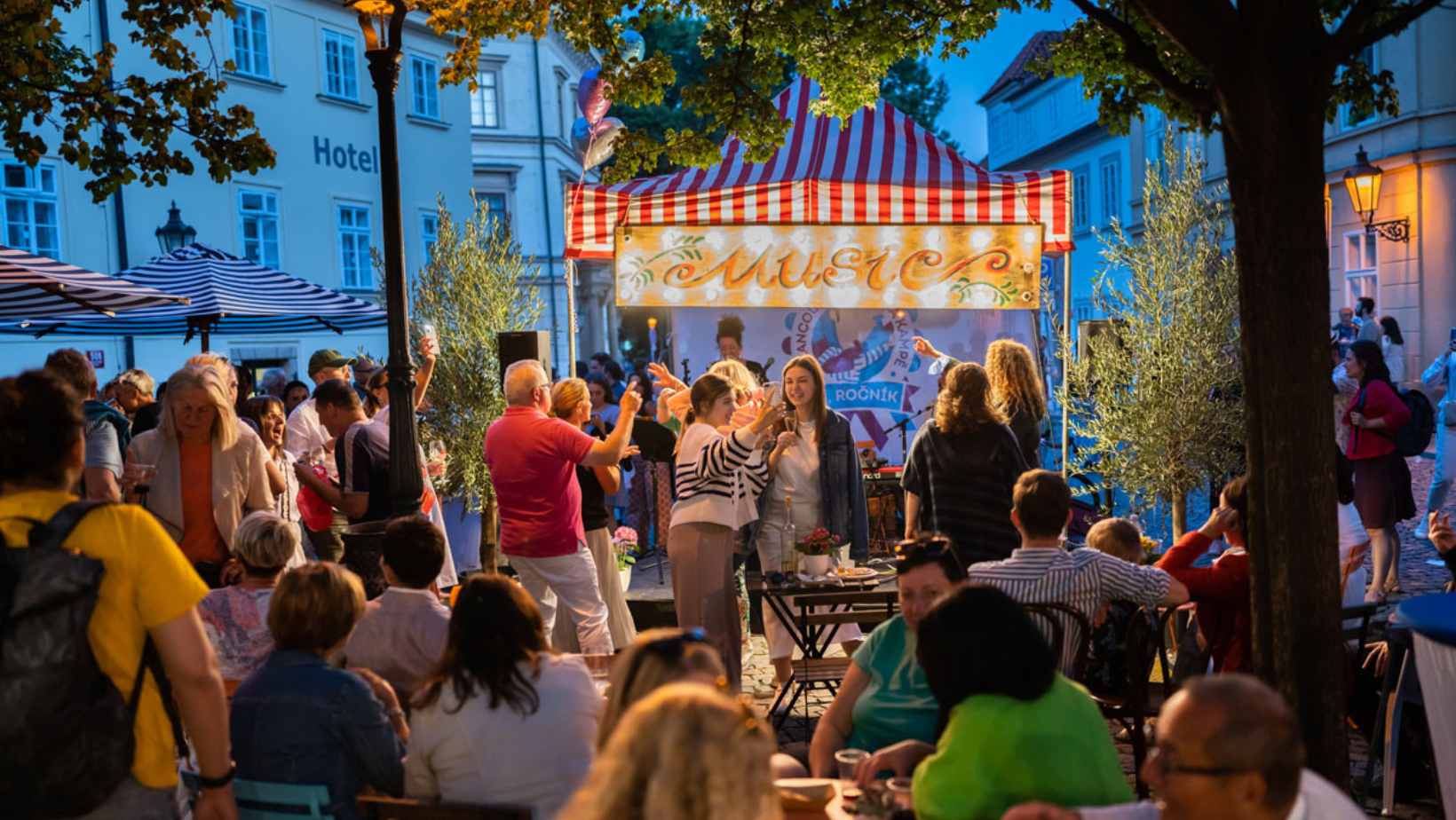
One of Prague’s best-known summer events is set to return to Kampa this July, bringing together French food, wine, music and culture in the heart of the city. From July 14 to 19, Kampa will once again host the annual French Market, bringing six days of regional food, wine, music and cultural events to the heart of Malá Strana.. Now in its nineteenth edition, the event will feature producers and vendors from across France, offering regional specialties ranging from seafood and cured meats to baked goods and sparkling wines. Organizers say this year’s program will place a particular focus on guest appearances and live performances. Among the most anticipated guests is Ferran Sentís Barcia, a finalist in the World Oyster Opening Championship. Visitors will have the opportunity not only to sample fresh oysters but also to watch demonstrations from one of the most respected oyster-opening specialists working today. Seafood will be joined by a wide selection of traditional French products. Visitors can expect to find Jambon Noir de Bigorre, a premium ham aged for two years in the foothills of the French Pyrenees. The No Stress Bakery stand will present saucisson brioche, a classic specialty from the Lyon region, while...
Most restaurant guides try to answer the same question: which restaurant is the best? A new Prague-based project called Voutie is taking a different approach. Instead of ranking restaurants as a whole, it focuses on something much more specific: individual dishes. The idea began with a simple conversation at home. One evening, the founder’s wife was craving sushi and asked a familiar question: where can you get really good sushi in Prague? “It made me realize how often I was asking the same thing myself,” the founder says. Whether it is sushi, pizza, kebab, burgers or lasagne, many people are not necessarily looking for the city’s best restaurant overall. They just want to know where to find the best version of the food they feel like eating that day. The concept is straightforward. Each registered user receives one vote per category and can assign it to the restaurant they believe serves the best version of that particular dish. If they later discover a place they like more, they can move their vote. One of the best things about Voutie is that every place on the platform is there because it is someone’s favourite for a specific dish. The goal is...
With two locations now running in Prague, including its newer space in Palmovka, Bohemia Boards & Brews is entering a new phase focused less on expansion and more on building its role as a social hub. This summer, the board game café is placing renewed focus on both venues and the role they play in the city’s social life. We spoke with founder Douglas Kaufman about how the concept has evolved and why it still resonates today. Bohemia Boards & Brews combines a café, bar, and a library of hundreds of board games, built around the idea of a shared “third place” — somewhere outside home and work where people can meet and spend time together. “The concept of the board game café was just catching on in the US and Canada, spearheaded by Snakes & Lattes in Toronto,” Kaufman says. “It offered a place with a cool vibe and friendly atmosphere, serving food and drinks while giving people a space to play games.” Before this model existed in Prague, he recalls, options were limited and often improvised. “If you wanted to play games and didn’t want to go to someone’s house, you either went to a pub with your...
Across the city, major projects are underway or in the pipeline that promise to make the Czech capital a better place to live. Tram to Wenceslas Square Where else is better to start than Wenceslas Square. It’s laid out by Charles IV in the 14th century, witness to countless historical events, and today a hub of tourism and commerce with some 1,600 companies and hundreds of shops, hotels, and restaurants. Right now, it looks like a construction zone. The reason: a new tram line that will transform both the square and public transport across the city. Along with the tracks, the public space will be restored with new greenery, benches, and a retention tank already built underground to capture rainwater for the newly planted trees. Metro exits will also be redesigned, and the upper part of the square will connect with the lower part, which was already reconstructed in 2023 with new paving, benches, and a fountain designed by Jakub Cigler’s studio. The new line aims to relieve pressure on the congested city center and offer a redundant route when disruptions hit I. P. Pavlova or Ječná Street. It will also provide a missing link to Vinohrady. The New Savarin...
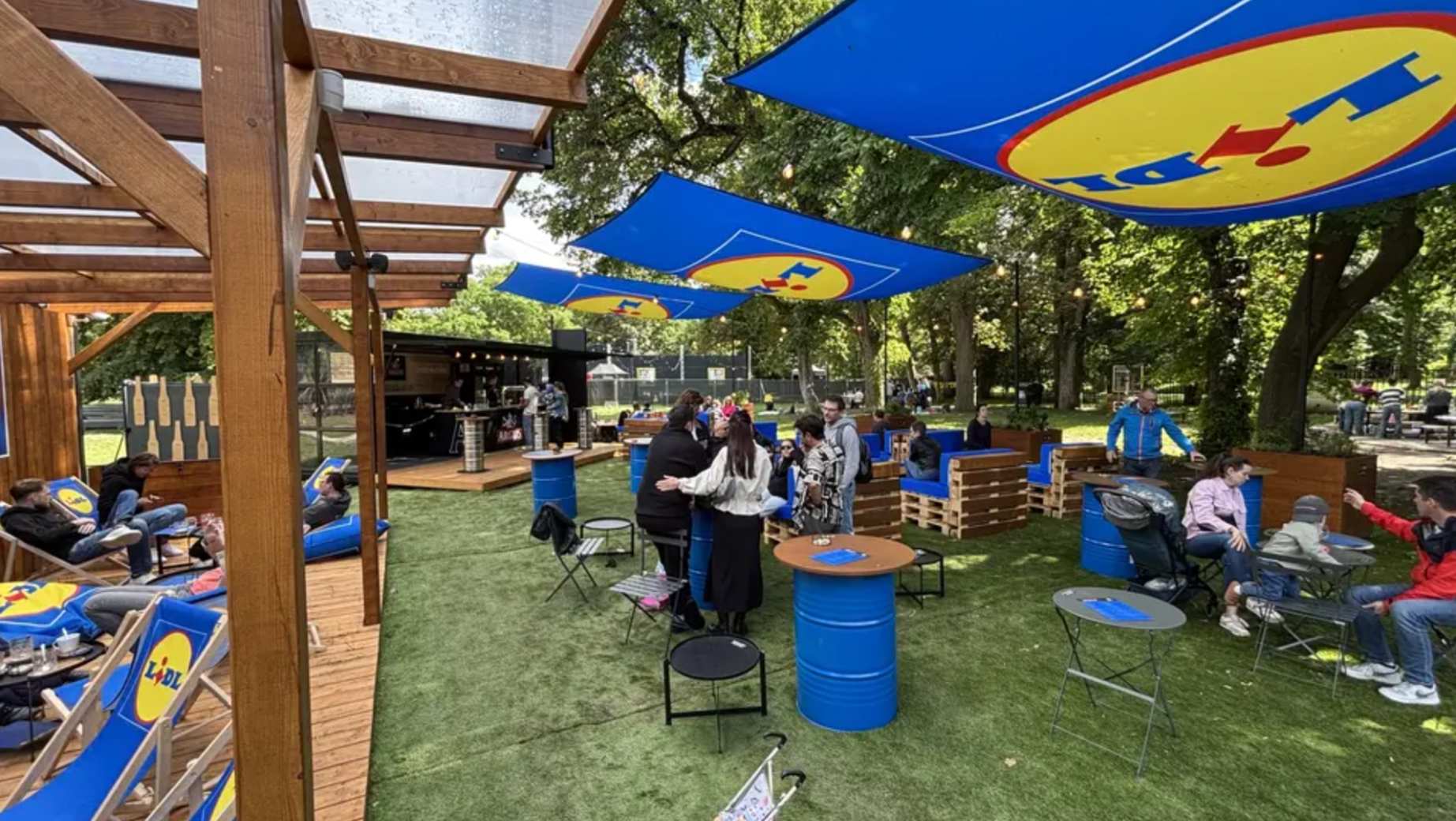
Lidl Czech Republic has launched a seasonal outdoor terrace at the Prague Exhibition Grounds in Stromovka, introducing a new concept that combines food, drinks and community events in one location. The temporary venue is situated next to the park’s public grilling area, allowing visitors to purchase ingredients on-site and prepare them at nearby grill stations. The terrace offers a selection of Lidl’s private-label products commonly found in its stores. Visitors can buy snacks, ice cream and barbecue ingredients directly at the venue. Draft Argus beer and non-alcoholic radlers are also available. Customers using the Lidl Plus mobile application can access discounted prices. A small draft beer costs 15 CZK through the app, while a half-liter beer is available for 25 CZK. Lidl said the beer-serving area is clearly marked as restricted to adults, with staff checking identification documents when necessary. A dedicated Bellarom Café section has also been created within the terrace. The café serves espresso, cappuccino, iced coffee and other coffee drinks. Lidl Plus users can take advantage of lower prices on selected beverages. The menu also includes lemonades, iced tea, prosecco and additional refreshments. The company plans to host a range of activities throughout the summer. The program...
A monument removed from Prague’s streets more than a century ago could soon return to one of the city’s most historic squares. Prague city councilors have approved plans to bring back the statue of Austrian field marshal Josef Václav Radecký of Radč to Malostranské náměstí in the Lesser Town. The decision also authorizes the city to ask the Ministry of Culture to release the original sculpture, which is currently housed in the Lapidarium of the National Museum. The monument stood in the square from 1858 until 1919, when the newly established Czechoslovak state removed symbols associated with the Habsburg monarchy. Following its dismantling, the statue was transferred to museum storage, while the pedestal was later removed as well. The return project has been discussed for years, supported by the Radecký Society and officials from Prague 1. City representatives now hope the monument can become part of the long-planned redevelopment of Malostranské náměstí, although a completion date for the reconstruction has not yet been announced. Costs are expected to range between 15 million and 30 million Czech crowns. The final amount will depend largely on whether the Ministry of Culture agrees to provide the original artwork. If not, a replica would...
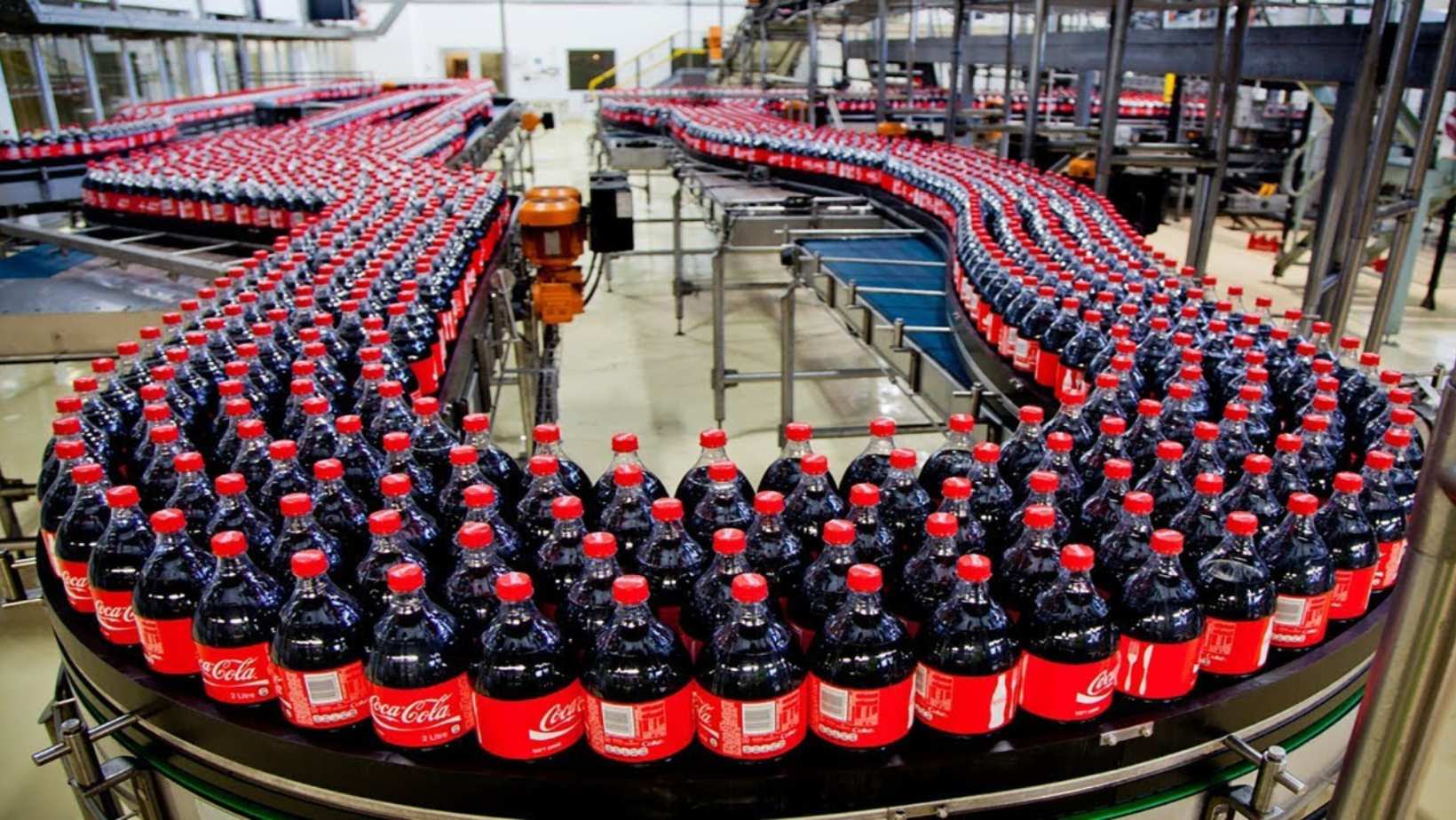
Coca-Cola is marking a major milestone in Czechia this year. The company has been producing its beverages locally for 55 years, growing from a niche product available only to a select few during the communist era into one of the country’s most widely consumed drinks. According to company figures, Coca-Cola’s Czech facilities produced 415.9 million liters of beverages in 2025 alone. When licensed production first began in the country in 1971, annual output stood at around 18.4 million liters. The story of Coca-Cola in Czechia began before local manufacturing existed. Many Czechs first encountered the drink at the end of World War II through American soldiers stationed in Europe. During the communist period, however, access remained limited. Bottles were mainly sold through Tuzex stores, which specialized in foreign goods, or in hotels catering to foreign visitors. A turning point came in 1971, when licensed production using the original Coca-Cola concentrate was launched in Modřice, near Brno. That move established the foundations for what would eventually become one of the company’s key operations in Central Europe. Another important chapter followed after the fall of communism. In 1993, Coca-Cola opened a production facility in Prague’s Kyje district, which has since become the...
Travelers heading to the Western Balkans could eventually use their phones without worrying about extra roaming charges, as the European Union moves forward with plans to expand its roaming zone beyond its current borders. The European Commission is working on a proposal that would bring six Western Balkan countries — Albania, Bosnia and Herzegovina, Kosovo, Montenegro, North Macedonia and Serbia — under the same roaming framework currently used across EU member states and participating European countries. If the plan is approved, residents and visitors would be able to make calls, send text messages and use mobile data in those countries under conditions similar to those they already enjoy throughout much of Europe. The process, however, is still at an early stage. While the Commission has expressed support for the expansion, the proposal must first receive approval from EU member states before negotiations can begin. Earlier this year, the Commission asked the Council of the European Union for authorization to open formal talks with the six Western Balkan partners. Once approved, separate agreements would need to be negotiated with each country. According to the Commission, successful negotiations would create the legal framework necessary for the Western Balkans to join the EU...
Summer in Prague is traditionally a time for festivals, open-air events, and nightlife venues, all of which attract visitors with special programs. Among them is Roxy, which is kicking off the new season with an expanded lineup of events, new production elements, and confirmed acts for the fall season. The club on Dlouhá Street has been shaping the city’s electronic music scene since 1992, and earlier this year it received the Bass Award for best club in the Czech Republic and Slovakia. This summer, the venue is entering the warmer months with a packed schedule designed for regulars and newcomers alike. Three recurring nights form the backbone of the program. Mainstage Party and Techno Night take over Fridays and Saturdays, while DNB Wednights, held every other Wednesday, bring drum and bass enthusiasts together in the middle of the week. DNB Wednights start at 8 p.m., while the club’s regular Friday and Saturday events begin at 11 p.m. Alongside its regular program, Roxy is preparing a series of themed nights that push the energy even further. Techno [Rave] and Hard Dance editions promise a heavier soundtrack and a different atmosphere for those looking for something beyond the club’s standard format. Music...
With its setting on the edge of Klánovický Forest in Prague-East, Unicorn School has developed a private kindergarten environment where early education is closely tied to nature, movement and individual attention. Housed in a family villa with a garden, playground and heated swimming pool, the facility brings together structured preschool learning and a day-to-day rhythm shaped by outdoor experience. The kindergarten and children’s group focus on small learning communities, where children are guided according to their own pace of development rather than a uniform classroom model. Teachers with long-term experience in early childhood education work with an emphasis on stability, trust and close cooperation with parents. A significant part of the programme takes place outside. The proximity of the forest allows for frequent walks, outdoor activities and seasonal learning, which are integrated into the daily schedule rather than treated as occasional excursions. The approach reflects elements of forest kindergarten practice, where direct contact with nature is considered part of the learning process. Inside, Unicorn School combines several educational frameworks. Montessori-inspired principles are used alongside Free Flow Learning and the Good Start Method®. Development is monitored through iSophi® diagnostics, which help adjust activities to individual needs. Early numeracy is introduced through...
Don’t have an account? Register
Already have an account? Log In
How Would You Like to Promote Your Business? PR ArticleDisplay bannersVideo productionNewsletter adsJob ListingsInfluencer Marketing
Your Email
We will come back to you within 24 hours with our proporsal