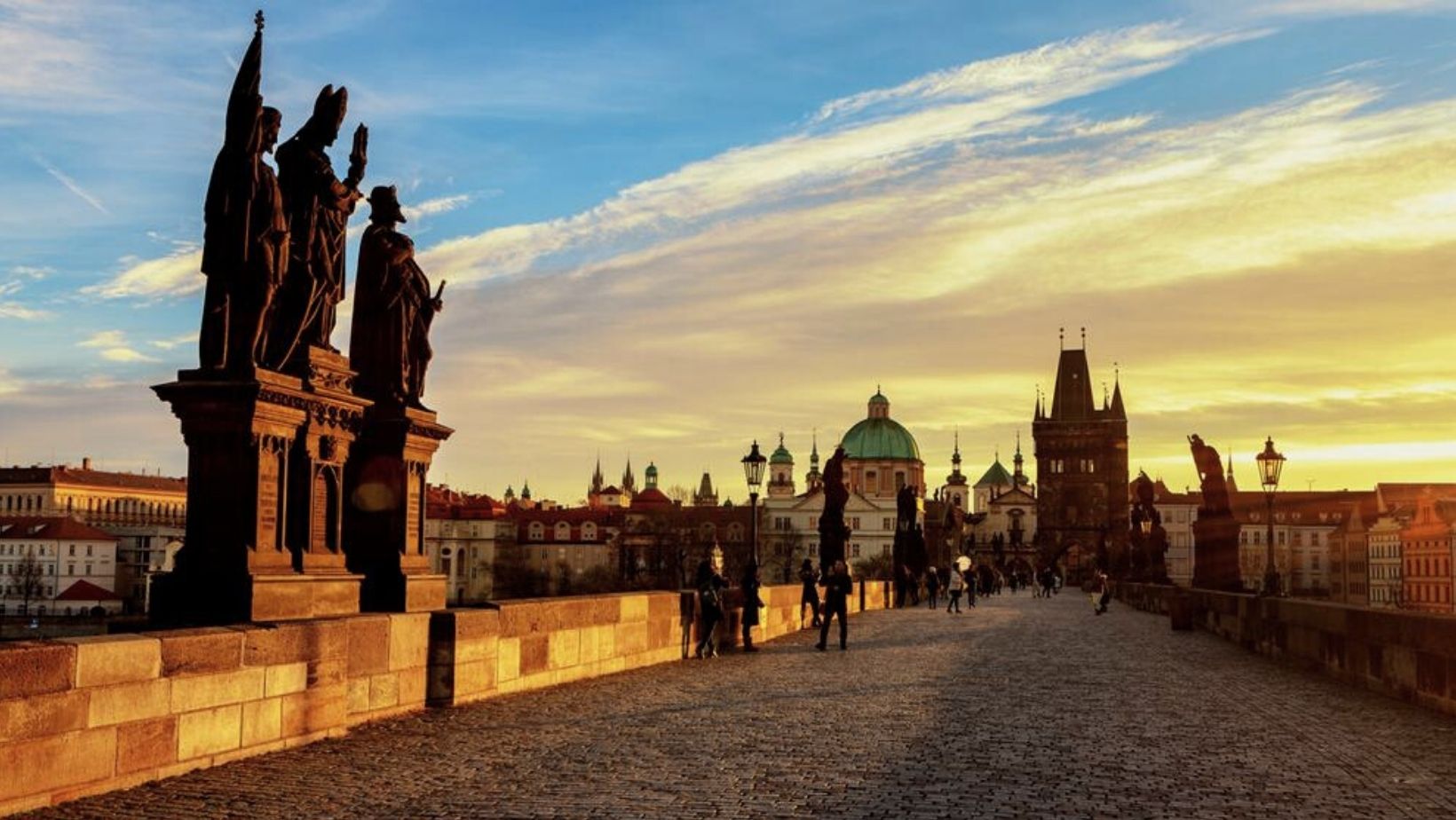
Increased security at Prague Castle was promised in the wake of a scandal back in September 2015, when a group of activists managed to hang a giant pair of red boxer shorts from the Castle roof in protest at Miloš Zeman’s supposed affinity for authoritarian regimes. However, the Castle claimed that tightened security was in reality a response to the concerns over potential terrorist attacks demanding increased vigilance. Yesterday, Vít Rakušan, the interior minister, said he would ask police and security services to review measures in place at the 70,000 sq meter complex, which is the country’s most visited tourist attraction. “Prague Castle is a symbol of Czech statehood,” he tweeted. “It belongs to all of us. And we are not really all terrorists, as we may now feel when we visit it. I have asked the relevant institutions to review all the security measures that have created a war fortification around the castle.” Rakušan told Czech journalists the police would seek the opinions of all relevant bodies. “They will assess and comment on the necessity of the existing measures and possibly work on a new security regime,” he added. “I believe an assessment of the current massive measures is...
If your day doesn’t start until you’re up to speed on the latest headlines, then let us introduce you to our new morning fix. Inflation in the Czech Republic accelerated in December to reach 6.6 percent year-on-year. The figure for the previous month was 6.0 percent. The last time the country experienced such rapid inflation was in September 2008. Seznam.cz has the largest audience reach of any media organisation in the Czech Republic, followed by the company that owns the Prima TV group, and by the firm that operates the TV station Nova. The growth of the Czech economy should speed up next year, rising from this year’s 2.5 percent to 3.9 percent in 2022, based on the latest regular Finance Ministry survey. However, inflation is also expected to grow from this year’s expected 3.8 percent to 5.5 percent. The new prime minister Petr Fiala said that the proposed EU ban on new vehicles with internal combustion engines by 2035 is unacceptable and the Czech Republic would seek allies in Europe to change it. More than 50 percent of new coronavirus cases in the Czech Republic are the Omicron variant, and in many larger cities, the proportion is...
Zdeněk Hřib signed a contract with the Municipal Rental Agency, which helps people in need to find affordable homes
Five Czech crewmembers who were reported missing during the Second World War more than 80 years ago have been recovered and identified.
A new space for Czech and international modern and contemporary art is opening in Prague: Kunsthalle Praha.
Czech inflation accelerated at the end of 2021 but the focus of investors has already shifted to the start of this year when consumer prices are expected to rise at the faster pace in over two decades. The annual inflation rate rose to 6.6% in December, from 6% in the previous month, data from Czech Statistics Office showed Wednesday. The last time the country experienced such rapid inflation was in September 2008. The average rate of inflation for the whole of 2021 was 3.8 percent. This was also the highest seen since 2008. Three central bank board members said this week that price growth may approach 10% in early 2022 before it starts slowing later in the year. The central bank has pledged to continue with one of the European Union’s most aggressive campaigns of interest-rate increases, after lifting borrowing costs by a cumulative 3.5 percentage points since June. The biggest contribution to annual December inflation came from cost of transportation and housing. While commodity prices and supply-chain problems are among key price drivers, the central bank says its monetary-policy tightening is aimed at preventing current high inflation from becoming a long-term phenomenon The Czech Republic has the lowest jobless...
Omicron has become the dominant variant, exceeding 50 percent of the examined positive cases in the country.
If your day doesn’t start until you’re up to speed on the latest headlines, then let us introduce you to our new morning fix. A joint meeting of the Czech and the Slovak governments may take place in late April and early May, Slovak PM Eduard Heger told a press conference yesterday. Traditional Czech-Slovak cabinet meetings have been recently suspended due to the coronavirus pandemic. Czech Foreign Minister Jan Lipavsky (Pirates) has decided to suspend the implementation of firms’ licences for the export of military materiel to Kazakhstan over the current situation there. According to a January report from the Czech Statistical Office (CZSO), consumption and wages are on the rise. However, the public budget deficit has reached a record CZK 420 billion, nearly 7% of GDP. A new plaque was unveiled to Milada Horáková – a politician executed by the Communists – in Prague on Tuesday. The new memorial is on the building where she was born, on the corner of the streets Rumunská and Bělehradská. More than 50 percent of new coronavirus cases in the Czech Republic are the Omicron variant, and in many larger cities, the proportion is near 80 percent.
This is the highest number in the last three years despite the coronavirus crisis.
On Monday, the Prague Transport Company (DPP) began the construction of a trolleybus line from Palmovka to Čakovice.
The Czech Republic said on Monday it would allow critical workers such as doctors and teachers to go to work after a positive COVID-19 test.
Prime Minister Petr Fiala’s (ODS) government has published a program statement setting out its priorities, such as stabilizing public finances and orienting the state towards the European Union and NATO. It also includes pension reform, education, environmental protection, digitalization of the public administration and support for the free market, science and research, and housing. Mr. Fiala added that the declaration also takes into account current topics such as the pandemic or investment in sustainable development on the basis of the Green Deal. The aim is to ensure the energy self-sufficiency of the Czech Republic. The new center-right government will seek to lay the ground for a possible phasing out of coal by 2033, while also supporting nuclear power as part of its energy future. Other plans aim at simplifying life for businesses, something to be expected from a centre-right government. Though Finance Minister Zbyněk Stanjura (Civic Democrats) presented some changes to the taxation system, he has avoided wider reforms. The program does not mention concrete steps to fight inflation, public debt, or the budgetary deficit, the highest ever in 2021. The government wants to continue developing a strategic partnership with Israel and that cooperation in Visegrad, which has been united...
Don’t have an account? Register
[swpm_registration_form level=”6″]
Already have an account? Log In
How Would You Like to Promote Your Business? PR ArticleDisplay bannersVideo productionNewsletter adsJob ListingsInfluencer Marketing
Your Email
We will come back to you within 24 hours with our proporsal