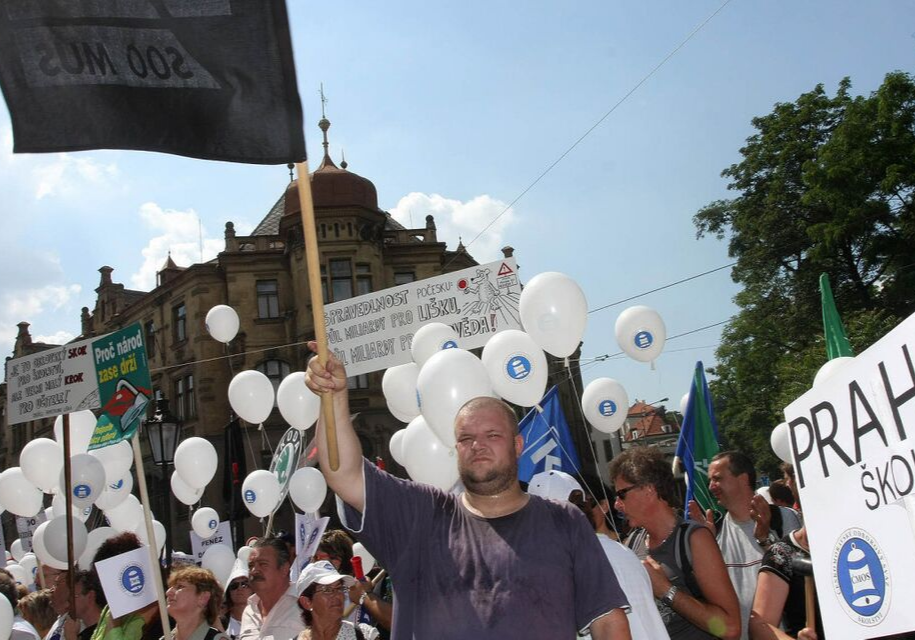
Czech school workers’ unions have declared strike alert over their dissatisfaction with next year’s pay increase offered to them by the state, union leader Frantisek Dobsik said today, while Education Minister Robert Plaga (ANO) called the unions’ reaction destructive. The unions demanded a 15% increase in teachers’ pay. They eventually lowered their demand to a 10% increase on condition that all additional money be added to teachers’ base pay, while the education ministry proposed the monthly base wage of all teachers be raised by 2,250 CZK, and monthly bonuses worth an average 1,400 CZK for a teacher. Teachers’ wages are raised by a government regulation. The cabinet is to discuss the relevant draft regulation for 2020 soon. The trade unions will decide on a strike on the basis of the government’s decision on this directive. The cabinet previously promised to gradually raise teachers’ wages so that they reach an average 45,000 CZK in 2021, which is 150 percent of the sum they earned in 2017. The unions, however, demanded a steeper increase.
Hundreds of restaurants from the Czech Republic have started to offer unsold food in mobile apps, where everyone can order them with a discount. According to the Save Food Organization, about 27,000 tons are thrown away every year, even though it is edible. “If I want to buy some food, it’s simple. I will click for an offer, such as a Dutch schnitzel with boiled potatoes in butter”, shows the founder of the application Nesnězeno, Jakub Henni, about how to order the remaining food from a restaurant in Prague via mobile phone. “I already have a card, so I just click ‘confirm and pay’, and then I have the food purchased” explains. You must pick the food directly at the restaurant. Nesnězeno is an app that has been running for less than a year, but more and more businesses are offering unsold food, 255 in total. The first ones were in Brno, and then more restaurants were gradually added in Olomouc, Ostrava, or Prague among others. For example, Kolkovna Olympia adds offers about twice a week. “We even have a regular customer there. One lady regularly takes two soups and two main meals”, says the manager Zuzana Dostálová. Restaurants’ interest in...
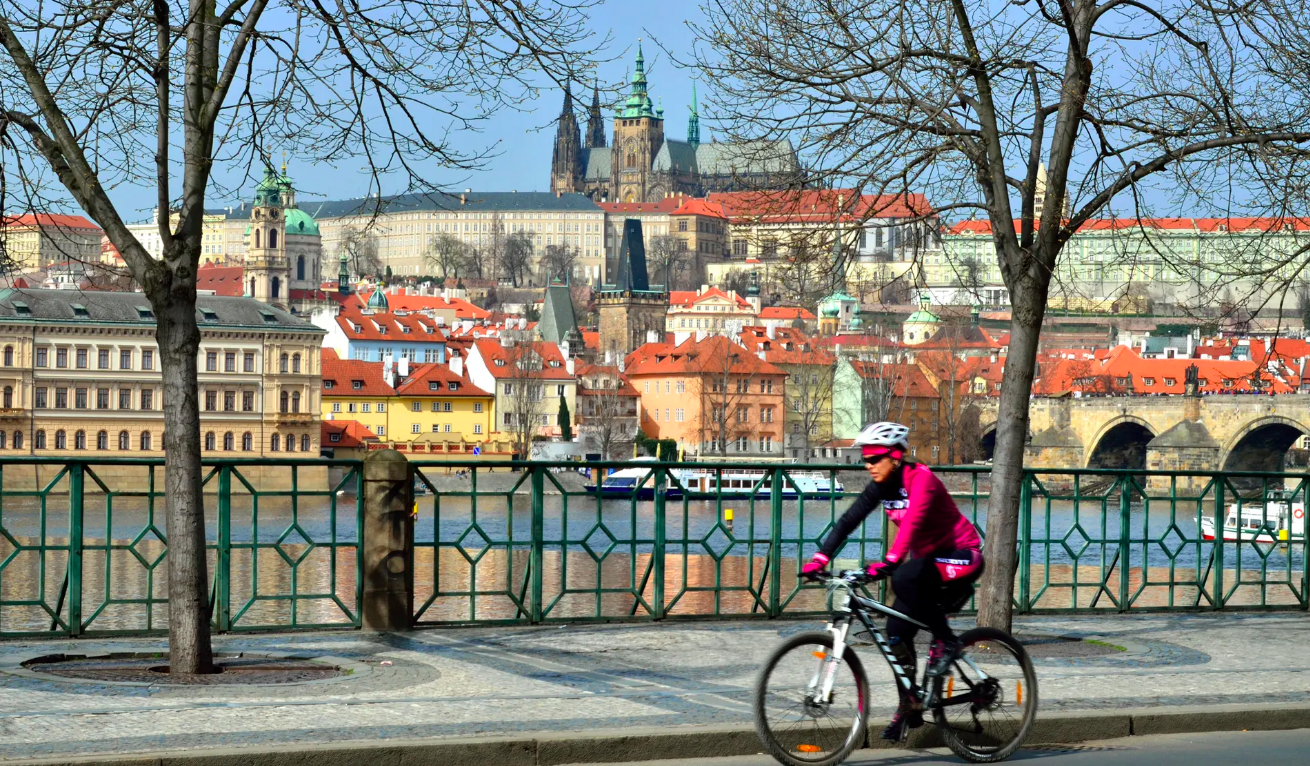
In the last eight years, there have been few new cycling routes in the capital. In older route sections, people on bicycles still encounter the same flaws. But the condition of Prague’s cycling infrastructure could improve in the foreseeable future. The number of cyclists in the metropolis is increasing and existing major routes require expansion. “We have earmarked 130 million CZK for the development of cycle paths. That’s a hundred million more than before. In the high level of preparation, the Vršovice Railway Promenade—between Vyšehrad and Skalka—will leave after the construction of the SŽDC railway corridor, ” says Pavel Polák, the Prague Cyclo-Coordinator. Polák worked in a similar position already during the time of Mayor Pavel Bém (ODS). He was dismissed in 2012 despite criticism of this decision by the professional public. Mayor Pavel perceives him as a competent person all the time. “As part of the renewal of the track between Prague and Kladno, a cycle path for Kladno cyclists will be created. Its eastern part will be located in Prague. These projects are also supported by the State Fund for Transport Infrastructure, ”explains Polák. Building routes using the original railway route is economically very advantageous. There are ten...
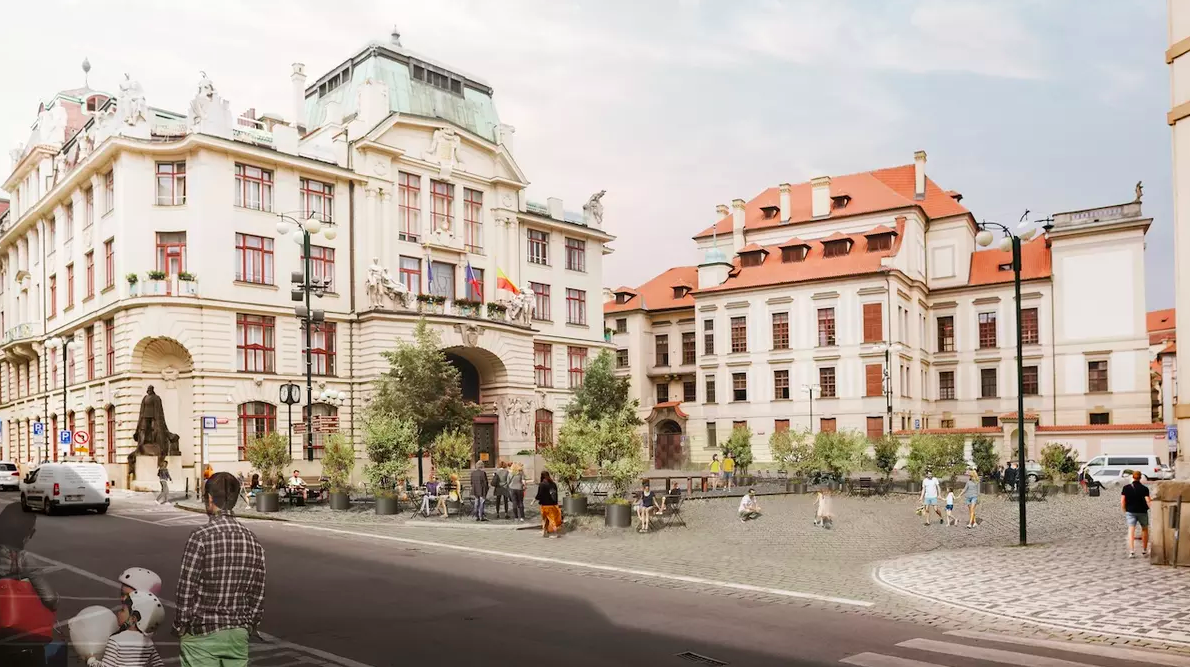
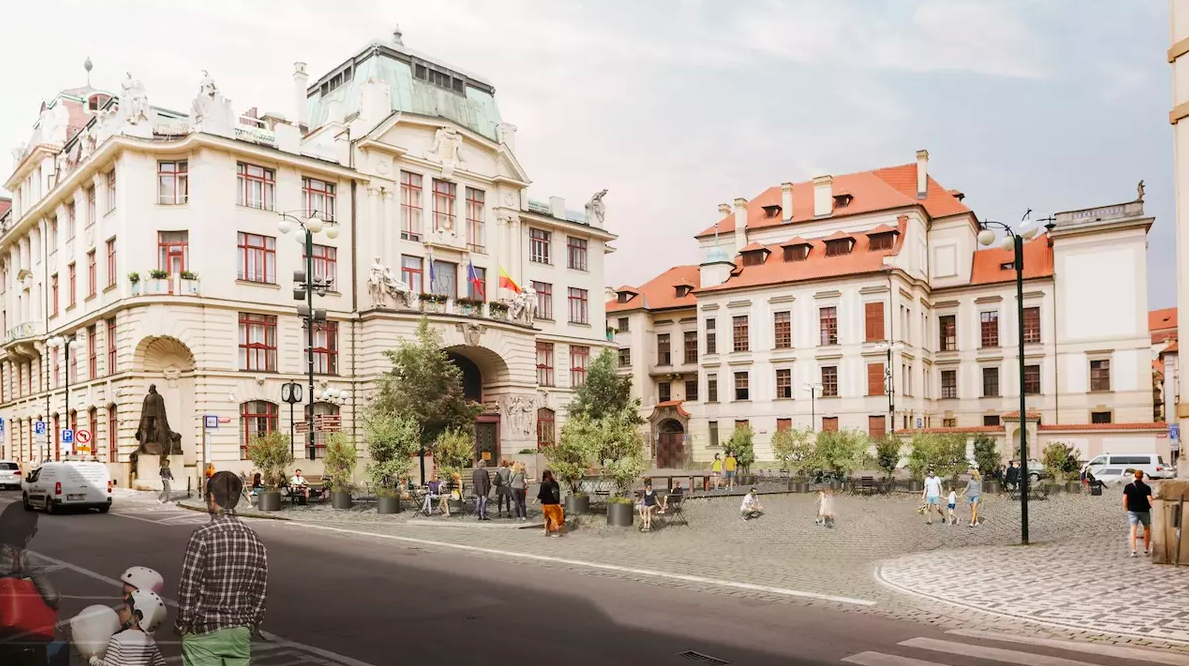
The Prague Institute of Planning and Development (IPR) has selected the team that will give Mariánské náměstí a new look. The designers will be Studio Xtopix in Prague. The temporary design will redirect traffic and transform nearly the entire square into a park. It will remain this way until the beginning of next year when the study is expected to be completed. “As well as City Hall, Mariánské náměstí is home to several important Prague institutions such as the Municipal and National libraries, but at present is rather poorly arranged and functions more as a parking lot than a square. I am pleased that the transformation will be handled by a multi-disciplinary team of architects, transportation engineers, water management specialists and landscape architects,” said First Deputy Mayor of Prague Petr Hlaváček. Until reconstruction commences, the square will temporarily be a pedestrian zone furnished with Prague City tables and chairs, art installations and other attractions. The winning studio will also be accepting input from residents about the new appearance of the square. From September 21st to October 1st, the IPR will place an information box at the square to collect suggestions and ideas on how the square should be transformed in the future....
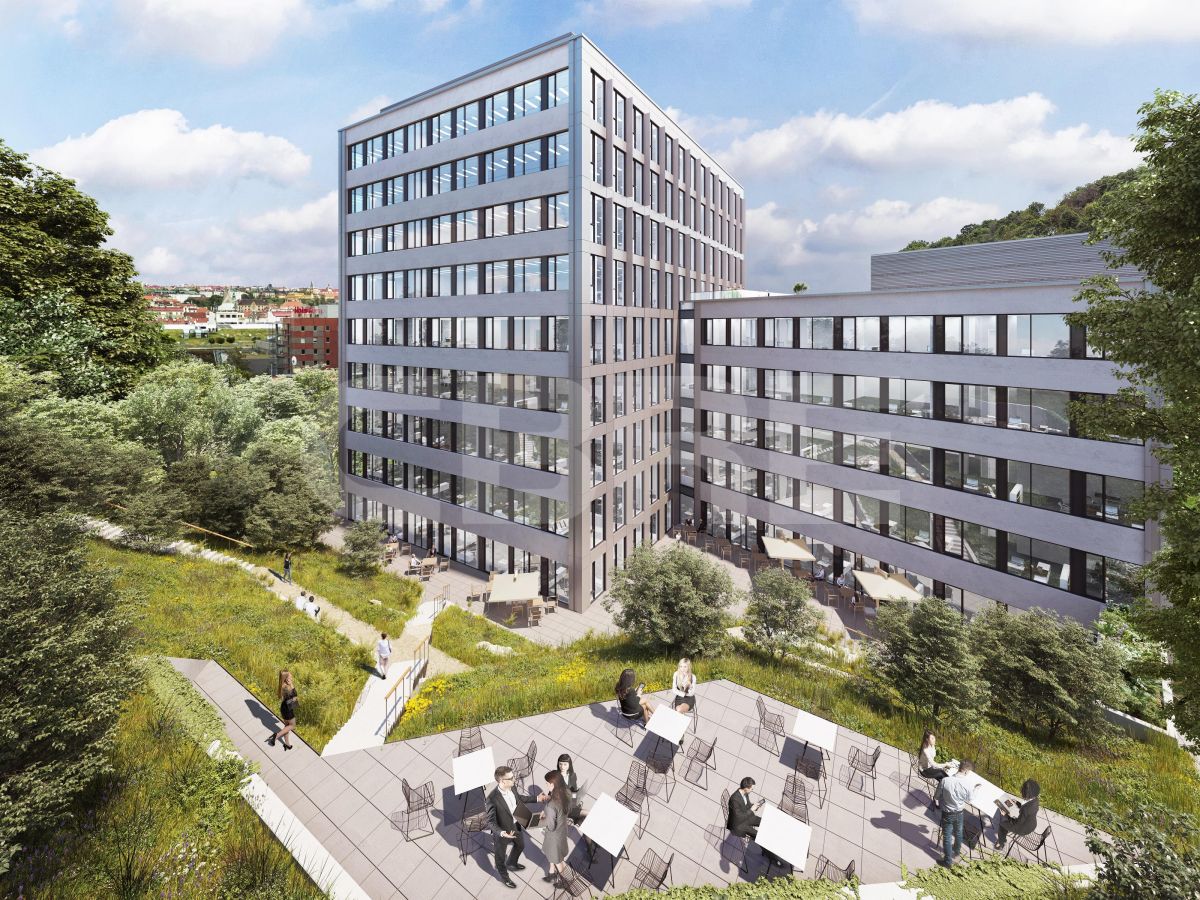
The number of office schemes built in Prague this year is the highest in the last five years: a total of 17 new buildings providing office space will have opened by the end of the year. The last time the market reached such a high figure was in 2014 – at the time, it was 18 schemes. In the meantime, the number was one-third lower, about 11 buildings on average. Out of the total 17 schemes to be commissioned this year (both completed and slated for completion by the end of the year), six are refurbishment projects and 11 are completely new builds. Again, this is the highest figure in recent years, and again, the last year when there were more new buildings completed was 2014, with 12 schemes. Karlín and Smíchov remain firm favourites The highest number of office schemes – three each – are currently being completed in Prague 5 (ČSOB HQ. II in Radlice, SmichOFF and Green Point near Anděl), Prague 7 (Centrum Stromovka in Letná, Argentinská Office Building and Riveroff Office House in Holešovice) and Prague 8 (DOCK IN THREE in Libeň, Rustonka R3 and Praga Studios in Karlín). With the exception of one project, these are...
We’re sorry to be the bearer of bad news but it’s now official – summer is sadly over for another year. Autumn has officially started today (September 23) at 9.50 am on the Peninsula, as reported by the National Astronomical Observatory, which depends on the National Geographic Institute and adds that it will last 89 days and 20 hours, until December 22 begins winter. According to the Observatory, throughout the autumn Mars will be visible at dawn and after sunset, Venus, Saturn and Jupiter will be seen. In addition, on November 11 there will be a transit of Mercury ahead of the Sun that can be seen in America, Africa, and Europe and, also from Spain. This transit did not take place since May 9, 2016, and after this November 11, it will not be repeated until November 13, 2032. Transits are the apparent passage of a planet ahead of the surface of the sun. From a planet, according to the IGN, you can only see the transits of the innermost planets to it in the solar system. Earth observers can see the transits of Mercury about thirteen times per century and those of Venus, about thirteen times per thousand years. On November 11 it will be visible in...
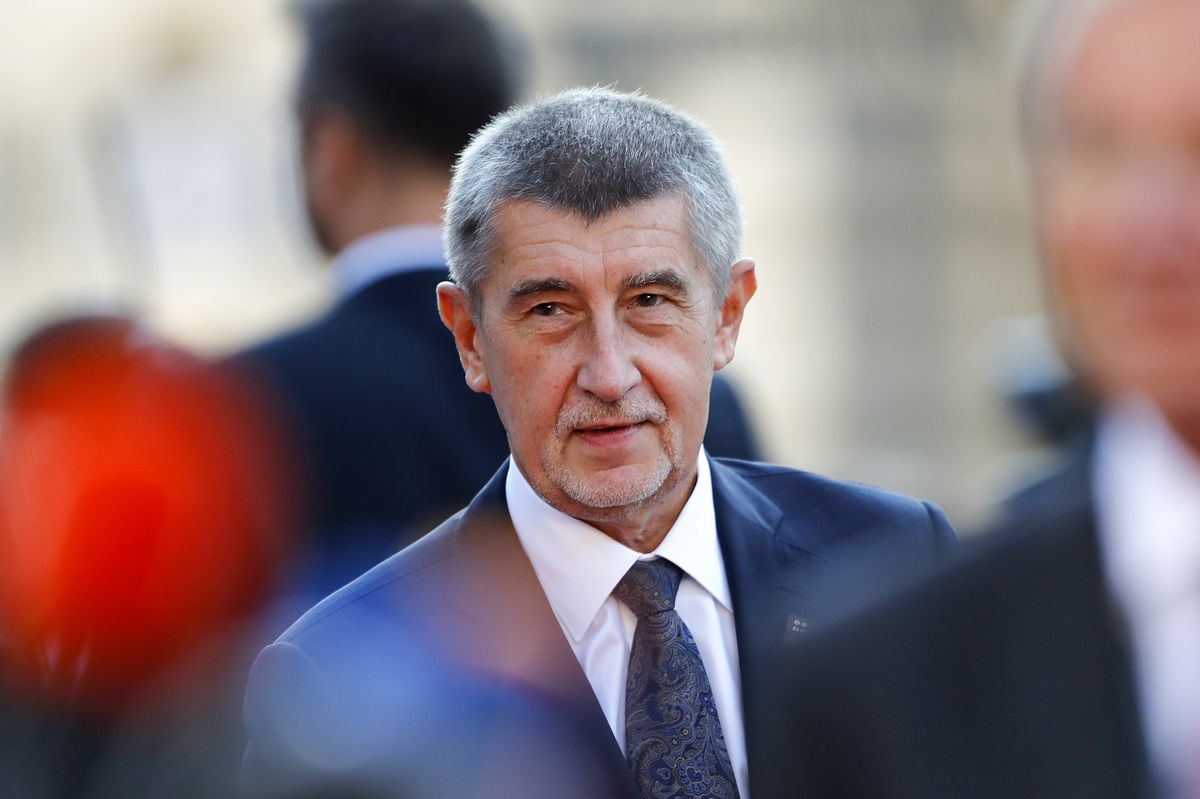
Czech Prime Minister Andrej Babis will attend in New York this week the United Nations General Assembly. The Czech prime minister said he had a meeting scheduled with Ukrainian President Volodymyr Zelensky on the UN sidelines to discuss bilateral relations. The annual event opens on Tuesday. The Czech government said Babis would address the gathering on Wednesday as a stand-in for President Milos Zeman. The assembly will also be attended by Japan’s new foreign minister, Toshimitsu Motegi, who will be in New York from September 22-28. He said a meeting with his South Korean counterpart was not planned. Ties between the two neighbors soured this year over wartime forced labor. Trade wars, migration, energy supplies, climate change and the eradication of poverty underpin the basic themes of the 193-member General Assembly agenda. The White House said U.S. President Donald Trump on Monday will host a meeting on the Global Call to Protect Religious Freedom and is not scheduled to attend the climate summit. Trump has announced that the United States was ending participation in the Paris Agreement. However, many U.S. states, municipalities, and businesses are continuing to abide by the Paris accord. On Tuesday, Guterres and the president of the 74th session...
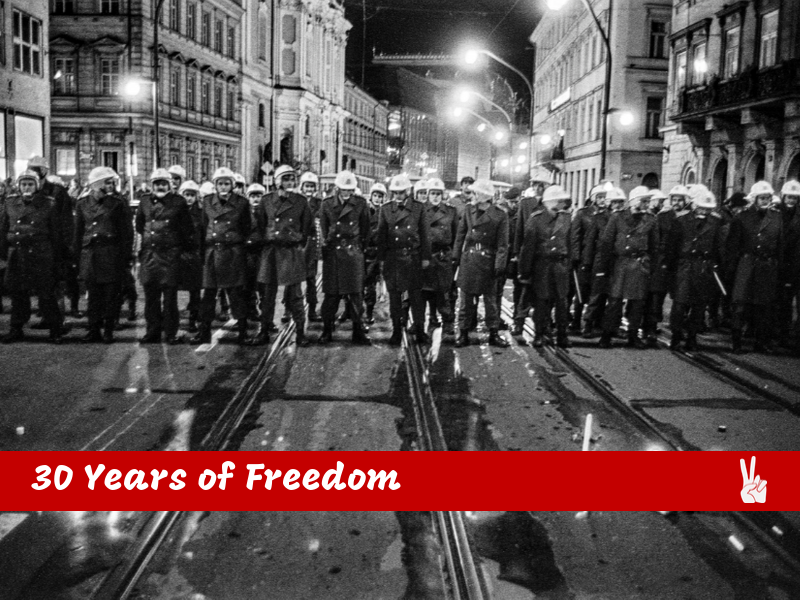
A photography exhibition bringing to life some of the 1989‘s most dramatic moments. The pictures capture not only the Velvet Revolution but also what lead to it. They are also showcased pictures taken on the street of Berlin and Bucharest. Opening time: daily 11:00 – 19:00 Admission fee: adults CZK150 students under 26 years CZK70 seniors over 65 years CZK70 a family ticket (2 adults + 2 children) CZK350 children younger 10 years old for free Address: Old Town Hall – Cloisters and Knights’ Hall, Staroměstské náměstí 1. About Jan Šibík Jan Šibík is one of the Czech renowned documentary photographers. He was born on April 15th, 1963. At the Czech competition of news photography, he won 40 awards in a few categories, including the main award for the photography of the year. He won three awards at the Fuji Press Photographer, including the main awards in 1997. He has also received the first prize from the city of Pilsen for the extraordinary support of democracy and human rights. In 2007 he was awarded the UNHCR award for “the photography or series of photographies, which are showing the problems of refugees in the best possible way”. He organized the humanitarian...
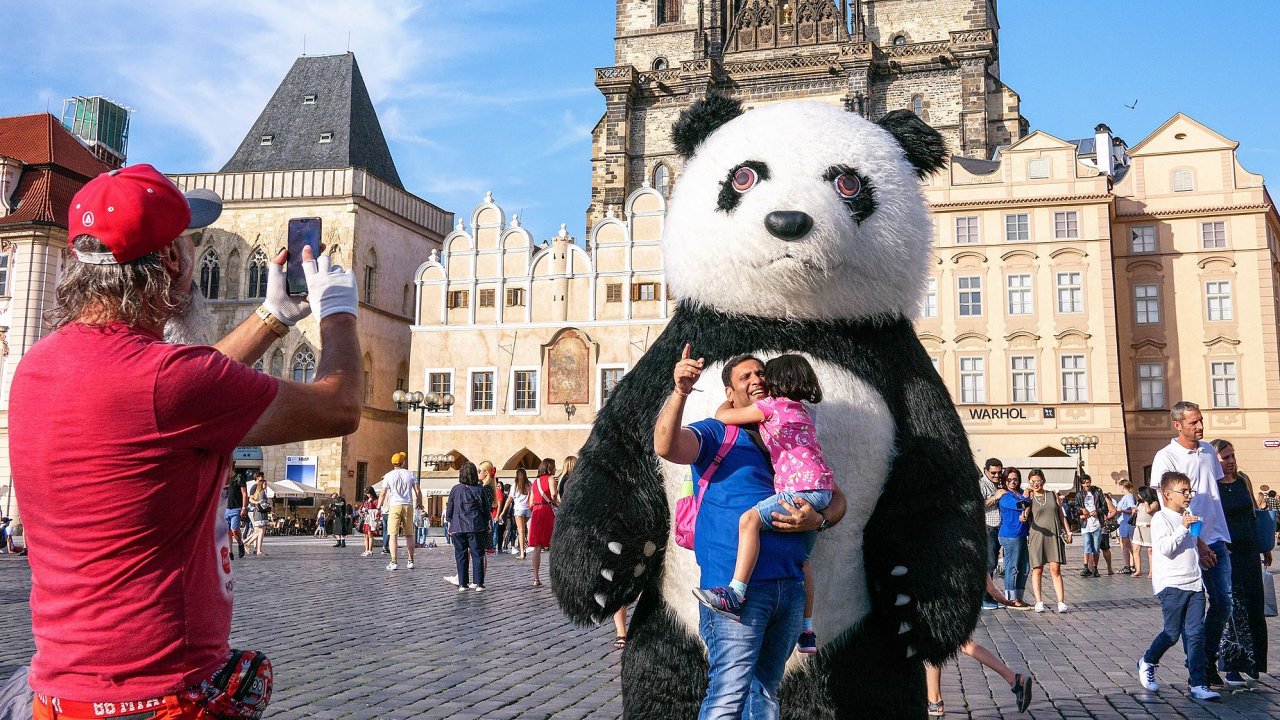
"Street artists" wearing enormous animal costumes will no longer be able to perform in the center of Prague.
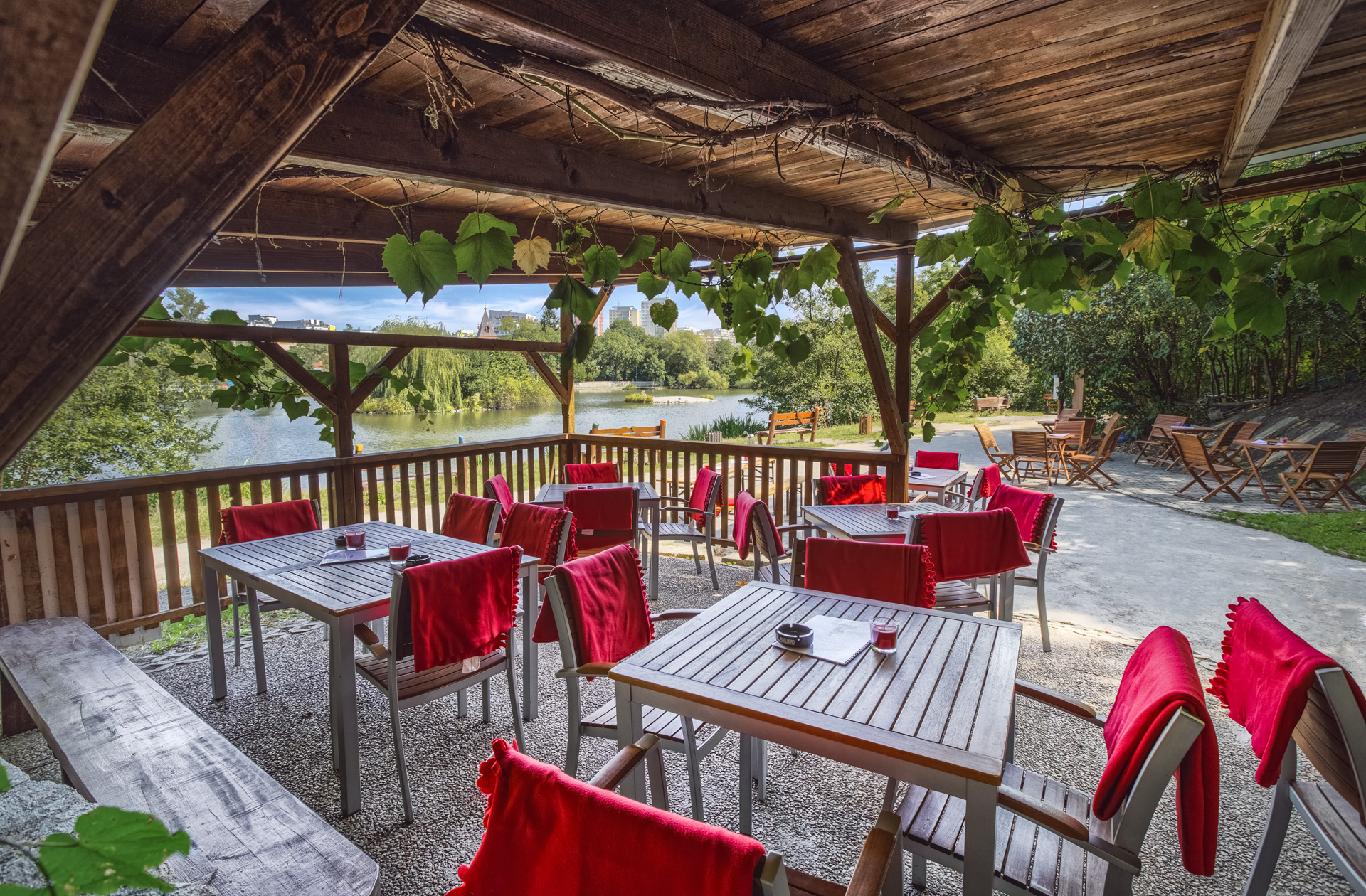
This is a crazy special treat. Hamerský sklípek used to be known under the name of “Fajna ďura” which is actually a Northern Moravian language (not used so much in Prague) and the name of this place means literally “nice den”. And moreover, this place looks somehow like a South Moravian wine cellar. And it is a nice den. At this place, I like not only sitting by the pond and looking at the islands and ducks and herons and coots and all the green or white, as you can enjoy this place both in summer and in winter, I also like the way you get here a lot. I feel amazed by the surroundings of this quiet place as there is a tram terminal station in an industrial area about 500m from here in one direction, and a big train yard and a sports area in other directions, and you still have no idea and you feel like you are in the middle of nowhere. (Unless you look a bit to the right where the prefab houses are visible behind the cute little church.) Hamerský sklípek is actually a wine cellar (which is the meaning of the Czech word...
Brownfields belong to the major urban problems in Czechia. These derelict areas are characterized by decayed, abandoned buildings and sometimes by contaminated land. Now Prague authorities are aiming to give these areas a new lease of life in an attempt to ease an acute housing shortage, create jobs and attract investment in projects. Brownfields are located in places with already existing public transport and are connected to other infrastructure. For the city, support for private construction on brownfields is the best solution to the current housing crisis, according to Central Group. Unused “brownfield” sites in the center cover an estimated 940 hectares, the equivalent of 1,000 soccer fields. Proposed projects include converting an abandoned milk factory into shops and apartments, and turning part of a derelict train station into office and residential space. They include Smichov City, which last year received planning approval, and Rohansky ostrov, where the developer hopes to get planning within six months. And then: Skanska Property’s Malešice site where its former factory site will soon undergo construction to turn it into a neighborhood for 2,500 people. Another brownfield site in Malešice, near the Depo Hostivar metro station, is also moving forward. Czech developer Central Group has...
Within the European Mobility Days, the Car Free Day will take place on Saturday 21 September in four Prague locations. In the City centre on Mariánské náměstí in Prague 1 and in the districts of Kbely, Dolní Měcholupy, and Újezd. The motto of this year is “Walk with us”! The European Mobility Week 2019 program in Prague offers a range of events and accompanying activities. On Monday, September 16, there was the Day without Road Death – EDWARD. The purpose of the event was to make road users think about their traffic behaviour. On Tuesday there was a discussion on Micromobility as a transport solution in cities. Wednesday offered Traffic Education Day for Children. Thursday belonged to the discussion The Threat of MAMATAXI – aimed at parents who drive their kids to and from school. On Friday, September 20, the second year of the Educational Day without Barriers at the European House in Jungmannova Street was organized. This EUROPEAN MOBILITY WEEK puts the spotlight on safe walking and cycling and the benefits it can have for our health and environment. Active transport modes such as walking and cycling are emission-free. The motto of the European Mobility Week highlights walking this...
Don’t have an account? Register
Already have an account? Log In
How Would You Like to Promote Your Business? PR ArticleDisplay bannersVideo productionNewsletter adsJob ListingsInfluencer Marketing
Your Email
We will come back to you within 24 hours with our proporsal