Unemployment in the eurozone has dropped to a record low, at 6.5 percent in October, the EU’s Eurostat statistics office said Thursday. The reading — the lowest since Eurostat started compiling jobless figures in April 1998 — was an indicator that the economies of the 19 EU nations using the euro had bounced back after the Covid pandemic. The seasonally adjusted unemployment rate was markedly less than the 7.3 percent recorded a year ago. Data from the Czech Statistics Office indicates that unemployment in Czechia lay at 2.1 percent, compared to 2.2 percent in September. The country has had one of the lowest unemployment rates in the EU for several years now. Eurostat estimated that, for the entire 27-nation European Union, 12.95 million adults were unemployed in October — or 6.0 percent of the active population — with 10.87 million of them in the eurozone. While all OECD economies, with the exception of former EU member Britain, have recovered to their pre-pandemic size, global headwinds are stalling the recovery. The eurozone is likely to tip towards recession within weeks, according to the European Commission. Inflation is running hot, despite falling back in the latest reading on Wednesday, at 10 percent...
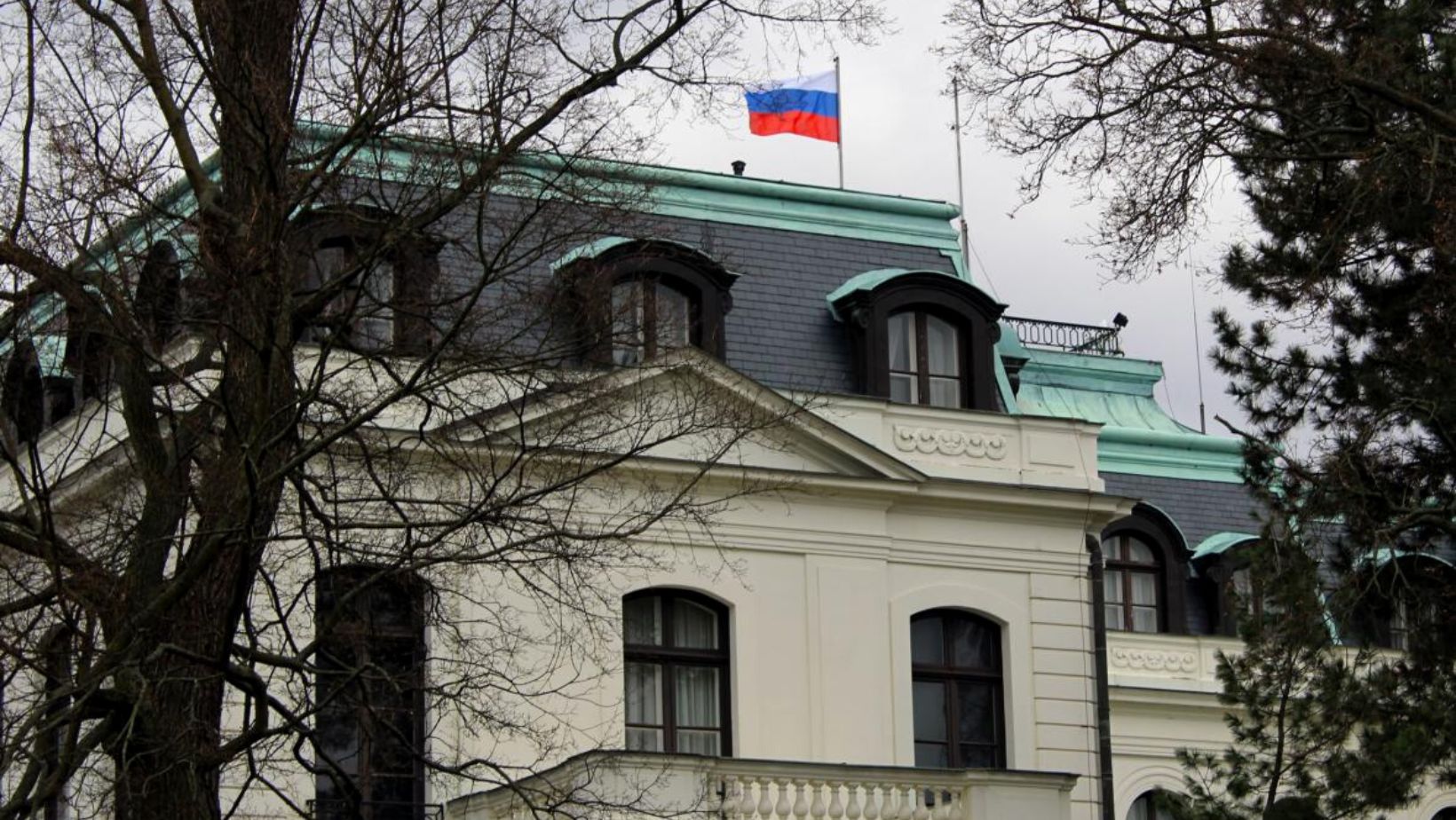
More than 500 people have signed a petition calling for electricity, water and heat supplies to be cut off to all Russian-owned buildings in Prague, including those used by Moscow’s diplomats, in response to Russia’s massive missile strikes on Ukrainian energy infrastructure. The signatures are being collected in an effort led by a Czech group called Arms for Ukraine. “Over the past several weeks, Ukrainian towns and villages have been hit by unprecedented missile attacks unleashed by Russia,” the group behind the campaign said. The Arms for Ukraine group added: “The main targets have been power plants, heating plants and water systems. This new phase of the war has had disastrous consequences for the daily lives of civilians. Apartments, schools and kindergartens, shops and factories, but also hospitals have been deprived of power and water.” The group called on “state and private energy distributors to give Russian diplomats in Prague a taste of their own medicine,” according to iDNES. “We demand that all Russian-owned buildings be disconnected from gas, water and electricity,” it said. “Let’s give the Russian embassy in Prague a taste of its own medicine,” one of the originators of the petition, Martin Ondráček, wrote on social media. “Let’s show Russian diplomats how it feels to be freezing at night, like...
Twelve out of the 21 candidates who registered for the presidential election by the November 8 deadline were dismissed after the interior ministry reviewed the registrations, leaving all the businessmen heavyweights out of the race. All the long-term political favourites remain, and four of the dismissed candidates said they will appeal the decision at the Supreme Administrative Court. The main reason for the dismissal resulted from the verification of the collected signatures in support of the nomination. Candidates were required to present signatures of at least 20 parliamentarians, 10 senators or 50,000 Czech citizens. Businessmen Karel Divis, Tomas Brezina and Karel Janecek presented more than 50,000 signatures from their compatriots, but the ministry rejected too many of these signatures taking the number of signatures on the candidates applications beneath the prescribed threshold. Karel Divis was short by mere 116 signatures after the ministry rejected the incomplete signature files and ran two tests on samples from the remaining 61,438 signatures which yielded 17.847% and 19.765% mistakes rates. “As per the law a particular amount of signatures was deducted from the overall number of valid signatures and the result of Mr. Karel Divis is 49,884”, said head of the electoral department at the interior...
Aisa International is an EU-based company in the Czech Republic that is relatively unique in the expatriate advice market. Aisa International provides investment advice through its discretionary management licenses and can act as a Securities Trader throughout the EU via passporting. All directors and owners of Aisa International have passed EU Security Traders exams, required for those that provide direct European investment advice. “We realised that psychology played a huge part in affecting outcomes, and bias was unavoidable within one group working to a common goal,” said Chris Lean, Investment Director, Aisa International. “Client psychology was entirely risk averse, feeling greater pain even where gains had previously outweighed losses.” Based on this philosophy, Aisa International built its plan using five key principles: Attitude to risk could not be a number in a chart, but a definition that a client could buy into. The key measurement was capacity for loss and risk aversion rather than gains. Portfolios had to be linked to measurements of risk and volatility, rather than targeting returns in short time periods. Portfolios have to be biased in content toward the geographic location of the client. Due diligence meant that active managers it utilised had to meet certain...
The real wages of the people in the Czech Republic are set to drop by at least 8.3% by the end of 2022 as blistering inflation continues to eat into the income of the citizens. The recent figures for October showed a 15.1% rise of prices year-on-year, far above the average of 10.6% for the Euro Area and 11.5% for the European Union. The few European countries that managed to reach figures above these records are Poland, Hungary and the Baltic countries that had the worse inflation records for ten months of 2022. Prices in the Czech Republic have slowed down for the first time in two years as the government has taken some actions to support households amid high and rising energy prices. A slowdown of inflation came primarily in the form of energy and food prices as core inflation continues to rise by 1.2% month-on-moth, beating the forecasts of analysts. Prices are expected to continue to slow down in November and December amid government measures to stabilise energy prices, commented Martin Marsovsky, chief manager of Finmex Academy. On the other hand, wages for most of the sectors are rising too slowly to catch up with inflation. So, real wages...
The Czech Republic, Romania and Hungary face the risk of exchange-rate crises over the next one year as fiscal and external challenges mount, according to Nomura Holdings Inc. The warning is based on analysis of eight indicators including FX reserves import cover, real short-term interest rates, as well as fiscal and current account measures, according to Nomura’s Damocles Index which assessed 32 emerging markets’ vulnerability to a currency crisis. Egypt, Sri Lanka, Turkey and Pakistan have already experienced crises but are not yet out of the woods, Nomura analysts Rob Subbaraman and Si Ying Toh wrote in a report Monday. Hungary’s forint is among the worst-performing emerging market currencies this year after a hold up in recovery funding from the European Union. Currencies of Romania and the Czech Republic have also declined more than 8% against the dollar. Vulnerability of emerging market currencies is now at the highest in more than two decades and gives an “ominous warning” of growing broad-based risks, the report said.
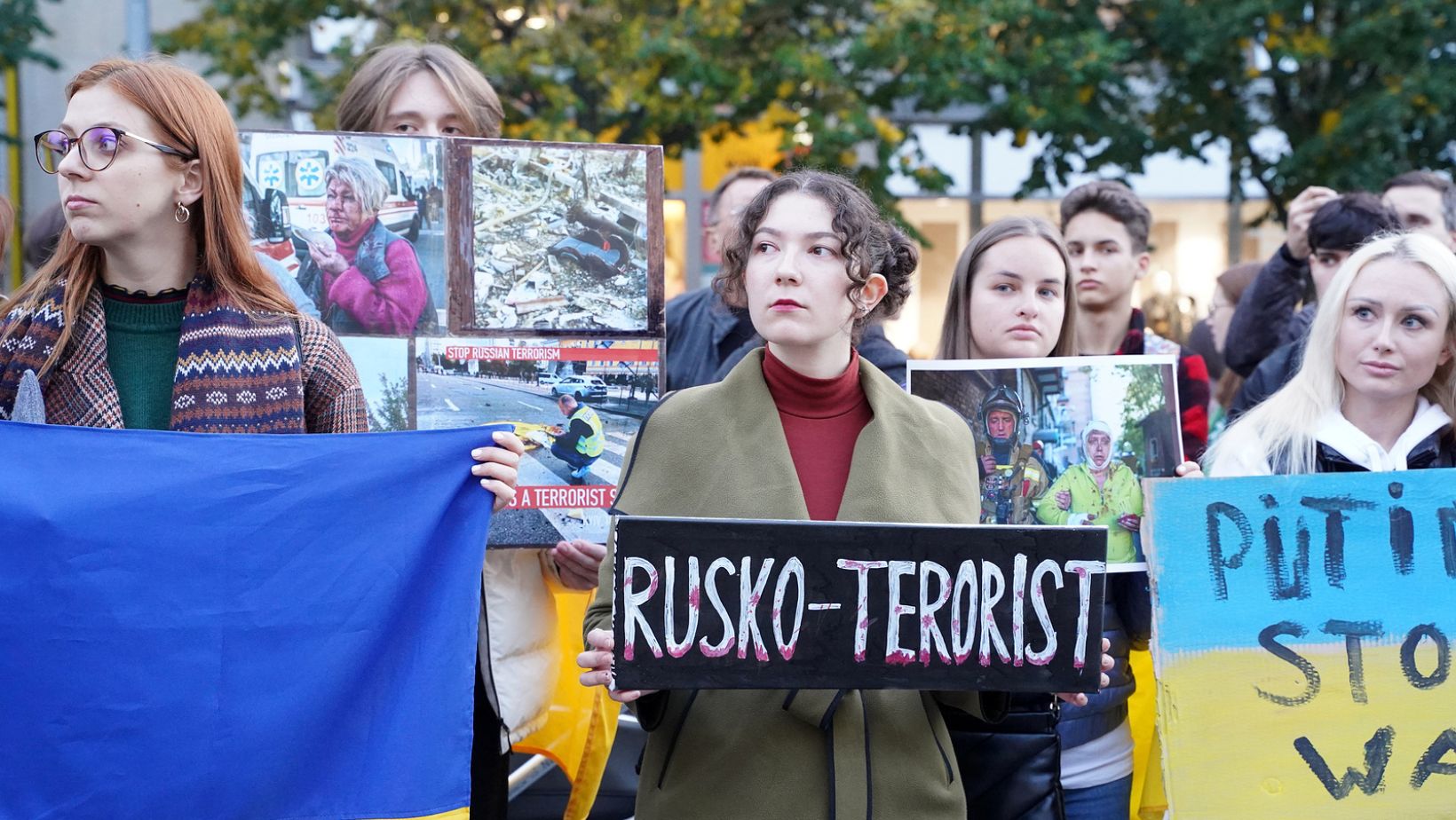
Czech lower house lawmakers approved a resolution on Tuesday to designate “the current Russian regime as terrorist”. They condemned attacks on Ukraine’s infrastructure and refusing to recognise Russia’s claims to have annexed regions of eastern and southern Ukraine. The vote was taken before a report of a blast in NATO member Poland. Western allies said they were investigating but could not confirm a report it resulted from stray Russian missiles. Russia’s defence ministry denied Russian weapons were involved. “If someone behaves like a terrorist, he is a terrorist,” commented TOP 09 party spokesman Jan Jakob on the decision. CTK news agency reported 129 of 156 lawmakers present supported the resolution. Ukraine’s parliament chief Russian Stefanchuk thanked the Czech house after the vote. The Czech Republic has been a strong backer of Ukraine in its fight against the invasion by Russian forces that began in February. “If Poland confirms that the missiles also hit its territory, this will be a further escalation by Russia,” Prime Minister Petr Fiala said on Twitter. “We stand firmly behind our EU and NATO ally.” In the United States, senators introduced legislation calling on the US Congress to do the same and add Russia to its...
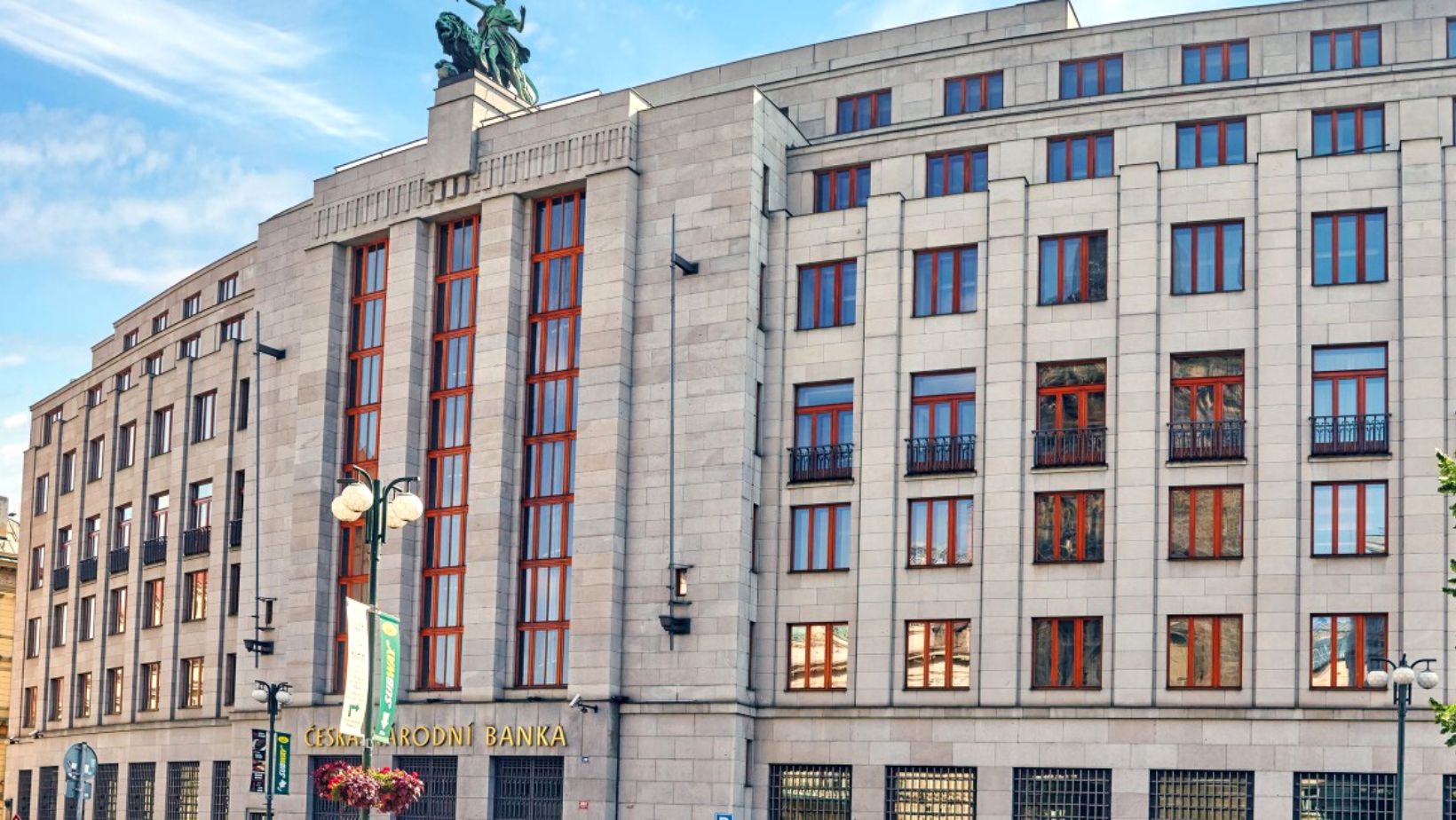
Czech central bank Governor Ales Michl said on Monday the state budget deficit needed to shrink and nominal wages should not rise too quickly next year, as the bank seeks to rein in inflation pressures. “For rate stability, we need two additional things that will cut the circulation of money in the economy, meaning inflation,” Michl wrote in a weekly column for the Mlada Fronta Dnes newspaper. He said results, not just words, were needed on the budget and nominal wages should not grow “more than, for example, 5%”. “Simply don’t rev the wage-inflation spiral,” he said. The central bank has held interest rates steady since June, after sharply raising them last year. Inflation hit 18.0% September, its highest level in three decades, but eased to 15.1% last month. Czech National Bank employees last week agreed to cancel previous contracts calling for wage rises corresponding to inflation. Czech real wages fell almost 10% in the second quarter, according to the latest data, and some central bankers see diminishing risks of a wage-inflation spiral. The central bank has forecast nominal wages to rise 6.3% in 2022 and 7.7% in 2023, but to fall 9.4% and 1.2%, respectively in real terms.
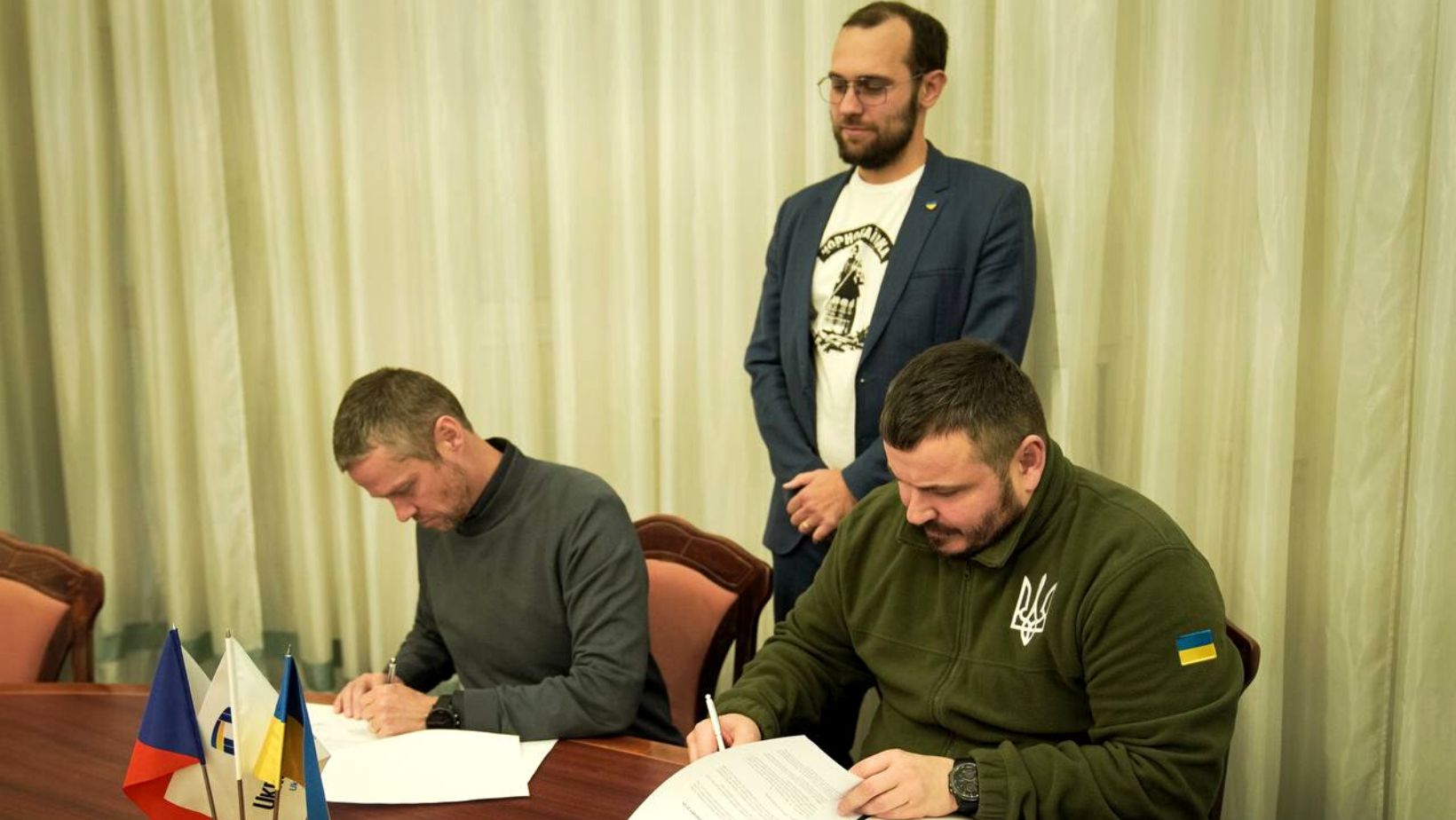
Ukraine’s state-owned military enterprise Ukroboronprom and the Intergovernmental Agency for Defense Cooperation (AMOS) under the Czech Ministry of Defense signed an agreement to establish a joint defense industrial cluster. The initiative would involve joint Ukrainian-Czech production of military vehicles, ammunition of various calibers, development of maintenance hubs, as well as technological cooperation through joint research centers. The plan would pool manufacturing capacities of Ukrainian and Czech defense companies, coupled with broader international financial support. “The Czech Republic will become a reliable industrial support for the Ukrainian defense and the defense industry,” said Tomáš Kopečný, Deputy Minister of Defense of the Czech Republic. As previously reported, Oleksii Reznikov, Minister of Defense of Ukraine, announced that the defense industry of Ukraine has established the production of 122-mm and 152-mm artillery shells. New artillery shells for Soviet-era systems have already been tested. Reznikov also emphasized that Ukraine currently does not plan to produce 155-mm ammunition for modern artillery systems. On November 5, Ukrainian President Volodymyr Zelenskyy thanked the Netherlands, the United States, and the Czech Republic for providing Kyiv with 90 T-72 main battle tanks.
The Czech economy is set to grow by 2.4 percent this year, although it is “currently going through a mild recession,” Finance Minister Zbyněk Stanjura (ODS, ECR) said on Wednesday. According to the ministry’s November macroeconomic forecast, the country’s gross domestic product (GDP) could increase by 2.4 percent in 2022, after growing by 4.2 percent year-on-year in the first half of the year. The estimate is 0.2 percent higher when compared to the ministry’s August projection. Growth should be driven by fixed capital investment and increased inventory accumulation, the ministry said. However, the forecast estimates that the economy will go through a slight recession in the second half of the year and early next year. In 2023, it will contract by 0.2 percent, the ministry has predicted. “GDP could be more or less stagnant in 2023. Households will continue to face the impact of high inflation next year, so their real consumption should fall slightly. Government consumption and gross fixed capital formation will continue to be pro-growth, but weaker year-on-year inventory accumulation will slow the economy noticeably,” the ministry said. Czech Finance Minister Zbynek Stanjura described ongoing high inflation driven by unprecedentedly high energy prices as the “main economic problem...
The energy company ČEZ will increase the price of heat from power plants and heating plants by an average of 20 percent next year. The increase in prices is mainly due to higher costs for allowances and production. According to the Heating Association, an organisation promoting the interests of Czech heating companies, the rise in prices will affect almost four million customers in the Czech Republic, which amounts to a little under half the country. ČEZ supplies approximately 7,500 customer points, including over 132,000 households, non-residential premises, and dozens of industrial enterprises, hospitals, schools, and other institutions. The increase is mainly due to rising costs, which include the price of fuel, materials, repairs, and carbon dioxide emission allowances. According to ČEZ, the cost of producing heat or buying it from suppliers accounts for approximately 80 percent of the price, and the total amount depends on the source of the heat and the fuel used to produce it. The increase for next year will average 123 crowns per month. For the owner of a standard 3+1 flat, this will mean an increase of about CZK 256 per month or CZK 3,074 more per year. Almost 9.5 percent of the company’s heat is produced from biomass, 8.5...
The Chamber of Deputies approved a bill which, if approved by the Senate and signed by the president, will impose a 60% windfall tax on the profits of energy companies and banks deemed excessive. The Czech government hopes the windfall tax for energy, oil and mining companies and banks will raise €3.5 billion next year. Revenues will go directly to the national budget and are expected to cover costs related to national caps on gas and electricity prices. “I have proposed a rate of 60% for the years 2023 to 2025,” Finance Minister Zbyněk Stanjura (ODS, ECR) told Czech lawmakers on Friday (4 November). Just a few hours after the Chamber of Deputies approved the text, EPH, one of the country’s largest energy companies, decided to move its subsidiary company EP Commodities, which specialises in trading in energy commodities, abroad. EPH, owned by Czech billionaire Daniel Křetinský, said in a press release that it agrees with the need to use part of the profits generated by energy companies to help people because of the emergency but believes the bill goes too far. Experts warn that the legislation could push other companies out of Czechia as the proposed windfall tax rate...
Don’t have an account? Register
Already have an account? Log In
How Would You Like to Promote Your Business? PR ArticleDisplay bannersVideo productionNewsletter adsJob ListingsInfluencer Marketing
Your Email
We will come back to you within 24 hours with our proporsal