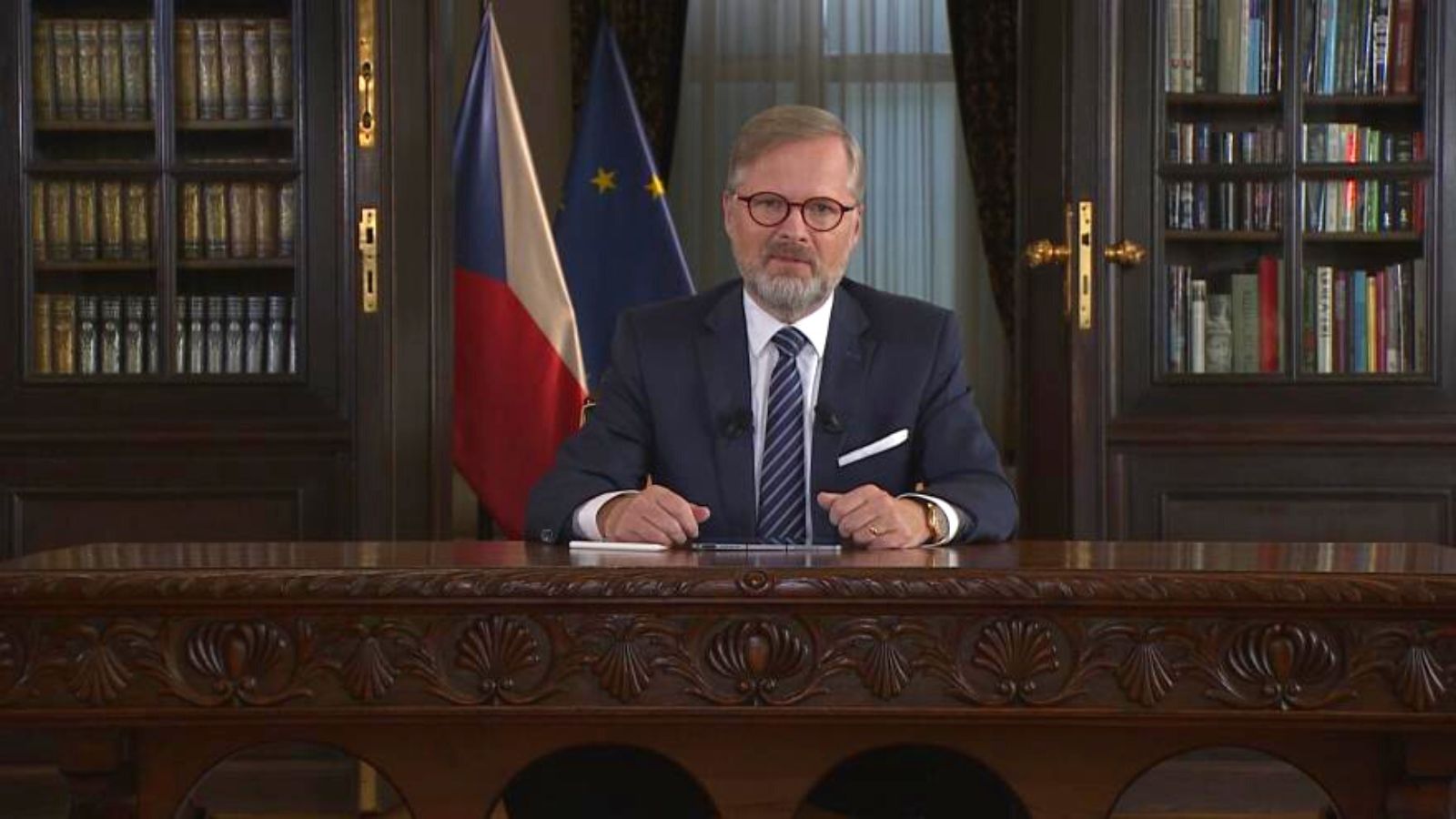
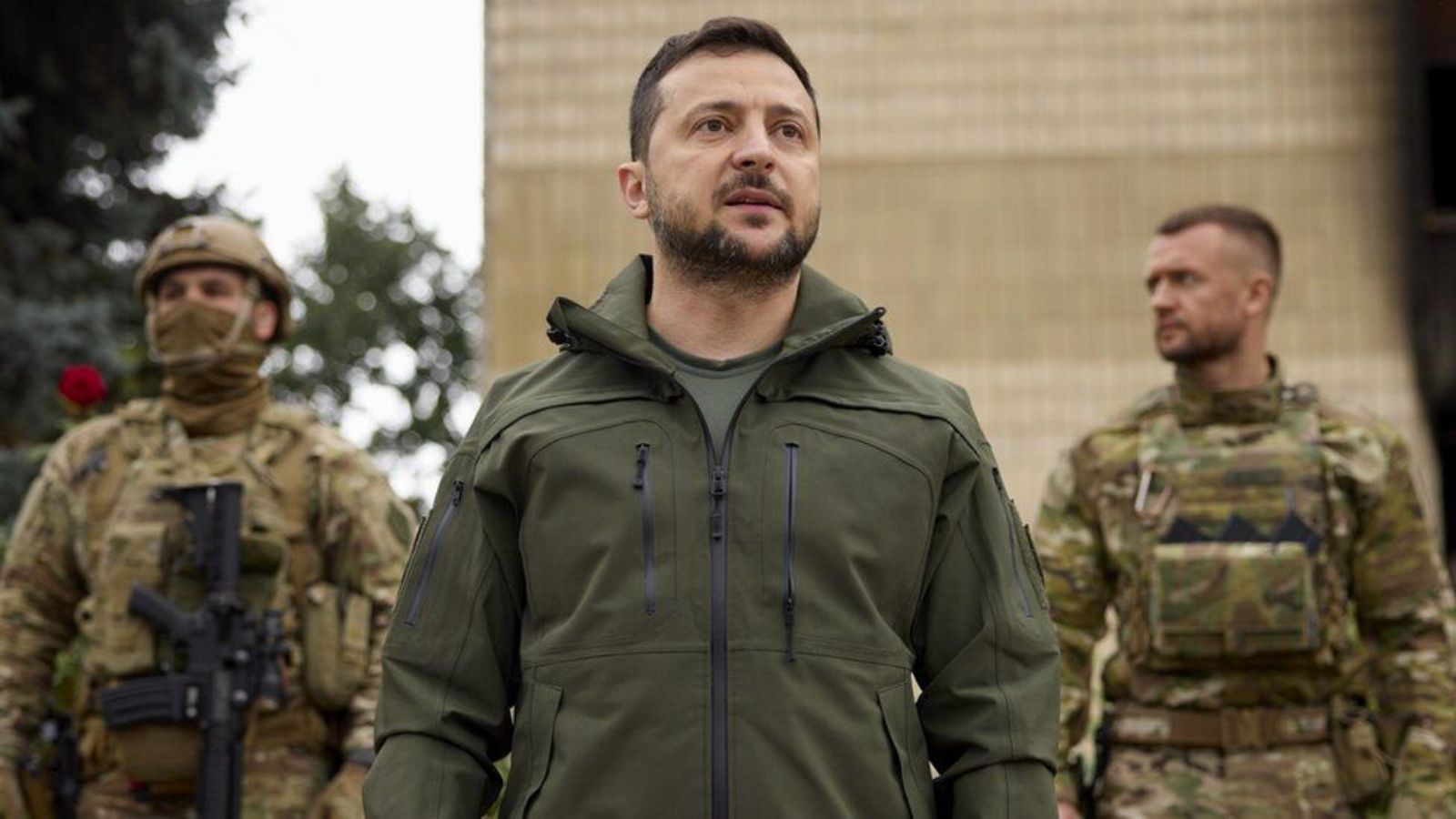
Russia’s war on Ukraine, like the terrorist attacks of September 2001, has been a turning point for the world, Prime Minister Petr Fiala told the Forum 2000 conference’s opening ceremony in Prague on Wednesday. This period will forever be associated with late Czech president Václav Havel, who co-founded the Forum 2000 conference, said Fiala. He added that Russia’s attack had renewed the alliance of Western democracies, with NATO and the EU expanding and becoming stronger, as a result, the Czech News Agency reported. Ukrainian President Volodymyr Zelenskyy joined the conference via video call. The Ukrainian president recalled the events of the Prague Spring and their violent suppression by the Warsaw Pact armies in August 1968, noting the West’s insufficient reaction at the time meant opporrtunities to liberate the Soviet bloc countries were squandered. Czechs recently commemorated the anniversary of the Soviet invasion by sending 1,968 Czech crowns to Ukraine in a symbolic gesture. During the speech, the president said that Ukraine still needs support from the West in its fight for freedom in the form of weapons, ammunition, money, and additional pressure on Russia. He proposed introducing more sanctions packages covering energy and finance, adding a special war crimes tribunal should also...
Food self-sufficiency is unrealistic for Czechia due to the world’s interconnectedness. Czechia, therefore, needs to focus on food security, such as maintaining adequate stocks of key foodstuffs, said Prime Minister Petr Fiala at the beginning of the agricultural fair Země živitelka in České Budějovice. According to Fiala, the effects of the war in Ukraine on Czech agriculture can only be estimated. The prices of inputs are increasing. At the same time, the demand from abroad is growing, and thus does the value of goods. In Fiala’s view, Czechia will have to deal with the risks arising from the conflict for a long time. Grain flows from Ukraine not only affect the European continent but also Africa, which especially depends on it. According to the prime minister, Czechia cannot be independent when it comes to food. The customer is not ready to pay for it, and products from abroad bring more choices and lower prices. “Customers vote by choosing goods,” Fiala said. Czechia is self-sufficient in only three food groups According to the latest data from the Czech Statistical Office for the year 2020, the Czech Republic was fully self-sufficient in only three food groups: beef, milk and milk products, and sugar....
A clear signal needs to be sent as European Union ministers debate tightening the issuance of visas for Russians, Czech Prime Minister Petr Fiala said on Monday, adding that suspending tourist visas would be a step in the right direction. Speaking after talks with German Chancellor Olaf Scholz and before EU foreign ministers discuss the issue in Prague on Tuesday and Wednesday, Fiala said a facilitation agreement on visas for Russians should be suspended, and that EU talks on the issue were continuing. Germany, Greece, Cyprus on the other hand, have been more reserved and oppose a strict travel ban against Russians. Last week German Chancellor Olaf Scholz said that it was Russian President Vladimir Putin’s war, and for that reason it was difficult for him to support a blanket travel ban that would also impact innocent people. A suspension of the visa agreement would complicate applications for short-term visas in the Schengen Area and make them more expensive. The diplomats also stated that a blanket travel ban, which would require unanimous support, isn’t expected. In the meantime, the policies of individual EU states won’t make much of a difference. Short-term tourist visas are valid in all 26 countries in the...
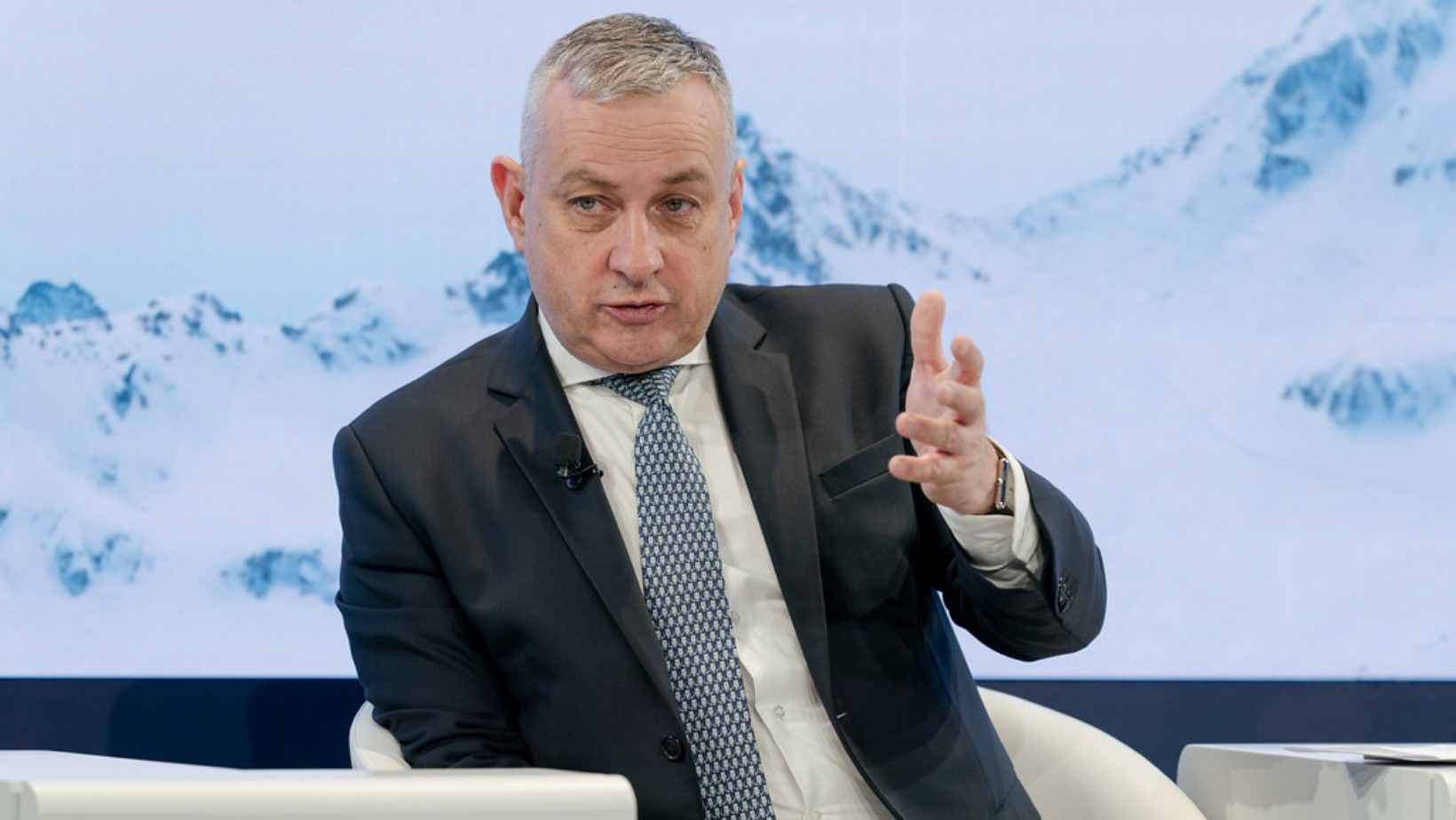
The Czech Republic will convene an extraordinary meeting of EU energy ministers on September 9, Reuters reported with reference to the Minister of Industry and Trade of the Czech Republic, Jozef Sikela. Prague announced its intention to convene an urgent meeting on August 26. Earlier, Prime Minister Petr Fiala on Twitter also said that the Czech Presidency of the EU would convene an extraordinary meeting of energy ministers. According to him, this meeting it is planned to consider specific emergency measures to address the energy situation. On August 28, Austrian Chancellor Karl Nehammer called to stop the madness that is happening in the energy market and work out a common solution for the EU. He also called for abandoning the principle of linking the price of gas to the cost of electricity. Fiala and German Chancellor Olaf Scholz agreed on Monday that a Europe-wide solution to the issue of energy prices had to be found. Mr. Scholz said that present electricity prices were unjust because the cost of production was not so high, adding that structural change was needed. Mr. Fiala reiterated that Czechia wished to be involved in the development of a European energy infrastructure and to acquire capacity in...
Despite the war with Ukraine and central banks printing trillions of euros in dollars in recent years, Czech President Miloš Zeman believes the primary cause of the energy crisis is “green fanaticism.” “Whether it’s called the Green Deal or whatever, I’m afraid. However, I won’t be here anymore when we find out where the green madness will take us. The abolition of cars with internal combustion engines will lead to the advent of far more demanding electromobility. The biggest consumers of electricity will be electric cars with a short range and a high price,” said Zeman while receiving Czech ambassadors at Prague Castle on Tuesday. According to Zeman, the solution to the energy crisis is not to succumb to the Green Deal and to pursue a sovereign foreign policy. He considers it crucial that issues affecting the country’s sovereignty continue to be voted on unanimously in the European Union. Zeman considers cooperation in the Visegrad Group beneficial. According to him, it is foolish to question it. The V4 prevented, for example, the mandatory introduction of migration quotas a few years ago. “I condemn the attacks coming from some in Brussels against Poland and Hungary,” he noted. “Let’s not play superpower. Let’s not look at the central issues of our foreign policy...
European Union citizens with at least temporary residence in the Czech Republic are eligible to vote in this year’s local elections on the 23rd and 24th of September. Czech local elections are held every four years, allowing residents to select regional municipal councillors. In Prague, voters will have the chance to elect the new mayor as well as city councillors and members of the city’s district councils. These elections have direct consequences on the day-to-day lives of Czech residents, directly influencing a host of local issues including decisions on transportation, urban development and tourism. Foreigners voting for the first time should register at the local municipal office of their permanent residence to be added to the voter list. Only adults aged 18 or above are eligible to vote. On election day, voters will need to bring an ID card or passport to the polling station. Completed ballots will be placed in an envelope provided by the electoral commission and dropped in a sealed ballot box. Czech municipal elections use a proportional electoral system, where each voter has as many votes as there are councillors – 65 in Prague – which can be distributed across candidates of all political parties. Councillors...
The Czech Republic, which holds the European Union’s rotating presidency, is considering whether to call an emergency energy summit for the bloc to tackle soaring power prices, including discussing price caps, a government minister said on Wednesday. The EU is facing a surge in energy prices to record highs, leaving governments scrambling to find ways to help households and businesses feeling the impact. “The market has gotten out of control to a certain extent, market volatility stops reacting to good news and only bad news accumulates and pushes prices up,” Czech Industry Minster Jozef Sikela was quoted by CTK news agency as saying on Wednesday. “It is a problem in all of Europe, and of course if you have a European market and European problem, then the easiest solution can be found on the European level.” Sikela said setting a maximum price on the European level would be one possible measure, and that the Czech Republic would support this if the EU decided to look at this. Europe is facing a sharp rise in power bills driven by sky-rocketing gas prices, as war in Ukraine and European sanctions on Russia heighten concerns over the security of gas supplies. The Czech...
By attacking Ukraine, Russia gained nothing and lost virtually everything, said Czech President Miloš Zeman, considered one of the Kremlin’s biggest EU friends before the war. Zeman made the comment on Tuesday at a meeting with Czech diplomats at Prague Castle. He said Russia had suffered economic, human, material and reputational losses since invading Ukraine. Putin attacked Ukraine due to NATO’s surrender in Afghanistan, Zeman said, citing the explanation offered by Israeli President Yitzhak Herzog. The Czech president told the diplomats that practically everybody in Czech politics believed the war in Ukraine was Russian aggression. He said he fully supported supplying arms to the Kyiv government and praised the welcoming of Ukrainian refugees to Czechia. The central European country has welcomed some 400,000 people to date. Zeman said he believed Czechia would contribute to the reconstruction of Ukraine but said a long war of attrition could be expected. The government has already stated its ambition to lead the reconstruction efforts and has established a channel for Czech companies to participate. Until the war in Ukraine forced him to change his position, Zeman was considered one of the Kremlin’s greatest friends in the European Union. Notably, he advised Ukrainians to take...
The Czech government will hand out state aid to ensure people do not spend more than 30% of their income on housing including energy amid soaring gas and electricity prices, Prime Minister Petr Fiala said on Wednesday. The contribution for housing will complement the 66 billion crowns the government aims to distribute in the form of a subsidised energy tariff over the 2022-2023 heating season, Fiala said. The government will also waive fees for subsidising renewable energy. “People will pay maximum 30% of their income on housing, including payments for water and energy,” Fiala told a news conference. “The government is prepared to cover all costs of housing above 30% income through a housing contribution.” The cap for spending on housing including energy will be 35% in the capital Prague, Fiala said. Energy has been among drivers of Czech inflation, which has been running at three-decade highs of 17.5% year-on-year in July. Fiala did not put any figure on the expected size of the aid to keep the costs under the cap. The government planned to run a fiscal deficit of 4.5% of gross domestic product before raising the central budget gap by 2 billion euros, or around 0.7% of...
To start with, Volodymyr Zelensky was careful not to blame Russians for a war Vladimir Putin started. Appealing to them and speaking in his native Russian, he asked: ‘Do the Russians want war?’ He called on them to rise up to make Putin listen. But this did not happen. Zelensky appears to have decided that they do, in fact, want war. So he has now said that western countries should ban all Russian citizens from entering their countries on the grounds that ‘the population picked this government and they’re not fighting it’. His foreign minister Dmytro Kuleba said Russians ‘must be deprived of the right to cross international borders until they learn to respect them’. His idea is gathering momentum with Lithuania, Latvia, Estonia, and the Czech Republic, who have already banned the issue of all kinds of visas to Russians. Other countries such as Belgium, Denmark, Malta, the Netherlands and Slovakia are refusing to give visas to most Russian citizens – with exceptions for family members, students and workers. Finland has called on the EU to adopt a common stance and stop granting Schengen visas immediately. Czech foreign minister Jan Lipavský is proposing an EU-wide travel ban on Russian passport...
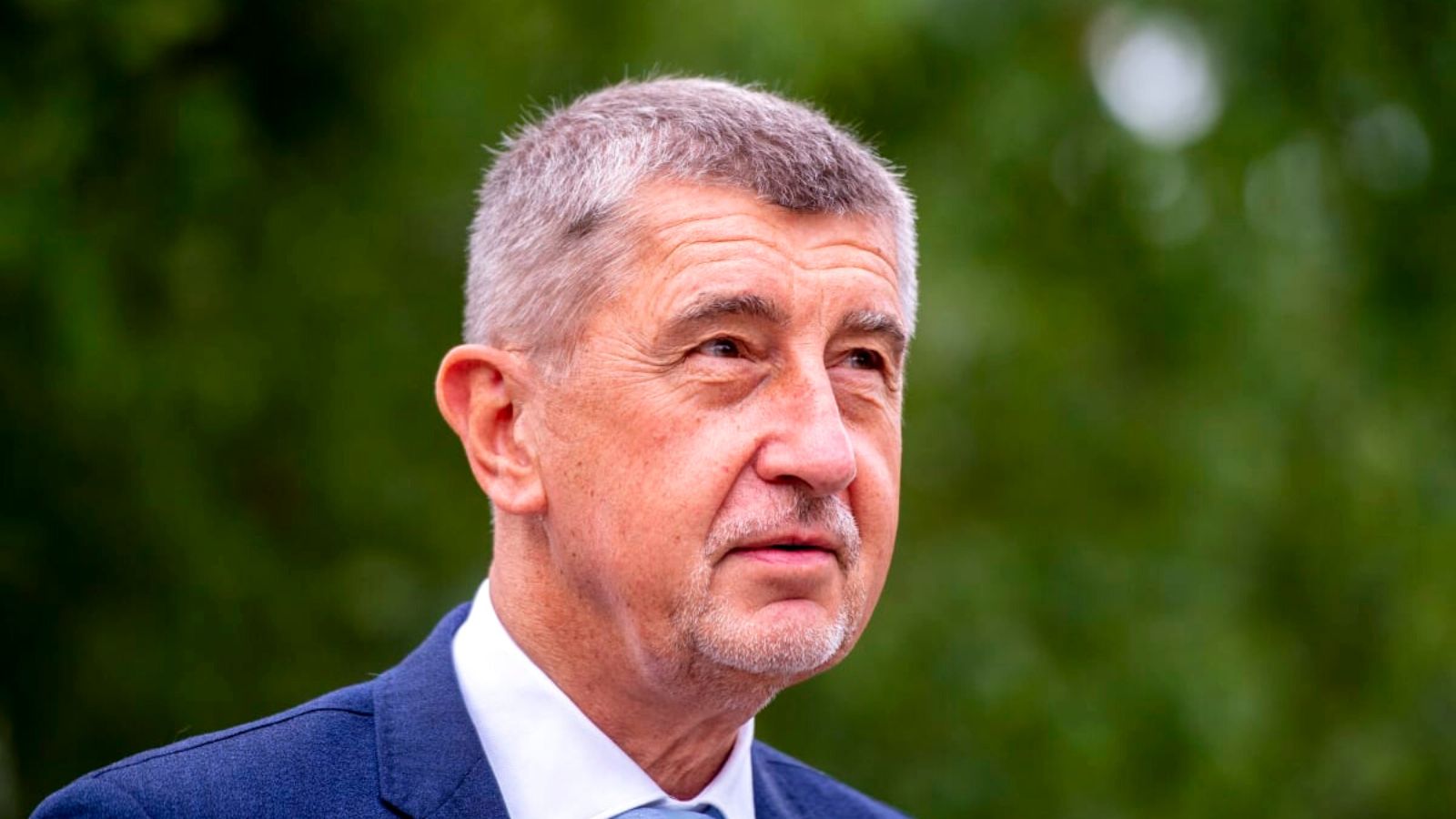
French prosecutors have opened an investigation into Czech billionaire and former Prime Minister Andrej Babiš, on suspicion of money laundering related to his purchase of villas in the south of France. France’s National Financial Prosecutor’s Office (PNF), which is responsible for scrutinizing serious economic and financial crime, launched its proceedings in February 2022, according to Le Monde, after the businessman was mentioned in the Pandora papers — a massive leak of documents that exposed how the rich and powerful use offshore companies to hide their wealth. According to the documents, the former Czech leader failed to disclose a series of shell companies used to buy a multimillion-euro French property. Babiš denied he had done anything wrong or illegal and said that the revelations were targeting his reelection campaign, which later failed. French investigators are now focusing on how Babiš acquired his €14 million property in the billionaire haven of Mougins, which was purchased via a Monaco-based company owned by an offshore entity in the U.S. The entire setup was allegedly hidden from French authorities and could constitute money laundering and a tax evasion scheme, Le Monde reported. Karel Hanzelka, a spokesman for Babiš’s group Agrofert, said that “all our transactions took place in a perfectly...
Unemployment in the Czech Republic rose to 3.3 percent in July from 3.1 percent in June. At the end of the seventh calendar month, over 240,000 people were looking for a job. On average, there are 0.8 applicants per vacant position in the Czech Republic. The Labor Office of the Czech Republic published the data on Monday, according to which the July increase in unemployment is an expected seasonal fluctuation. At the end of July, there were 240,706 applicants for employment in the records of employment offices. It was 9,397 more than in June and about 31,500 less than last July. At the end of this year’s first holiday month, there were 313,250 vacancies offered by employment offices. This is 6,150 fewer than there were available in June. This comes after pre-summer hiring in hospitality and tourist-focused jobs naturally slowed once the season started. In a year-on-year comparison, the number of vacant positions fell by almost 45,000. According to the Labor Office, the increased unemployment in July is due to slowed hiring during company-wide summer holidays as well as the arrival of school graduates into the labor market. “The development in the coming months will depend on the course of the war conflict in...
Subscribe for our daily news
Don’t have an account? Register
Already have an account? Log In
How Would You Like to Promote Your Business? PR ArticleDisplay bannersVideo productionNewsletter adsJob ListingsInfluencer Marketing
Your Email
We will come back to you within 24 hours with our proporsal