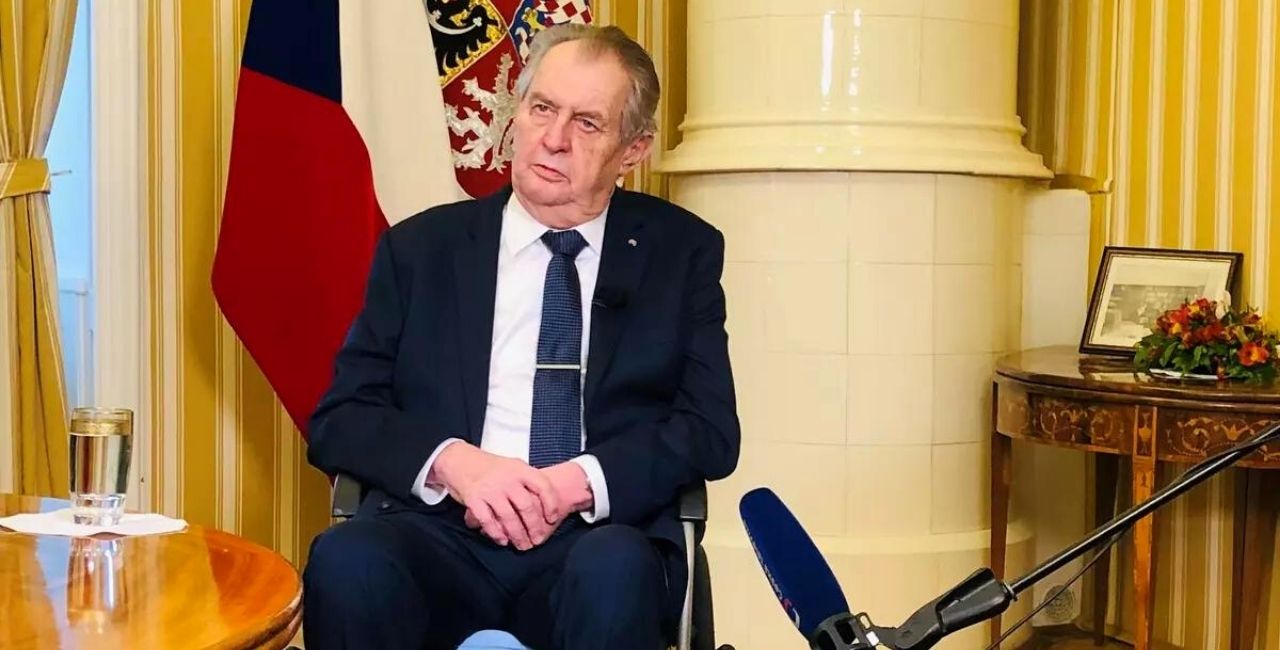
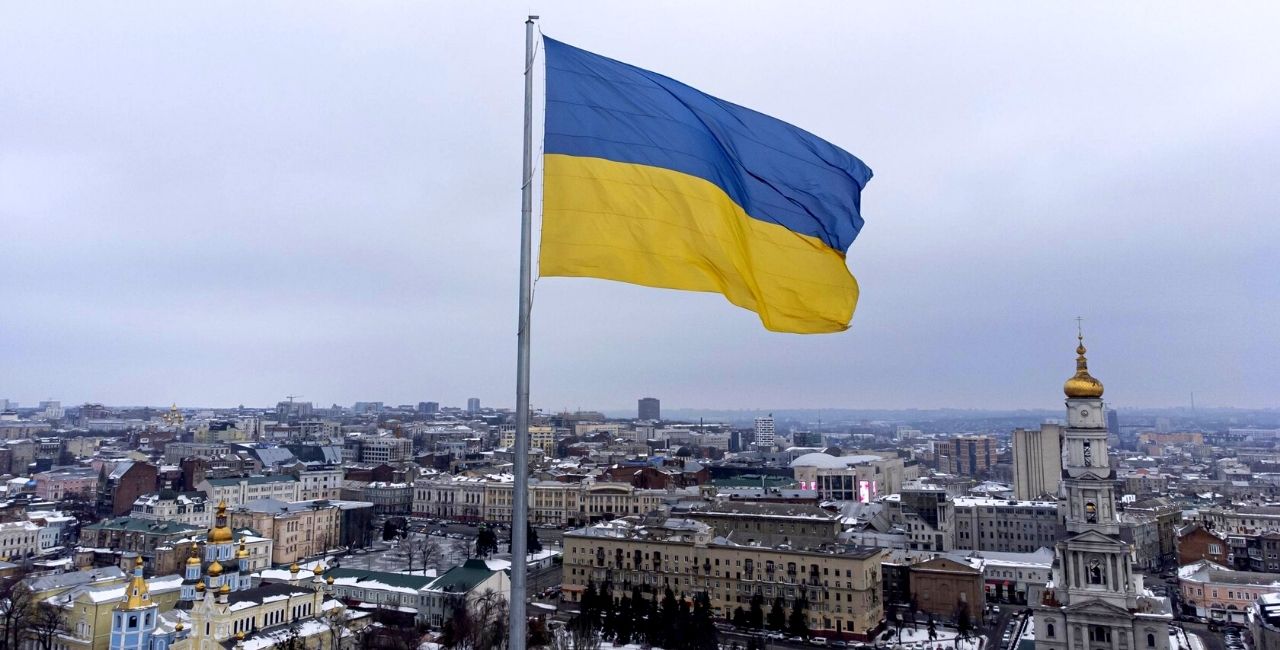
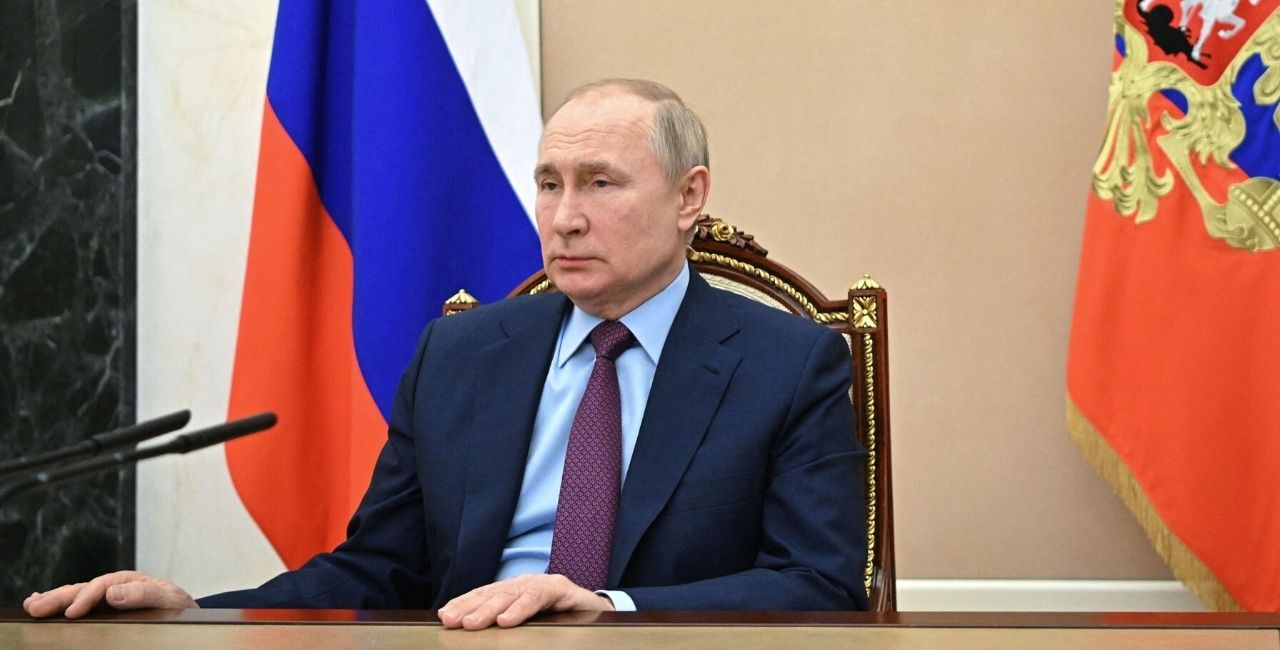
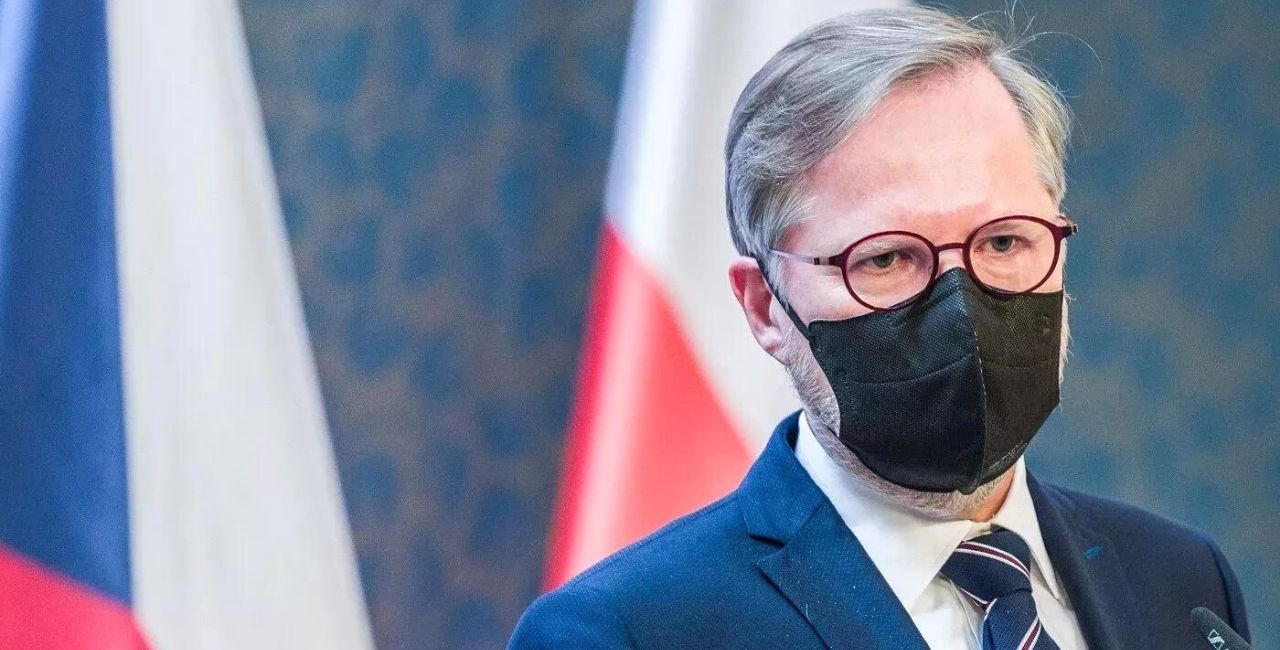
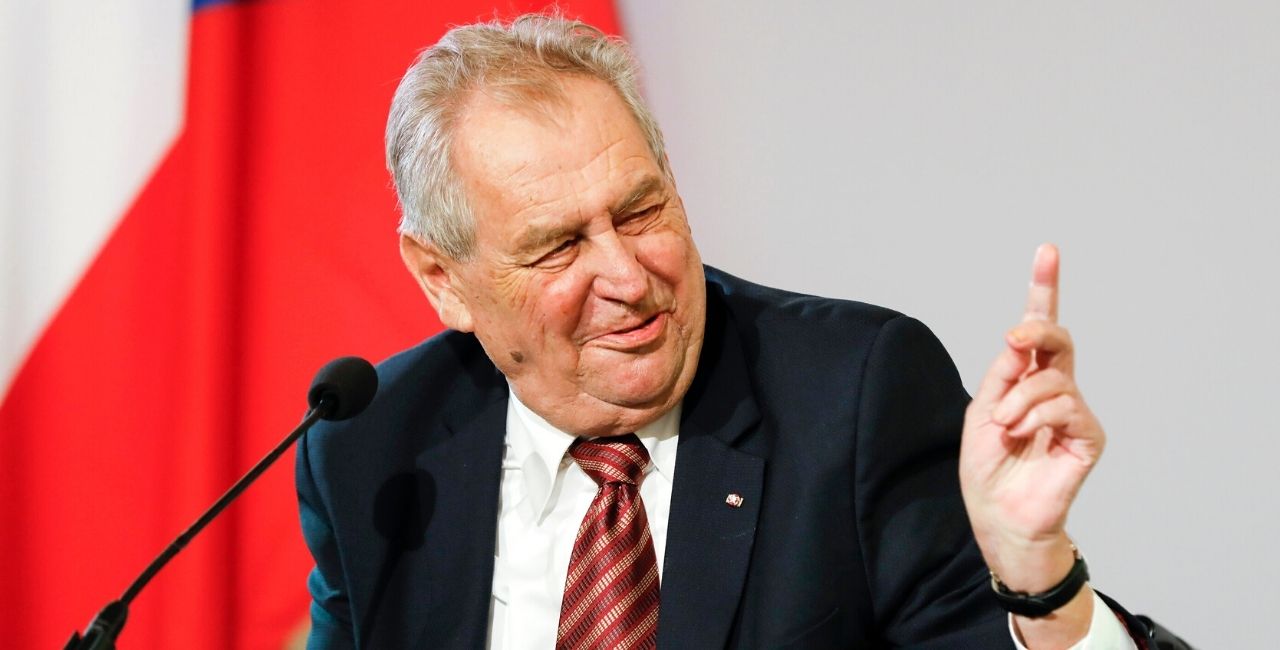
Czech President Miloš Zeman, who had in the past promoted warm relations with Moscow, said on Thursday Russia’s attack on Ukraine was a “crime against peace” and required a response through harsh sanctions including cutting the country from the SWIFT international payments system. “It is time to reach for much tougher sanctions than those originally planned, by which I mean above all a sanction in the area of the so-called SWIFT,” Zeman said in a speech. “It is needed to isolate a madman, not just defend against him by words, but by concrete measures.” Zeman also expressed support for Ukraine and its people. He recalled that he and Prime Minister Petr Fiala will attend the NATO summit on Friday. “I believe that the situation will calm down, not by a cowardly compromise, but by a decisive response against the aggressor,” he added. Přečtěte si přepis projevu prezidenta republiky 🇨🇿 Miloše Zemana k občanům České republiky: https://t.co/NwsozAzVLM pic.twitter.com/m2L6FRGd6g — Jiří Ovčáček (@PREZIDENTmluvci) February 24, 2022 Latest People gathered on Prague’s Wenceslas Square and at the Russian Embassy in the city on Thursday to express their support for Ukraine following the Russian attack. A large gathering is organized for 5 o’clock in...
The Czech Republic stands ready to rapidly deploy hundreds of soldiers where needed at NATO’s request, Seznam Zprávy news outlet reports. The Czech Ministry of Defence stated that the North Atlantic Alliance is constantly on standby with its collective Rapid Reaction Force, to which Czechia contributes units that change continuously at biannual intervals. The ministry confirmed that Czechia has its units ready in case of need. “By the end of June, Czechia has 180 anti-chemical specialists and about 400 members of the 4th Rapid Deployment Brigade on standby. However, their detachment is not a reaction to the current situation. The soldiers were already preparing for these tasks during the past year,” said Jakub Fajnor from the Ministry of Defence press department. Defence Minister Jana Černochová said on Monday that the deployment of Czech troops in Ukraine is now out of the question. Due to the need for a rapid response to the development of security threats, NATO created the Very High Readiness Joint Task Force (VJTF) a few years ago, which can intervene to help an allied country within a matter of hours. The force consists of approximately 5,000 soldiers at any given time, which support the air, naval and...
The Ministry of Foreign Affairs of the Czech Republic strongly condemns the decision of the Russian Federation to recognize the independence of the so-called Donetsk People’s Republic and Luhansk People’s Republic. “This is a clear violation of the UN Charter, the Minsk Agreements and the Budapest Memorandum of 1994. After the illegal occupation and annexation of Crimea in 2014, this is yet another step by which the Russian Federation has long trampled on the fundamental principles of international law and its own obligations regarding the territorial integrity and sovereignty of Ukraine,” states the official website. The recognition of the independence of the so-called people’s republics is another step in the escalation of the already tense situation and threatens the security of the whole of Europe. “The Czech Republic, together with its NATO and EU allies, supports international diplomatic efforts to avert aggression against Ukraine and preserve peace. The Czech Republic will respond in unity with its allies. We reaffirm our long-standing, principled support for the territorial integrity and sovereignty of Ukraine within its internationally recognized borders,” said minister Jan Lipavsky. “We call on the Russian Federation to reconsider its steps and return to the negotiating table in the interests of...
The Czech government is prepared for all development scenarios in Ukraine, including the interruption of energy supplies, said Prime Minister Petr Fiala (ODS) in a video posted on social media on Saturday. The solution to the situation, according to him, is not war, but even thoughtless concessions. From the side of Russia, he sees an effort to make the Czech Republic once again a weak and divided country, which he will be able to influence. The basic condition for dissuading Russia from aggression is to show unity and an uncompromising attitude. Any war conflict, according to Fiala, would undoubtedly have repercussions on the Czech Republic as well. “I would like to assure you that our government is prepared for this situation, that we can manage it together. We are prepared for all scenarios, whether there is a power cut or a refugee wave,” the Prime Minister said. He noted that no one wants such a development, and that is why the government is trying at the international level to resolve the critical situation in a diplomatic and peaceful way. At the same time, he stressed the need for unity and firmness in matters of principle. He recalled the historical experience...
Western-touted assertions about Russia’s plans to launch ‘an invasion of Ukraine’ on February 16 led to another fiasco for US intelligence agencies, President Milos Zeman of the Czech Republic said in an interview with the Mlada Fronta Dnes newspaper, published on Thursday. During an interview with the newspaper “Mlada fronta Dnes”, Zeman compared those allegations to the United States’ past claims about Iraq and Afghanistan. “My view [of the situation around Ukraine is that] there will be no war because Russians aren’t insane to launch an operation that will cause them more damage than benefits,” Zeman pointed out. “As for US intelligence agencies, this is their third fiasco. The first was the war in Iraq, where no weapons of mass destruction were found. Afghanistan was the second one, as [they] claimed that the Taliban would never take Kabul. And now this is the third one,” the Czech president noted. Zeman said that five days before February 16, he had received a secret message about alleged preparations for a Russian invasion of Ukraine. “It came from the CIA. I don’t ask the CIA what sources of information it has. But given the three [fiascos], I doubt the quality of these sources,”...
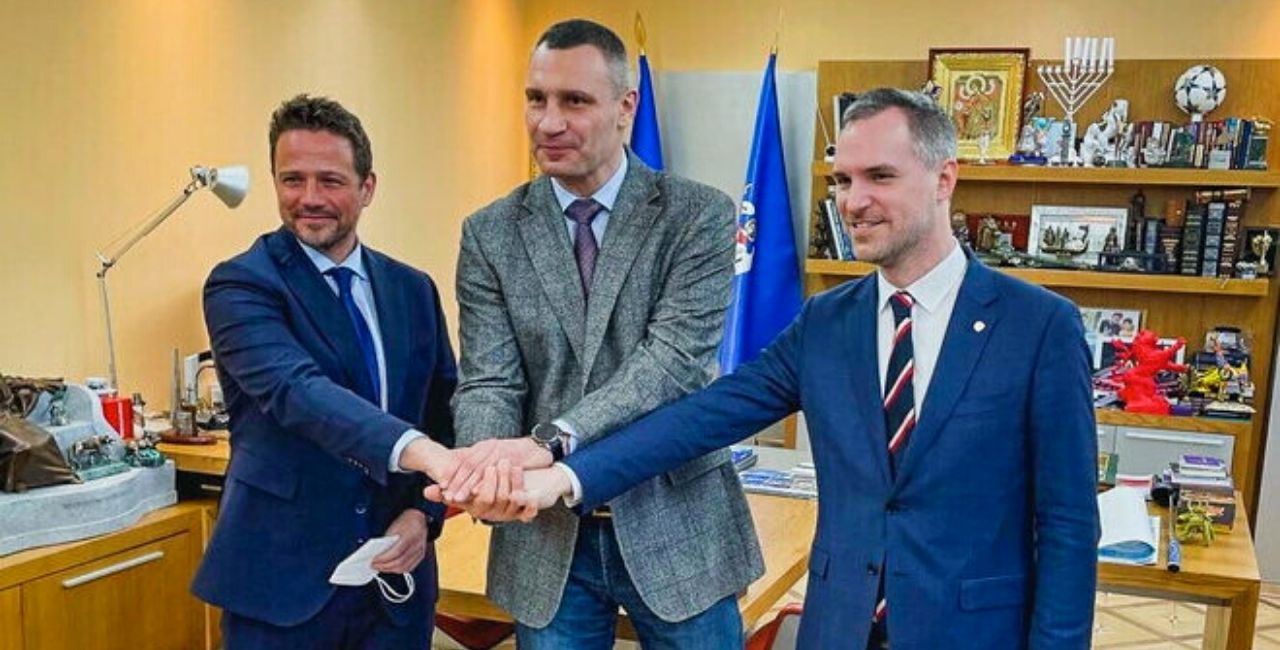
Kyiv Mayor, UDAR leader Vitali Klitschko has met with Prague Mayor Zdeněk Hřib and Warsaw Mayor Rafal Trzaskowski, who arrived in Kyiv to express their support and solidarity with Ukraine, as well as discuss Kyiv’s accession to the Pact of Free Cities with Klitschko. During the meeting, Klitschko noted that the visit of the mayors of European cities is very important for Ukrainians and for him personally. “Today is a very dramatic moment for my country. Ukraine, for all the time of independence, has never faced such a threat. A threat to its statehood, territorial integrity, its citizens. We are a peaceful state and a peaceful people. And we do not threaten anyone,” Klitschko said. “But we will protect our freedom and independence, our land from any aggressor. And today the support of every partner, every friend of Ukraine and Kyiv is important to us. And the wider and more powerful such support is, the more deterrence there will be for Russia to launch a full-scale invasion of Ukraine, the likelihood of which is very high today,” he added. He thanked his colleagues and noted that the very fact of their visit to Kyiv at such a dramatic moment is...
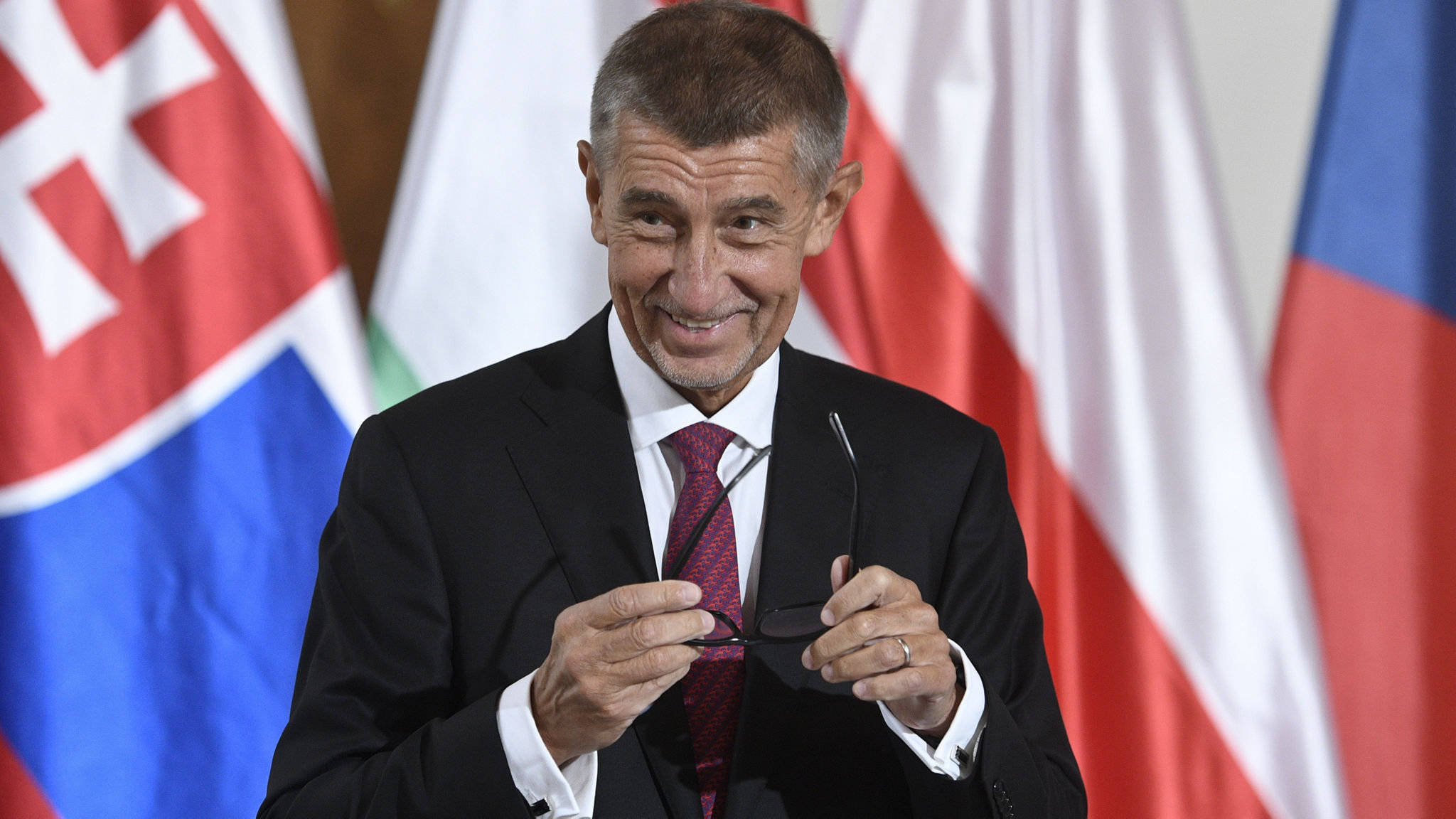
Former Prime Minister Andrej Babiš was re-elected as chairman of the ANO party despite defeat in October’s elections. On Saturday’s party congress, Babiš reaffirmed that ANO, affiliated to Renew Europe group, would remain a “catch-all” political party and spoke about his possible presidential candidacy. Babiš was the only candidate for the post of ANO chairman and received 76 of 95 votes. During his speech, he criticised the current five-party ruling coalition and media. “The entire carpet-bombing of our movement was carried out with the loud support and applause of many journalists,” Babiš said. “They talked about the end of democracy, about being dragged to East, about interfering in police investigations and other and other nonsense that never happened,” former PM added. Babiš also mentioned the upcoming presidential elections but did not say whether he would run in them. However, he said that the ANO party must field a candidate to unite society and represent the Czech Republic well abroad. The next presidential elections will take place in 2023. As the president is elected directly by the citizens, Babiš’s popularity among the public could propel him to the post. In October’s elections, the ANO party received 27.1 % of votes, only...
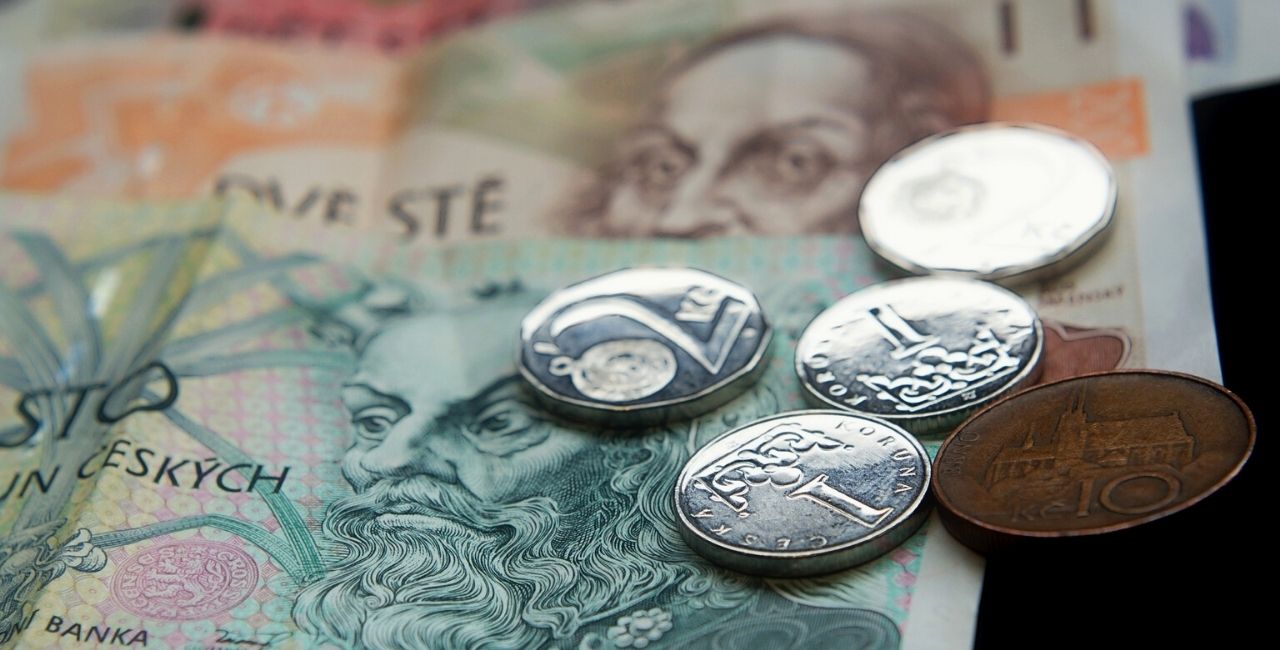
While in previous months the level of inflation in the Czech Republic was largely equivalent to that in the EU, in January the consumer price index exceeded the eurozone’s average, the Czech Statistics Agency announced on Monday. Eurozone inflation was at 5.1 percent in January. Meanwhile, in the Czech Republic, it reached 9.9 percent. It is expected that inflation next year could be between 8.6 and 10.9 percent on average and as high as 11 percent. This is due to higher energy prices, and change in price lists of goods and services and the expected rise in food prices. In December, annual inflation was 6.6 percent, and according to CZSO data, annual inflation was above ten percent last time in July 1998. “It is difficult to estimate because prices are constantly changing in the economy. This year, it is all the more complicated, as price pressures are very widespread and the revaluation of January prices can be really significant, “said Jakub Seidler, chief economist of the Czech Banking Association. He says that a 30% year-on-year increase in electricity and gas prices can be expected, as well as a significant increase in food prices. “It is thus very likely that year-on-year...
The Czech Republic is preparing to sign a Declaration on Ukraine’s European Prospect in support of the country’s EU accession. Czech Foreign Minister Jan Lipavský told this in an interview with Yevropeiska Pravda, a Ukrainian media outlet. “We are currently negotiating on the issue (of signing a declaration, – ed.) with Ukraine. And I am very optimistic about the results of these talks,” Lipavský said. He stressed that if Ukraine does not stop carrying out reforms, joining the EU will become a “simple documentary formality.” Lipavský also underlined the most crucial areas, subjected to the reforms. “The rule of law, judicial reform, anti-corruption spheres. This is a difficult task, yes, but we will repeat it again and again. Once you have a milieu that EU companies feel safe in Ukraine, you will see the robust growth of the Ukrainian economy,” the minister assured. Seven EU countries have already signed Declaration on Ukraine’s European Prospect – Poland, Latvia, Lithuania, Estonia, Slovakia, Croatia, and Slovenia. February 7-8, the Slavkov trilateral – Foreign Ministers Jan Lipavský (the Czech Republic), Alexander Schallenberg (Austria), and Ivan Korčok (Slovakia) – paid a joint visit to Ukraine to coordinate policies on deterring Russian full-fledged invasion. The Czech Republic assured Ukraine of support...
The Czech government plans to continue supplying weapons to Ukraine after the decision to provide 4,000 artillery shells as European Truth reported citing Czech Foreign Minister Jan Lipavský. “I don’t know exactly what form this will take yet, but our government has the political will to help Ukraine withstand this crisis. Part of this effort is aimed at changing the “loss calculations” for Putin so that he decides not to physically attack Ukraine,” the Czech minister said. According to him, there was no discussion in Czech society about whether to provide shells to Ukraine. “Of course, people may have different opinions, but there was no political debate at all about supplying weapons to Ukraine. So I’m glad that the Czech Republic has finally joined the club of states that help Ukraine in this way. As you mentioned, not all states do this. But our club is not bad – we are there together with the United States, Britain, Poland, the Baltic States,” the minister said. The diplomat added that the Czech Republic helps Ukraine because local events affect Central Europe. “Migration is changing, economic interaction – everything is changing. We are in a close neighborhood with you, so everything that happens in your country matters to...
The Czech Republic is the ninth most advanced economy in the European Union. Sweden ranks first, followed by Germany and Denmark. This is according to the first pillar of the new Prosperity Index focused on the economy, compiled by analysts at Česká spořitelna and Europe in Data. The Czech Republic can achieve a better ranking by investing in changing the structure of the economy, innovation, and education. David Navrátil, the chief economist at Česká spořitelna, added that the Czech Republic’s strongest points include economic complexity (ranked 2nd) or the investment-to-GDP ratio (ranked 3rd). On the other hand, weaker results are in terms of the share of national income in domestic product or the level of value-added of the economy. A higher level of investment does not automatically mean a higher rate of modernisation of the economy, especially in comparison with other countries. This can be seen, for example, in the robotization of the Czech economy. The number of robots per worker in the Czech Republic is growing, but not enough. This is why the Czech Republic has fallen out of the top 20 most robotized economies in the world. Currently, Germany is the European leader in robotization with 371 robots...
Liquefied natural gas (LNG) shipments to Europe late last year showed Russia could not use gas as great leverage over Europe, and the gas shortfall supported efforts to build more LNG capacity on European shores, Czech Foreign Minister Jan Lipavsky said on Wednesday. Lipavsky told Reuters in an interview that diversion of LNG cargoes to Europe after prices surged late last year amid lower supplies from Russia showed there were alternatives to Russian gas and supported the argument for investing in infrastructure. “I like to say (Russian President) Vladimir Putin gave Europe a great Christmas gift because he showed that we are not dependent on Russian gas,” Lipavsky said. “I am not saying we can only be dependent on LNG, but this is a very good example that Russia cannot afford to use gas as some fundamental economic lever, because if Europe builds sufficient mechanisms, terminals, it will diversify its energy security.” The Czech Republic consumes around 8.7 billion cubic metres of natural gas per year, most of which comes from Russia through Germany. Lipavsky, whose ministry has a special envoy for energy security, said the Czech government aimed to gain access to an LNG terminal in some neighbouring country....
Don’t have an account? Register
Already have an account? Log In
How Would You Like to Promote Your Business? PR ArticleDisplay bannersVideo productionNewsletter adsJob ListingsInfluencer Marketing
Your Email
We will come back to you within 24 hours with our proporsal