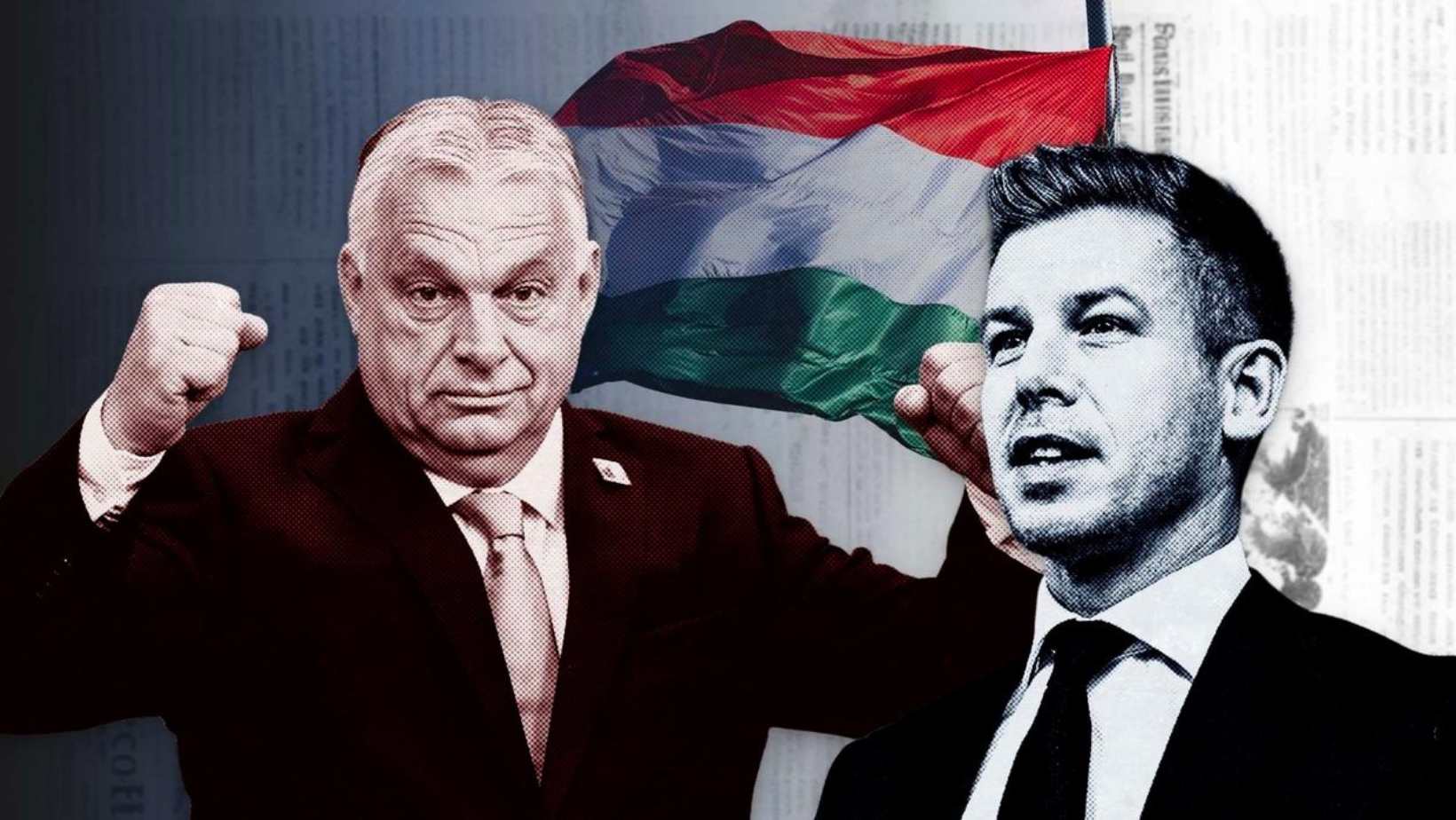

Czech political leaders have responded swiftly to the outcome of Hungary’s parliamentary elections, where longtime prime minister Viktor Orbán was defeated by opposition leader Péter Magyar and his Tisza movement.
The result, which signals a major political shift in Central Europe, has drawn a mix of cautious optimism, concern, and political messaging from across the Czech spectrum.
Prime Minister Andrej Babiš, who had previously supported Orbán ahead of the vote, congratulated Magyar shortly after the results became clear. He acknowledged that the Hungarian leader had secured the trust of voters and said he respected the outcome. Babiš added that he looked forward to future cooperation with Hungary’s new government, signaling a pragmatic approach despite his earlier backing of Orbán.
President Petr Pavel welcomed the result more openly, framing it as a victory for democratic principles. He pointed to the high voter turnout as a sign of strong civic engagement and said the outcome showed that “democracy has won.” Pavel also described the shift as positive news for Europe and praised Orbán for conceding defeat after 16 years in power, a gesture he said contributed to political stability.
Foreign Minister Petr Macinka struck a more cautious tone. He described Orbán as an important ally within the European Union and suggested that Czechia would now need to adjust to the loss of that partnership. At the same time, Macinka emphasized that Prague would seek to maintain “above-standard relations” with Hungary’s incoming government.
Industry Minister Karel Havlíček also congratulated Magyar on what he described as a convincing victory. At the same time, he paid tribute to Orbán’s long tenure, calling him one of Europe’s most enduring political figures. Havlíček suggested the election outcome was driven largely by “fatigue after 16 years,” with voters seeking change rather than a sharp ideological shift.
In contrast, Czech opposition figures largely welcomed the result as a turning point. Interior Minister Vít Rakušan described the election as a clear rejection of Orbán’s rule and used the moment to draw parallels with domestic politics, expressing confidence that Czech voters could bring about similar change in future elections.
Zdeněk Hřib said the outcome could strengthen European cooperation and potentially remove Hungary’s previous resistance to key EU decisions, including sanctions against Russia and joint defense initiatives. He framed the result as good news not only for Czechia but for the broader European project.
Transport Minister Martin Kupka echoed that sentiment, describing the election as the beginning of a “new chapter” for Hungary. He said the country could now move closer to its European partners after years of strained relations, particularly over Orbán’s approach to Russia and EU policy.
Former prime minister Petr Fiala went further, calling the outcome a defeat for populism and pro-Russian politics in Central Europe. He said the result offered hope that similar political trends could emerge in neighboring countries, including Slovakia and the Czech Republic.
Would you like us to write about your business? Find out more
-
NEWSLETTER
 Subscribe for our daily news

Most Popular