Sinatra Tribute Pairs Frank Sinatra Classics With 1930s Dining at Prague's Mánes
Partner article


Prague Morning
 Follow us on Google Discover
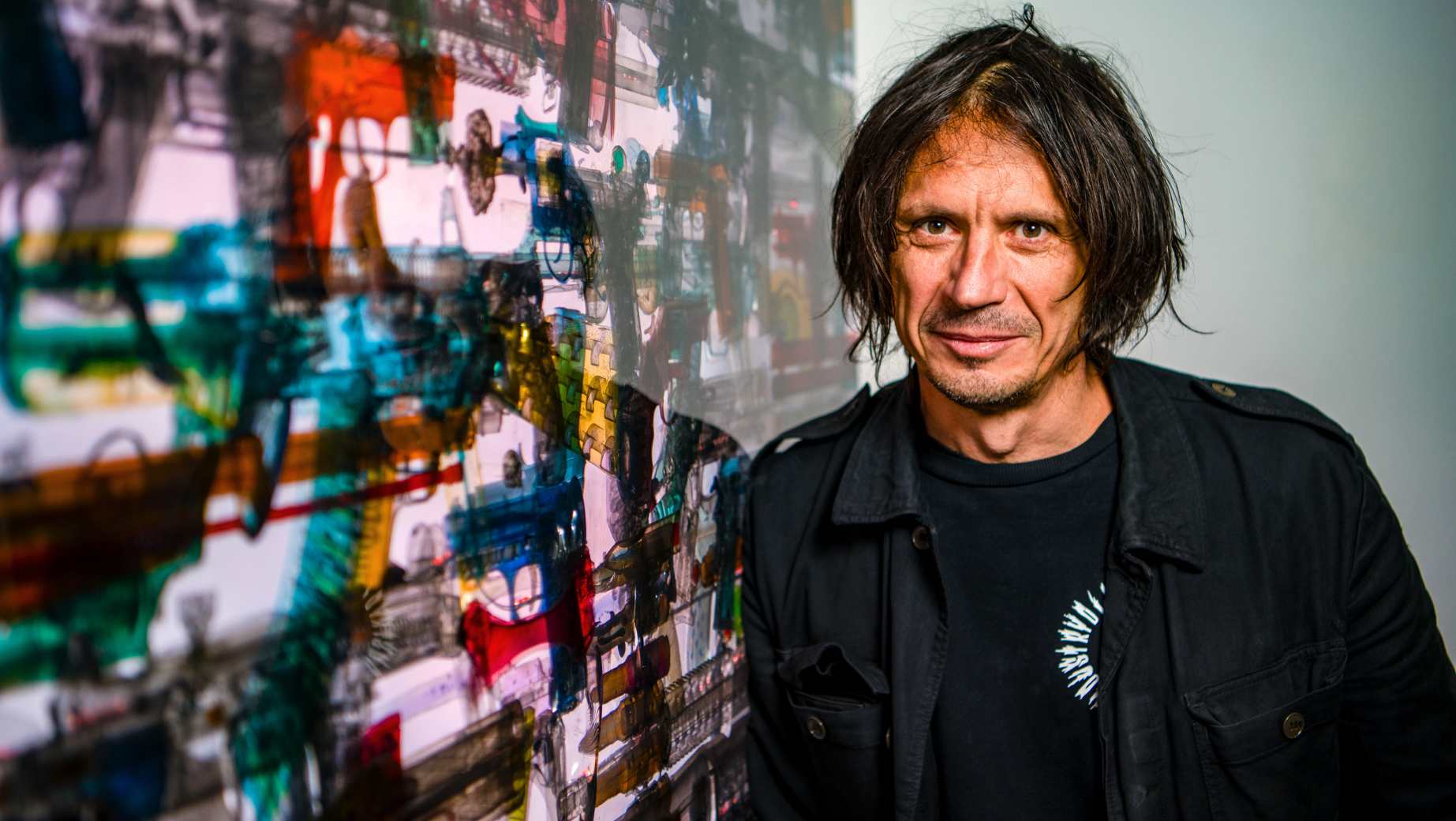

Czech sculptor David Černý is set to return to the international spotlight next spring, bringing a new exhibition to Venice at the same time as the Venice Biennale.
Titled ARTOCALYPSA, the show will open on May 6, 2026, in the Cannaregio district and run until early November.
While Cannaregio is typically one of the quieter corners of Venice, the Biennale transforms even its side streets into busy cultural routes, as visitors move between national pavilions and independent exhibitions. Černý’s project is expected to draw attention for its central theme—one he has returned to repeatedly over the years: weapons.
Rather than presenting them in a purely technical or aesthetic way, ARTOCALYPSA explores the contradictions they represent. Weapons are among the most advanced products of human innovation, yet also among the most destructive.
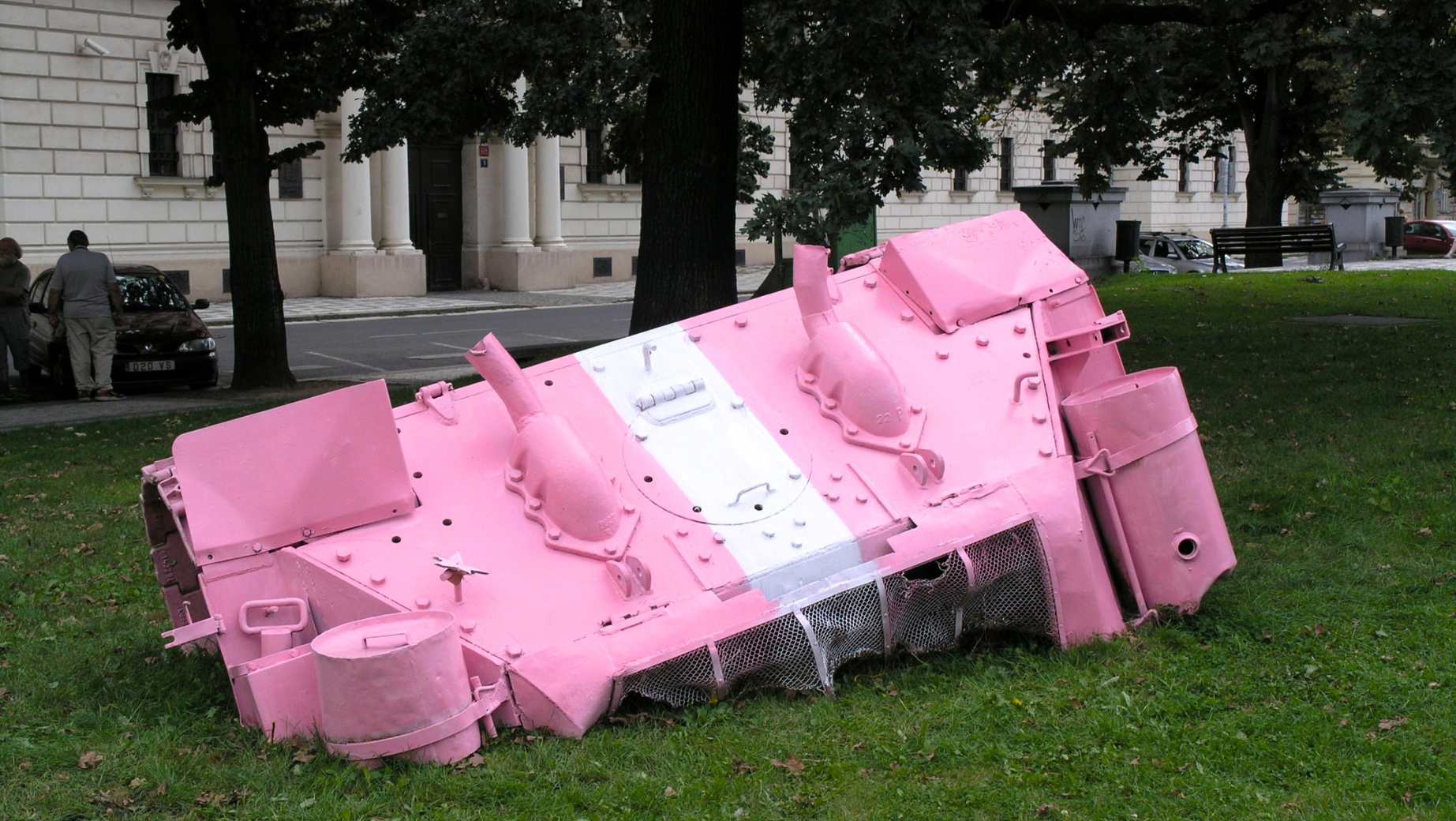
Pink Tank
In a period marked by overlapping crises—health, climate, and economic instability—the exhibition suggests that these objects reveal how societies behave under pressure. The focus shifts away from the weapons themselves to the people around them: those who design them, use them, reject them, or profit from them.
The idea of bringing Černý’s work to Venice originated with Italian researcher and writer Lorenzo Polo, who has followed the artist’s work for years. His first encounter left a lasting impression.
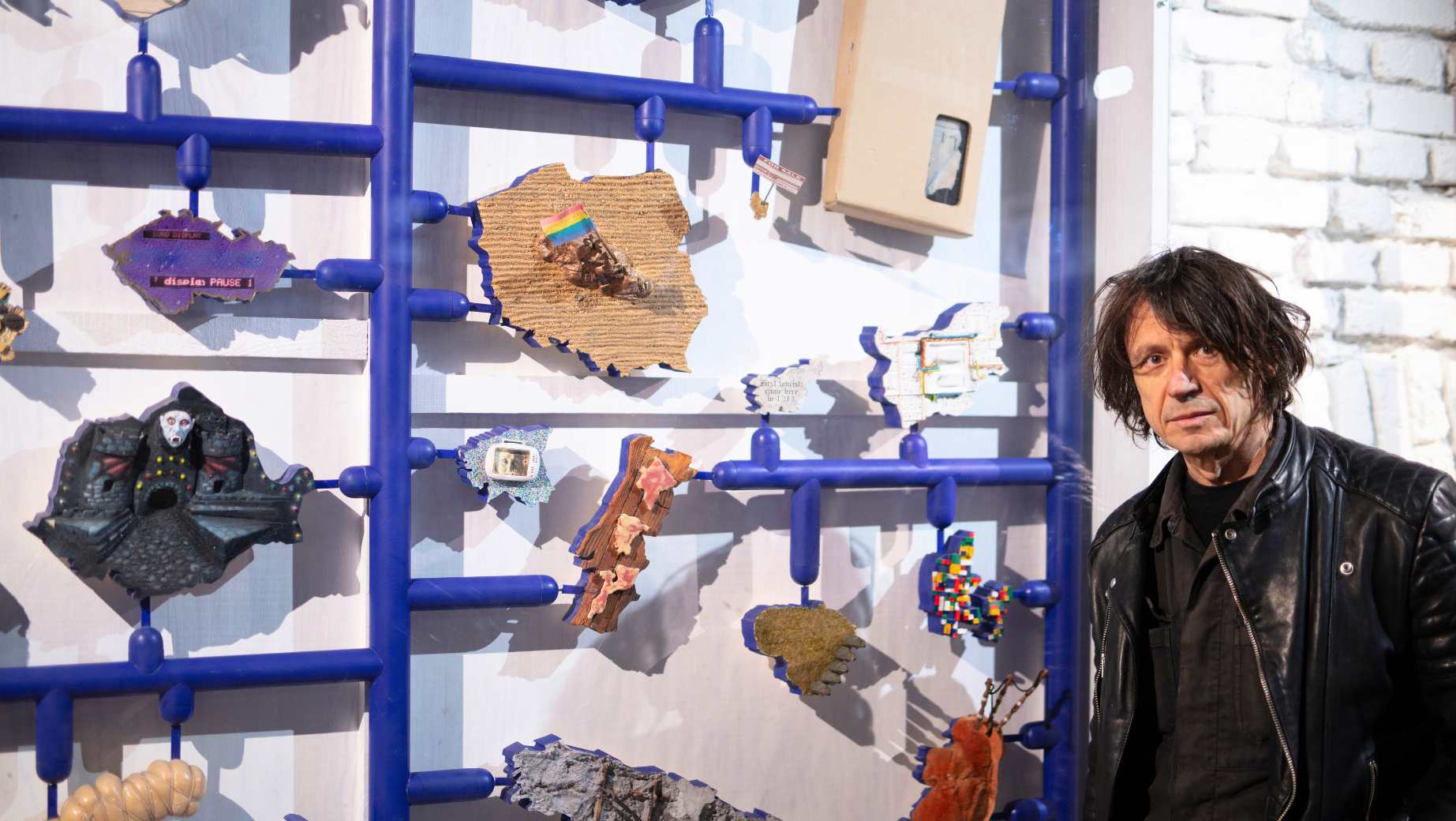
Among the highlights is Entropa (2009), one of Černý’s most widely known works. Originally created for the Czech EU presidency, the installation sparked controversy after it was revealed that the supposed collaboration of artists from EU member states was, in fact, an elaborate hoax. The piece presents exaggerated national stereotypes, turning political commentary into biting visual satire.
The exhibition also revisits earlier works such as Guns (1993), which magnifies handguns to monumental scale, drawing attention to their design and aesthetic appeal while confronting their destructive purpose. In contrast, newer pieces like Nuke Chair (2025) introduce a more unsettling tone.
“When I first saw the rotating head of Franz Kafka, David Černý’s monumental kinetic sculpture in Prague, I felt as if I had been cut deep by an invisible weapon. It left me with a peculiar mix of feelings, ranging from astonishment and laughter to intense reflection.”
That reaction led him to study Černý’s work more closely, drawn to its refusal to conform.
“Černý does not aim to please or conform to traditional notions of beauty. His works surprise, disturb, and provoke, often addressing uncomfortable political issues.”
Although the two crossed paths several times over the years, their collaboration took shape much later. A key moment came in May 2024, when Polo encountered Černý again in Prague while one of his installations was taking form.
“On 18 May 2024, after reading an article in Prague Morning about the installation while it was actively taking shape in the city, I decided to go and see firsthand what was happening. It was there, on the street, that I met David.”
View this post on Instagram
Another section focuses on Černý’s Inventors/Scientists series, featuring large-scale portraits of figures such as Leonardo da Vinci, Wernher von Braun, and J. Robert Oppenheimer. Each played a role in advancing science and technology, but also contributed—directly or indirectly—to the development of weapons. The works raise questions about the fine line between innovation and destruction.
Polo also points out that, in his view, Italy lacks a comparable artistic voice willing to challenge public space in the same way.
“Italy, to my knowledge, lacks an equivalent voice of dissent, an artist brave enough to build complex mechanisms of thought and confront themes such as freedom, war, and weapons in public space.”
At the same time, he sees a clear connection between Černý’s work and Italy’s artistic tradition, which blends creativity with engineering and experimentation. That overlap helped shape the decision to stage the exhibition in Venice— “a city that is itself a work of art and a theatrical setting.”
Looking back, Polo describes the project as the result of a long and unlikely chain of events, starting from a position with few resources.
“When I think of how this project came together, starting as a complete outsider with little to no resources, it all comes down to cause and effect.”
The exhibition is supported by Panství Bechyně, with production backing that has made the project possible. It will be open to the public from Tuesday to Sunday, with extended hours during the summer months.
Would you like your story featured here? Get in touch with our team at [email protected]



Already have an account? Log In