Russell Crowe to Perform in Prague for the First Time in May 2027
Partner article


Prague Morning
 Follow us on Google Discover
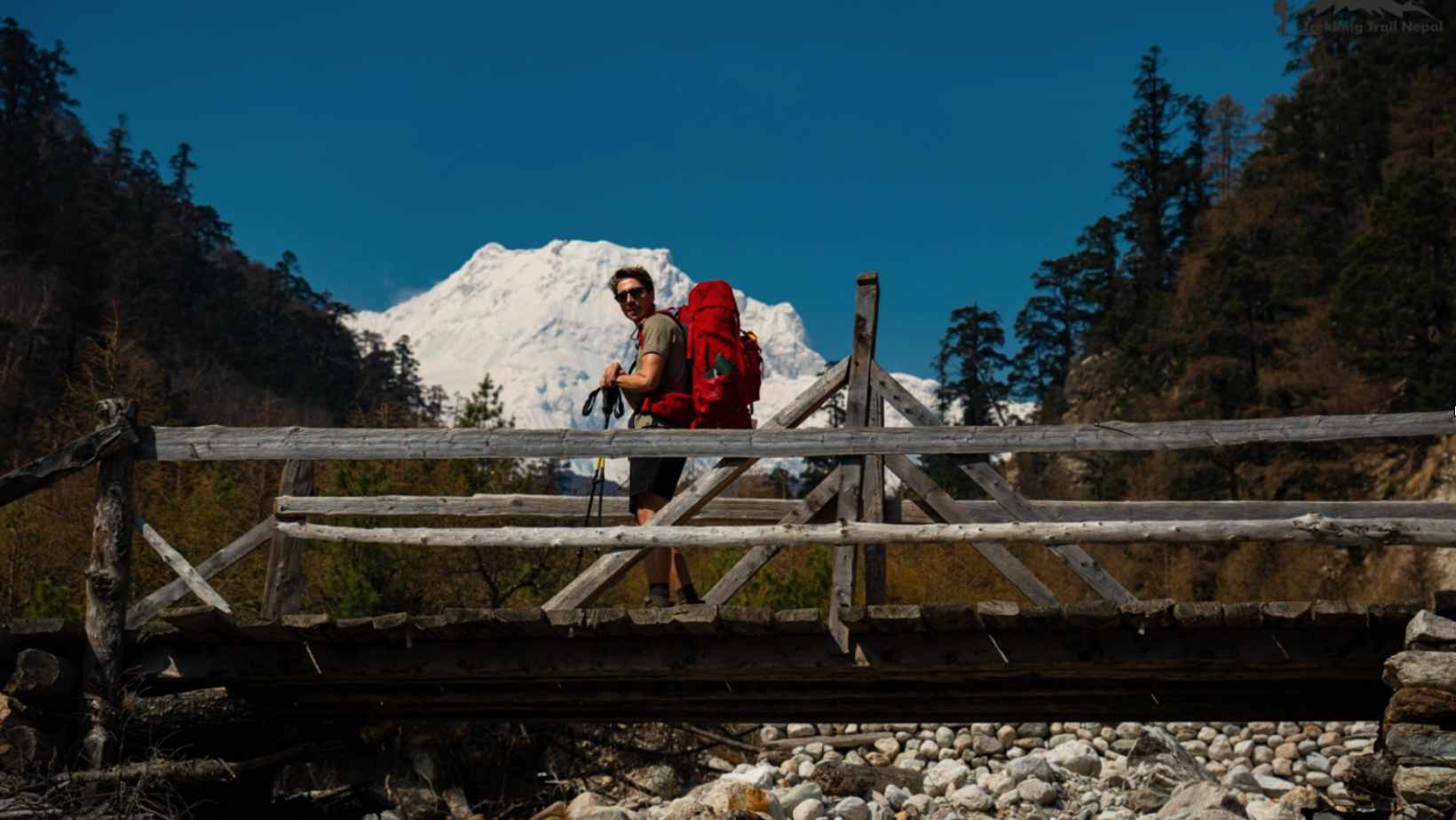


There are places in the world where you travel to see landscapes. And then there are places where the journey quietly changes you.
The Manaslu Circuit Trek in Nepal belongs to the second kind.
Set deep in the remote Himalayas, this trail circles Mount Manaslu, the eighth-highest mountain on Earth however the true experience goes far beyond the summit itself.
This is not just a Himalayas trek in Nepal. It is a story unfolding step by step.
For many European travelers, especially those familiar with the Alps and loved with mountains often mean accessibility, comfort, and well-developed infrastructure. Nepal offers something fundamentally different.
Here, the Himalayas are not just landscapes, they are living, breathing worlds to make your mind widen like horizon and taller as mountains, here in the untouched Manaslu region. that world still feels untouched.
Unlike more commercial routes like the Annapurna Circuit and Everest Base Camp, Manaslu Trekking remains raw, quieter, and deeply authentic. Fewer crowds, fewer distractions, and stronger connection to nature, culture, and people.
This is exactly why more conscious travelers from countries like the Czech Republic are beginning to look beyond mainstream trails and toward experiences that feel real.
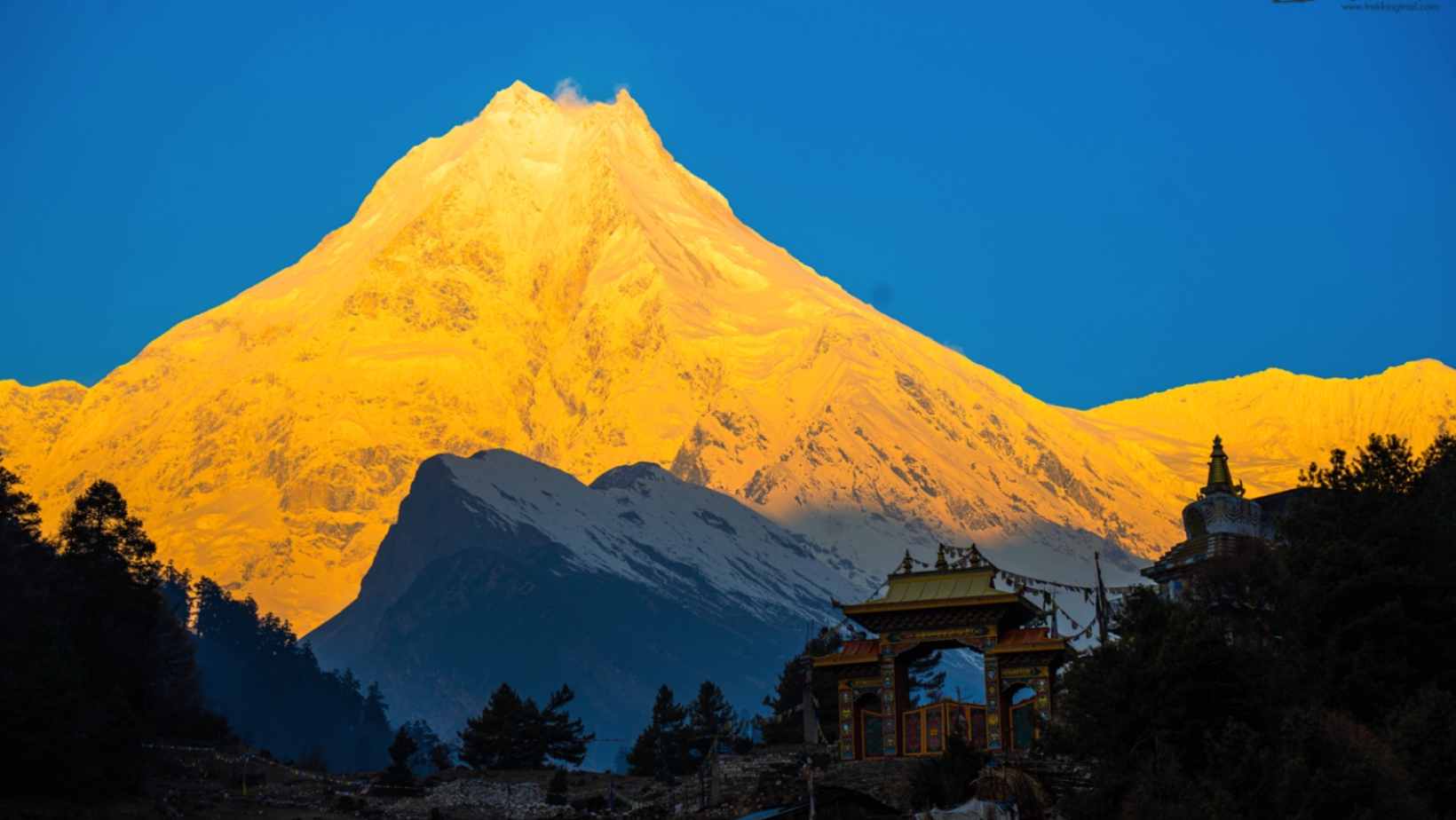
The Manaslu Circuit trek starts in a small riverside village called Machhakhola 930m, located in Nepal’s Gorkha District. From here, the journey gradually unfolds.
You follow the Budhi Gandaki River, crossing suspension bridges that sway above powerful currents. The trail winds through dense forests, terraced fields, and traditional villages where life has remained unchanged for generations.
Unlike Europe, where hiking often ends in modern lodges, here you walk into something older. Something slower.
Days on the Manaslu trail follow a simple rhythm:
Walk.
Climb.
Breathe.
Pause.
By evening, you arrive at small Himalayan teahouses, family-run lodges offering warmth, food, and shelter. There is no luxury here, and that is the beauty of it.
After a long day, a simple meal of dal bhat (rice, lentils, vegetables) feels deeply satisfying. Sitting around a warm dining room, sharing stories with strangers from around the world, becomes part of the experience.
This is something many European travelers find surprising, how little you need to feel content.
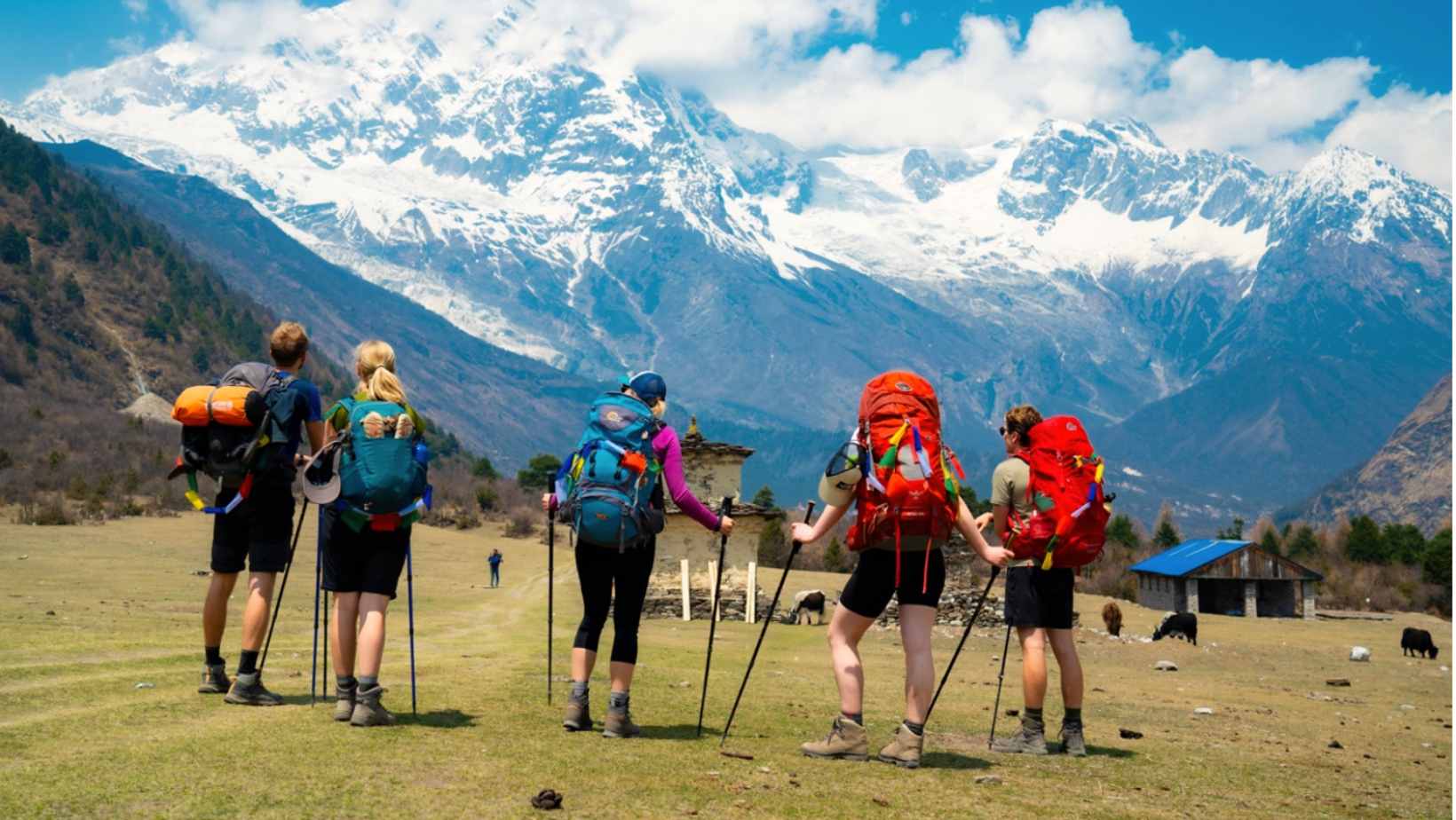
Two places define the emotional heart of the trek:
Samagaun
A peaceful village surrounded by mountains, where time slows down. Yaks graze nearby, prayer wheels spin quietly, and the air feels still.
It is also the gateway to Manaslu Base Camp, a challenging but unforgettable side journey.
Samdo
Higher, colder, and more remote. A place where the landscape becomes harsher, and the sense of isolation deepens.
Here, the Himalayas feel close, not just physically, but emotionally.
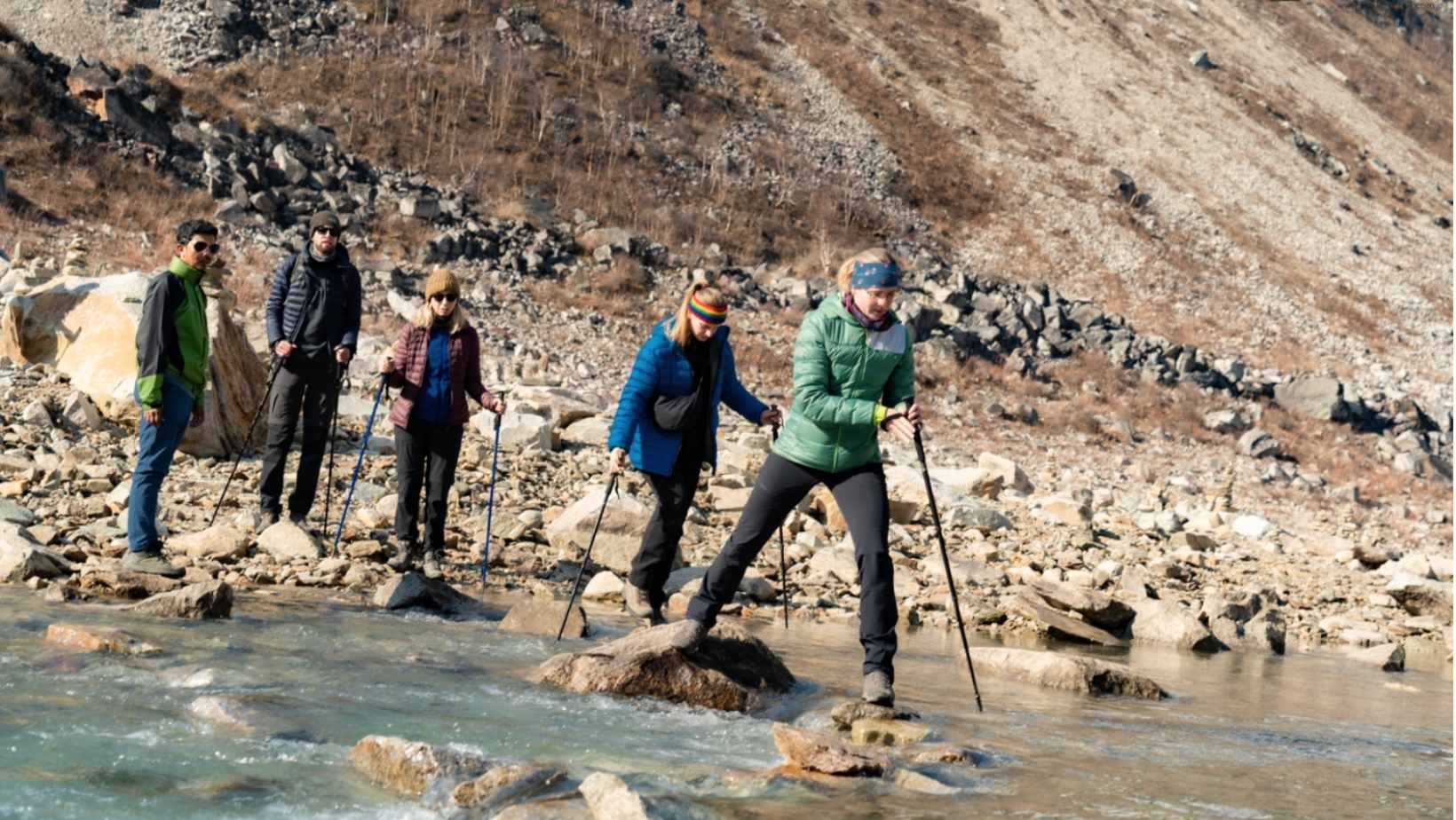
The Manaslu Circuit is not an easy trek, and it is not designed to be.
It is a slow, demanding journey into a landscape that constantly tests your strength and patience. The trail winds through deep pine forests and blooming rhododendron valleys, where the air is thick with scent and silence, broken only by distant rivers cutting through the mountains. As you climb higher, the environment begins to shift. Trees thin out. The terrain tightens. The path narrows into rugged mountain ledges carved into steep hillsides.
Some sections feel almost suspended above the world, thin trails etched into vertical slopes, where every step requires focus. Below you, valleys drop away into enormous silence; above you, stone ridges and snow-streaked peaks rise without end.
Then come the long ascents and punishing descents, endless stone staircases, loose gravel tracks, and icy switchbacks that seem to climb forever. Your breathing grows heavier. The altitude begins to speak through every heartbeat.
And then there are the mountain tea houses, small, wooden shelters perched on high ridges. Inside, warmth spills from the kitchen, butter tea steams in metal cups, and tired trekkers gather in shared quiet. These places feel like brief pauses in the sky, fragile comfort against the vastness outside. But nothing compares to the approach to Larkya La Pass (5,106 meters).
The final ascent begins in darkness, when the air is sharp enough to sting your lungs. The trail is steep, frozen in places, and endlessly rising into a wind that never seems to stop. Every step becomes deliberate. The world grows colder, thinner, more demanding.
As you climb higher, the landscape turns lunar, snowfields, glacial moraine, and endless white ridgelines stretching into the horizon. The silence is intense, broken only by the crunch of boots and the wind rushing across the pass.
Reaching the top of Larkya La is not just a moment, it feels like crossing into another state of existence. The exhaustion is still there, deep in your legs and lungs, but it fades under something larger.
Surrounded by the vast Himalayan giants, the struggle doesn’t disappear, it transforms you. It becomes meaning full.
One of the strengths of the Manaslu Circuit is its gradual altitude gain.
You begin around 700-900 meters and slowly move into high Himalayan terrain, giving your body time to adjust.
A well-planned itinerary typically includes:
These pauses are not delays they are essential.
They increase safety, improve success rates, and allow you to truly experience the environment instead of rushing through it.
Manaslu is not designed for everyone, and that is precisely where its true strength lies, because this is a journey that calls to a certain kind of traveler, one who seeks depth over ease and experience over comfort. It is for those who are willing to trade polished trails for raw mountain paths, who find meaning in long walking days, shifting weather, and the quiet challenge of altitude rather than convenience.
This trek naturally attracts individuals with good physical fitness and strong mental resilience, but more importantly, it draws those with an open and adventurous mindset, people who are curious about cultures, patient with slow journeys, and ready to embrace uncertainty as part of the experience.
You do not need to be a professional athlete to complete the Manaslu Circuit, but you do need determination, consistency, and the willingness to push through moments of discomfort, especially as the trail climbs higher into the remote Himalayan landscapes. Even experienced hikers from Europe, accustomed to the well-managed trails of the Alps, often find the Himalayas more demanding, not just because of the altitude, but because of the remoteness, the unpredictability, and the rawness of the environment. And yet, it is exactly this challenge that makes the journey so rewarding, because every step feels earned, every breath feels significant, and every moment becomes part of a deeper, more meaningful adventure that stays with you long after the trek is over.
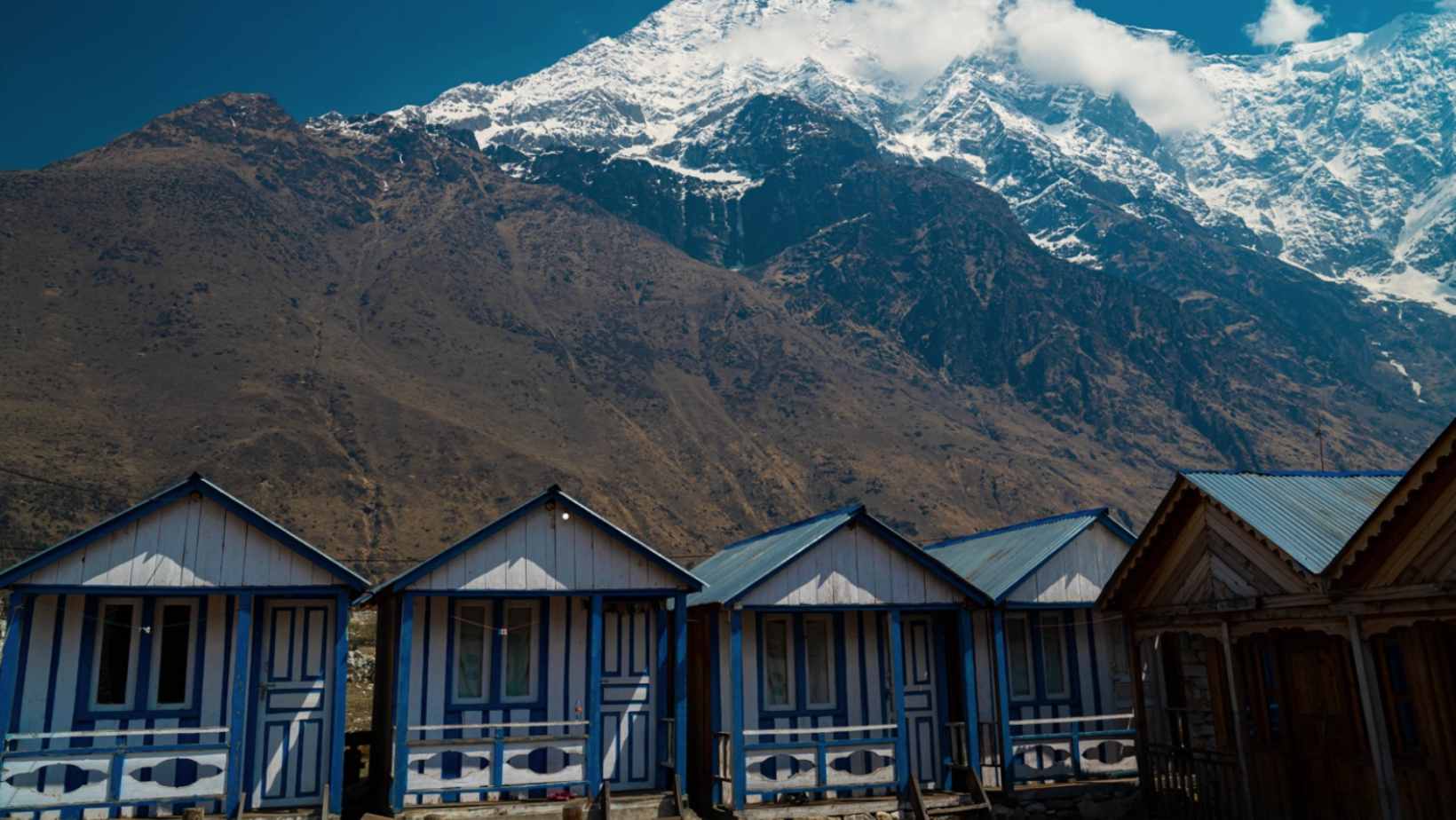
Many travelers choose to skip the Manaslu region, often because it asks for more, special permits, more complex access, limited infrastructure, and the restriction of solo trekking, yet these very challenges are what quietly protect its authenticity and preserve it as one of the last true hidden gems of the Himalayas.
As you move deeper along the trail, gradually approaching the cultural frontier near Tibet, the journey transforms into something far more profound than a physical trek; it becomes a passage into a living Himalayan world shaped by centuries of tradition, isolation, and resilience. Ancient Buddhist monasteries stand silently against dramatic mountain backdrops, prayer flags flutter endlessly in the high-altitude wind, and villages like Samdo reveal a raw, unfiltered glimpse into Tibetan-influenced life where culture is not performed but simply lived. In these remote settlements, you can explore small local markets filled with Tibetan goods, taste authentic foods like noodle soups, yak butter tea, and simple handmade meals, and observe daily life that feels untouched by modern urgency, elderly buddhist women slowly walking with prayer beads (mala) in their hands, young locals moving calmly through stone-built paths, and families running modest teahouses and lodges with genuine warmth rather than commercial intent.
Many of these communities live in economically modest conditions, yet what they offer is something far more valuable than comfort a deep sense of kindness, openness, and human connection that leaves a lasting impression. As the journey continues through rugged terrain, glacier valleys, and high mountain passes, the rawness of the environment begins to influence you; the cold becomes sharper, the paths more demanding, and the unpredictability of nature more real, yet at the same time your mind begins to quiet, your pace naturally slows, and your perspective shifts.
ï Purposeful Barriers Protect Authenticity: Special permits, restricted access, and no solo trekking keep Manaslu genuinely remote and free from mass tourism.
ï A Cultural Passage, Not Just a Physical Trek: The deeper you walk, the closer you move toward a living Tibetan-influenced world shaped by centuries of isolation and tradition.
ï Ancient Monasteries and Untouched Villages: Buddhist gompas, endless prayer flags, and settlements like Samdo offer raw, unperformed Himalayan culture still deeply rooted in daily life.
ï Authentic Food and Local Markets: Tibetan goods, yak butter tea, noodle soups, and handmade meals served with genuine warmth, not commercial intent.
ï Human Connection Over Comfort: Communities living modestly offer something far richer, an openness and kindness that leaves a lasting personal impression.
ï The Environment Changes You: Glacier valleys, high passes, sharp cold, and demanding trails quiet the mind, slow the pace, and shift your perspective in ways comfort travel cannot.
ï Raw, Honest, and Unforgettable: Colder, rougher, and less polished than popular routes, Manaslu does not just offer a trek. It leaves you with a powerful, personal story that stays long after the mountains are behind you.
In a world where travel is often curated, polished, and predictable, Manaslu strips everything back to something honest and essential, allowing you to experience not only the grandeur of the Himalayas but also the simplicity of life within them. It is colder, rougher, and less comfortable than many popular routes, but it is precisely this rawness, combined with its deep cultural richness and untouched atmosphere, that makes Manaslu not just a trek, but a powerful, personal story that stays with you long after you leave the mountains behind.
Planning a Manaslu trek requires preparation.
Permits and Guide
The region is restricted, so you need special permits issued through a registered trekking agency inclusive of trekking guide. Trekking Trail Nepal handle it all.
As of march 2026, Solo trekking is allowed. However, we request you to have a companion for the best price and experience.
Route Understanding
It is important to study the itinerary, daily distances, elevation gain, and acclimatization points.
Working with an experienced local trekking company ensures safety, logistics, and a smoother experience.
European mountains are beautiful. But the Himalayas offer something taller with culture, natura and raw. In Nepal, you don’t just hike, you explore the world how different it is.
The Manaslu Circuit is not just about reaching a destination.
It is about everything that happens along the way:
The silence.
The effort.
The people.
The altitude.
The stories.
For those who choose it, Manaslu does not remain just a trek. It becomes something personal. A memory that stays long after the journey ends.
Choosing the right trekking company in the Himalayas is not just about logistics, it is about trust, experience, and the quality of the journey itself.
At Trekking Trail Nepal, the focus goes beyond simply guiding you from one point to another. The goal is to offer something deeper, the trekking experience built on authenticity, reliability, and genuine connection to the mountains.
What makes this approach different is the way journeys are designed.
Instead of following only standard routes, Trekking Trails Nepal carefully blends experiences, including both the Manaslu Base Camp and the full Manaslu Circuit, into one cohesive journey. This allows trekkers to explore not just the trail, but the full story of the region, from remote villages to high alpine wilderness.
This combination creates a richer, more complete Himalayan experience, something many trekkers miss when choosing shorter or more commercial itineraries.
Experienced, licensed guides with deep knowledge of the Manaslu region ensure that every step is safe, informed, and meaningful. From altitude awareness to cultural insights, their presence adds confidence and depth to the trek.
For European travelers, including many from the Czech Republic, Trekking Trails Nepal offers a familiar sense of professionalism combined with local expertise. Communication is clear, planning is structured, and the team understands the expectations and concerns of international trekkers. You can talk, with our Local representative in Ostrava in Czechia +420724386324
Whether it is your first time in Nepal or you are returning for a deeper adventure, the approach remains the same:
Stay calm. Trust the process, and walk with a team that know and feels the mountains.
Every journey is carefully managed, from permits and logistics to safety and acclimatization, so that you can focus on the experience itself.
In the Himalayas, conditions can change quickly. That is why having the right team is not just helpful, it is essential. With Trekking Trail Nepal, your journey is not only guided, it is supported, understood, and thoughtfully crafted.
Because in the end, a great trek is not just about where you go. It is about how you experience it.
Would you like your story featured here? Get in touch with our team at [email protected]