

Just days before the opening of the exhibition, the usually quiet Galerie Rudolfinum is suddenly full of energy.
Staff gather for a preview tour of Beyond the City of Time, led by the artist himself, Sahej Rahal. I was fortunate to join the walkthrough, which suggests Prague’s art audience is about to encounter a striking blend of digital mythology and speculative storytelling.
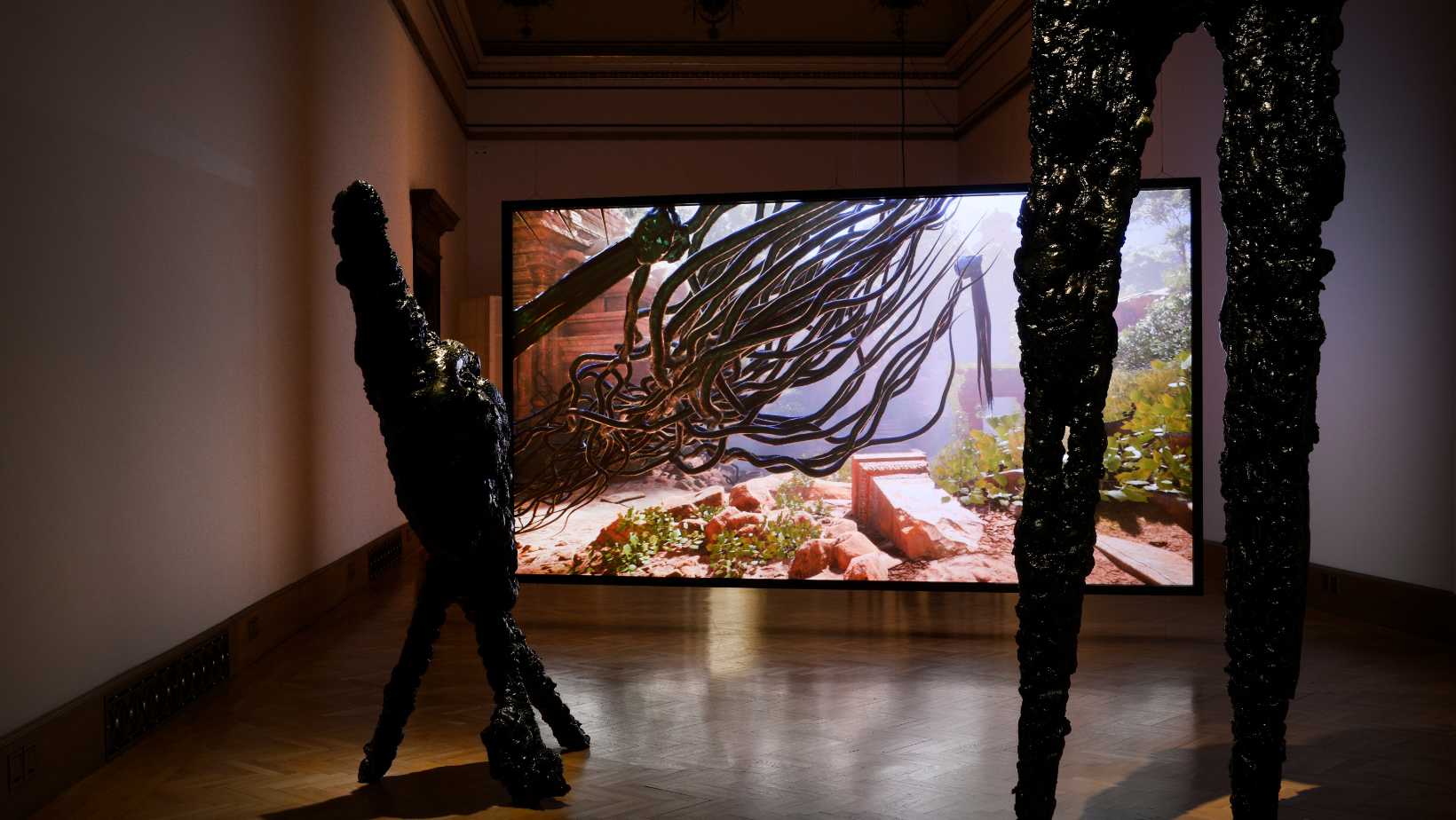
The Mumbai-based artist explains how his three-legged sculptures, AI-driven simulations and pigment paintings combine Indian folklore, video-game logic and science fiction to question how we perceive time and reality.
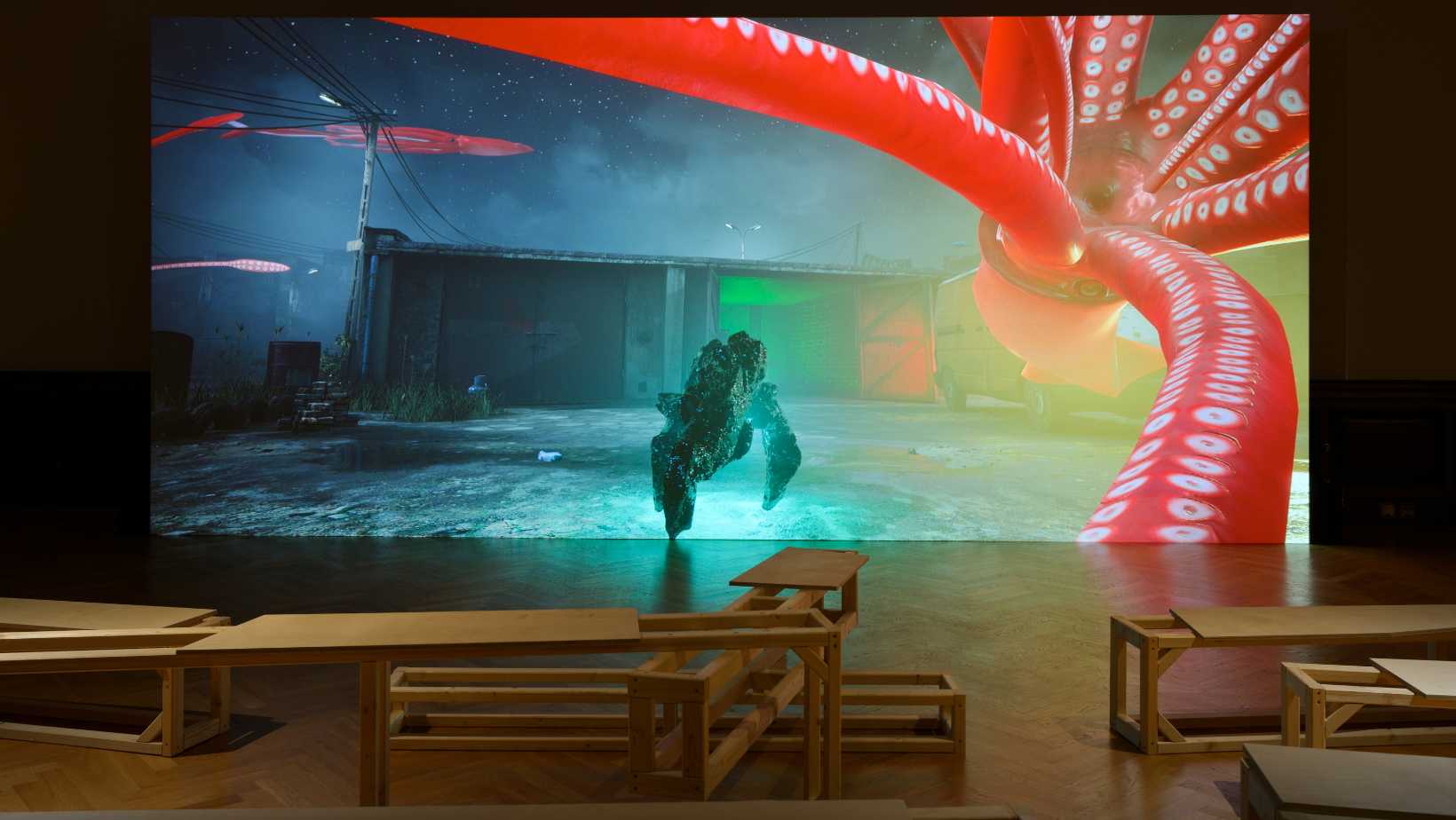
For his Prague debut, Rahal has turned the gallery into a collaborative game environment, inviting visitors to shape evolving myths alongside unpredictable, creature-like forms that react to sound, movement and touch.
Asked about his name, Rahal said it carries personal symbolism. “Sahej comes from the idea of the path of least resistance — my aunt chose it — while Rahal means traveller,” he explained.
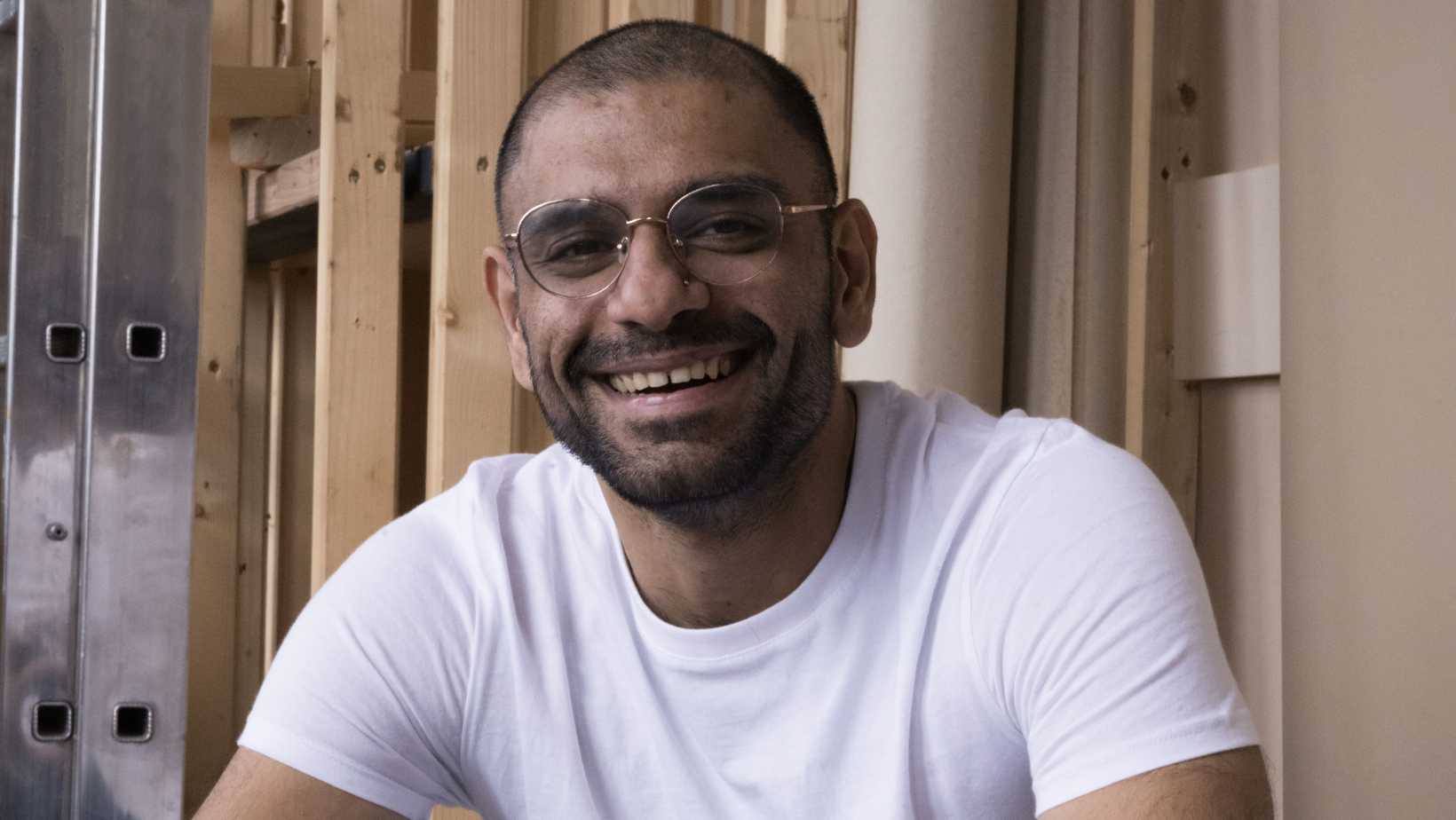
Sahej Rahal
Originally trained as a fine-art painter at Mumbai’s Rachana Sansad, Rahal first considered engineering and has a background in programming. He eventually merged those interests. “Art school helped me improve my drawing, but I realised I could combine that with programming. Ultimately, I’m interested in building worlds — whether through images, sculptures or games — all part of one unfolding universe.”
His work spans film, gaming environments and sculptural installations shown internationally, including appearances at major biennales.
Rahal draws inspiration from sources as varied as the poetry of the Indian mystic Kabir, ancient manuscripts, and the speculative writing of Ursula K. Le Guin, particularly her “carrier bag theory” of storytelling. In Prague, he deliberately leaves space for interpretation. “I like the possibilities audiences bring — the meanings they add themselves,” he said.
Material choice plays a key role. Rahal often works with discarded everyday objects to create a tactile, grounded quality. His paintings use layered pigments on terracotta-treated paper. “That uneven texture absorbs ink well,” he noted. “It gives a matte, almost earth-like effect, similar to rangoli drawings made on the ground in India.” Found wood, cardboard, expanding foam and spray paint form the basis of sculptures that loom over visitors like watchful figures.
Rahal openly describes himself as a “complete nerd.” His Discord username riffs on Luke Skywalker, reflecting a long-standing interest in science fiction and fan culture that surfaces throughout his work.
He also clarifies that the technology behind his installations is closer to video-game AI than to large language models. Systems such as finite state machines guide non-player characters that react dynamically to participants. Projects including Distributed Mind Test (DMT), Anhad, Atithi, and The Book of Missing Pages blur the boundary between player, viewer and myth-maker.
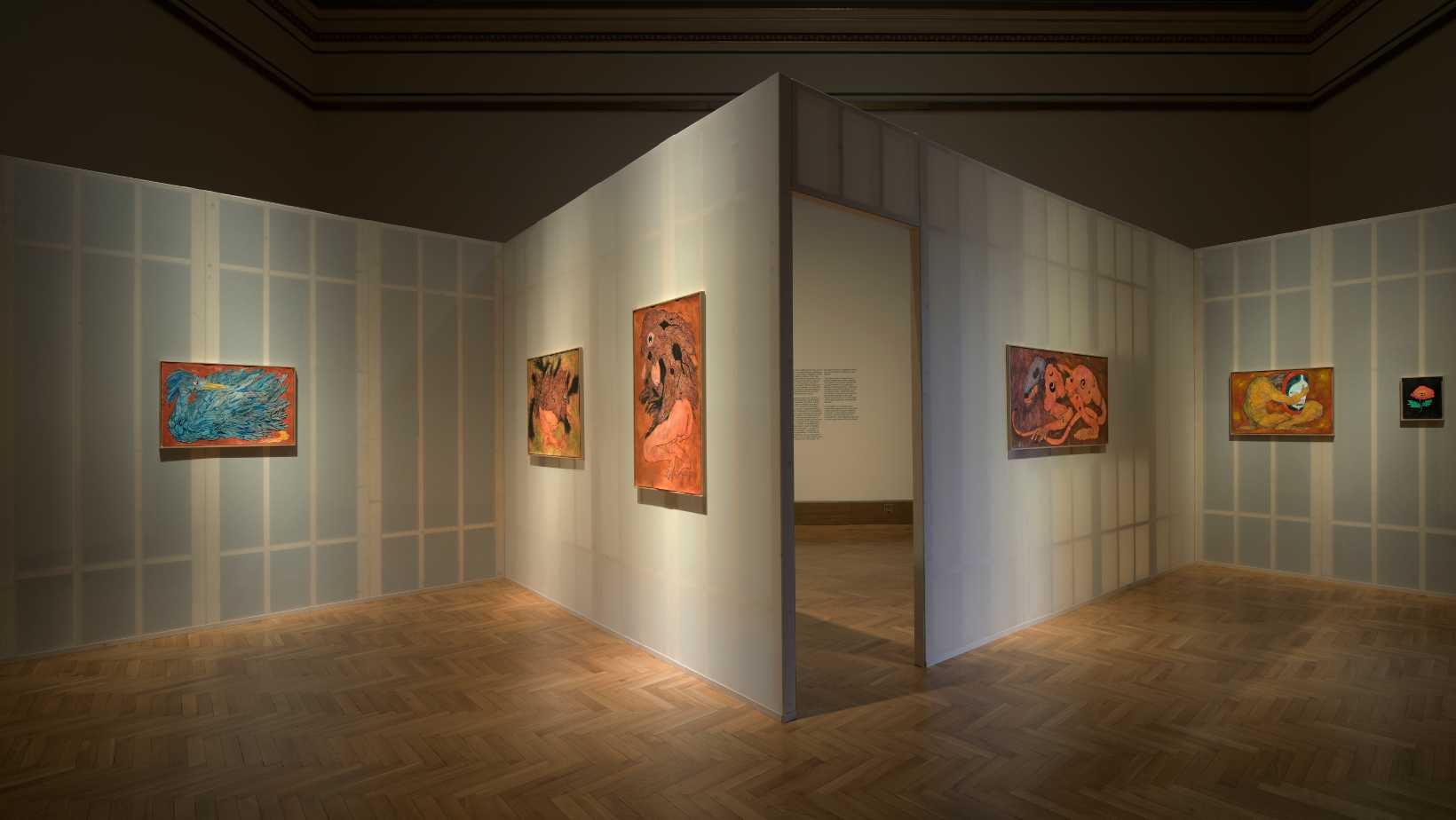
Elements of Hindu cosmology also appear in the exhibition, particularly narratives linked to Manu, where illusion is understood not as deception but as a structural part of reality.
The exhibition is designed to be interactive, with rooms conceived as playable environments. “The spaces here function like a game,” Rahal said. “They’re meant to let the imagination move freely.” Beneath the technological layer sits a familiar philosophical question: who we are, where we come from, and what it means to be human.
Curated by Edith Lázár and Eva Drexlerová, Beyond the City of Time runs at Galerie Rudolfinum until May 10, 2026. Rahal describes it simply as an open invitation: a space where visitors can help piece the world together alongside him.
Would you like us to write about your business? Find out more
-
NEWSLETTER
 Subscribe for our daily news

Most Popular