Sinatra Tribute Pairs Frank Sinatra Classics With 1930s Dining at Prague's Mánes
Partner article


Prague Morning
 Follow us on Google Discover
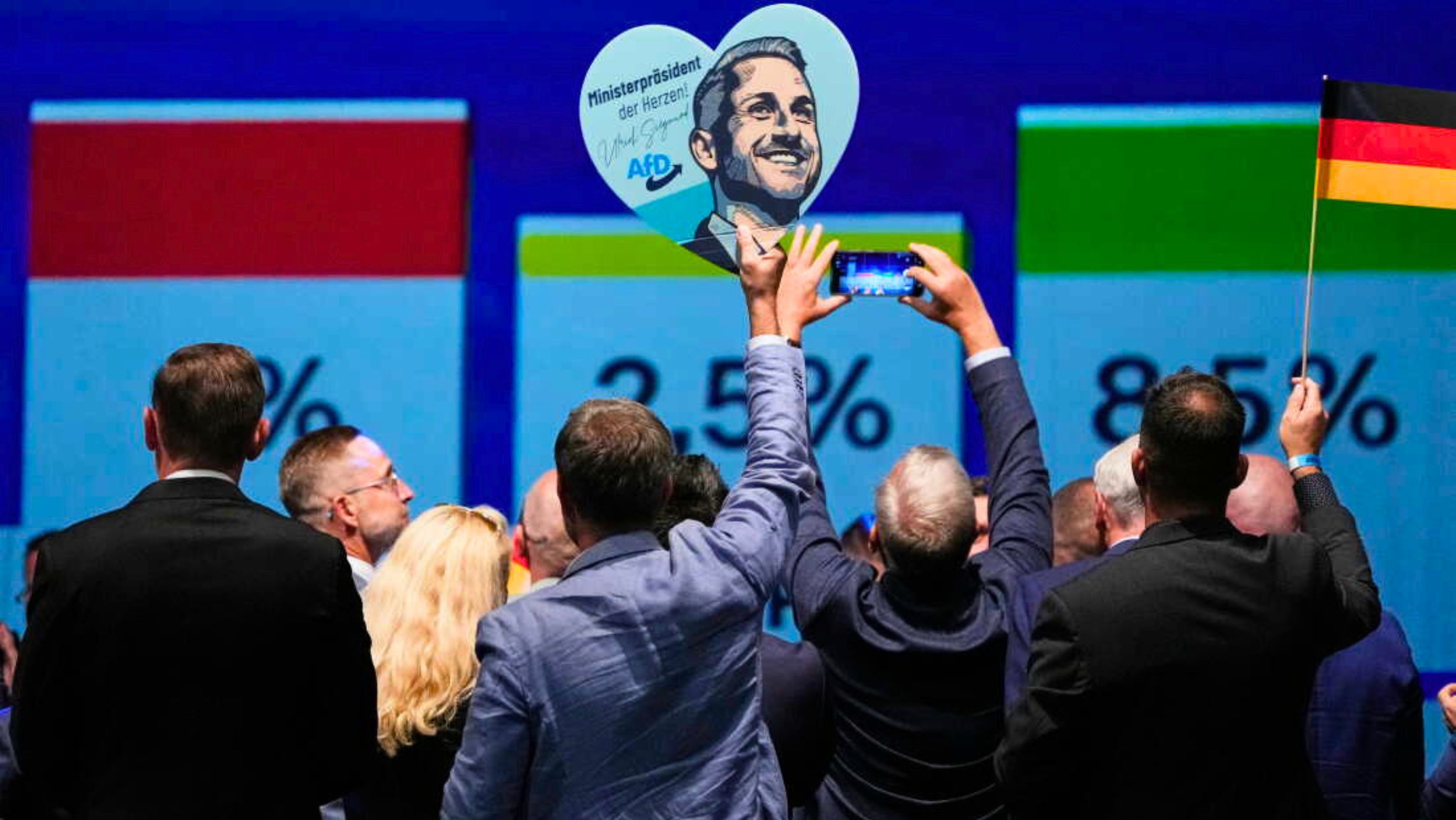

The Alternative for Germany (AfD) has secured a major victory in the Saxony-Anhalt state election, prompting different reactions from Czech politicians.
While some have congratulated the party and called for dialogue with its leaders, others have warned that the result reflects the growing strength of political extremism.
The result has also renewed debate in the Czech Republic over migration, security and how mainstream parties should respond to the AfD.

Martin Kupka, chairman of the Civic Democratic Party (ODS), described the result as a warning for Europe. He said democratic parties could not counter extremist movements simply by labeling them or ignoring issues that concern voters.
“Democratic parties must offer clear solutions: a tough migration policy, security, less regulation and no populist waste of public money,” Kupka said.
He added that the Czech Republic should avoid following the same political path.
Vít Rakušan, leader of the Mayors and Independents (STAN), similarly said the election should serve as a lesson for Czech politicians.
According to Rakušan, mainstream democratic parties risk losing voters when they leave issues such as migration and social problems to populist movements.
Rather than focusing solely on the AfD’s success, he said, democratic parties should develop practical and sustainable responses to issues that voters consider important.
Former Prime Minister Petr Fiala offered one of the strongest warnings. In a post on social media, the ODS politician called the result a “political earthquake” and said the AfD’s success could not be explained solely by the failure of mainstream democratic parties to address voters’ concerns.
Fiala argued that the reasons were more complex than economic dissatisfaction alone. “The causes are deeper and far from just economic,” he wrote.
The response from the Czech government’s current Foreign Minister Petr Macinka was more cautious. Macinka said the next steps by the AfD and Germany’s Christian Democratic Union (CDU) would be particularly significant.
He said it would be important to see how the winning party uses its strong mandate and how the CDU responds to the result.
Tomio Okamura, chairman of the Freedom and Direct Democracy (SPD) party and speaker of the Czech Chamber of Deputies, took a more positive view of the AfD’s performance.
He congratulated the party and said the election showed that voters were dissatisfied with the policies of Germany’s established parties, particularly the CDU.
“The people of the former East Germany have made it clear that they no longer want this policy to continue,” Okamura said in an interview with Czech Television.
Okamura also rejected criticism based on the AfD’s classification as a far-right party. He questioned the credibility of reports concerning extremism and pointed to similar accusations involving his own SPD.
Radek Vondráček of the ANO movement also called for a different approach to the AfD. Speaking to Czech Television, the chairman of the Chamber of Deputies’ foreign affairs committee said the election had given the party a clear mandate and expressed hope that it would be able to form a stable government.
“I hope that the time for dialogue is coming, when citizens will receive some appropriate result for what they have chosen,” Vondráček said.
Would you like your story featured here? Get in touch with our team at [email protected]





Already have an account? Log In