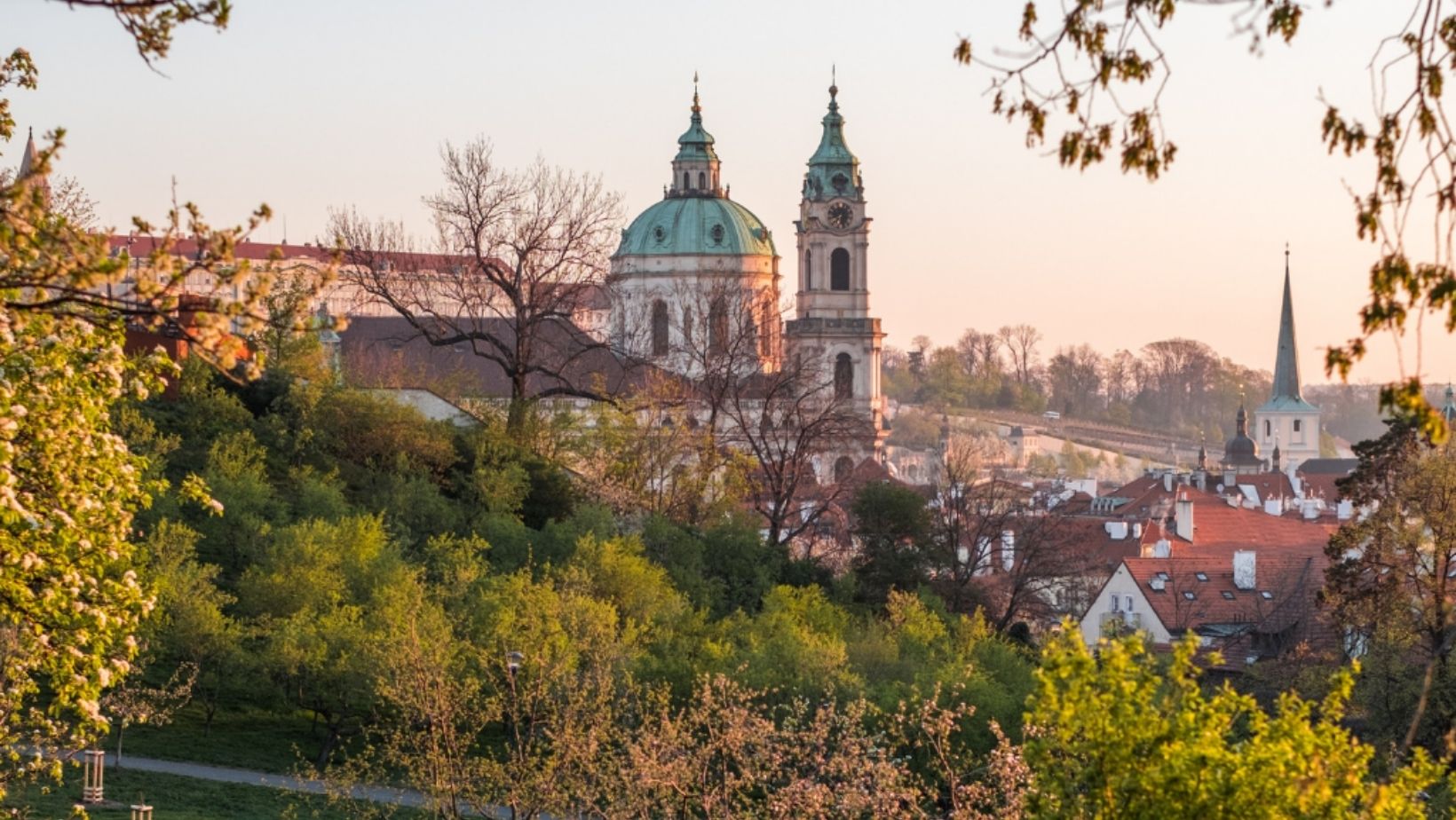
The City of Prague, in cooperation with Prague City Tourism launches a pilot project of refundable cups for events held on Prague’s embankments and at the Exhibition Grounds. The aim is to promote the use of sustainable dishware instead of disposable consumer plastics. The city has allocated CZK 2.4 million for the project. After the test phase, the system will operate on a fully commercial basis, without any city support. The City of Prague initiated the reusable cups project with the aim of strengthening the city’s ecology. Prague City Tourism was commissioned by the city to implement the test phase of the project and distribute the cups at events. This will run from September 2022 to February 2024. “At the moment, we have established cooperation with the Prague embankments and the Prague Exhibition Centre. We live in a time when we need to think sustainably, therefore we are launching a pilot operation and providing a sustainable and environmentally friendly version of refundable cups for selected Prague events,” says František Cipro, Chairman of the Board of Directors of Prague City Tourism. During the project, which will last 19 months, 50,000 refundable cups will be available. Throughout this trial period, event organisers can use the cups free of charge. After the roll-out phase, in early 2024, the city will evaluate the project...
Czechs want to protect the climate but are worried about the economy as slightly more than half of them (52%) believe the EU Green Deal will harm it, according to a survey presented by the STEM agency on Tuesday (20 September). But Czech citizens also have limited knowledge of the Green Deal, as just 12% of those surveyed knew its targets. Among everyone surveyed, a third said they wanted a strengthened Green Deal, while a third said they wanted it completely abolished or at least limited. Another third said they had no opinion. The survey also pointed to half the respondents associating the Green Deal with air and landscape quality improvements. “But they do not associate it with an improvement in their economic situation. And that, especially today, is a serious deficiency,” the survey’s authors said. Czech citizens also want the state to invest more in sustainable measures, such as renewable energy sources, according to the study called “Czech (non)transformation 2022”. Meanwhile, Environment Minister Anna Hubáčková said that all social groups, including low-income households, must have access to financial support for renewables or energy-saving measures. She added that few possibilities exist for low-income households to improve their heating or electricity...
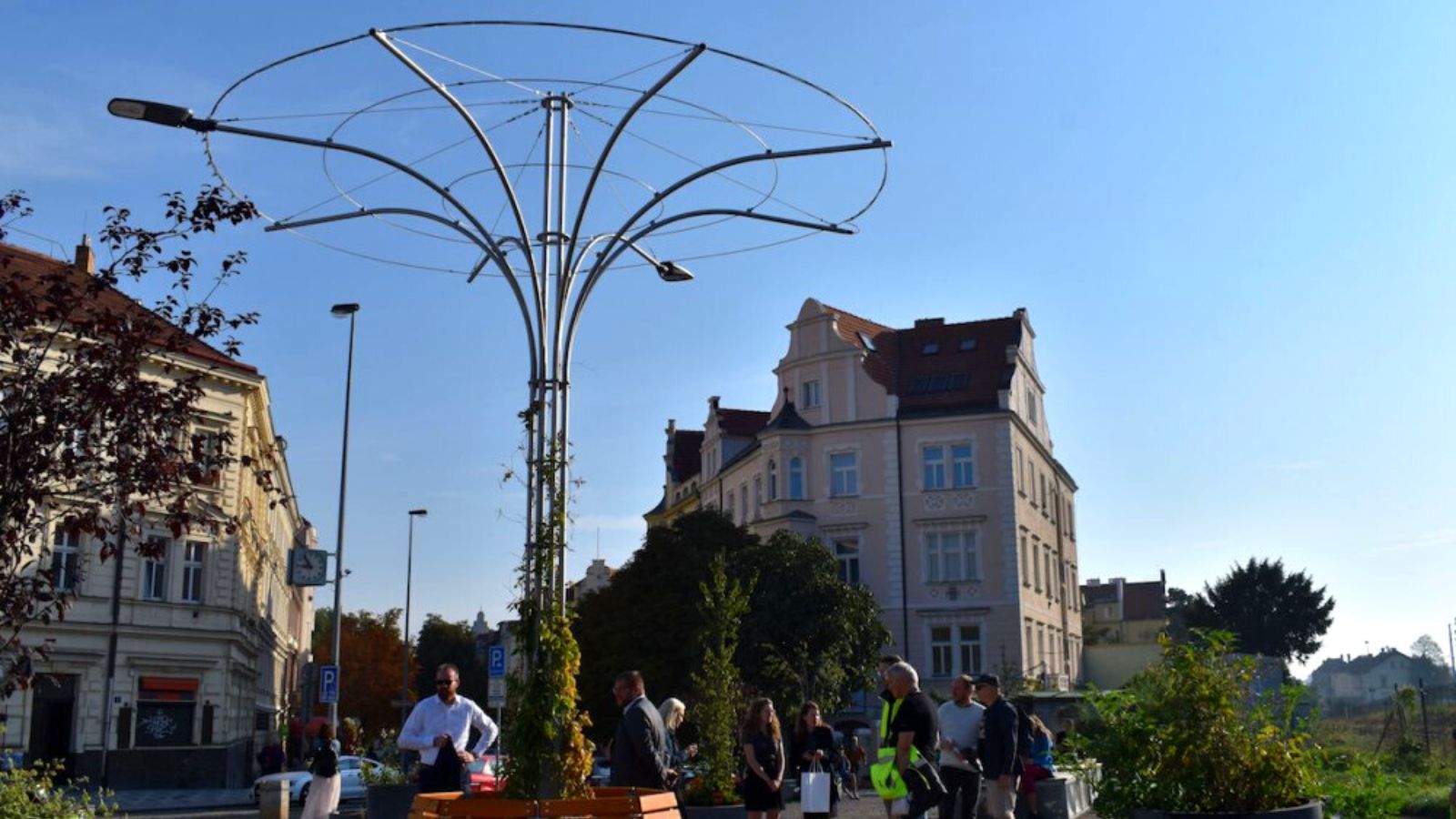
Two benches with LED lamps and climbing plants have already been installed in Prague 6 (Dejvická and Hradčanská stops). Such lamp benches will help green the city, illuminate it, save electricity and become a place of rest for local residents. Supertrees at Gardens by the Bay in Singapore are an engineering marvel. They are equipped with solar panels and rainwater harvesting systems that are used for irrigation. The trunks are vertical gardens, and at the top of the trees, you can dine in a restaurant. Singapore’s Supertrees inspired Prague authorities to create the first green lamps in the city. The production of two five-meter structures cost about half a million crowns. The lamps will be tested for three years. “The Czech University of Agriculture asked us if it would be possible to test this lamp in an urban environment. Moreover, we already have several strategic projects regarding how the city should respond to future climate change, and one of these topics is greening,” says Ondřej Kolář, Mayor of Prague 6. “This supertree is also unique in the fact that it is inspired by foreign countries, namely Singapore, where there are illuminated lamps resembling a tree,” added deputy chairman Tomáš Novotný....
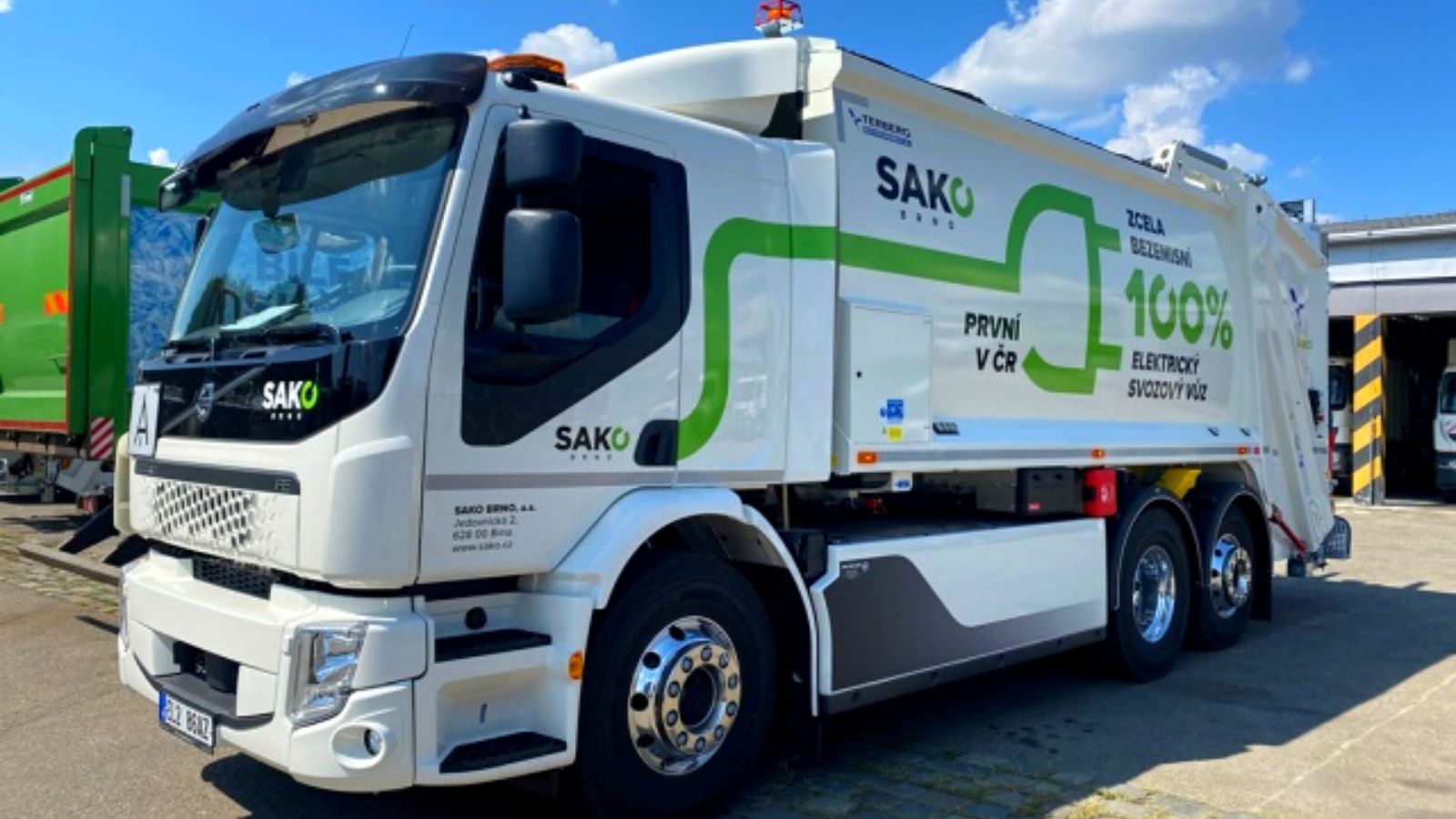
If you live in a city, you’ve probably had the experience of waking up at 3 a.m. or 4 a.m. to the sound of a garbage truck rumbling outside your apartment, pumping diesel exhaust through your window. If you live in Brno, however, that experience may soon change: the city now has the country’s first electric garbage truck, which runs on a nearly silent motor, and plans to slowly phase electric vehicles into its full fleet. The technological Volvo FE Electric truck battery is charged in 2 hours. A full charge is enough for 200 km, and at -10°C – for 70 km. But even this reserve of power will suffice for a standard eight-hour shift. The electric truck can transport up to 13 tons of garbage per day. At the moment, it is in operation in the areas of Židenice, Slatina and Černovice. Mayor’s Office plans is to buy several more trucks (one unit costs CZK 12 million). “A typical garbage truck drives about 2,000 kilometers a month and burns 450 litres of diesel fuel. The electric garbage truck does not produce emissions at all, which means it does not cause discomfort for passers-by or its crew,” said Deputy Mayor...
Which part of Prague is the greenest and which is the noisiest? Find out through Prague’s Institute of Planning and Development Prague’s most population-dense area is Prague 2. Prague 10 leads in the number of homes for the elderly in the capital. People will find the most job opportunities in Prague 1, and as far as kindergartens are concerned, Prague 6 has the fewest. How do we know this information? All of this and more can be found in the Catalog of urban areas from the workshop of the Institute of Planning and Development of the Capital City of Prague (IPR). It displays various information about all 57 city districts and about Prague as a whole. “The database contains statistical data from various areas, such as the economy, public amenities or the environment. IPR has now completely redesigned the six-year-old application and added new functions and data,” says IPR spokesperson Marek Vácha. The catalog of city districts displays IPR data processed for the purposes of Territorial Analytical Documents, which are related to a specific city district. The range of information that the catalog offers is vast — in addition to the basic things, like area, population density or the age...
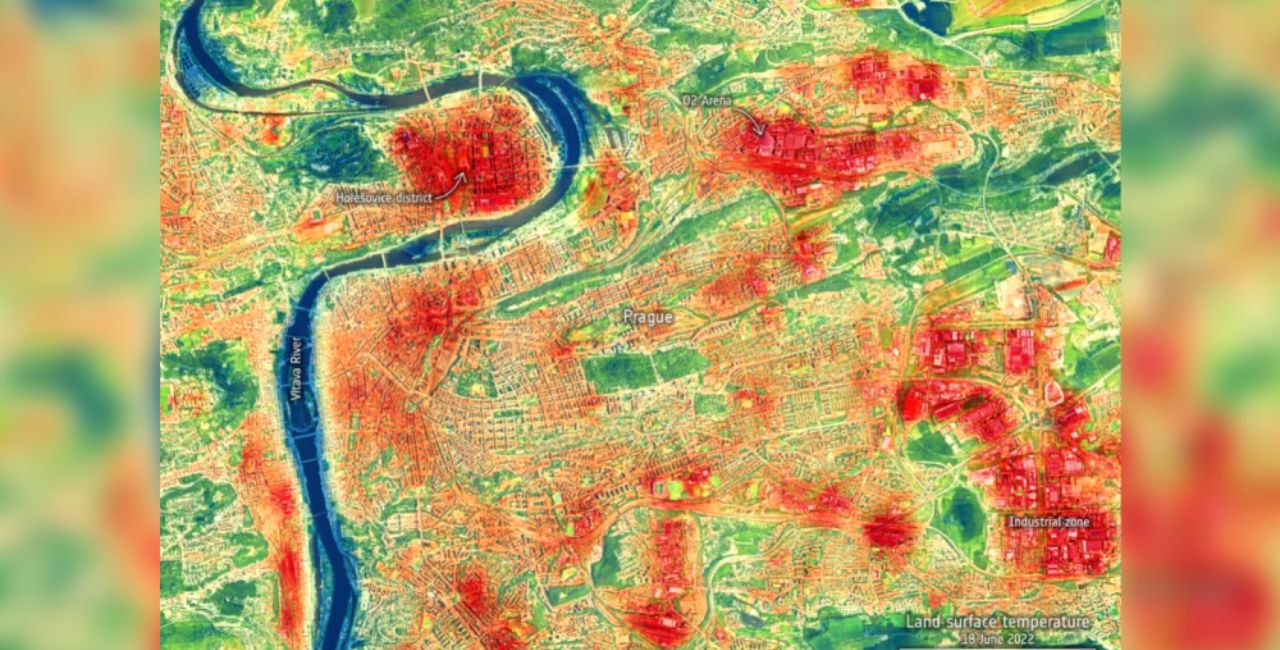
Holešovice, the surroundings of the O2 Arena, and the industrial zone in Šterboholy. These spots glow red in the temperature image from June 18th taken from the International Space Station. The sun heats surfaces to more than 45 degrees. What exactly does the picture show? What are its pitfalls? How can photovoltaic panels improve the situation? Landscape planning specialist Michael Pondelíček from the Prague Institute of Planning and Development answered all this and more. Could you describe what the June 18 image taken from the International Space Station shows? It shows what the temperature conditions are in Prague in instantaneous temperatures. So it shows the current temperatures in the given places. Since it was a warm day, we can therefore conclude that the image shows us an instantaneous temperature map. It is a simple idea of how the city is doing thermally on a normal day. We can also see white or dark red places on it where the temperature is around 50 degrees Celsius. And also the blue or green areas which are cooler and where the temperature drops to 30 degrees Celsius. Yes. The main one is the cooling corridor in Prague, which is the Vltava and its...
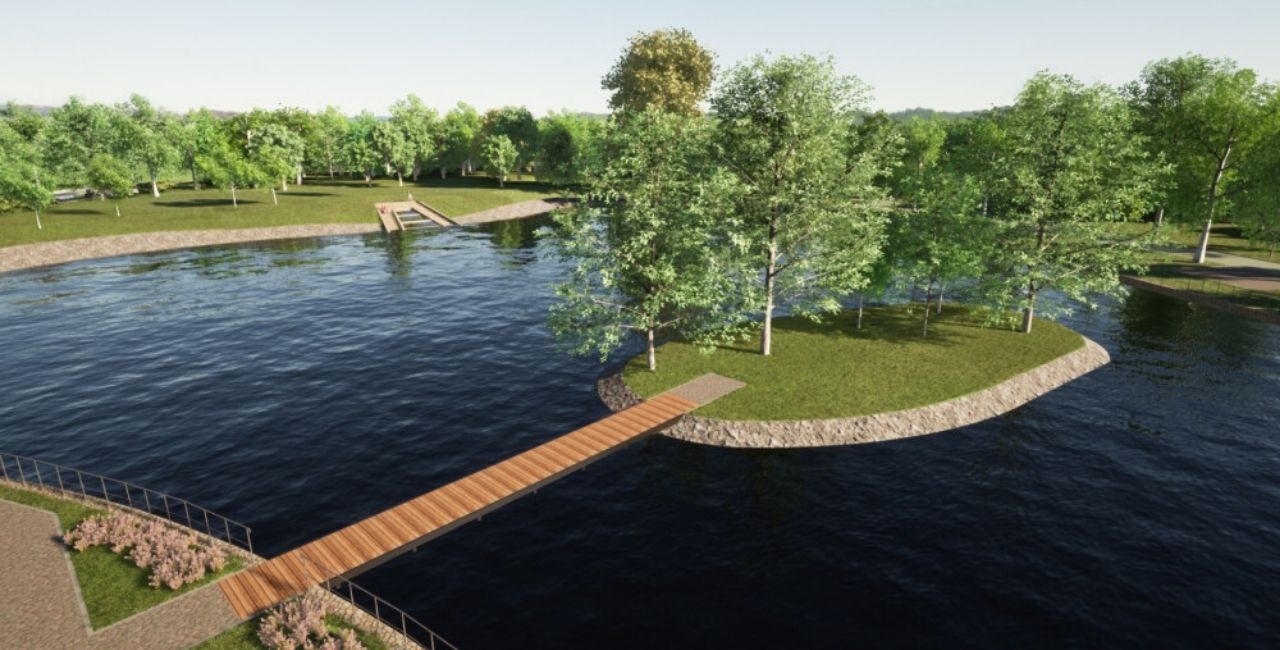
The water reservoir being built in Letenské sady should be ready this fall. However, the seven-hectare pond with an island will not be used for swimming or fishing, but rather will mainly function as a water reservoir. It should also help improve air quality. The reservoir stands between the Hanavian pavilion, the bastion of St.Tomáš and the Prague metronome. Some of its banks are vertical with railings, while others are gradual for easy access to the surface. Through the wooden jetty, visitors can reach the island. But the water in the pond will be used mainly for watering the greenery in Letenské sady. “Letenský rybník will not be intended for active recreation, people will only be able to swim in it at their own risk. Bathing of dogs will be prohibited, as will the movement of boats, the pond will not even be used for fishing,” reads the website of the city of Prague. Once completed, they want to plant wetland plants in the pond, and in the future, they are also planning two fountains and another water feature. Water with a volume of around 13.5 thousand cubic meters will be pumped into it from the Vltava through the Rudolph...
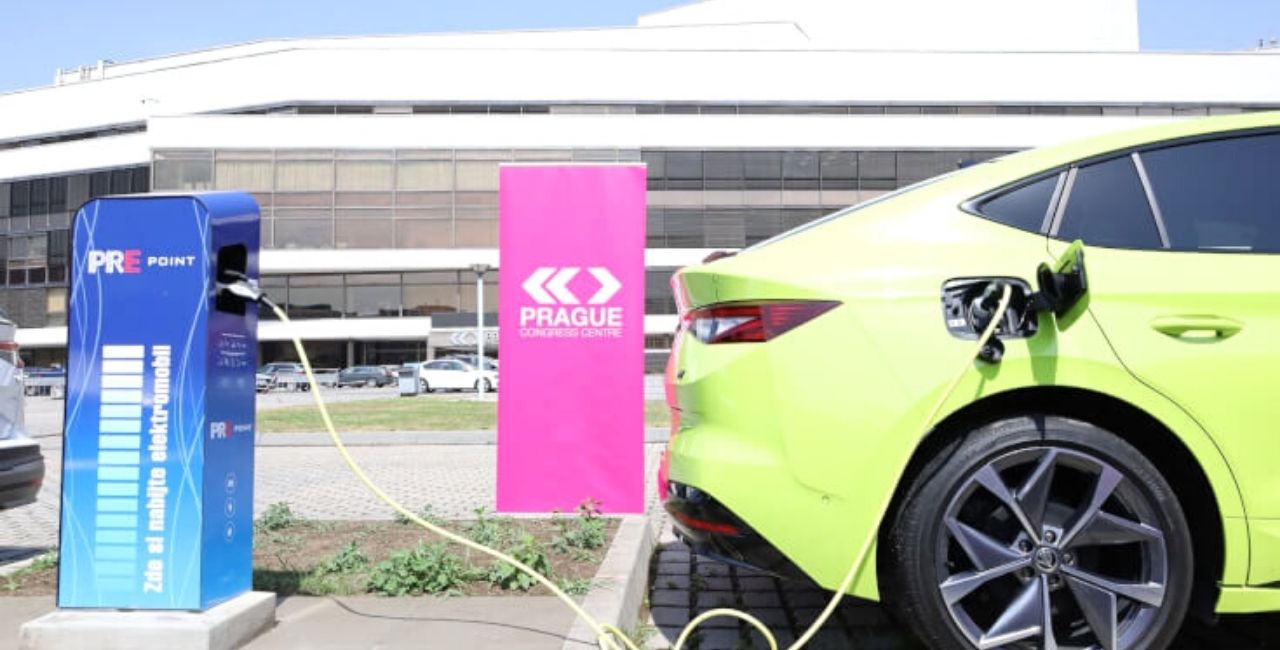
Pražská energetika has opened a set of eight public charging stations in the parking lot of the Prague Congress Centre, which will allow up to 15 electric cars to be charged at the same time. This is the largest charging point in Prague. Owners of electric cars can use one Hypercharger Alpitronic station with a capacity of 75 kW and 7 other so-called AC stations with a capacity of 22 kW. This new urban charging hub was created thanks to the support of the Ministry of Transport. It was co-funded by the Operational Programme Transport – Metropolitan Network II project. A set of seven AC charging stations with a capacity of 2 x 22 kW will allow charging of up to 14 electric vehicles at the same time. They are also complemented by a fast DC charging station with a capacity of 75 kW, which will enable fast charging. “Electromobility, especially in the capital city of Prague and in urban agglomerations in general, contributes to a better environment. Pražská energetika has been investing in the construction of charging infrastructure for 10 years. We have already commissioned nearly 380 charging stations not only in Prague, but we are also building a backbone network throughout the Czech Republic,” says Pavel Elis,...
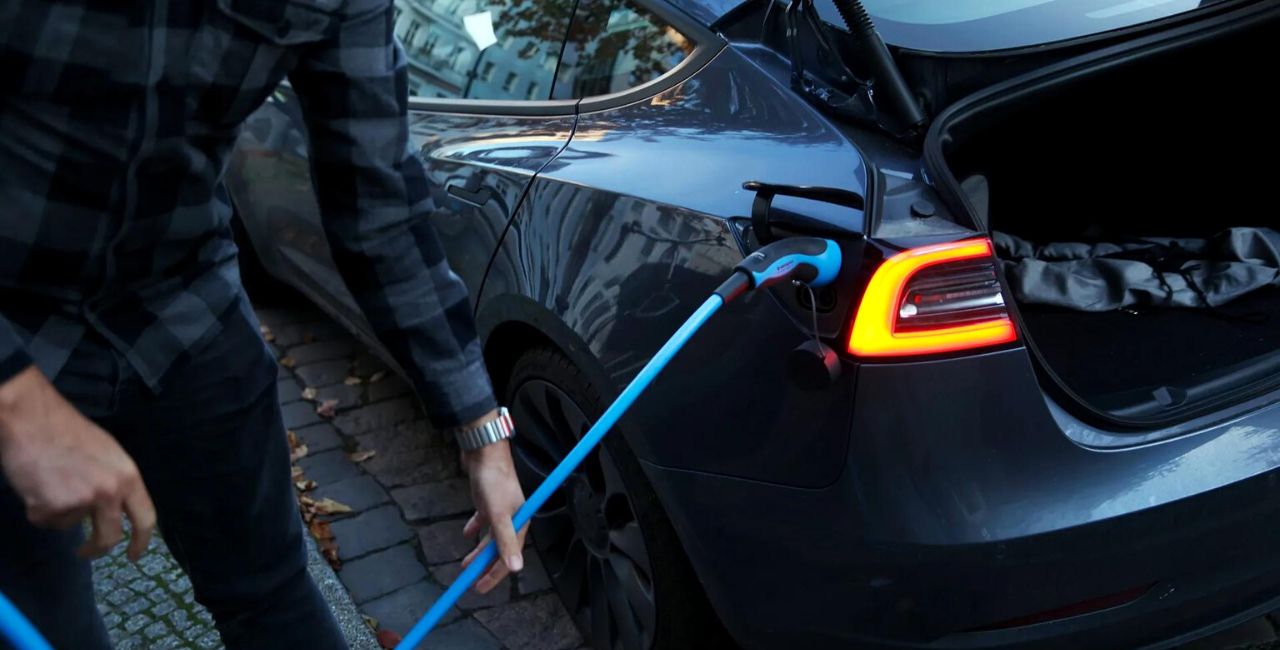
By 2025, 100 new high-speed chargers for electric cars will be built in Prague. Pražská energetika and Škoda Auto are jointly working to build them, following a memorandum of cooperation signed on Monday. In the Czech Republic, there are already more than 15,000 battery-powered or hybrid-electric cars, mainly concentrated in Prague. There are already around 2,000 recharge points available throughout the Czech Republic. Both parties to the memorandum have nominated representatives to a working group that will identify the locations where the construction of charging stations will have the greatest effect. By the end of 2025, approximately 200 charging points should each be built in the capital within a hundred HPC racks, each with an output of at least 150 kW. There are expectations that there could be as many as half a million electric cars in the country by 2030. The switch to electric vehicles will come with a larger government push to diversify its energy sources, and to move away from dependence on fossil fuels and towards renewable sources. Crunch time Major carmakers in Germany, South Korea and Japan — known as original equipment manufacturers or OEMs — are now making decisions about which production hubs to convert into...
What factors will influence transportation in the future? Some believe that ride- and car-sharing will assist in determining the answer. Shared mobility is a cutting-edge transportation approach that allows consumers to receive on-demand, short-term access to various forms of transportation. It can encompass car-sharing, bike-sharing, carpooling, and platform-based travel services, among other modes of transportation. Historically, people could move throughout an urban region in a variety of methods; but new travel options made possible by modern technologies and commercial models have given people even more options. Car-sharing has risen to the forefront of the sharing economy thanks to the convenience of requesting a car from our mobile phones. We spoke on various topics with Mr. Švaříček, the CEO of HoppyGo, a Czech based peer-to-peer P2P car-sharing company. Q: What is the vision of the HoppyGo, and how do you incorporate it into your daily activities? The vision is to offer an affordable, convenient and flexible mobility solution in a few clicks that is environmentally friendly and helps local communities. We fulfill our vision via connecting the owners and drivers via our platform, offering a very flexible mobility offering (starting on one-day rentals all the way up to a year, starting...
The Czech startup Mewery holds the claim of being the first European food-tech startup developing cultivated pork on a proprietary microalgae base.
In 2019, the Czech capital set a goal of planting a million new trees on its territory within eight years. Since the adoption of this plan, 370,000 new trees have been planted in Prague to date. These appear in emerging forest parks, city parks, orchards, and in the streets of the city. Trees play an irreplaceable role in adapting the city to climate change. “We also add trees to parks in the city centre, and plant them along brooks and ponds. City trees can also bear fruits, that is why we revitalize and set up orchards. Last year we planted a new and unique chestnut tree alley in Prague. Our goal is to add trees to the city streets. An integral part of our activities is the care of newly planted trees, which is essential especially in the first five years,” says the Deputy Mayor of Prague for the Environment Petr Hlubuček. In addition to new forests and forest parks, the city planted new trees in existing parks in the city centre, especially in two major green areas of Stromovka and Petřín in 2020. The aim of the Prague municipality is to plant trees even in the streets of the city. “Every tree in our city is very valuable...
Don’t have an account? Register
[swpm_registration_form level=”6″]
Already have an account? Log In
How Would You Like to Promote Your Business? PR ArticleDisplay bannersVideo productionNewsletter adsJob ListingsInfluencer Marketing
Your Email
We will come back to you within 24 hours with our proporsal