Milan Kundera, the 91-year-old author of “The Unbearable Lightness of Being” and other acclaimed novels, has decided to donate his private library and archive to a public library in Brno, where he was born and spent his childhood. The Moravian Library in the city of Brno said Thursday that the entire collection would be transported from Kundera’s apartment in Paris in the fall. The donated items include editions of Kundera’s books in Czech and some 40 other languages, articles written by and about him, published reviews and criticism of his work, newspapers clippings, authorized photographs, and drawings by the author. Everything will be made available to the public, mostly in digital versions, the library said. Czech Culture Minister Lubomir Zaoralek welcomed the move, calling it “an extraordinary cultural event.” Kundera fled communist Czechoslovakia and has lived in France since 1975. France is where he published his most famous books, including “The Book of Laughter and Forgetting” (1979), “The Unbearable Lightness of Being” (1984), “The Art of the Novel” (1986) and “Immortality” (1990). His later works, written in French, have not yet been translated into Czech. Kundera’s wife, Vera, told the library that her husband has been cooperating with a translator...
Throwing out of the window is a collective dehonestation and a dishonour of official authority. However, this act is called “defenestration” (from the Latin “de” – ie, from – and “fenestra” – or window) thanks to the Czech lands, where throwing dignitaries out of windows has become not only a symbol of dissatisfaction but also chaos and suffering for whole Europe. The first occurred on July 30, 1419, but its story began four years earlier when the church burned to death its beloved master Jan Hus. His thoughts did not die with him – they spread inexorably across the kingdom, gaining more and more support among the dissatisfied people. Czech King Wenceslaus IV had to join the disputes between Catholics and Hus’ supporters who demanded an altar sacrament of Utraquist. In response to the pressure of the Roman King Sigismund and the growing Hussite arrogance, he established anti-Hussite city council in the New Town. The Hussite priests had to leave the churches, their processions were forbidden, and their brothers were thrown into jail provocatively on the day of Jan Hus’ burning. The first Prague Defenestration was a reaction to the arrest of several radical Hussites by Prague City Hall because they were preaching about Communion in Both Kinds. During the early morning hours on July 30th,...
The replica of the Marian column at Old Town Square is not the only Hapsburg era monument that may be restored. Plans to revitalize Malostranské náměstí call for the statue of Field Marshall Radecký to be returned to the square but there is some opposition to that idea as well. Marshall Wenceslas Count Radecký of Radeč (1766-1858) was a soldier of Czech origin who led many victorious campaigns in the service of the Austro-Hungarian Empire, known for the victories at the Battles of Custoza (1848) and Novara (1849) during the First Italian War of Independence. The brothers E. and J. Max were designers of the monument, cast from captured Italian guns, and solemnly unveiled in 1858, i.e. after Josef’s death, in the lower part of Malostranské Square. Prague 1 councilors supported the intention to return the monument to Malostranské náměstí and the proposal has previously been endorsed by the Commission for Culture. “Before the complete reconstruction of Malostranské náměstí, an archaeological survey will be carried out so that the erection of the monument can be incorporated into the new plan. The overall transformation of the square should begin later this year,” said Prague 1 Town Hall in a Facebook post....
British violinist Daniel Hope will perform a special concert in a stunning setting: a floating stage on the Vltava beneath the National Theatre.
“Architecture for everyone” is the motto of Open House Prague this year, which invites visitors to see buildings and spaces that aren’t usually accessible in 10 city districts. “Due to the COVID-19 pandemic, this year we will meet our visitors on a new date, in September. To our delight, many of our partners who we had originally agreed with have decided to participate again,” says festival director Andrea Šenkyříková. Open House Prague festival will take place from September 1 to September 6, 2020. During the weekend of that week, visitors will be able to take a look around 73 usually inaccessible buildings and spaces, and starting on September 1, the weekdays will offer a supporting program consisting of guided walks, lectures, and debates on city architecture. The festival of open buildings is now a traditional architecture holiday that allows people to explore the hidden treasures of the city for free and enjoy the unique atmosphere of communality and excitement from exploring places. Beautiful views over Prague will be available from terraces and roofs, and visitors will also get to explore ancient undergrounds. The weekend program will be accompanied by supporting events on weekdays, which will provide visitors with more information...
Set between 1968 and 1989, Havel focuses on former Czech president life from 1968 to 1989 when he was a dissident under the Communist regime and relationship with his wife Olga and friend Pavel Landovský. Havel is directed by Slávek Horák and starring Viktor Dvořák in the titular role. The tagline of the movie, „Co byste obětovali pro pravdu a lásku?“ (“What would you sacrifice for truth and love?“), comes from the former president’s personal motto. Havel will be released in Czech cinemas from July 23. Synopsis It’s the summer of ’68 and the young Czech playwright Vaclav Havel is enjoying the heady atmosphere of newfound freedom as the iron grip of Soviet repression gradually loosens throughout Eastern Europe. In Havel’s Prague, politics are as exciting as theatre, sex, drugs, and rock ‘n’ roll. Havel, though, is a comfortable and acclaimed playwright, and he’s determined to avoid conflict that might upset his world. He resists confrontation with the political authorities – led by the celebrated politician Alexander Dubcek – and he tries to carry out his romantic escapades without undermining his marriage to his beloved Olga. Havel’s fling with freedom comes to an abrupt and violent end when Soviet Russia...
Tibet Open House in Prague launched a photography exhibition titled “If only for a single day…” by photographer Stanislav Doležal. The exhibition will be on display in the main gallery Monday-Friday from 13:00-18:00 until the end of September. The exhibition documents the historic meeting between the former Czech Republic’s President Václav Havel and the Tibetan spiritual leader, the Dalai Lama. The former president had also joined the nominations for the Nobel Peace Prize in 1989 with the Dalai Lama, who ultimately won the prestigious award. The Dalai Lama made the visit to the country in Feb 1990 after the then President of Czechoslovakia made a personal invitation, “I would be happy if Pope John Paul II and the Tibetan Dalai Lama, visited our country even if only for a single day.” The title of the exhibition attempts to carry the enthusiastic tone of the invitation that was set 30 years ago. For the 30th anniversary of the historic meeting, Tibet Open House’s exhibition will be open to the general public until the end of September with the additional programs such as screenings of thematic films and lectures. The press release prior to the launch said, “The visit of the Dalai Lama with...
Kramář Villa is open to the public on Saturday, as part of a series of government building “Open Day” events. Built between 1911 and 1914 by Karel Kramář, a politician and the future first Czechoslovak prime minister, the villa has over 700 m2 of floor space. Since 1998, this villa has been the official residence of the Prime Minister of the Czech Republic. Although it is difficult to categorize the architectural style of the villa, as Neo-Baroque features are complemented by typically Art Nouveau elements, it is considered one of the most striking examples of Prague villa design. It consisted of 56 rooms used for diverse purposes – including bedrooms, studies, dining and drawing rooms, guest suites, and even a bathhouse, on a total area of 700 square metres. Hot houses, a tennis court, and a park were built in its surroundings. The original interior of the villa was designed and executed in collaboration with such outstanding artists as J. Beneš, professor of the College of Applied Arts, and sculptor Celda Klouček. After the death of Karel and Nadezhda Kramář, the villa passed into the ownership of the Karel Kramář Society. At the end of the 1930s it was administered by the National...
The seventeenth edition of Colour Meeting Festival invites you to Czech and international music and theatre scene.
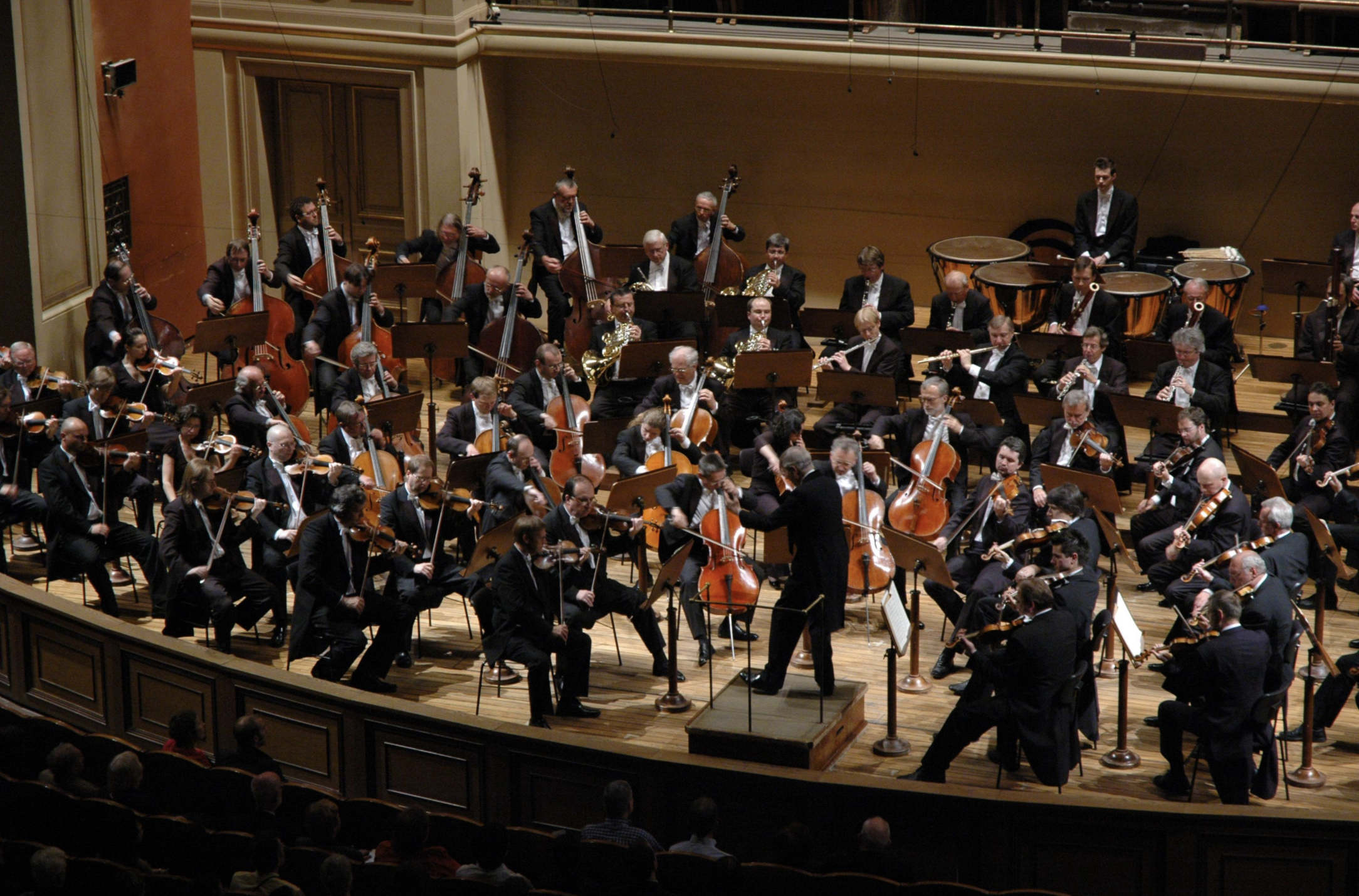
The concerts in the Wallenstein Garden have become an imaginary landmark dividing the old and the new FOK seasons, and this year is no different. On August 26, Wallenstein Garden hosts a classical music concert starting at 5 pm. You can enjoy the Symphony No. 5 by Ludwig van Beethoven, the Waltz of the Flowers by Tchaikovsky, and music from the popular series Game of Thrones. The garden was created at the same time as the Wallenstein Palace in the early 17th century, in the lower part of the Malá Strana District. It displays a fine example of Mannerist layout and decoration, with very diverse sections. It is dominated by an aisle lined with bronze sculptures, an impressive Sala Terrena, and an amazing artificial grotto. During the last renovation in 2012, the appearance of the gardens was restored into the original state from 1920’s. Address: Wallenstein Garden (Valdštejnská zahrada), Letenská, Praha 1 – Malá Strana, 118 00 Program: Ludwig van Beethoven Symphony No. 5 in C minor Op. 67 Pyotr Ilyich Tchaikovsky Waltz of the Flowers Film Music Pirates of the Caribbean, Game of Thrones, Dinner for Adele Jan Kučera | conductor Free admission.
Affected by the COVID-19 pandemic, the Karlovy Vary International Film Festival unveiled a scaled-down program of movies on Friday with an opening ceremony in an empty auditorium and a star-free red carpet. The Karlovy Vary International Film Festival announced in April it was canceling its main events as the novel coronavirus shuttered cinemas and mass gatherings. Restrictions have since eased, allowing the festival’s president, actor Jiri Bartoska, to unveil a list of 16 foreign and domestic films on Friday. Full festival in 2021 He gave his speech in the festival’s main venue, with the red carpet laid out at the entrance but no guests around to walk on it this year. The event usually draws A-list celebrities, dozens of films and hundreds of fans to the screening rooms in the spa town of Karlovy Vary from June to July. This year organizers said the 16 films will instead be screened in 96 cinemas across the country. “Each year at this moment, we present the Crystal Globe (the festival’s award), and this year it belongs to you, cinema managers and spectators,” Bartoska said in the speech that was recorded to be screened at the cinemas before each film. “This year, (the festival)...
Summer cinema sessions will start on July 7 right on the rooftop of the Prague Exhibition Palace (Veletržní palác).
Don’t have an account? Register
[swpm_registration_form level=”6″]
Already have an account? Log In
How Would You Like to Promote Your Business? PR ArticleDisplay bannersVideo productionNewsletter adsJob ListingsInfluencer Marketing
Your Email
We will come back to you within 24 hours with our proporsal