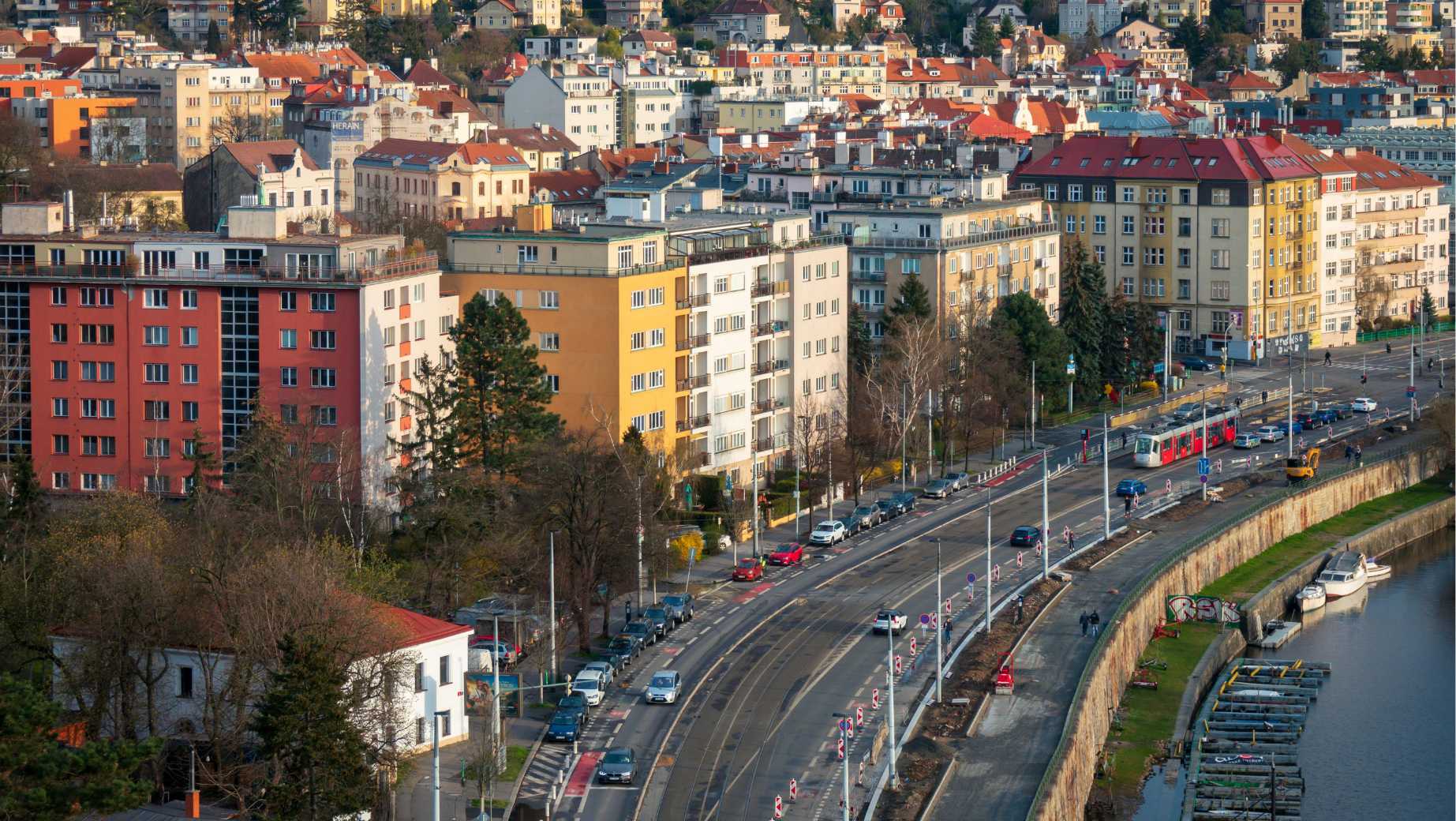
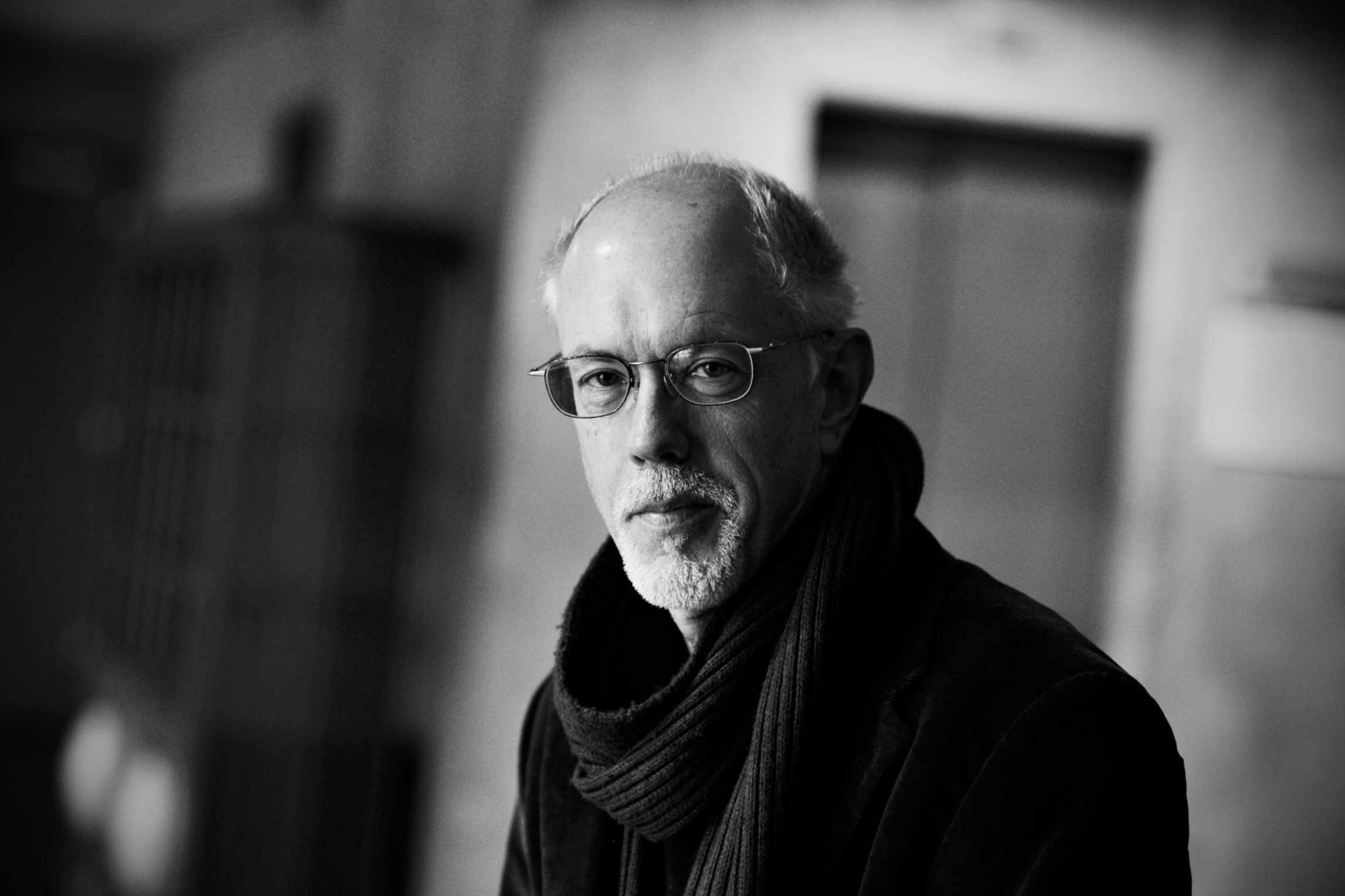
When he first visited the Czech Republic in the 1990s, the American photographer Matthew Monteith was taken with the details of ordinary life in this country in transition. Captivated by the ineffable—a mood, a sense of place—he made repeated visits and in 2001—3 traveled throughout the country photographing with the hope of creating a contemporary allegory that reflected ideals found in old postcards and Czech photography from the 1920s and ’30s. Most of these pictures were taken in or around Prague, in his friends’ homes, on the streets, or in small towns where it is as likely to find a centuries-old castle as an ominous nuclear cooling tower looming large. Although it is important to know where these photographs were taken, ultimately their meanings are not contingent upon place. More info about the project Czech Eden here
Curated in collaboration with Lady Gaga, the April 18 event will celebrate health workers globally.
Gene Deitch, one of the last of the major figures who worked during the Golden Age of American animation, passed away last night in Prague.
By Maximilian Colloredo-Mansfeld—Anglo American University The COVID-19 (Corona-virus) started in Wuhan (Hubei), China, in late 2019 apparently from a mutated animal virus. Before the lockdown of the city of Wuhan and the Hubei province, the disease was not considered such a danger by the Chinese government, and even though necessary measures were eventually taken, it was too late and a pandemic soon struck globally, reaching Prague in March. Badiucao, a suddenly famous Chinese human-rights activist and political caricaturist, who is exiled from China, but with his family still there in danger because of the strict Chinese government, has since mid-March also put up posters throughout Prague in an attempt to protest how the Chinese government has handled this situation. Badiucao was born in 1986 in the outskirts of Shanghai and, after Ai Weiwei, he is today becoming one of the most famous activist artists coming from China. Since he started with his rebellious caricatures career back in 2011, he has been featured in CNN, BBC, and Amnesty International, to name a few. And while his exhibitions travel throughout the world, criticizing China for their actions against human rights, he and his family are naturally under constant threat from the Chinese...
On the night of 13 April 1950, State Security operatives, policemen and People's Militia units surrounded 75 Czech and 62 Slovak monasteries.
Are you missing concerts and live venues? Tune in to the new United Live Radio – A Non-Commercial radio whose sole aim is to connect fans missing live music with music promoters and event organizers counting the minutes when they can become active again. Despite the difficult situation, the organizers and artists are trying to keep working and bringing their fans what they do best – a magical quality music experience. This new project, United Live Radio, was created for this purpose. The radio will aim to substitute temporarily the lack of activities in clubs and venues, and the absence of concerts and music festivals. Actors of all parts of live music scene of the Czech Republic will prepare specialized programs for listeners. This Non-Commercial Radio is made possible by leading Czech festivals, concert promoters, clubs and venues, wanting to connect the whole music community in this way. Listeners will be able to tune in the United Live Radio on website every day from Friday, April 10 at 15:00 for the next 30 days. “The impact of restrictions on live culture is enormous, and this project, which is being developed in collaboration with festivals, concert promoters, venues, and artists, wants...
By Mandy Archer—Anglo American University Three new paintings, along with twenty-five other works (paintings, film & video) from the Belgian artist Michaël Borremans are being exhibited for the first time at the Galerie Rudolfinum. While this exhibition, titled The Duck, has been closed due to COVID-19, artwork from The Duck and interviews with Borremans can still be viewed on the gallery’s website. The Duck began with a video and a film, bringing visitors onto Borremans’ stage as if he sets up the actors on the screen. There were two videos positioned on the left-side wall and one large vintage film projector at the entrance. The two “paintings” on the left were Borremans’ figures that moved like “moving pictures.” The larger projected image showed a black and white film of three men with blurred faces sitting in chairs each slightly apart from each other. This loops for one minute, with no movement from the men and only a change of lighting. Nothing is static in the almost empty room as the figures move within the frame and alert the viewer to Borremans’ affection for cinema, daring us to forget where we are and tune in to the moving images. The videos...
The largest Czech gallery does its best to remain open digitally even at the time of the coronavirus pandemic.
‘Nic’ means ‘nothing’ in Czech and that is the aim of this project – as cultural events cannot take place, cultural institutions and artists need your support.
Theatres, galleries, cinemas, music clubs, and other cultural institutions saw the first impacts of the coronavirus threat during the last few weeks. Thanks to the project called #KULTURAŽIJE, which was initiated by Mall.tv in conjunction with the fundraising platform Donio.cz, viewers can watch live broadcasts of various shows and performances online from home. Starting from today, April 6th, you can enjoy these events on Prague Morning Facebook page. #KULTURAŽIJE was spontaneously started just a day after the ban of events in the Czech Republic on March 10. Originally planned with just a few concerts, and theater performances, #kulturažije has grown into the largest local online festival. In the following days, you can enjoy live concerts by Čechomor, Mňága a Žďorp, Czech National Symphony Orchestra and many more. Over thirty concerts, theatre, and dance performances and other cultural events have been broadcasted online for the past two weeks by MALL.TV For the first time on the Czech Internet, viewers could watch the play of the world-famous pianist Ivo Kahánek, and Cirk La Putyka, a Czech ensemble dedicated professionally to the genre called “the Contemporary Circus”. #KULTURAŽIJE can be watched for free in the Czech Republic and Slovakia at www.mall.tv, ion mobile...
By Andrew Delave – Anglo American University Witness the disintegration of Berlin’s Olympic Stadium in David Claerbout’s exhibition “Olympia (The real-time disintegration into ruins of the Berlin Olympic stadium over the course of a thousand years),” at Galerie Rudolfinum; and even while the museum is closed at this time due to the COVID-19 virus, the exhibition is accessible virtually through mini-pieces on YouTube, Facebook, and Instagram. The renowned Belgian video-artist (born 1969) uses 3-D rendering technologies to explore the withering effects of time on man’s creations, and so his 2016 video projection Olympia is a real-time model of the Berlin Olympic Stadium built under Adolf Hitler for the Olympic Games in 1936. While the venue has seen numerous renovations throughout the century, the exhibition delves into the conceptual ideas of decay over an extended timeframe. The videos, therefore, project models of the Olympic stadium devoid of human interaction. Instead, watch as weeds, trees, and other natural elements slowly intrude on the concrete foundations of the stadium itself. The projection is monumental in scale, as it is shown across two wide surfaces in one of the museum’s main gallery halls. The larger screen guides the viewer with the movement of a...
The Czech flag today celebrates 100 years. The red-white-blue flag was created as the state symbol of the Czechoslovak Republic, established in 1918. After its split in 1993, the Czech Republic kept the original flag, while Slovakia chose another one. The designer is generally accepted to have been Jaroslav Kursa, an employee at the Interior Ministry’s archives and the most active member of a Ministry commission set up to create the new flag. The flag was officially approved by the National Assembly of Czechoslovakia on 30 March 1920 and since then, it has been in continuous use, with the exception of the German occupation of Czechoslovakia during World War II. Additionally, during a short period following the Velvet Revolution, between 1990 and 1992, the Czech part of the Czechoslovak federated state adopted the previous red and white flag. The first two colours Kursa picked were white and red – the traditional colors of Bohemia, representing the sky and the bloodshed for the freedom of the country. But because this flag would have been almost identical with the Polish flag and had the same colors as the Austrian flag Kursa added a blue wedge on the right-hand side. Blue is the traditional colour of Slovakia, but it...
Don’t have an account? Register
[swpm_registration_form level=”6″]
Already have an account? Log In
How Would You Like to Promote Your Business? PR ArticleDisplay bannersVideo productionNewsletter adsJob ListingsInfluencer Marketing
Your Email
We will come back to you within 24 hours with our proporsal