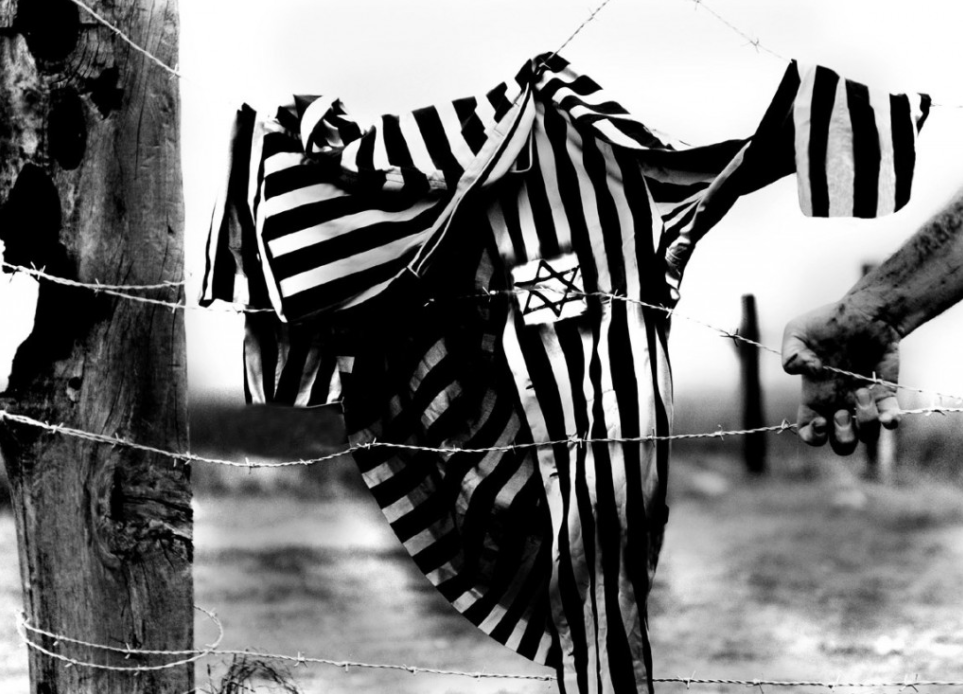
A number of Czech towns and cities mark today the Holocaust Remembrance Day with traditional outdoor ceremonies at which the names of Holocaust victims are read out by politicians, church dignitaries and leading cultural figures. Between 1940 and 1945, 1.1 million people were murdered at Auschwitz, most of them Jewish. The prisoners at Auschwitz included 50 000 citizens of Czechoslovakia, about 6 000 of whom survived. The Nazis murdered six million people of Jewish origin during the Second World War. The interwar Jewish community of Czechoslovakia was 350 000 strong, 250 000 of whom died during the war. It marks the anniversary of the Warsaw Ghetto Uprising in 1943. In Hebrew, Holocaust Remembrance Day is called Yom Hashoah. When the actual date of Yom Hashoah falls on a Friday, the state of Israel observes Yom Hashoah on the preceding Thursday. When it falls on a Sunday, Yom Hashoah is observed on the following Monday. The event is organized by the Terezín Initiative Institute. Author: red
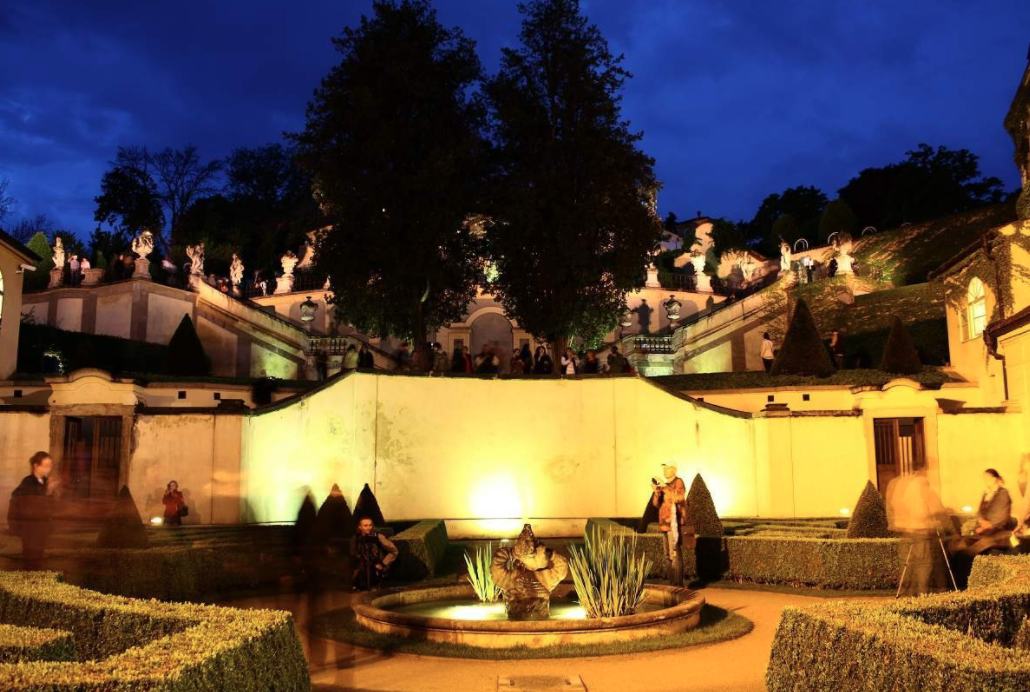
On April 26 from 8 pm to 10 pm the Baroque Vrtbovská Garden will be festively lit for an illuminated view of Prague by night. The festive lighting of this garden takes place two times a year – in the spring and in the autumn. You will be surprised by the magic and beauty of this place. It offers an amazing view of the Prague Castle and part of the historical center. Entry to the terraced Italian garden is through Vrtba Palace from Karmelitská street. The garden cuts into the Petřín slope and stretches from the courtyard of the palace to the southwest. The creation of this magnificent palace garden is associated with the construction boom around 1720. The garden was designed by František Maxmilián Kaňka, who first renovated the palace for Jan Josef, Count of Vrtba and then created the garden. More information here. Author: red
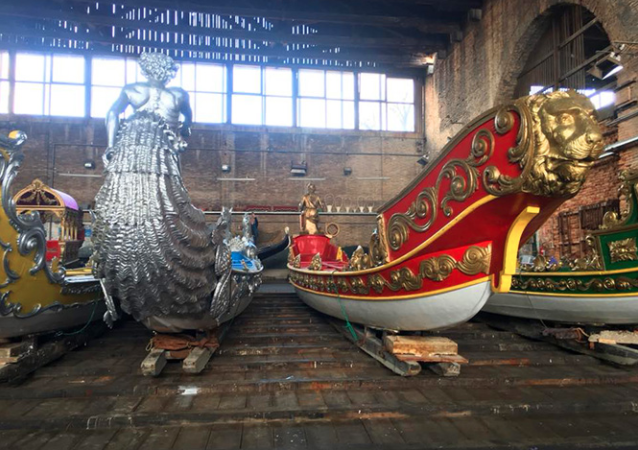
Two unique ceremonial gondolas will leave Venice for the first time in history to show off before Navalis Saint John’s Celebrations on May 15. In Venice there are only 10 ceremonial gondolas, which are called “Bissóna“. The Bissóna is an ancient Venetian ceremonial boat, rowed by eight oarsmen in costume, lavishly decorated with allegorical sculptures and gold-plated carving. It was used in parades or to welcome important people. The two gondolas will leave Venice thanks a special permit from the mayor’s office. The organizers of Navalis insured them for Kc 30 million. The feast celebrate the anniversary of canonization of Czech patron St John of Nepomuk, the patron of all people from water, and it takes place always on the eve of the St John’s day – 15th May. Saint John of Nepomuk is also the patron of all gondoliers and one of the eight patrons of Venice. The statue of Saint John of Nepomuk is the only Baroque statue situated right on the bank of the Grand Canal in Venice, Italy. Author: red
The Czech Republic has a rather unusual tradition on Easter Monday. Boys get willow branches, braid them together into whips and decorate them with ribbons to whip girls with for luck and fertility. During communism in the Czech Republic, many religious connotations were suppressed, and so Easter started to be seen as an occasion to have some fun time. On Easter Monday men use to whip the girls’ bottom with special branches, called “pomlázka”. Pomlazka is a kind of a whip composed of osier twigs braided together. Men can travel around the city in groups and go to visit some relatives, friends, and they can whip all the women they want. This thing is called ‘Easter birching’. It’s supposed to be a gentle whip but sometimes it happens that the touch is not so light as expected. Anyway, the girls have to bear the whipping and they can throw buckets of water at them (if frozen it’s better) and this way the morning becomes very funny and hilarious. At first sight, it seems like a sexual joke between men and women, but it’s not. The symbolic meaning is to drive away from the evil ghosts and to bring strength and good health to all the...
This pilgrimage church, built in honor of St John of Nepomuk, a 14th-century martyr canonized in the 18th century, stands at Zelená Hora, not far from Ždár nad Sázavou in Moravia. Constructed at the beginning of the 18th century on a star-shaped plan, it is the most unusual work by the great architect Jan Blazej Santini, whose highly original style falls between neo-Gothic and Baroque. The composition of the property is based on the aesthetic concept of a perfect central complex with an explicit central vertical dominant. The symbolic five The layout of the building has mystical aspects mentioned in the even at the time when it was complete. The basic principle is the composition of the five-pointed star (five-pointed ground plan, five entrances, five altar niches, twenty-five chapels around a central space, five stars and five angels on the high altar), the symbol not only of the five wounds of Christ, but also of the five letters in the Latin word „tacui“ (I kept silent) and above all the five stars in the halo of the martyr St. John of Nepomuk, which the legend tells us were seen above his drowned body. The purpose of the church, which was financed...
Don’t have an account? Register
Already have an account? Log In
How Would You Like to Promote Your Business? PR ArticleDisplay bannersVideo productionNewsletter adsJob ListingsInfluencer Marketing
Your Email
We will come back to you within 24 hours with our proporsal