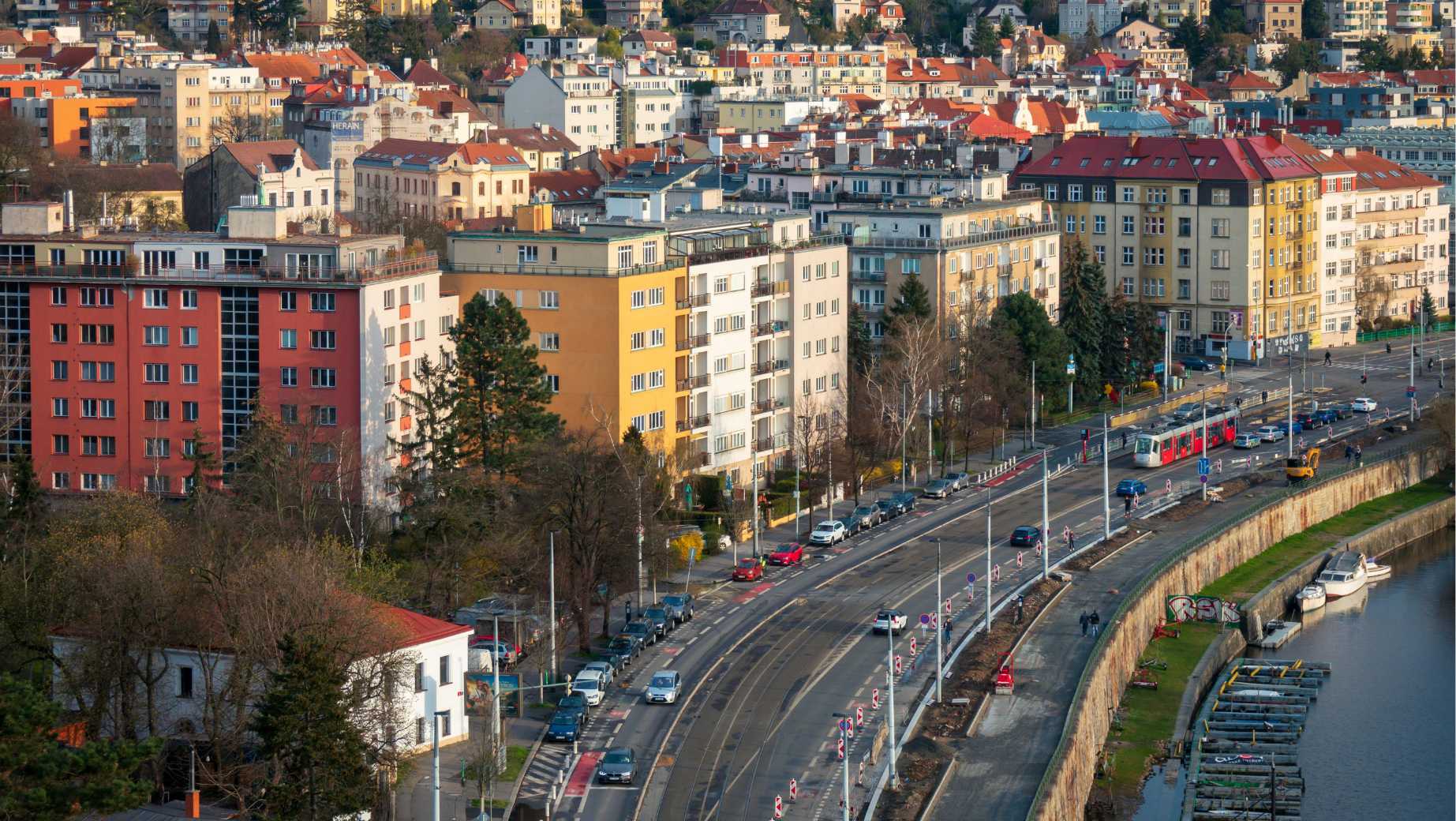
On 7-8 August, you can take part in guided tours and marvel at the palace’s interiors This weekend, residents and tourists in Czechia will have the opportunity to visit one of the most beautiful buildings in Prague: the Liechtenstein Palace. Although this palace is typically off-limits, the Office of the Government of the Czech Republic will make it open to the public on 7 and 8 August. The government’s action is part of its participation in the Open House Festival which seeks to make inaccessible buildings open to citizens and tourists. According to the government’s website, the Liechtenstein Palace dates back to 1555. Although it has had several owners over the years, the palace became the property of the Municipality of Prague in 1897. Now, it is used by the government for various official purposes and events. Thus, the public will be able to see and walk through halls and rooms which are currently used for conferences, state delegations and protocol events. Expanding on this, the government disclosed that numerous influential individuals have stayed and/or visited Liechtenstein Palace. Some of these include King Juan Carlos of Spain and Queen Sofia, Queen Elizabeth II of Britain, as well as the Japanese...
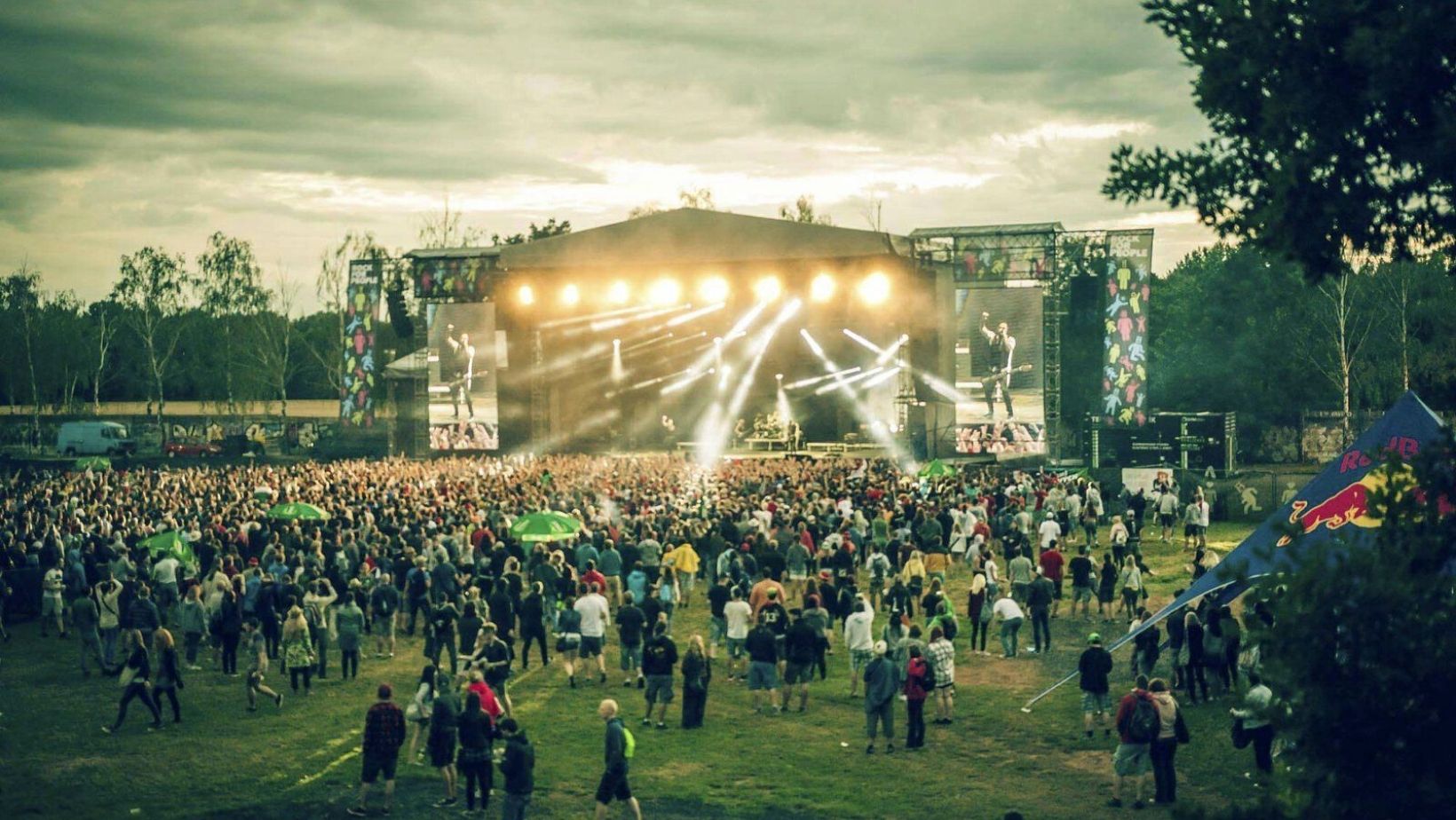
One central facet of the pandemic still dominating lives all over the planet is the collapse of numerous industries once taken for granted. Live music is no exception. From the first lockdown, all forms of live music completely vanished. Its return to a recognizable form is occurring only gradually. This is the opening installment – focusing on club culture – of a three-part series that examines COVID’s impact on live music in the Czech Republic. The second part will focus on smaller, indoor concerts, while the final piece of this series will examine festivals. Prague Morning recently caught up with local DJs/producers DJ Tuco (Radio 1’s The Work Out, Footclan, Meanbucket), Z-Kat (Masquerave) and Eva Porating (Ankali) to discuss, among other things, the possibility of a longstanding culture permanently altered, the prevalence of outdoor events, and what the clubgoer could possibly expect both now and in the near future. Did you think electronic and/or club music could be permanently altered by a pandemic that forced people to stay home? DJ Tuco: No, I don’t think so. People will forget about it [the pandemic] fairly quick. Z-Kat: Not in the grand scheme of things unless the clubs remain closed for a...
The Prague 8 municipal department is marking Roma Holocaust Memorial Day by flying the Romani flag to remember the tragic night of 2 August 1944. Some 21,000 Roma and Sinti people were murdered by the Germans in the so-called ‘Gypsy family camp’ (Zigeunerlager) at Auschwitz-Birkenau during World War II. On the night of August 2, 1944, the Germans killed 2,897 Sinti and Roma in the gas chambers. “On 2 August 1944, the final two transports of Romani people left Auschwitz-Birkenau. More than 900 men were sent to Buchenwald and 490 women to the concentration camp of Ravensbrück. Children, the elderly, and invalids, were murdered in the gas chambers. The history of what had been called the Gypsy Camp, where Romani people from the Protectorate [of Bohemia and Moravia] were also imprisoned, came to an end,” local authorities cited the author Jiří Padevět in their press release. Annually, 2 August is commemorated by Romani people all over Europe as Roma Holocaust Memorial Day. During the 17 months that the “Gypsy Family Camp” existed (from February 1943 to July 1944), as many as 23,000 children, men and women were imprisoned there. Approximately 21,000 Romani and Sinti prisoners, both male and female, were murdered in the camp...
The defenestrations of Prague were two incidents in which multiple people were defenestrated (that is, thrown out of a window). The first occurred in 1419, and the second in 1618, although the term “Defenestration of Prague” more commonly refers to the second. Each helped to trigger a prolonged religious conflict inside Bohemia (the Hussite Wars, 1st defenestration) or beyond (Thirty Years’ War, 2nd defenstration). Prague Defenestration of 1419 A rector at Charles University and a preacher at Prague’s Bethlehem Chapel, Czech theologian and philosopher Jan Hus opposed many aspects of the Catholic Church in Bohemia. He notably denounced the moral failings of bishops and even the papacy from his pulpit and opposed the sale of indulgences, Church documents which supposedly shortened or terminated a soul’s stay in purgatory. Jan Hus spoke out against the pope for selling indulgences in Bohemia to raise money, which did not sit well with King Wenceslaus IV of Bohemia, who had received a share from indulgence sales. Without the King’s support, Jan Hus was eventually excommunication and fled to southern Bohemia, where he stayed in exile for two years. When the Council of Constance assembled in 1415, Jan Hus was asked to be there and present his views. But upon arrival, the Czech reformer...
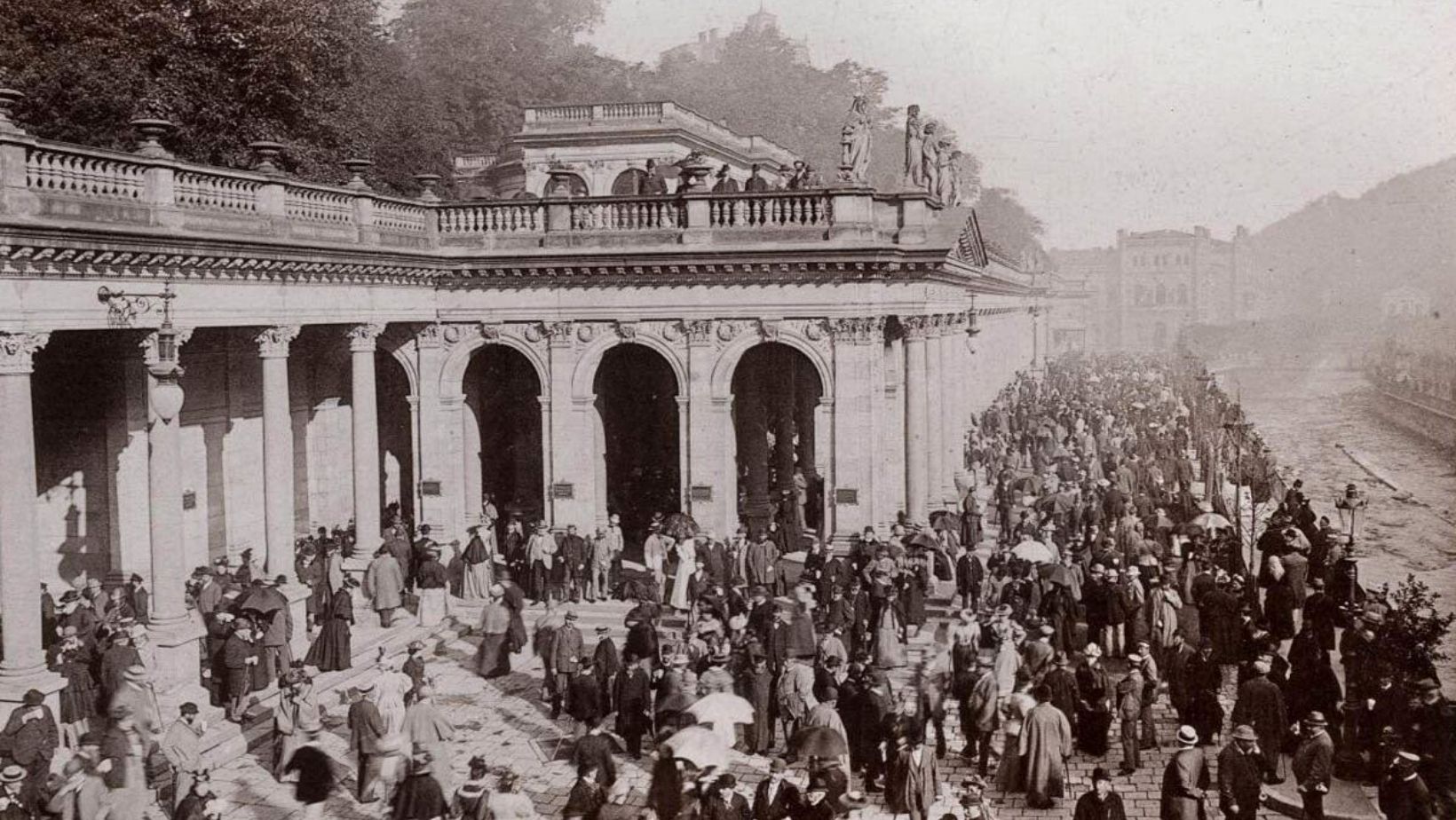
A group of major European spa towns was added to the highly prized World Heritage list on Saturday for their “exceptional testimony to the European spa phenomenon” from the 18th century to the 1930s, Unesco said. This includes Baden bei Wien in Austria, Spa in Belgium, Karlovy Vary, Františkovy Lázně and Mariánské Lázně in the Czech Republic, Vichy in France, Bad Ems, Baden-Baden and Bad Kissingen in Germany, Montecatini Terme in Italy, and Bath in the United Kingdom. The World Heritage Committee, meeting in China for its annual session to review the list of world heritage sites, said the group captured “the most fashionable, dynamic and international spa towns among the many hundreds that contributed to the European spa phenomenon”. “Whilst each spa town is different, all the towns developed around mineral water sources, which were the catalyst for a model of spatial organisation dedicated to curative, therapeutic, recreational and social functions,” it said. Karlovy Vary Karlovy Vary, also known as Carlsbad, is a charming little spa town known for its amazing variety of healing thermal springs. The area offers a variety of walking paths you can use to get to the various springs to relax in, many of which...
Saturday will see UNESCO’s World Heritage Committee discuss proposals for new additions to its heritage list. Czech spa towns are teaming up with other eight European counterparts. Spas were a huge European phenomenon from the 18th century to the early 20th century. The Bader Lexicon of 1854 lists 652 major European spas, but only a handful of the grandest spas now survive in an authentic form. Each used natural mineral waters to treat pain and disease in the days before industrial medication and they are testimony to the development of medicine. The towns have unique urban forms and significant architectural ensembles including special spa buildings and visitor facilities such as spa houses, colonnades, churches, theatres, casino houses, dedicated hotels and boarding houses. The combination of the fabric of the towns with their parks and green spaces and surrounding ‘therapeutic landscape’ is very important. Four Czech spa towns — the western triangle of Karlovy Vary, Mariánské Lázně and Františkovy Lázně, together with the east Moravian spa resort of Luhačovice — have teamed up with around half a dozen major European spa resorts in a bid to obtain the prestigious UNESCO recognition quicker. The 11 candidate spas are: Baden bei Wien (Austria) Spa (Belgium) Karlovy Vary,...
The British Grand National has long been revered as one of the hardest cross-country races, with Aintree’s 28 fences proving a stiff test of the 6.5km, two-and-a-half-furlong race. It’s the longest jump race in British horseracing, but it doesn’t quite compare with the most gruelling cross-country race in Czech horseracing. The Velka Pardubicka Steeplechase, also known as the Grand Pardubice Steeplechase is the Czech Grand National. It lays claim to not only being the world’s oldest cross-country event but the toughest too. Outside of the Czech Republic, the Velka Pardubicka Steeplechase is rarely covered by the leading tipsters and handicappers at oddschecker, whose daily tips typically cover the UK and Irish racecards. Nevertheless, this article is designed to shine a spotlight on this iconic event for locals that are yet to experience this 147-year-old race as well as horse racing enthusiasts reading and living further afield. Unlike the British Grand National, the Grand Pardubice Steeplechase has more obstacles totalling 31. It’s one of the main reasons why Czech racing enthusiasts are drawn to Pardubice, which is situated 100km from Prague. The Grand Pardubice Steeplechase is also slightly longer than the Aintree Grand National at 6.8km. Historically, this event is scheduled...
Dissident playwright and then-President Václav Havel gave sufficient encouragement to artists that the Summer Shakespeare Festival took place for the first time in 1994 – at Prague Castle, no less. Prague Shakespeare Company has recently announced that international TV, film, and theatre star Hammed Animashaun (Amazon’s Wheel of Time, Royal National Theatre) will join PSC Artistic Director Guy Roberts as co-director of the English-language production of A Midsummer Night’s Dream performing as part of the Summer Shakespeare Festival at Prague Castle on 29 & 30 July, 2021. Set in a magical wood filled with fantastical fairies, sprites and legendary creatures, with original music by Patrick Neil Doyle, This production features a new version of A Midsummer Night’s Dream, translated into contemporary modern English by Tony Award-winning and Oscar-nominated storyteller Jeffrey Whitty. You can buy your tickets here Why English-language Shakespeare in Prague? There is a rich tradition of experiencing Shakespeare in English in the Czech Republic. Robert Browne’s acting troupe perhaps played Shakespeare in English in Prague as early as 1596 and then certainly in 1603. In 1619 they returned to celebrate the wedding of Princess Elizabeth to the Elector of Palatine. Shortly before that time Czech aristocrats watched plays...
The most complete human being of our age.” claimed Jean-Paul Sartre. “A pupil of the school of terror. A dogmatic, cold, and intolerant sectarian,” wrote the Black Book of Communism. “Che” generates inexorable response, but even now, fifty-four years after his death, he never fails to fascinate. His tragic end, several famous photographs, and the sixties have made him immortal. Time magazine counted him among the most influential people of the 20th century. And even in many shacks across South America, you can find his portrait hanging right next to the crucifix. And between revolutionary episodes in his life, he spent a few months in 1966 at a secret intelligence villa on the outskirts of Prague. In the summer of 1965, after five years as minister of the Cuban government, Ernesto “Che” Guevara, decided that office work was not suitable for him. He picked up the rifle again and returned to action following one of the secret missions of Castro’s services abroad, in the most delicate theatre of the 1960s: Africa. Amongst the turbulence of decolonization and the cold war, the guerrillas dreamed of exporting the revolution by supporting tiny Marxist vanguards in different countries. This is how Che found himself in the...
Kofokino is heading to Petřín! As early as Thursday, July 15, the regular screening of popular films in the open-air begins directly at the most romantic place in Prague. Visitors can refresh themselves with tapped Kofola for free, and the first hundred of them will enjoy the film in the comfort of a beach chair. Kofokino is open to visitors every Thursday until the end of summer, each time with a different movie. The screening will start at 7.30 pm with the easygoing summer film 3Bobule. Thanks to this timing, visitors will be able to reach the last connection of the cableway for the way down. Although many of them may prefer a romantic wander along the dark paths. Summer cinemas with… Kofola! Apart from Petřín, Kofokino will head wherever people enjoy their free time; to popular pubs, campsites, and recreational areas. Outdoor cinemas will be built in unique places, such as in Divoká Šárka in Prague, in the Beskydy Pustevny, a camp near the Seč reservoir in Eastern Bohemia, or the monastery premises in Rajhrad. You can find the current list, including the program, here
The annual Night of Castles and Chateaux, always held at the end of August, will be newly held on July 31. Most Czech castles and châteaux turn into magical places full of stories and experiences. These aristocratic residences will teem with life during non-traditional times (even at midnight) and the non-traditional program will make sure visitors want to go back. The program includes night tours, tours with lanterns and candles, theatrical performances, concerts, shows and other amusements. You can try contemporary fare in the castle kitchens, have a look in places where visitors usually never get to see, or you can walk around the château with a flashlight and hear stories that sent chills down the spine during previous generations. The Gardens below Prague Castle will be lit up with torches, so you can experience its unique, romantic atmosphere. You can also look forward to a historical fencing show with expert commentary; and to guided tours of these beautiful Baroque gardens. The Night of Castles and Chateaux is an annual celebration organized by the National Heritage Institute starting in 2010. Its goal is to present our heritage sites in a new light, at an unusual time of day and with special events. The...
On the left bank of the Vltava River in Smichov, entirely off the tourist track, you‘ll find the Portheimka summer palace just adjacent to the Church of St. Vaclav. The side of the building facing busy Štefanikova Street appears rather plain but walk just a few feet, and from the other side, the lovely Baroque facade, a small courtyard with a fountain, and a park with mature chestnut trees come into view. The summer palace was built here in the mid-18th century by Prague native and one of the most renowned architects of his time Kilian Ignaz Dientzenhofer, whose name is associated with the Church of St. Nicholas on Old Town Square and the completion of the dome of the Church of St. Nicholas in the Lesser Town. The summer residence faces the garden. The richly decorated French doors open out onto the balcony, which is adorned on each side with busts depicting allegories of Day and Night. Ideologically, they refer to the antique gods Apollo and Venus and represent the Sun and Moon as well as the masculine and feminine principles. The placement of the busts on the balcony is not random – traditionally, the masculine aspect is attributed...
Don’t have an account? Register
[swpm_registration_form level=”6″]
Already have an account? Log In
How Would You Like to Promote Your Business? PR ArticleDisplay bannersVideo productionNewsletter adsJob ListingsInfluencer Marketing
Your Email
We will come back to you within 24 hours with our proporsal