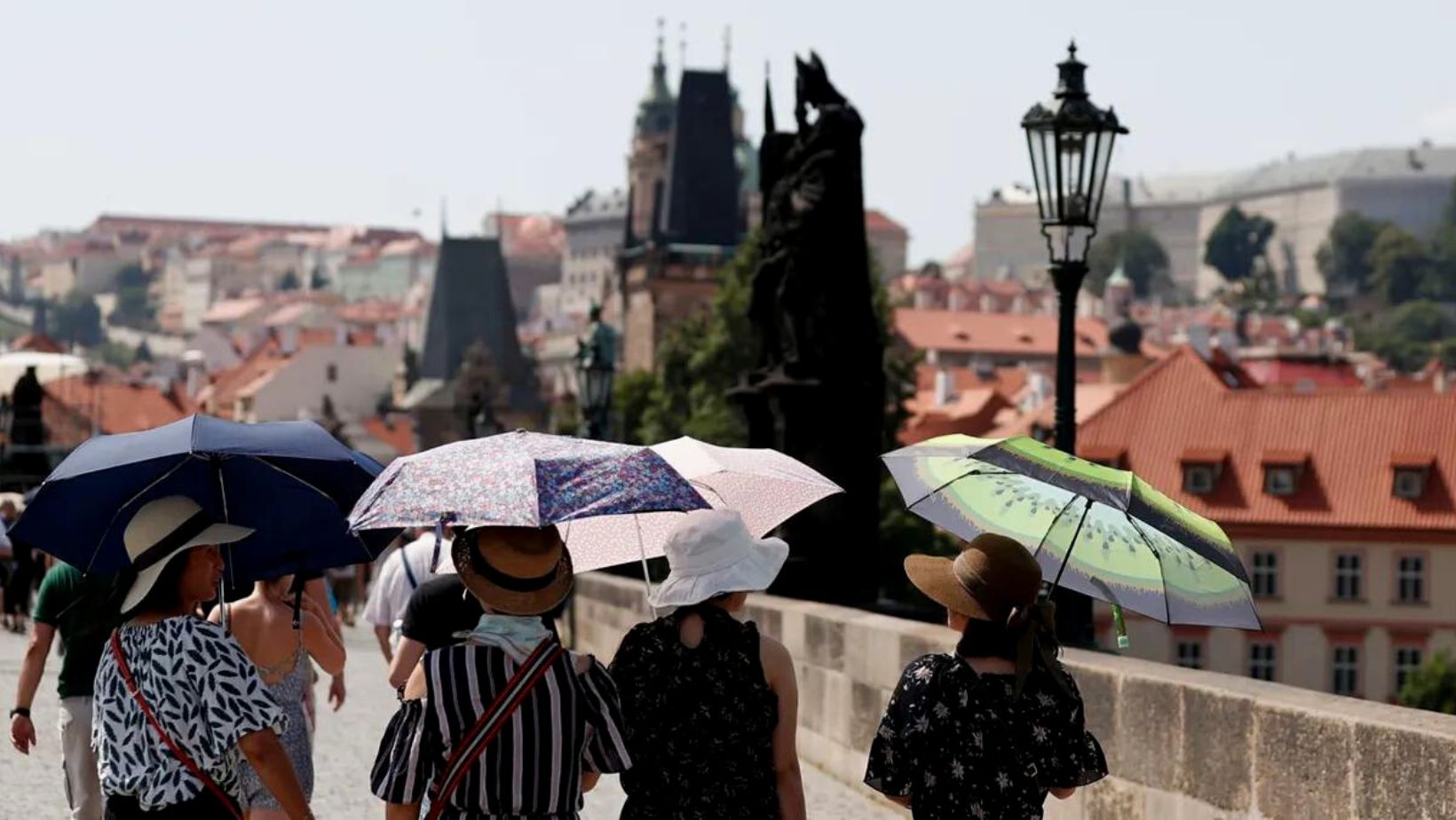
By Wednesday, hot temperatures will return, with summer weather peaking over the weekend. Meteorologists predict temperatures reaching up to 33°C, according to the weekly weather forecast. Today, August 6th is expected to be the coolest day of the week, with daytime highs rarely reaching 25°C. “It may rain during the day in Moravia and Silesia, and possibly in the Šumava region in the morning and forenoon,” meteorologists reported on Facebook. “Cloudiness will gradually decrease throughout the day, giving us a fair amount of afternoon sunshine, although temperatures will still not feel very summer-like,” they added. Nighttime lows will range from 16 to 12°C, while daytime highs will be between 22 and 26°C, around 20°C in the northeast. On Wednesday, the weather will start clear to partly cloudy, but showers or storms are expected in the evening in Bohemia. Nighttime lows will be between 15 and 11°C, with daytime highs from 27 to 31°C. “Wednesday will also be sunny, but cloudiness will increase in the evening from the west in Bohemia. Showers or storms could appear, especially in Bohemia, but significant rainfall is not expected,” the weekly forecast adds. Thursday will see a brief cooling in Bohemia, though temperatures in Moravia...
Antisemitic incidents in the Czech Republic sharply increased last year, with their peak appearing in the final quarter of 2023 following the Hamas attacks on Israel on October. 7, the country´s Jewish community said Monday. In its annual report, the Federation of the Jewish Communities said it registered 4,328 antisemitic incidents in 2023, up 90% from 2,277 in the previous year. The report said that 1,800 incidents – or 41,59%, of the total – happened in the last three months of the year. “The Oct 7 was immediately followed by a global explosive wave of antisemitism, which also strongly hit the Czech Republic,” the report said. The bulk of the anti-Jewish hatred, 98%, was expressed online, most of them through social media, it said. Those included the publication of false, dehumanizing, demonizing, vulgar and conspiracy theories and stereotypes as well as hatred aimed at the state of Israel. The report, however, concluded the Czech Republic remains a safe country for Jews. It said there was no physical attack registered for the second straight year. But 18 incidents involved antisemitic threats, harassment and verbal insults, more than double than the previous year. The rest of the incidents included demonizing the Jewish...
The Ministry of Labour and Social Affairs Marian Jurečka has officially distanced itself from Prague Pride, an event that supports LGBT+ minorities, including lesbian, gay, bisexual, transgender, and queer individuals. According to Deník N, the ministry recently requested the removal of its logo from the Prague Pride website after the Alliance for the Family publicly questioned its support for the event pointing out that Christian Democrat Marian Jurečka leads the ministry. Eliška Černá, the spokesperson for Prague Pride, confirmed, “On Wednesday, we received a call from a Ministry of Labour and Social Affairs employee asking us to remove the logo because the ministry no longer supports the association.” The ministry stated that any previous financial support for Prague Pride occurred under a different administration. “Since there has been no support from the ministry for several years, the logo on the Prague Pride website was a leftover from the past administration, which the organizers forgot to remove,” the ministry clarified in a press release. The ministry’s statement comes amid heightened security measures for the upcoming Prague Pride festival. The Czech police have increased security due to concerns over a potential attack, similar to an incident at a recent event in Bratislava....
Archaeologists in the Czech Republic have found a hoard of buried weapons and jewelry dating to around 1600 BC, a rare discovery that could shed more light on life in central Europe during the Bronze Age. Researchers surveying a site in the town of Budyně nad Ohří stumbled upon bronze artifacts, including eight axes and pieces of jewelry, from over 3,600 years ago. The site, 40km northwest of Prague, was first found a year ago by an archaeologist using a metal detector. A series of excavations since have unearthed eight arm rings, as many axes, two pins, and one spearhead, all dating to the Bronze Age. Researchers suspect the artifacts were part of a collection that was purposefully buried underground. While researchers are still not quite sure why the objects were hidden in that place, they have three theories. Researchers have analyzed the artifacts uncovered over the past year and are certain about their age but suspect one of the axes is much older. During the Bronze Age, which spanned from 3,300 BC to 1,200 BC, people in Europe made the shift from fashioning tools from stones to using bronze, an alloy that was made by melting and mixing tin...
The Czech Senate has adopted an amendment to the labour regulations of the country making it possible for all employees to demand the option to determine their own working schedules – after a consultation and mutual agreement with their employers. These legislative amendments are quite revolutionary in a sense, and they are motivated by the idea that this would boost productivity and morale in the country’s workforce. Plus, this could increase mutual trust between employers and employees. In fact, having the power to set your own working schedule has already been an available option for certain professionals in the Czech Republic – mainly those who are working remotely. The new amendments, however, seek to expand this to include everyone regardless of their profession and type of workplace. The amendments to the Czech Labour Code were initiated by the country’s Labour Minister Marian Jurečka. Many employers and experts, however, don’t seem to be very accepting of the idea and put its real-life application under doubt. “If we take an industrial enterprise and imagine that someone would just decide when to come and not come to work, this will not work in practice,” pointed out Josef Středula from the Czech-Moravian Confederation of...
The Czech Republic is exploring the possibility of establishing a Ukrainian Legion. Defense Minister Jana Cernochova revealed that discussions are underway to allow Ukrainian refugees to join the legion and aid their homeland voluntarily. “The Ukrainian community living in the Czech Republic is numerous, even without considering the wave that came as a result of the war. So it would make sense,” Cernochova said on Czech Television. The initiative follows Poland’s similar proposal to organize military training for Ukrainians residing outside their country, including refugees. Karel Capek, a spokesperson for the Czech Ministry of Defense, told Novinky.cz that the ministry is evaluating the Polish project from practical and legal perspectives. Another ministry spokesperson, David Polak, confirmed to iDnes.cz: “The Ministry of Defense is gathering more information from the Polish side about forming the so-called ‘Ukrainian legion.’ When we collect this information, we will consider the possibility of our involvement.” The concept of a Ukrainian Legion gained traction after Ukrainian President Volodymyr Zelenskyy and Polish Prime Minister Donald Tusk signed a bilateral security agreement. The document includes provisions for forming and training a Ukrainian Legion on Polish territory. Zelenskyy said that any Ukrainian citizen joining the legion could sign a contract...
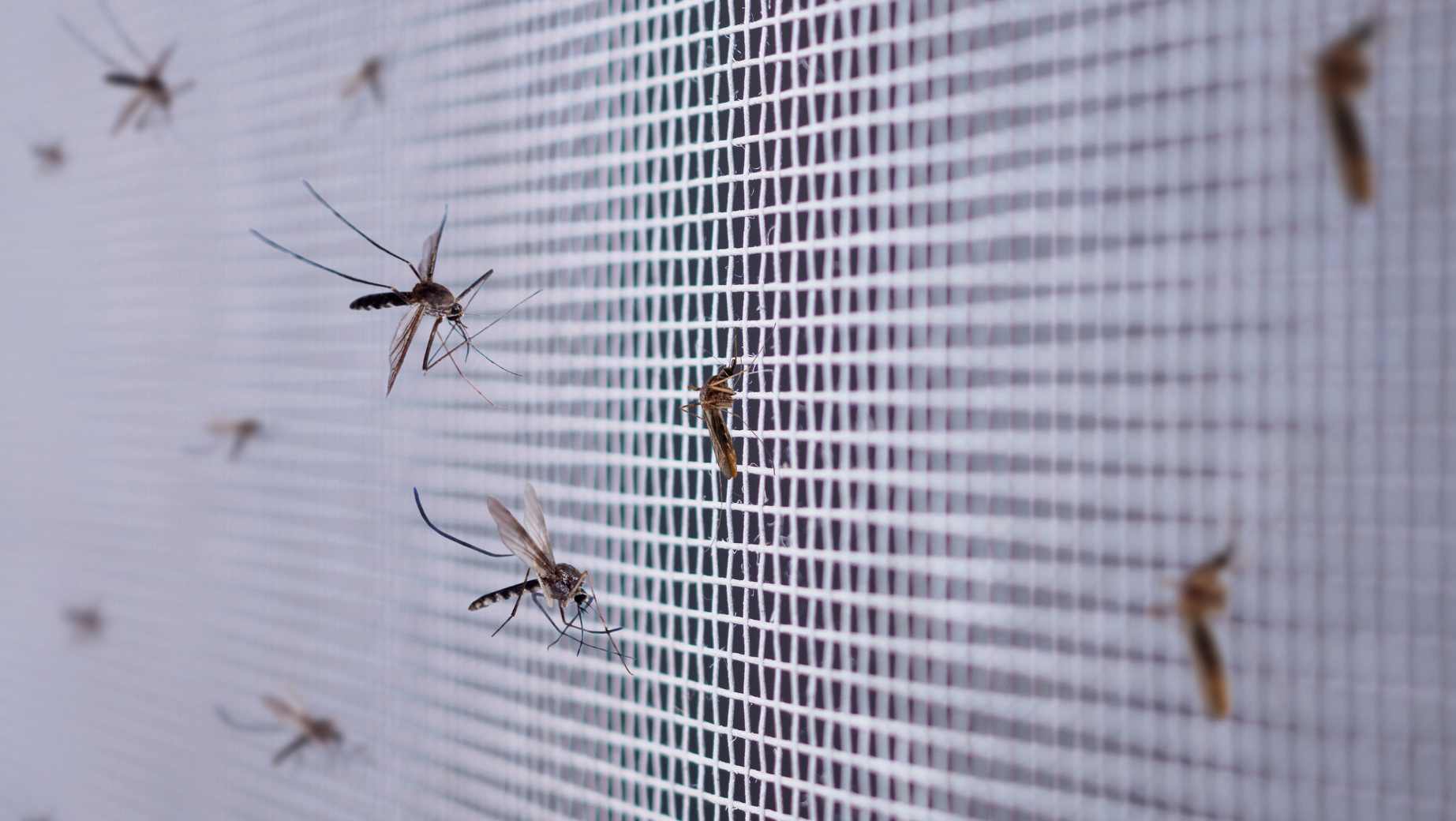
An invasive mosquito species, Aedes japonicus (Asian bush mosquito), has been identified in the Czech Republic for the first time. Hygienists have recorded its presence in the Olomouc region. While these mosquitoes can potentially spread certain diseases, no instances of disease transmission to humans have been reported in the country. However, they do bite humans and are active during the day and evening. This species has been under surveillance in Europe since 2000, and it was first confirmed in the Czech Republic in 2021, near the state borders of southern Moravia and southern Bohemia. The larvae of this mosquito species develop in both natural and artificial water reservoirs, including barrels, containers, tires, pots, gutters, tree cavities, and rock cavities. They overwinter in their native East Asia as eggs, and in warmer regions, they can survive the winter as larvae. In the Olomouc region, they have been found in IBC containers with retained rainwater. Until now, hygienists have not focused on mosquitoes in intentionally retained rainwater in gardens and near homes, as these areas were primarily inhabited by mosquito species that suck the blood of birds, not humans. Unlike these native mosquitoes, the females of the Aedes japonicus species suck the...
In 2024, there is a growing push for education reforms to address the overuse of mobile phones. Some countries have started banning phones in schools, but until now, the Czech Republic has not taken similar steps. This September, the eastern city of Vsetín will implement the country’s first-ever school phone ban. Banning Phones in the Czech Republic According to school regulations based on the UN’s Convention on the Rights of the Child from 1989, primary school students must keep their phones off or in silent mode during school hours to avoid disrupting lessons. They are also prohibited from making audiovisual recordings. However, students are allowed to keep their phones with them without having to hand them in. The new regulation agreed upon by the Vsetín district council changes this. “Starting from the new school year 2024/2025, pupils of Vsetín primary schools managed by the town will not be allowed to use or carry mobile phones during school hours,” the council announced. This regulation will apply to five elementary schools in Vsetín directly managed by the city. These schools are: Primary School Vsetín, Trávníky 1217 Primary School Vsetín, Sychrov 97 Primary School Vsetín, Rokytnice 436 Primary School Vsetín, Ohrada 1876 Primary...
The Northern Lights could be visible in Czechia in the coming days due to a series of solar flares releasing plasma clouds heading toward Earth, according to astronomer Petr Horálek from the Institute of Physics in Opava. This rare natural phenomenon was last observed in Czechia in May, when the aurora was the strongest since 2003. The first wave of plasma clouds is expected to arrive today, although during the day. Horálek noted that geomagnetic activity could continue into the night. Additionally, more flares are occurring on the Sun. “It is possible that increased geomagnetic activity will persist for the next few days,” Horálek said, though he warned that predicting these phenomena is challenging. Horálek compared the situation to May, when a series of eruptions caused bright auroras globally, including in Czechia and Slovakia. This time, the eruptions are weaker. “Scientists do not expect the current solar activity to produce the same intensity of phenomena, but there is still a chance of auroras. Moreover, in the coming days, the moon will recede from the night sky, creating favorable conditions,” he explained. Plasma clouds from the Sun typically reach Earth in two to three days, making long-term forecasts impossible. For those...
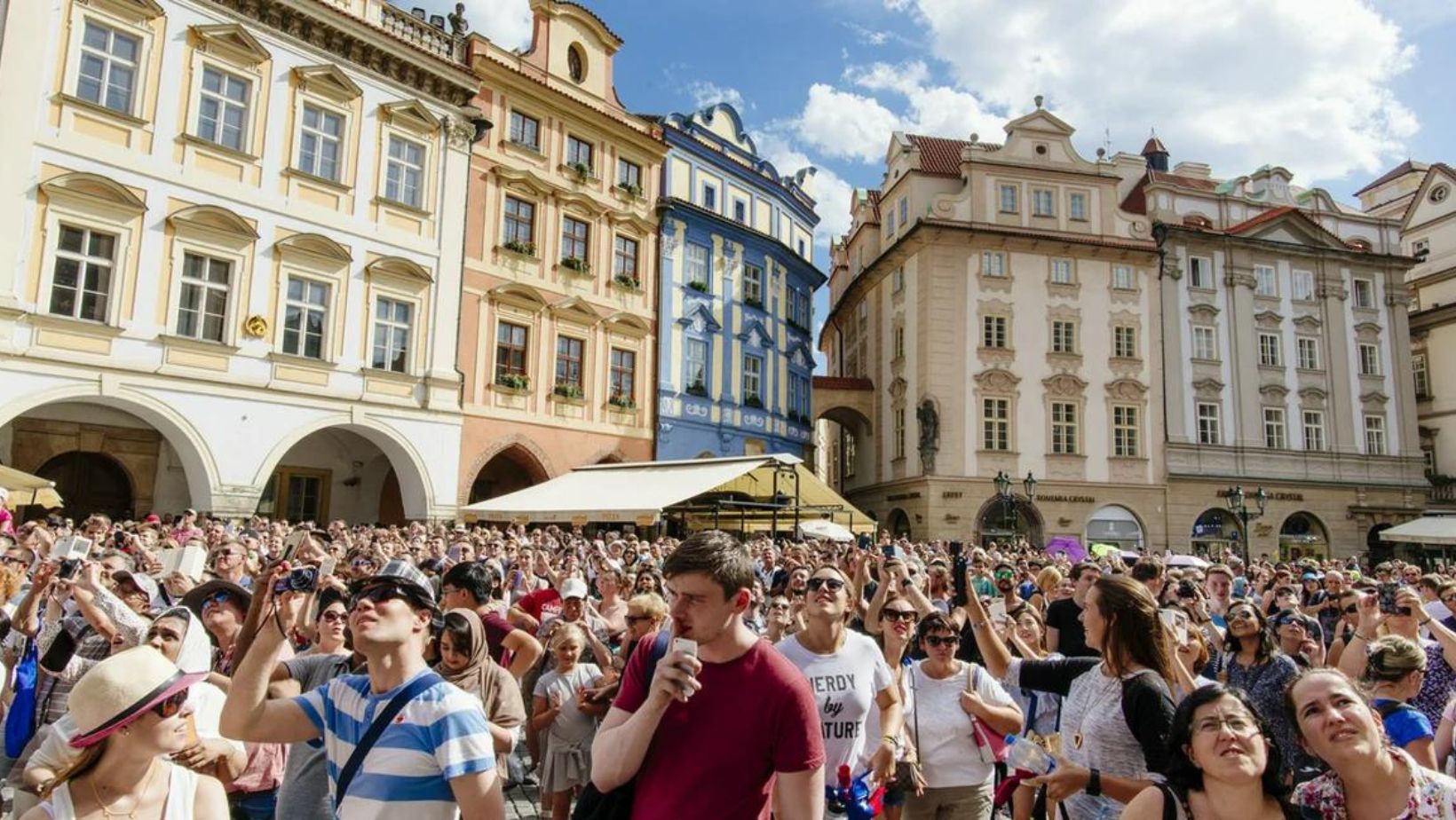
Tourists from Asia are starting to return to the Czech Republic, although their numbers are still noticeably lower than before the pandemic. Chinese travelers, who were once the fifth most numerous visitors to the country, have not yet returned in the same numbers. Before the 2019 pandemic, around 1.7 million tourists came from Asia annually; last year, the figure was just under 800,000. The direct air link between China and Prague, which had been out of service for four years, has now been restored and operates three times a week. “We believe that the resumption of direct flights will attract Chinese tourists to the Czech Republic and that visitor numbers will soon return to pre-2019 levels,” said Chinese Ambassador Feng Piao. In the first quarter of this year alone, nearly 22,000 tourists arrived from China, and the CzechTourism agency expects this number to increase tenfold by the end of the year. According to the agency’s director, František Reismüller, the Czech Republic could see a full recovery to pre-pandemic levels by 2025 or 2026. Most Asian tourists spend only a few days in the Czech Republic, typically three, before traveling to other European destinations. Asian Tourists Replaced by Other Visitors In...
On Sunday, August 11, the Czech Republic will host the ‘Day of Jewish Sites’ (Den židovských památek 2024). During this event, both residents and visitors can access about 45 historical Jewish sites for free, many of which are typically closed to the public. A complete list of participating sites, along with their opening hours, is available on the campaign’s website. Most locations will welcome visitors from 10:00 AM to 5:00 PM. Several sites will offer additional programs for visitors, including guided tours, storytelling for children, and other activities. To make it easier for visitors to navigate, the organizers have developed a mobile application that provides detailed information about each site. The Jerusalem Synagogue (Jeruzalémská synagoga), the largest synagogue in Prague, will also be part of the event. There is a smartphone app and an interactive map to help visitors. Click on the star to find the site — there is historical and other information, but it’s in Czech, so you will have to use Google Translate. Since the fall of communism, around 70 synagogues have been restored, most of them for cultural use — so the Day of Jewish Monuments only takes in a fraction of restored Jewish heritage sites in...
Two million people in the Czech Republic use TikTok. However, in proportion to the population, the country has one of the lowest penetration rates in the EU. Recent estimates show it has 1.5 billion monthly active users worldwide, while Facebook boasts over three billion users. Under the Digital Services Regulation, TikTok reports having an average of 142 million active users per month in the EU from last August to this January. A detailed breakdown by country offers intriguing insights. Nejnižší podíl populace ze států EU používající TikTok mají Česko a Slovensko pic.twitter.com/xeOL3ooBz5 — Filip Zelenka (@FilipZelenka3) July 25, 2024 When considering the number of users as a proportion of the total population, Luxembourg leads with 46% of its population using TikTok monthly. Ireland follows with 42%, Spain with 40%, Romania with 39%, Lithuania with 38%, Malta with 37%, Greece with 36%, and Italy and France with 35%. Slovakia and the Czech Republic are at the bottom, with only 17% and 19% of their populations using TikTok, respectively. Slovenia and Denmark have 24% usage, while Austria and Croatia each have 25%. Germany has 26%, and Poland 27%. US government says TikTok poses threat to national security The US Justice Department defended...
Don’t have an account? Register
[swpm_registration_form level=”6″]
Already have an account? Log In
How Would You Like to Promote Your Business? PR ArticleDisplay bannersVideo productionNewsletter adsJob ListingsInfluencer Marketing
Your Email
We will come back to you within 24 hours with our proporsal