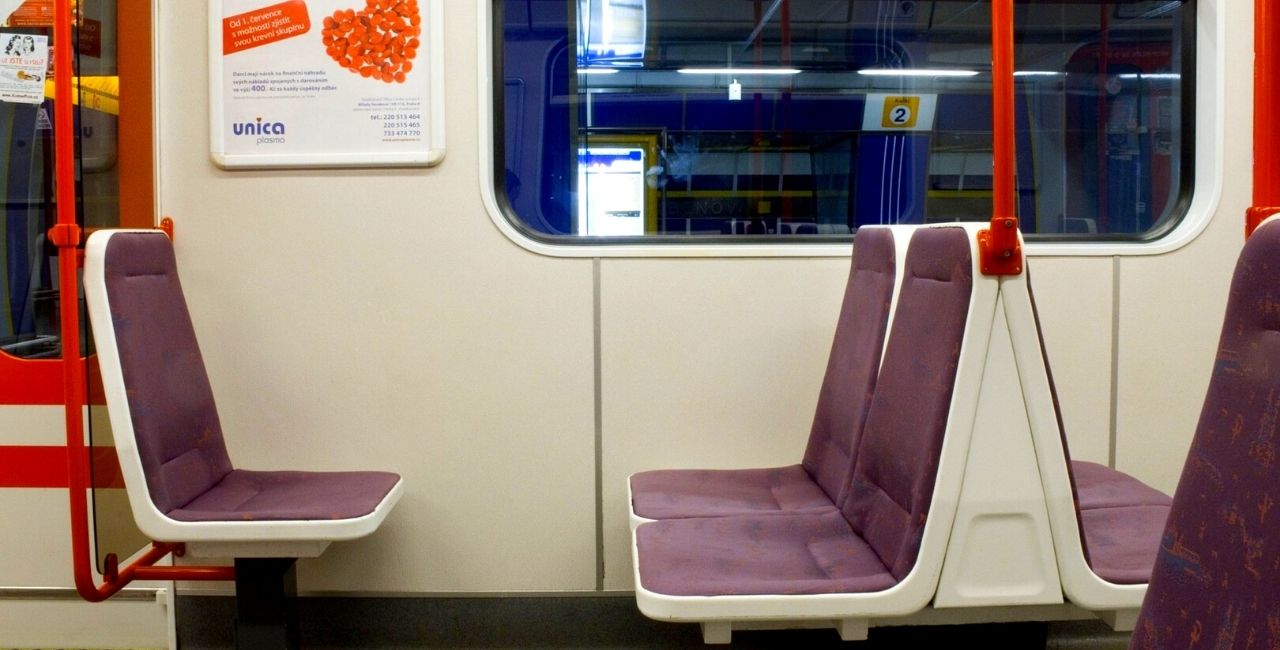
In the online survey of the Prague Public Transit Company (DPP), people living in Prague can comment on the future shape of seats and their distribution in metro trains. All passengers who use the Prague metro at least once a week can answer the questions on the DPP website by the end of April. The survey consists of 12 questions. Respondents can give their opinion on the location of single seats in the direction of travel, but also, for example, what type of seats they would prefer on metro trains and how often they use the Prague metro. According to its spokesperson, the results of the DPP survey will be announced at the beginning of May. Seats placed sideways to the direction of travel will now be found in 12 metro trains on lines A and B. Prague and DPP have been testing this location in cars for about a year. “When you take the metro, you see that almost every passenger in this third seat, opposite the two-seater, always sits turned sideways. Only when he’s there with friends will he sit facing the two-seater, but only in exceptional cases,” says Adam Scheinherr, Deputy Mayor of Prague. The seats will turn 90 degrees,...
Maundy Thursday, or Zelený čtvrtek (Green Thursday) as it is known in Czech, is the last Thursday before Easter. Why is it called “Green” in Czech? One explanation is that, in many places before the 13th century, green vestments were used for Mass on that day. Another theory refers to “the Green Ones” — penitents who, after being readmitted to the Church, wore sprigs of green herbs to express their joy. The “grün” in the German name for the day, Gründonnerstag (literally Green Thursday), does not come from the name of the color itself but from a corruption of the old German word “greinen” or “weinen,” meaning “to weep.” Bells Fall Silent Until Saturday On the evening before Easter, all church bells are rung before they fall silent until White Saturday. According to tradition, the bells are said to “fly to Rome.” In their absence, children use rattles and wooden clappers, which are sounded morning, noon, and night in place of bells. In some places, they were even believed to help drive away Judas. Fasting and Green Food Traditions A strict fast was once observed on Green Thursday. Because only one complete meatless meal was allowed — free of any...
If your day doesn’t start until you’re up to speed on the latest headlines, then let us introduce you to our new morning fix. President Miloš Zeman would not support the idea of US soldiers being permanently based in the Czech Republic, Prime Minister Petr Fiala said after a meeting with the head of state on Tuesday evening. From Friday to Monday, metro operations on line C between Muzeum and Pražského povstání stations will be suspended. The reason for the closure will be the replacement of sleepers. Alternative transport will be provided by buses. The Czech National Bank is likely to moderately raise interest rates further as the return of inflation towards the central bank’s 2% target will be delayed, said Governor Jiri Rusnok. Prague’s Assistance Centre for Ukrainian refugees will change venue later this week. The facility has to date been housed at the Congress Centre but is set to reopen at a former bank in the Vysočany district. The Ministry of Labour and Social Affairs (MPSV) is launching a mobile phone app named “Smart Migration”. The app allows foreign residents to easily find answers in Ukrainian, English and Russian to common situations they...
The Ministry of Labour and Social Affairs (MPSV) is launching a mobile phone app named “Smart Migration”, as part of efforts to help refugees from Ukraine. The app allows foreign residents to easily find answers in Ukrainian, English and Russian to common situations they need to deal with after arriving in the Czech Republic, including employment, healthcare, and education. The information will be continuously updated and supplemented. A key feature of the application is a set of interactive tutorials that make it easier to find the necessary information. The application was created by a team from the university’s Faculty of Business Administration and Economics as part of the “Smart Migration in the Czech Republic” project, in which the Prague Metropolitan University also participates. The Ukrainian Initiative (UIČR), an umbrella diaspora organisation in the Czech Republic, is also involved in the Smart Migration project. Latest news: Prague’s Assistance Centre for Ukrainian refugees will change venue on Thursday morning. The facility has to date been housed at the Congress Centre but is set to reopen at a former bank in the Vysočana district on Thursday morning. From this Monday, it is possible for people in the Czech Republic who provide free accommodation...
Ahead of the Czech EU Council Presidency that starts in July, many university students, including those under the EU’s Erasmus project, have been drafted in to fill various roles but they are complaining about working conditions as they will be expected to cover their own expenses. The Czech presidency has opted for a low-cost presidency as decided by the previous government of Andrej Babiš. Although the new cabinet has slightly increased the budget, the extra money will only cover the costs associated with inflation. As the state cannot afford to hire experienced diplomats, a lot of work will be done by university students acting as interns. Students are now complaining to the government about the conditions of the internship. According to a letter seen by Seznam Zprávy, the interns who were selected “in the first wave” are supposed to have their accommodation and travel funded by the government. However, those selected later must pay for their own accommodation in Brussels and travel from the €750 per month Erasmus+ budget or personal savings. “We would appreciate it if the conditions of the traineeship were equal for all trainees and if the costs of the Czech EU Presidency did not have to be...
Following the example of other international air hubs, Prague Airport has decided to award the best airlines of the past year. In the first year of the contest, airlines were evaluated in two categories. The domestic airline Smartwings won the title of the fastest-growing carrier at Václav Havel Airport Prague, while Belgian Brussels Airlines became the most efficient carrier in terms of traffic at Prague-Ruzyně airport. “We drew inspiration from the international context, where the recognition of airlines is a standard procedure performed by airports towards their partners. After a difficult Covid period, we would like to appreciate those who have contributed the most to the resumption and recovery of our operations. At the same time, we want to motivate carriers to pursue further development at Václav Havel Airport Prague,”Jiří Pos, Chairman of the Prague Airport Board of Directors, said. The award recognizing the largest year-on-year increase in passenger numbers is presented to the air carrier that achieved the highest year-on-year increase in the total number of passengers transported compared to the previous calendar year, i.e., compared to 2020. For the year 2021, the award goes to Smartwings. The title of the most efficient carrier in terms of traffic, Best Performing Airline at Prague...
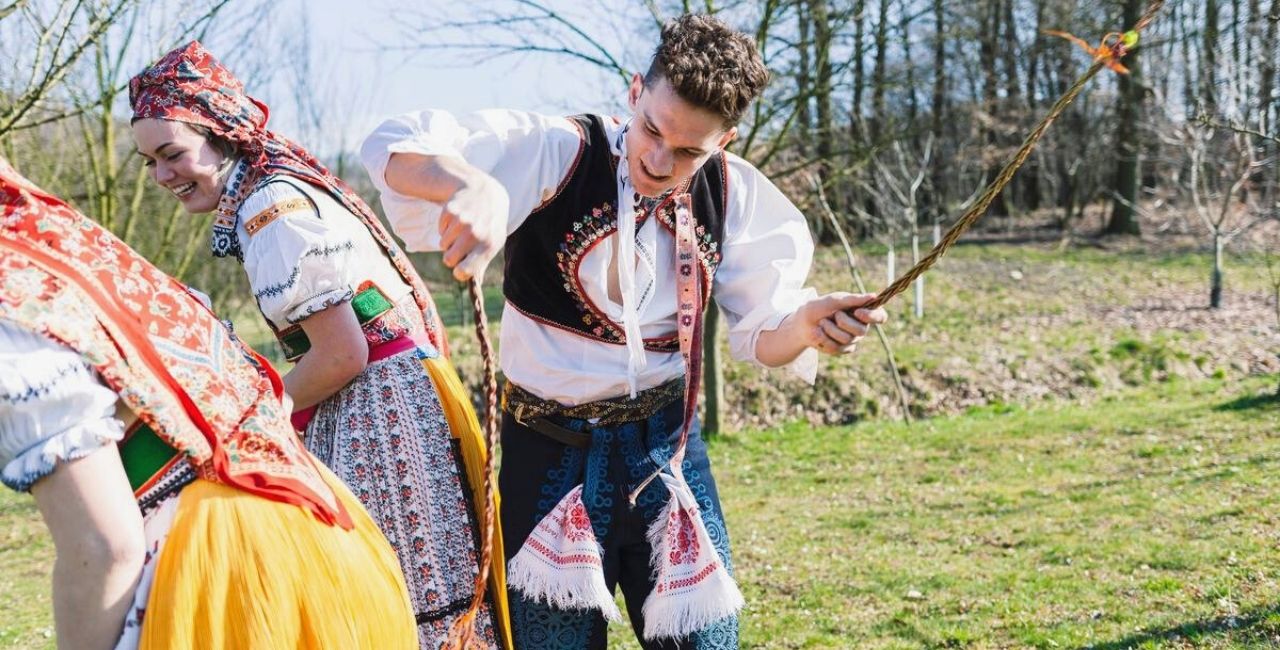
For Czechs, as in many nations around the world, Easter brings with it a wealth of traditions and customs which have little to do with the religious aspects of the Christian holiday but are rooted in pagan rituals welcoming spring’s arrival. Until last year when Good Friday became an official Czech holiday, Velikonoční pondělí (Easter Monday) was the only state holiday associated with Easter in the country. Traditional Easter in the Czech Republic Even if it’s not the way that many Czechs celebrate today, the pomlázka, a homemade whip braided from willow branches and decorated with colorful ribbons, has been for centuries one of the most recognizable symbols of the Czech Easter celebration. Along with kraslice, hand-painted eggs decorated with intricate designs, both symbols belong to the tradition of koledovani (caroling) which occurs during the secular celebration of Easter Monday in the Czech Republic, particularly in villages and small towns across the country. The pomlázka According to pagan tradition, the willow whip was used to symbolically give women the fertility and health they’d need in the coming year. Men and boys braided willow branches to make the whip because the blooming willows were the first sign of spring’s arrival. As one male Czech friend eloquently explained,...
If your day doesn’t start until you’re up to speed on the latest headlines, then let us introduce you to our new morning fix. Roughly 26,500 children of refugees from war-stricken Ukraine were enrolled at kindergartens and elementary schools in the Czech Republic by April 7. In addition, elementary schools still have 150,500 vacancies for children and kindergartens around 12,900. Recreational pyrotechnic products in the backpack of a British national caught fire due to inexpert handling at the Prague airport, Terminal 2, yesterday morning and the owner of the bag got burnt. The corridor linking terminals 1 and 2 was evacuated due to security reasons. Nuclear fuel for Temelín, one of the Czech Republic’s two nuclear power stations, will be supplied by American firm Westinghouse and France’s Framatome from 2024. Temelín currently uses fuel from the Russian company TVEL. The new contract for nuclear fuel will run for 15 years. Prague’s Assistance Centre for Ukrainian refugees will change venue later this week. The facility has to date been housed at the Congress Centre but is set to reopen at a former bank in the Vysočany district. The Ministry of Labour and Social Affairs (MPSV) is...
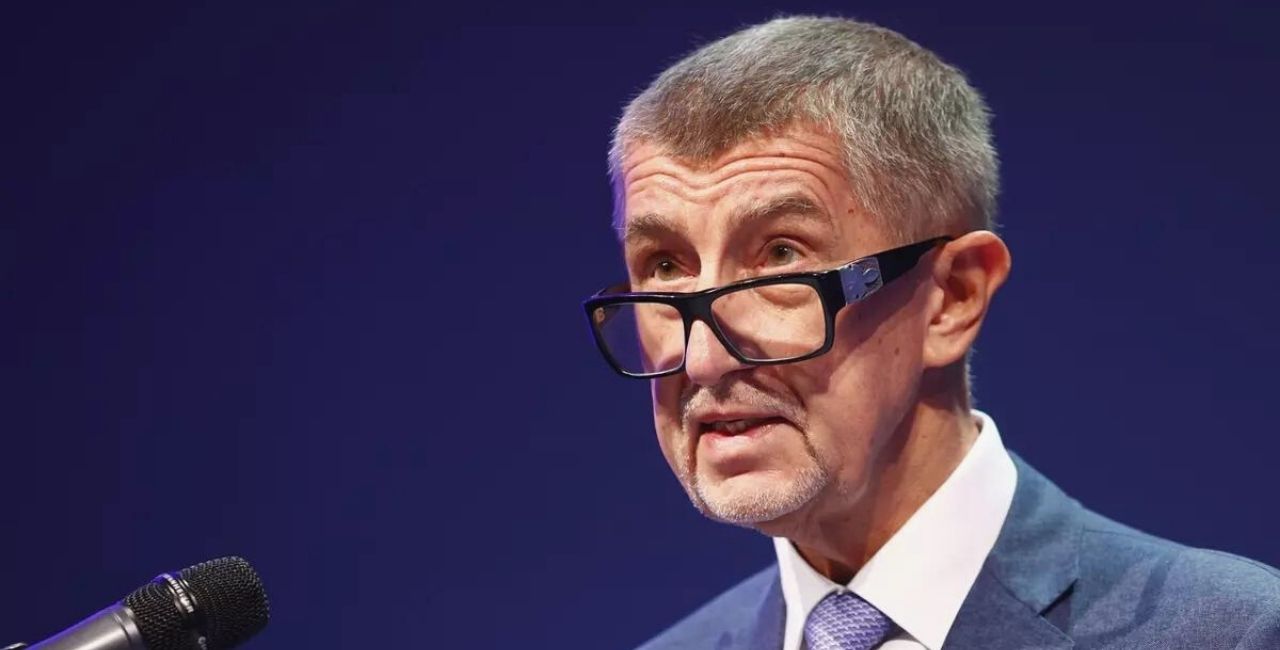
Former Czech Prime Minister Andrej Babiš is skeptical of proposals to establish a U.S. military base in the country, and has called for a public vote on the matter. “We do not support it. I find it unnecessary,” Babiš told his social media followers. “I assume that this is a delicate topic, and it would be best to hold a referendum on it.” Communists, members of the Freedom and Direct Democracy, and the Tricolor Citizens’ Movement are also against the proposal. Babiš stated that he has no information about NATO desiring a U.S. base in the Czech Republic. Minister of Defense Jana Černochová said on Friday that she would hold talks with her U.S. counterpart Lloyd Austin in the United States after Easter. According to Černochová, negotiations on the U.S. presence in the Czech Republic are also at stake and she wants to bring up that topic in the meeting as well. The U.S. base in the Czech Republic could be in Přerov or Mošnov, said Deputy Prime Minister and Minister of Labor and Social Affairs Marian Jurečka on Sunday. The Ministry of Defense said on Sunday evening that specific locations are not being discussed. Babiš noted that the NATO...
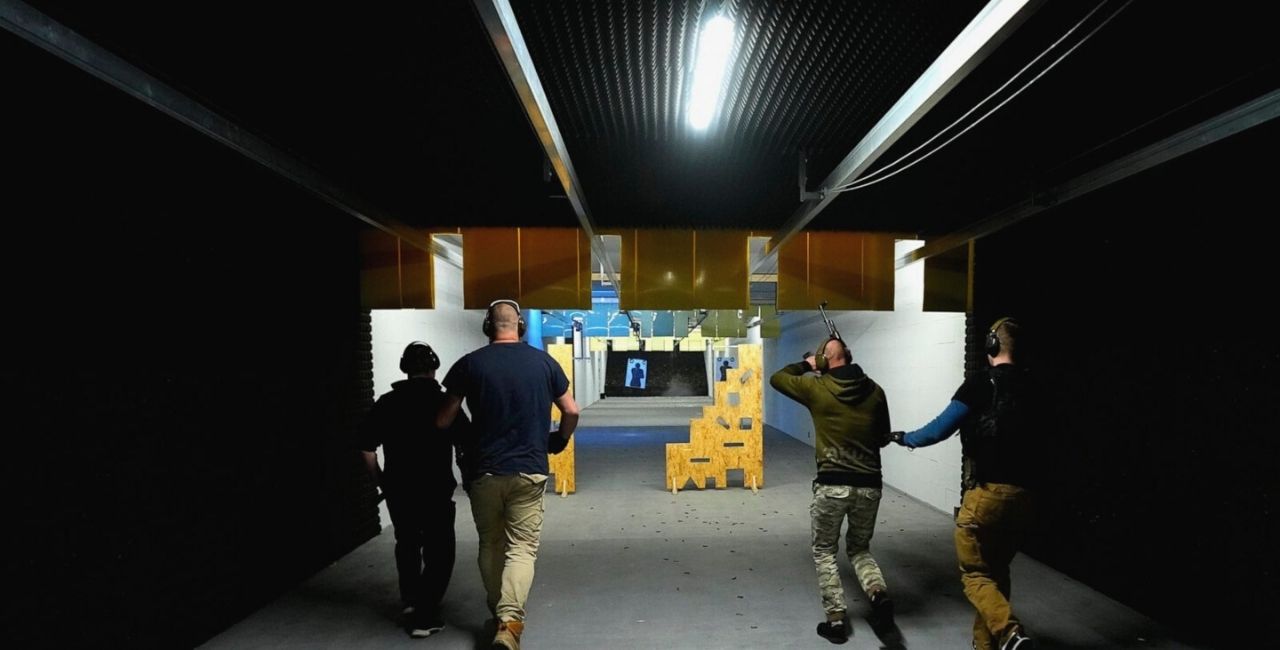
Of the first four shots Olha Dembitska fired from an AK-47 assault rifle in her life, one hit the target. “It´s pretty difficult the first time,” the 22-year-old Ukrainian woman acknowledged. On this occasion, the target was the shape of a human body at a shooting range in the Czech Republic. Next time, it might be for real, in Ukraine, and the target could be one of the Russian troops who have invaded her homeland. Dembitska is one of at least 130 men and women who have so far undergone free-of-charge training for Ukrainians living in the Czech Republic who want to learn how to fight the aggressor. “I might return to Ukraine if they need me,” she said. Almost none of the participants had any experience with weapons before war struck their homeland. Since Russia launched its brutal attack, Ukrainians from all parts of the country and elsewhere have been arriving in Brno, attracted by courses designed to teach them essentials and skills to safely handle lethal rifles while being able to inflict damage on their enemy. Beside learning to shoot, the courses give them the basics about guns, movement around the battlefield and a lesson in providing first...
Great Synagogue of Pilsen, one of the largest in the world, restored after over a decade of lobbying by local Jewish community. The Great Synagogue of Pilsen was restored at a cost of around CZK 100 million. The synagogue is the second largest in Europe and one of the five largest in the world. To celebrate the synagogue’s reopening, a parade took place through the Pilsen starting from the city’s Old Synagogue, Czech news site Seznam Zprávy reported. The parade of hundreds of people included bringing a Torah scroll and the five books of Moses dating from 1896 to the newly opened historic synagogue. The Torah was carried during the procession by Czech Chief Rabbi Karol Sidon. In the parade were also rabbis and members of Jewish communities from all over the Czech Republic. They walked down the street singing Psalms of David. Once at the Great Synagogue, the chair of Pilsen’s Jewish community, Jiří Löwy, carried the Torah into the synagogue sanctuary. The Pilsen Jewish community has 98 members, according to its vice president Roman Štix. The Great Synagogue building, with two 45-meter towers, was built between 189 and 1893 when the city had a population of 2,500 Jews. The newly...
Ryanair announced an exciting new route for its Prague Summer’22 schedule to Turin, Italy from the 5th of June. This route which will operate twice per week, brings Ryanair’s total number of routes to/from Prague for Summer’22 to 29, connecting many cities and regions across Europe, giving our customers more options for travel than ever before. To allow our customers to book flights at the lowest possible fares, we recommend everyone to book early and to encourage this we are launching a seat sale for all new routes with fares available from just / €19,99 one way for travel until October 2022, which must be booked by Wednesday 13th April. “As Europe no. 1 airline, Ryanair is delighted to announce a new exciting route to Turin. Our Prague S22 schedule offers almost 120 weekly flights across 29 routes, including 1 new route to Turin & 1 new summer service to Naples. We encourage our Prague customers to visit Ryanair.com and book a trip to one of these excellent Italian destinations as soon as possible,” said Ryanair’s Country Manager for CEE, Olga Pawlonka. “The resumption of air connections from Prague continues. The new Turin service launched by Ryanair will support further development of both outbound and...
Don’t have an account? Register
Already have an account? Log In
How Would You Like to Promote Your Business? PR ArticleDisplay bannersVideo productionNewsletter adsJob ListingsInfluencer Marketing
Your Email
We will come back to you within 24 hours with our proporsal