The Czech Republic detected 2,521 new cases of COVID-19 on October 18, the highest daily tally since late April, data from the Health Ministry showed on Tuesday. The Czech government has opted not to tighten anti-epidemic measures, focusing on vaccination instead as data show that most of those infected have not been inoculated. 6.03 million people have been vaccinated as of Monday. The daily count reported for Monday is almost double the reported number for the same day last week. Hospitalizations rose to 544, the highest number since the end of May, but still a fraction of the numbers in March, when the last wave of the pandemic swept over the country. Over the past seven days, 54 people died in connection with COVID-19, more than in the whole month of September. The country now has over 100 new cases per 100,000 inhabitants. The health authorities have urged people who are as yet unvaccinated to consider getting the jab and have shorted the term for Covid booster shots from eight to six months after primary inoculation on the recommendation of the European drug regulator EMA.
If your day doesn’t start until you’re up to speed on the latest headlines, then let us introduce you to our new morning fix. CZECH REPUBLIC The Czech Health Ministry has changed the conditions for administering Covid-19 booster shots, shortening the interval from eight to six months after primary inoculation, effective immediately. Prague 1 is working on a draft text that would significantly restrict alcohol consumption in public spaces, banning it from 10 pm to 6 am every night. Local councilors are also examining the possibility of introducing a ban on staying in public spaces with an open bottle/container of any type of alcohol beverage. Health problems were preventing Czech President Milos Zeman from carrying out his duties, an official said Monday. The Senate representatives will meet the leaders of the parties elected to the lower house on Tuesday to discuss the temporary transfer of presidential powers. WORLD Hungary should strengthen ties with the European Union, put its economy on a path to adopting the euro currency and join the European Public Prosecutor’s Office to root out corruption, the opposition’s joint prime ministerial candidate told Reuters. Peter Marki-Zay, will challenge Prime Minister Viktor Orban in an election next year after...
The Museum of Senses, which welcomes visitors to challenge their perception through extraordinary illusions and exhibitions for the ultimate sensory awakening, had extended with some new, mind-blowing exhibits. The Museum is a unique experience, and they have plans to continue growing worldwide as a company and with support of investors and franchise partners. Best and most valuable proof of Museum of Senses visitor’s experience is an amazing response from visitors that has been confirmed by recently winning a 2021 TripAdvisor ‘Travellers Choice Award”. Based on thousands of reviews and opinions from travelers and visitors from around the world, this annual award recognises the very best tourism establishments in terms of service, quality, customer satisfaction and more, across a range of categories. Gabrijela Bartowski, chief executive officer of the museum, explained that they are planning to remodel, refurbish and expand concept in several stages during the upcoming year as they continue to grow. “We are continuously upgrading the content, by researching and carefully listening to our visitors what they like the most and enhancing the visitor experience,” she said. “We eventually want to expand 1/3 of the museum experience.” A distorted gravity room and an interactive ‘Return of Golem’ experience are just some...
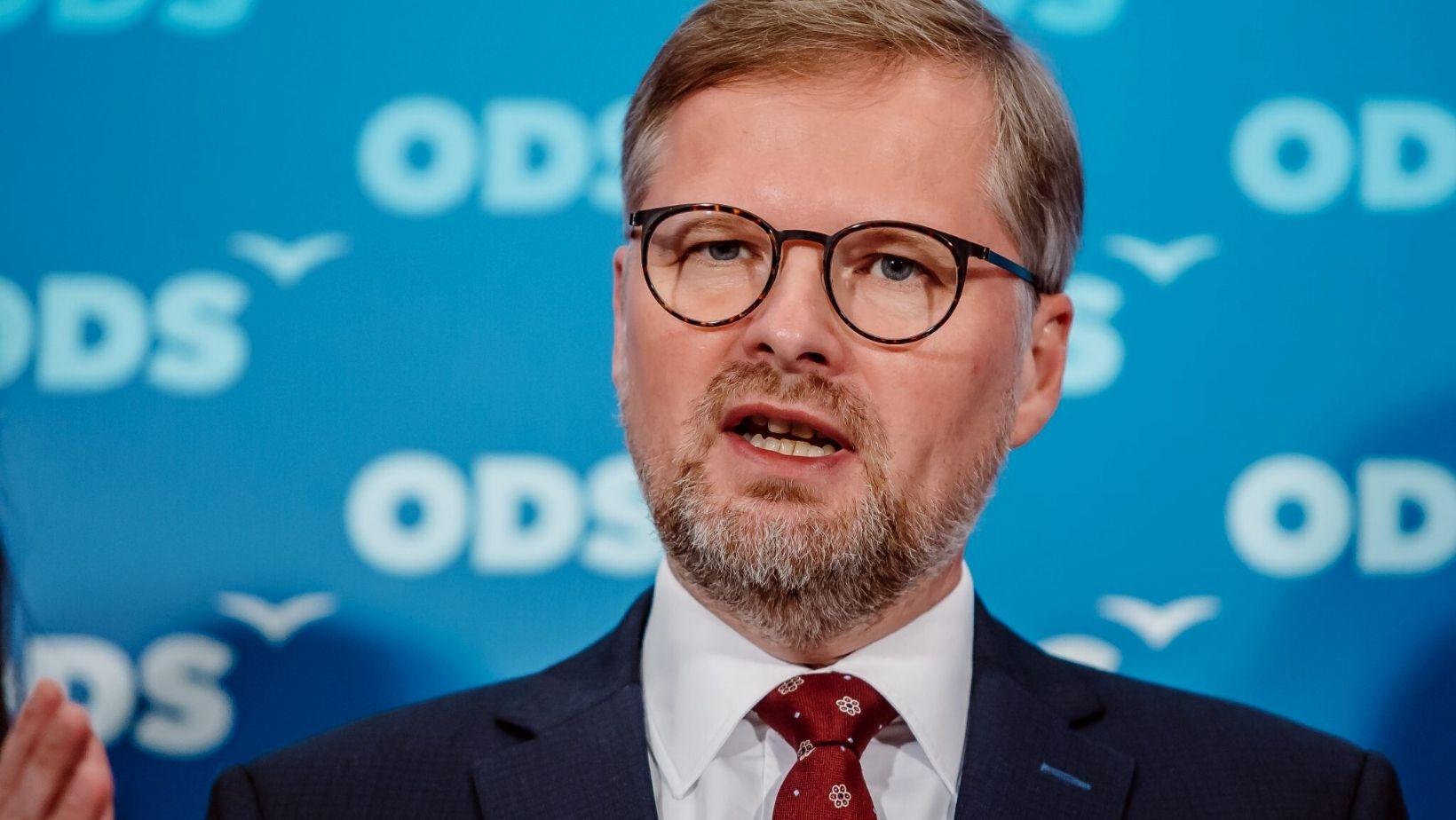
Czech opposition parties seeking to form a new government will aim to rework the 2022 budget to cut the planned deficit to below 300 billion CZK, a top party leader said on Sunday. Petr Fiala, leader of the centre-right coalition Together which defeated Prime Minister Andrej Babis’s ruling ANO party in an Oct. 8-9 election and plans to form a new government with the Pirate/Mayors group, told a Czech Television debate show that they would reject the current administration’s budget plans. That means the budget is unlikely to be approved before year-end, causing the country to revert to a provisional plan that limits discretionary spending. Fiala said a provisional budget for up to two months would not cause a problem. Babis’s government has proposed a 376.6 billion CZK deficit in 2022, similar to the record gap seen in 2020 after the start of the coronavirus pandemic and the expected gap seen in 2021 as spending stays high. “A deficit like this is not possible,” Fiala said. “We have to count on a provisional budget, but of course it is in everybody’s interest to have the amended budget accepted at the soonest.” He said changes could be done in weeks. When...
The hospital will create a medically integrated trans-national region between Austria and the Czech Republic On 16 October, the European Union’s first cross-border hospital opened for patients in both Lower Austria and South Bohemia. It is called the ‘Healthacross Health Centre’ and is located in the Austrian town of Gmünd. As TheMayor.eu reports, the hospital will also provide care for the Czech town of České Velenice, right across the border. České Velenice has around 3,500 inhabitants, and a hard time providing healthcare services. The nearest hospital is in České Budějovice, a full 60 kilometres away. Gmünd has 5,500 inhabitants and a similar problem with access to healthcare. However, together they form a patient pool big enough to warrant the creation of a hospital. The project cost around 434,000 euros and was financed through the ‘Interreg V-A – Austria-Czech Republic’ Operational Programme by the EU’s Regional Development Fund. It was developed in close cooperation between the two municipalities. Construction of the new hospital, as well as insuring that all staff speaks both Czech and German began in 2019, and the facility is set to service roughly 9,000 cross-border patients. According to Czech Minister for Health Adam Vojtech, cross-border hospitals are a...
Do you consider the “green credentials” of a place when you’re planning a trip? Clean air, pure water, pedestrian-only streets, bike paths, parks, botanical gardens and other public green spaces, green trains, eco-hotels, rivers, lakes, hiking trails, good public transportation and quality vegetarian dining are all among the environmental strides towards sustainable tourism now implemented by some of the most beautiful capitals of the world. In Europe, from Finland and Slovenia to Italy and France, many cities are making efforts to tackle the climate crisis and assume the lead on environmental action. Cities such as Grenoble and Budapest have mayors elected with eco-platforms and are leaders in sustainability projects. To determine its new list of 20 Best Green Capitals in Europe, the European Best Destinations (EBD) organization considered criteria including air and water quality, public transport with zero CO2 emissions, green spaces per inhabitant, percentage of people who walk, cycle or take public transport to work, quality of life and the number of kilometers of cycle paths. It also included destinations awarded the title of European Green Capital by the European Commission for Environment, as well as those designated as a European Destination of Excellence (Eden) by the European Commission. Prague is also among the Greenest cities in Europe by many rankings....
Health problems were preventing Czech President Milos Zeman from carrying out his duties, an official said. The speaker of the Czech Senate, Miloš Vystrčil (ODS), said that a letter he received from Prague’s military hospital where Zeman is being treated says the president is unable to work and the long-term prognosis is “very uncertain”. According to the letter signed by the hospital’s director, Miroslav Zavoral, Zeman is unable to perform “any working duties for health reasons”. It said Zeman’s return to his duties in the next several weeks is “very unlikely.” Vystrčil said the Senate would meet tomorrow (Tuesday, October 19) to debate activating Article 66 of the Czech Constitution which would transfer the president’s powers to other constitutional officials. Under Czech law, if the president isn’t able to act due to his illness or other reasons, the prime minister and the speakers of both houses of parliament will take over his presidential powers. Zeman was rushed to the Czech capital’s military hospital on October 10, a day after the election for the lower house of parliament. The hospital previously said Zeman was in an intensive care unit in stable condition, but further details about his health were unknown. As...
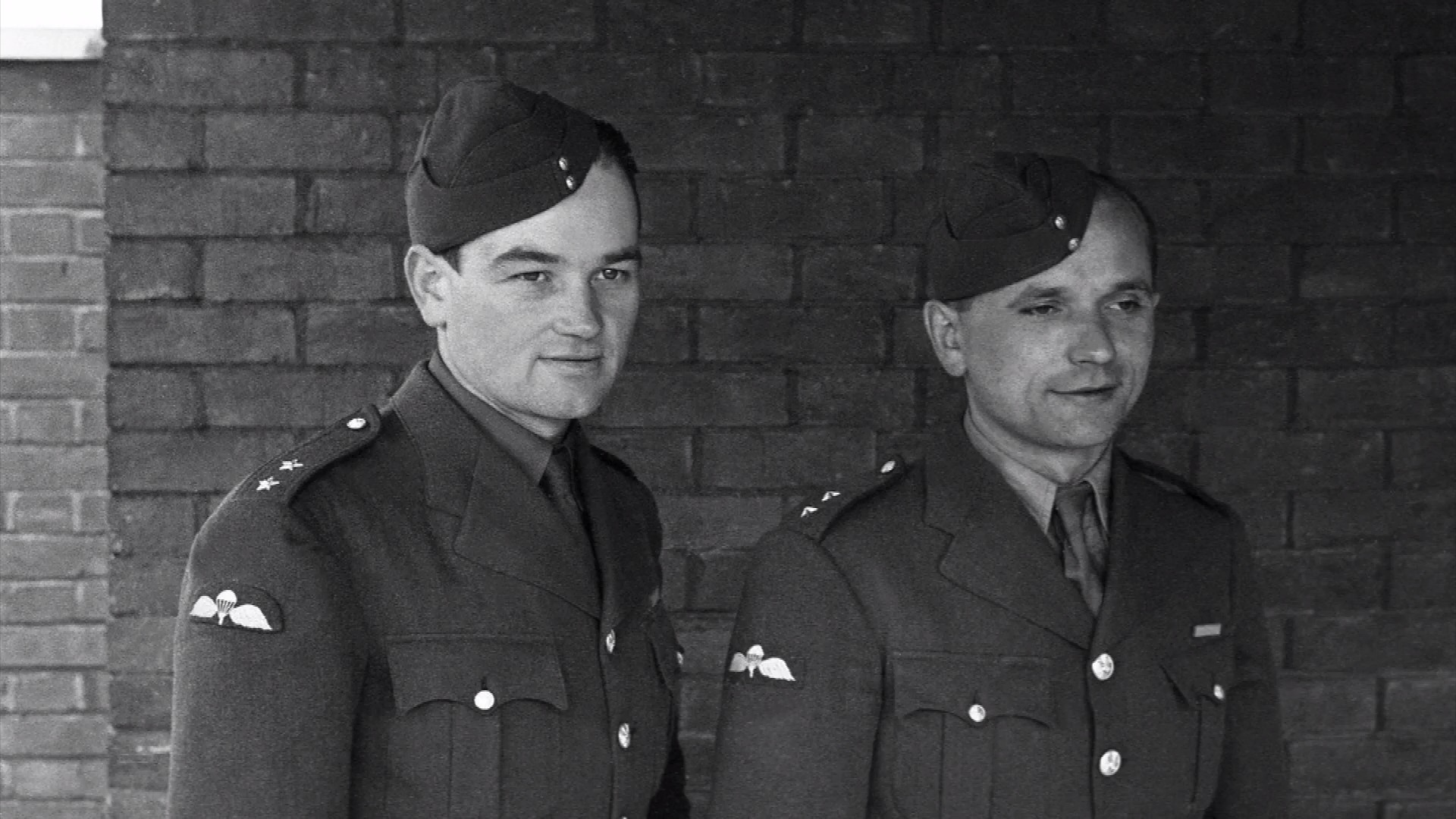
The freshly named Piskáčkových street is in the city’s Vysočany district. Libuše Eichlerová was six years old when her uncle, the resistance fighter Jaroslav Piskáček and his family were arrested in July 1942 by the Gestapo. “These are the death certificates of the Piskáček family. Uncles, aunts Tonička and Mirka. In Mauthausen, they were murdered by the Nazis,” Eichlerová explains. The last time she saw her aunt, uncle, and their then fifteen-year-old son was on holiday in Šumava. “They were very nice people, happy,” she adds. The family of Jan Piskáček were arrested in June 1942 after helping paratroopers Josef Gabčík and Jan Kubiš, who had carried out the daring assassination of Nazi governor Reinhard Heydrich in Operation Anthropoid. On 28 December 1941, Jozef Gabčík and Jan Kubiš were, together with seven other paratroopers, dropped near Nehvizdy. Preparation for the attack took a long time – the scheduled date of the assassination was not until 27 May 1942. In the intervening time, Kubiš and Gabčik studied Heydrich’s movements, familiarizing themselves with his schedule, his habits, and the areas he frequented. Finally, everything was in place for the assassination to occur. The morning of May 27th 1942, Heydrich left his mansion...
On October 26 from 6 pm to 10 pm the Baroque Vrtbovská Garden will be festively lit for an illuminated view of Prague by night. The festive lighting of this garden takes place two times a year – in the spring and in the autumn. You will be surprised by the magic and beauty of this place. It offers an amazing view of Prague Castle and part of the historical center. Entry to the terraced Italian garden is through Vrtba Palace from Karmelitská street. The garden cuts into the Petřín slope and stretches from the courtyard of the palace to the southwest. The entrance fee is 65 CZK for adults and 45 for kids under 15 years. About the Vrtba Garden Vrtba Garden lies on Petřín Hill overlooking Lesser Town, offering a peaceful respite in the middle of the busy city. This Italian-style terraced garden is one of the most beautiful Baroque gardens in Central Europe and is a UNESCO World Heritage site. Here you will definitely find desired peace in the middle of the busy town. Vrtba Garden was built between 1715-1720 by František Maxmilián Kaňka with sculptor Matyáš Bernard Braun. You can admire staircases with ornamental banisters, statues...
Czech infrastructure manager SZ has announced a tender worth 4 billion CZK for a contractor to double track and electrify the 5km Kladno – Kladno-Ostrovec section of the 29km Prague – Kladno line, the first element of a project to upgrade the route. SZ has also revealed plans for the wider 50 billion CZK project which will include the first dedicated rail connection to Prague Havel Airport. Work on the Kladno – Kladno-Ostrovec upgrade is scheduled to start in 2022 and be completed in 2024. The chosen contractor for the tender will also revamp Kladno station. The entire project involves electrifying and track-doubling the existing Prague – Kladno line and building a new branch from Prague-Ruzyně to an underground station at the airport. Work on the branch line is expected to start in 2024 and continue until 2029 with a separate tender expected for the airport station, which will serve the airport’s two terminals. Construction will also begin in 2026 to extend this line to Kladno via Jeneč to complete a loop. SZ says it is currently preparing documentation to launch a tender worth 5 billion CZK next year to upgrade the Prague-Ruzyně – Kladno section, which will be completed...
On Oct. 18, 1896, Prague held its first-ever film screening at the Hotel U černého koně. Optician and mechanic Adolf Oppenheimer carried out the screening, screening only short films at the time. Dismas Šlambor, alias Viktor Ponrepo, established the first permanent Czech cinema a few years later in September of 1907. The theater opened in the house U Modré štiky located on Prague’s Karlova St. Ponrepo’s father was a glider, but rather than endeavor to take over the family business, Ponprepo worked as a traveling magician for a while. When interest in the magic business tanked at the turn of the 19th century, Ponprepo purchased both a phonograph and a cinematograph, kicking off his career in film. His Ponrepo cinema held 200 seats, somewhat resembling a family business. After the theater’s establishment, moving pictures became increasingly popular for the city residents. By 1911, there were nine cinemas located at Prague’s center and another 13 in the suburbs, making for an uptick of 22 cinemas over the course of four years alone. Another three years later, and there were 39 theaters constructed in the city, seeing around 12,000 visitors on weekdays and up to 80,000 on Sundays. Today, with its seemingly...
According to the Czech Tourism Union (ČUCR), tourism in Prague faces financial losses of billions of korunas, a figure which continues to grow. As Covid-19 measures are still in place, without a quick and effective solution to the current situation, a dramatic impact on the entire Czech Republic and its economy can soon be expected, the union said, calling on Prague Mayor Zdeněk Hřib of the Pirate Party to take action. According to an earlier statement by the Association of Hotels and Restaurants of the Czech Republic, Prague accounts for 60 percent of tourism in the Czech Republic. Before the outbreak of the Covid-19 pandemic in 2019, 8.4 million guests visited the capital, according to ČUCR President Viliam Sivek. Of these, about 6.8 million were from abroad. “In the first half of this year, it was less than 1.9 million visitors. There were just over 286,000 foreigners. It is obvious that such a decline is driving down the whole of Czech tourism,” he noted. ČUCR also criticized political parties for putting tourism on the side of their agenda. According to Sivek, it is necessary to support inbound tourism, which, unlike other European Union countries, has remained in the Czech Republic...
Don’t have an account? Register
Already have an account? Log In
How Would You Like to Promote Your Business? PR ArticleDisplay bannersVideo productionNewsletter adsJob ListingsInfluencer Marketing
Your Email
We will come back to you within 24 hours with our proporsal