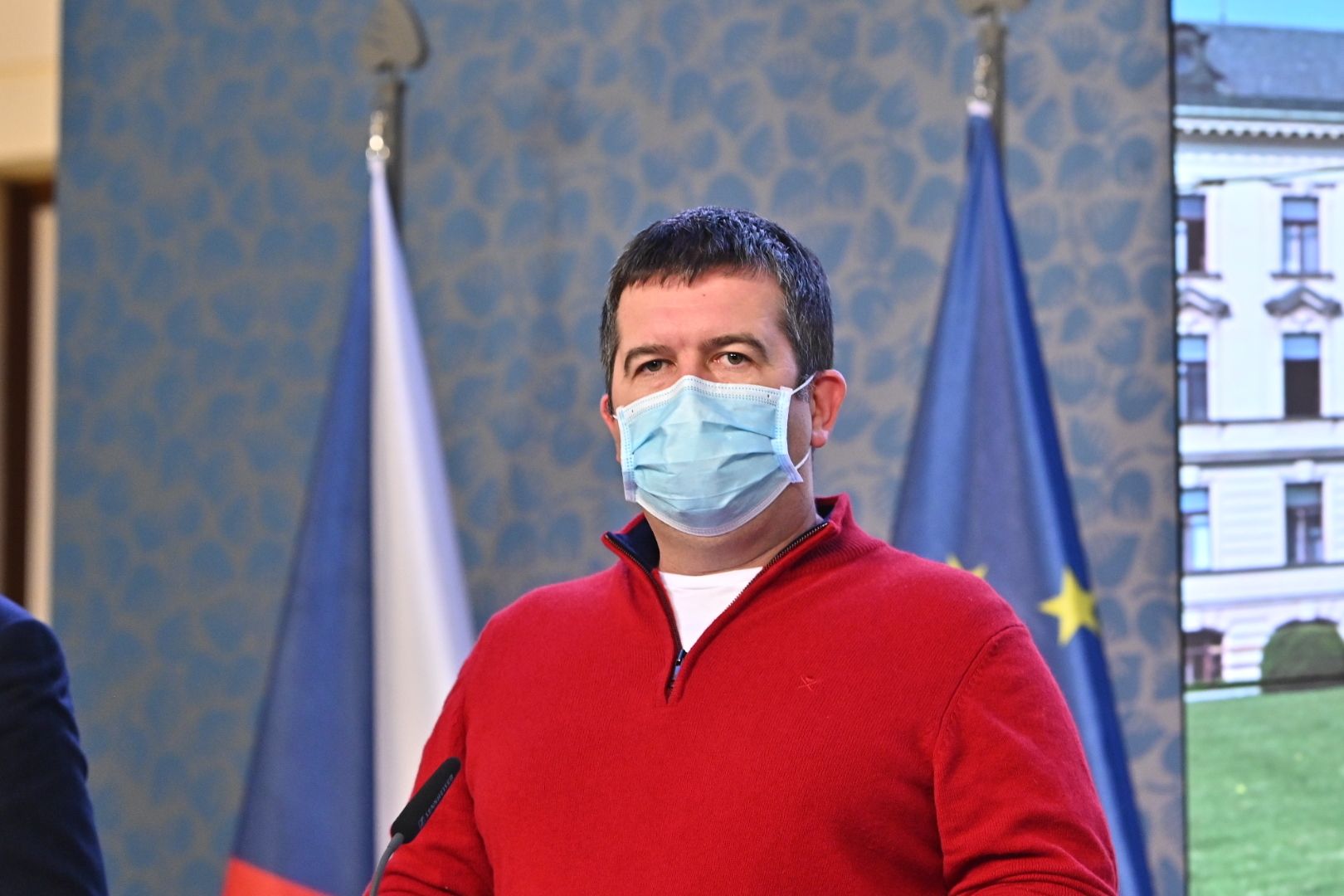
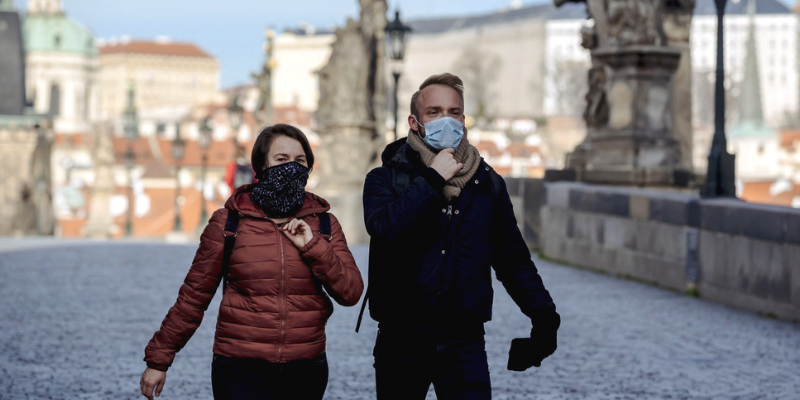
Police officers and hygienists will check compliance with covid quarantines and isolations. “The police will receive the lists from the regional hygienic stations and carry out intensive inspections,” said the Minister of the Interior Jan Hamáček (ČSSD) and the Minister of Health Jan Blatný (ANO). “Choosing to ignore mandatory isolation and quarantine orders is not only against the law, but it’s also putting citizens, first responders, health professionals, and the most vulnerable at risk of exposure to the virus,” Hamáček added. According to Blatný, compliance with the basic rules, including quarantine and isolation, will significantly help to relax the restriction measures adopted by the government. How do the quarantine and isolation work? In February, the Czech government extended quarantine and isolation from ten days to two weeks. People who have already had Covid-19 in the last three months or who have already been vaccinated with both doses, do not need to be quarantined. People without symptoms who have been infected need to stay in quarantine. In isolation are those in whom the infection has been confirmed. On Thursday, March 4, the Czech Senate approved a proposal to pay CZK 370 a day to those who are ordered to quarantine. This payment is...
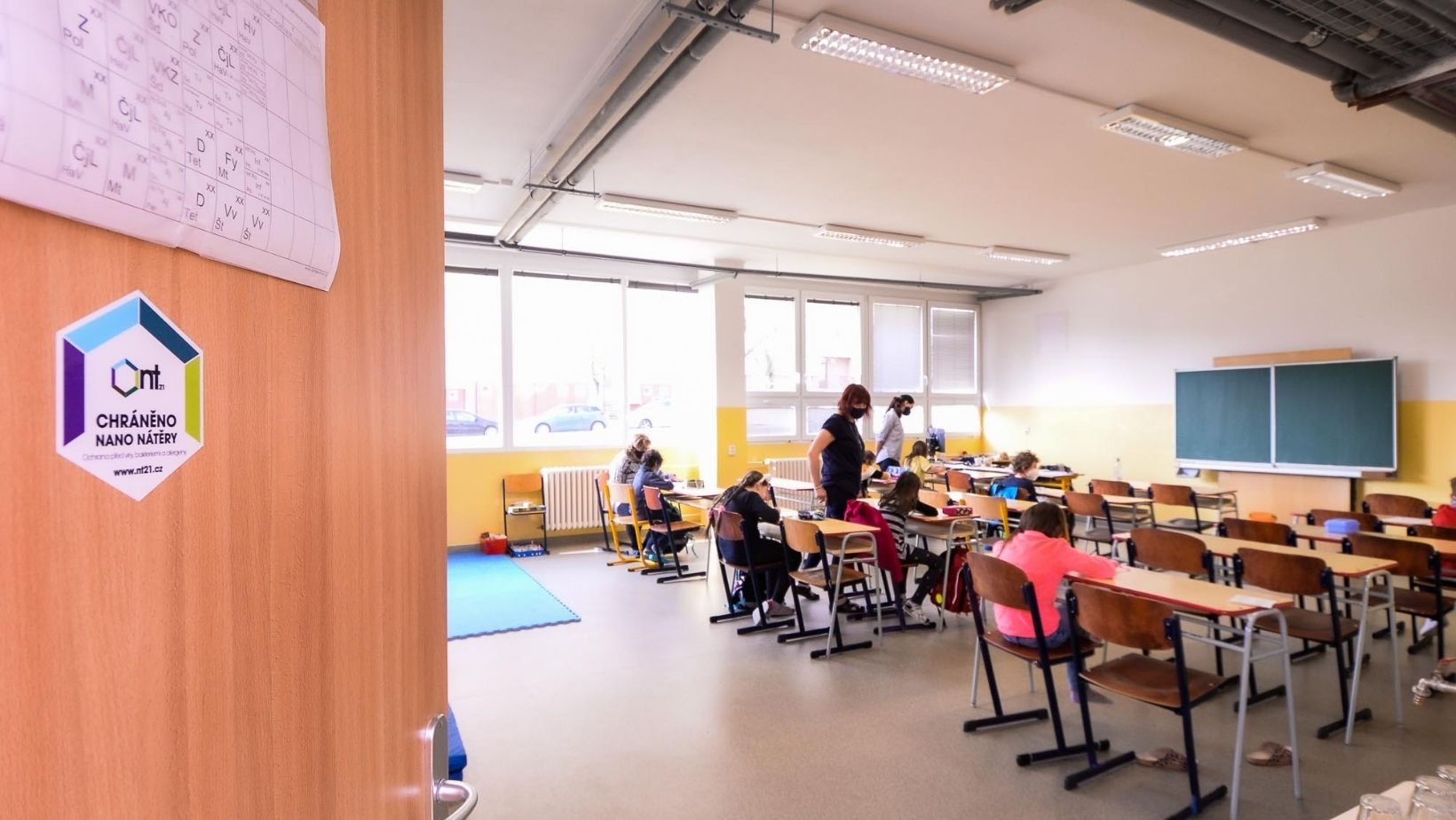
The walls of this Pilsen school have been painted with a protective coating that eradicates bacteria and viruses One of the classrooms in Pilsen’s 31st primary school has received a special nanotechnological paint coating on its walls and ceiling. According to a press release by the Pilsen Municipality, the school teaches and looks after children of frontline key workers such as paramedics, firefighters, and police officers. Protection against COVID-19 The special coating was applied for free by the company Nanotechnologie 21 s.r.o. (NT21) and it is said to have protective qualities; that is, it is believed to eliminate viruses, bacteria, allergens, fungi, and fumes produced by volatile substances such as disinfectants and cleaning products. Commenting on the protective coating, the Council for Education Lucie Kantorová said, “This is a Czech patent used in healthcare in our country and in the world. Teachers also praised another of the effects of this technology, namely the elimination of odours. Children thus have the highest possible protection that can currently be obtained on the market.” Speaking to the Municipality of Pilsen, Petr Brož from NT21 explained how the coating works: “This coating will retain its functional properties for up to ten years. It was originally intended for healthcare, but for example, for its ability to absorb...
Czech company Snuggs founded by Linda Šejdová and Tomáš Zahradník only started two years ago, but their yearly turnover in 2020 reached almost 100 million CZK. Founded in 2019, Snuggs has created a line of underwear aimed at maximum comfort and a sense of security during menstruation. The reusable underwear helps reduce the amount of waste packaging coming from single-use products such as tampons and pads. Produced based on ethical values, Snuggs has sold around 200,000 products. “Our mission is not to push out all other alternatives, but we want to offer women another product and provide them with a wider choice,” says Linda Šejdová, co-founder of Snuggs. Snuggs conceptualized their product when Linda wore menstrual panty products from America. She inspired herself from these products, realizing how sustainable they were. However, the quality of the products did not satisfy her, which led her to the idea of creating her own line of panties. She got in touch with Tomáš and with the University of Liberec, then started creating. During the pandemic, the fairly young and successful company has not had as much impending trouble as other companies, surviving and managing to stay afloat because of the fact that menstrual...
Monday, 22 March will mark exactly one year since the death of the first person in the Czech Republic from COVID-19. A 95-year-old man in the Bulovka hospital in Prague was the first to succumb to the disease here. On the occasion of that sad anniversary, the church bells of all the religious organizations involved in the “Minute of Silence” initiative will ring on Monday, 22 March at noon. According to the event’s organizers, it has been organized in response to the fact that the Czech public debate about the pandemic has primarily been conceived of as an organizational or technical discussion. “The human dimension of the spread of this disease and its destructive influence on our society has been quite forgotten. The grief and the death have, therefore, just remained statistics; it is as if we have forgotten that death on this scale impacts the state of our society as a whole and its ability to cope with the current situation,” the initiators of the event say in their announcement. The event is the initiative of the human rights activist Jana Hradílková, the environmental activist and journalist who has been reporting on the pandemic Jan Kašpárek, and former communist-era dissident and political...
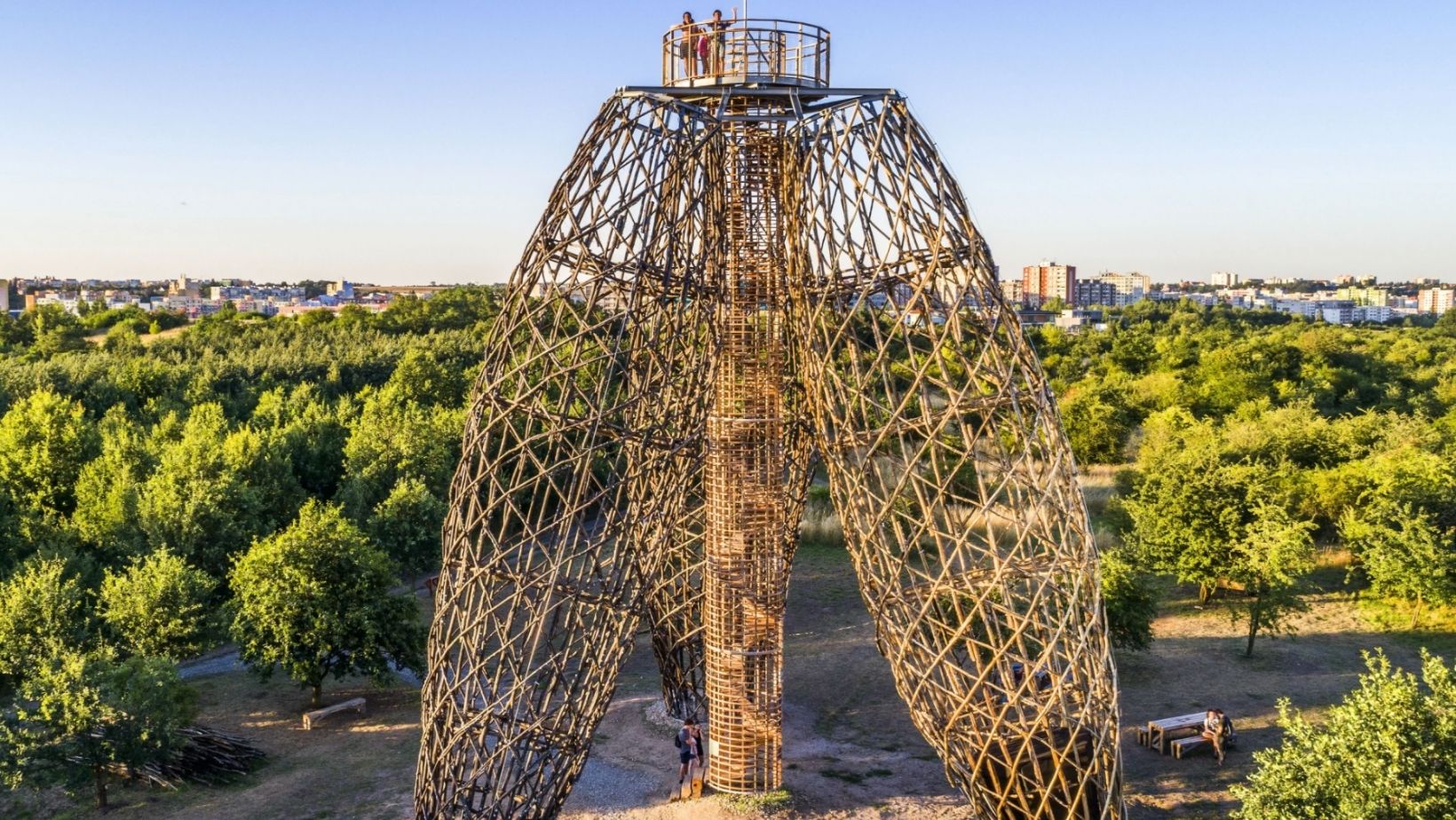
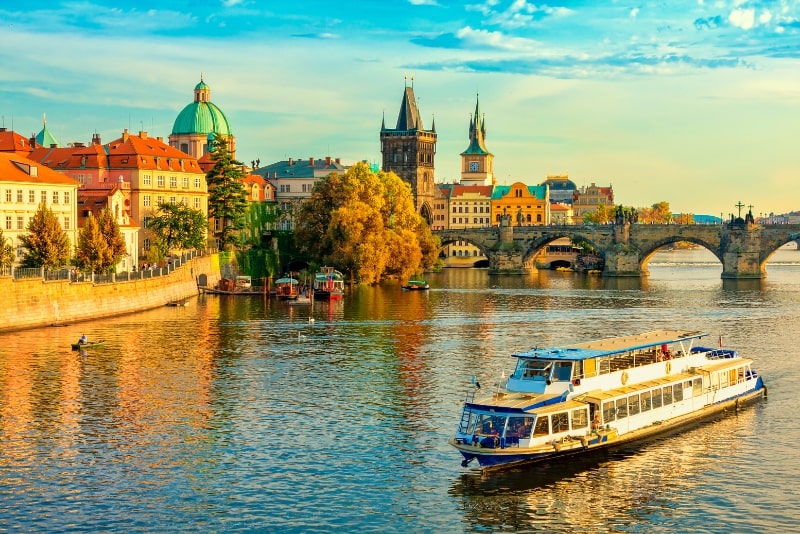
Covid-19 restrictions may impede most of us from visiting other districts in the Czech Republic, but luckily, Prague is a city with a plethora of beautiful and stunning surprises. If you’ve run out of ideas, here are some curiously pretty and interesting sites to check out for the next time you head out in the city. Blanka Tunnel ART The public installation of the Czech-Argentine artist Federica Díaze has become the dominant feature of the new relaxation zone and park in Letna. The installation is located on the concrete surface itself of the Blanka tunnel, which transforms the mere tunnel into a piece of art. Everything was created thanks to the initiative of local citizens, who have long been troubled by the view of the spacious and untreated concrete exudation of the Blanka tunnel near Stromovka in Prague. Cemetery in Dolní Břežany The Břežanský Cemetery is located on the western edge of Dolní Břežany and loosely connects to a park in the city center. It is an unconventional work that builds on the history of the village with its philosophy. Thanks to this, we will find elements belonging to Celts, Slavs, or Christians. At bird’s view, one can see that the...
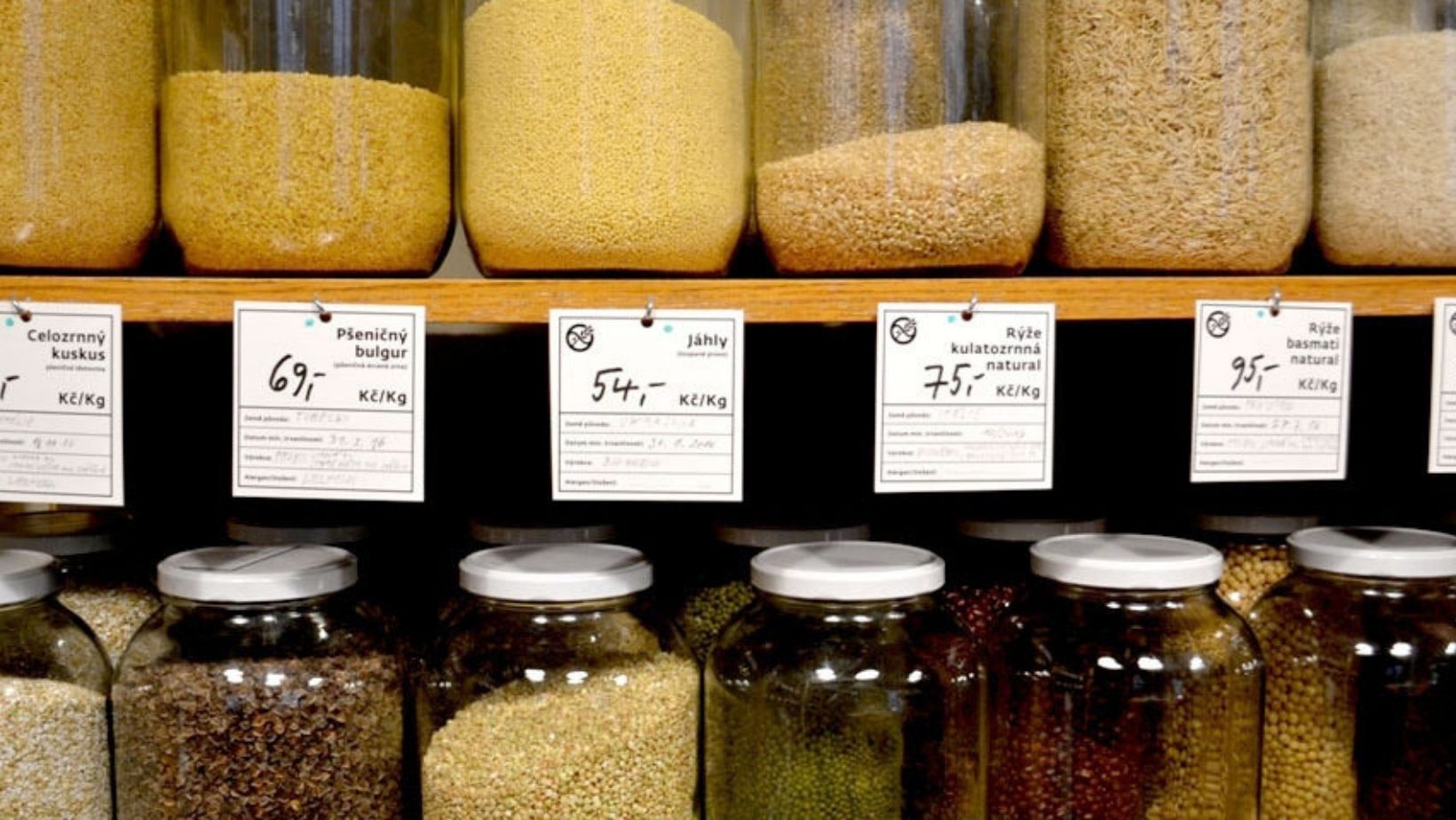
The growing demand in the market has created room for a new type of service, such as zero-waste shops. To buy goods in these stores means to shop environmentally friendly products and make a massive difference to the collective global footprint. Zero waste shops have gained popularity in the past few years with a growing understanding of plastic pollution, waste issues, and global warming. Do you also think that there are too many packages, and do you want to try a change? Life without waste and excess plastic is not so tricky anymore – you can find several shops in Prague where you can buy zero-waste products for your household and yourself. What do you need to prepare for shopping in a zero-waste shop? More than with other purchases, it is essential to decide at home what and how much you want to buy. Why? Firstly, to have somewhere to store the goods. There is usually no other packaging in the store than the ones you bring. Containers can be different – sacks, glass bottles, plastic cans, or cans in which you store spilled rice or flakes at home. Secondly, we prevent unused food from ending up in the trash by...
Who doesn’t need some happy news these days? Just in time for the United Nation’s annual International Day of Happiness on March 20, the results of the 2021 World Happiness Report have been released—and the results will put a smile on your face, despite the ongoing pandemic that has killed more than 2.6 million people around the globe. Finland has been named the happiest place in the world for the fourth year running, in an annual UN-sponsored report. The World Happiness Report saw Denmark in second place, then Switzerland, Iceland, and the Netherlands. Data from analytics researcher Gallup asked people in 149 countries to rate their own happiness. Measures including social support, personal freedom, gross domestic product (GDP) and levels of corruption were also factored in. “We need urgently to learn from Covid-19,” said report co-editor Jeffrey Sachs, professor and director of the Center for Sustainable Development at Columbia University. “The pandemic reminds us of our global environmental threats, the urgent need to cooperate, and the difficulties of achieving cooperation in each country and globally.” Besides the happiest countries in the world, the Happiness Report also looked at the places where people are the most miserable. This year, countries like Afghanistan, Zimbabwe, Tanzania and Jordan were...
As vaccination efforts have increased across Europe, countries like Greece and Croatia are already preparing for large amounts of tourism. In Croatia, the Czech Minister of Foreign Affairs, Tomáš Petříček is currently negotiating conditions of entry for tourists visiting the Adriatic sea from the Czech Republic. Safe locations to visit will be designated by a special marking stating “Safe Stay in Croatia”. According to Petříček, Greece will accept an antigen test as an adequate requirement for those who have not yet been vaccinated. They are anticipating the country’s tourism season to begin on May 14 if safety conditions permit. “They are either being tested or will show sufficient immunity as a result of the Covid -19 disease they have already undergone, or they will submit a negative test for covid-19,” Petříček said. This year trains will continue to run from the Czech Republic down to the Adriatic coast with stops along Croatia at Rijeka and Split. Croatia has long been a popular tourist destination for Czechs. Last year, 511,000 Czechs visited the country between Jan. and Sept. despite the global pandemic transpiring. Croatia has implemented new health precautions for travelers to prevent the spread of Covid-19 among tourists. The Stay...
Small and medium-sized companies can now receive free professional support to help them recover from the effects of the COVID crisis DoToho! is a new Czech platform aimed at providing small and medium-sized businesses in Prague with support from experienced mentors and experts. The program is free of charge and its ultimate goal is to help restart the Czech economy after COVID. According to a press release by the City of Prague, Mayor Zdeněk Hřib voiced his support for the program: “When I walk through the city centre, I am offered a sad view of closed places without customers. The loss of income also had a significant effect on the construction sector. I believe that selfless professional help for entrepreneurs within the DoToho initiative! will help them to cope with the situation and start their business again.” How does it work? Small and medium-sized businesses have been identified as those which have a turnover of 3-300 million CZK and at least 3 employees. These preferably Prague-based companies are now given the chance to sign up to the DoToho! program to receive professional advice, support, and training. Each company will be assigned a mentor who will provide them with the help they need two hours a week for two months. The mentors...
As of March 18, 2021, Prague councilors approved stricter rules regarding buses’ entry into the city center, whilst trucks over 3.5 tonnes are prohibited. Moreover, the new rules are to drive out irregular sightseeing tours for tourists, often operated by decade-old buses. Tourist buses will need to have a clear route and timetable. From 1st of July next year, they will also have to meet at least the Euro 6 emission standard. For a diesel vehicle to be Euro 6 compliant, it can’t emit more than 80mg/km of NOx (nitrogen oxides) gases, while a petrol vehicle can emit no more than 60mg/km. According to the city management, before the pandemic, the intensity of commercial bus traffic was such that the center was jam-packed and saturated. Councilors were also guided by efforts to improve the atmosphere, “When people from all over the world start to discover the beauties of Prague again, tourist bus operators will no longer do what they want in the streets of Prague,” says Scheinherr. The regulation of bus transport in the center of Prague took place in the 1990s. In 1999, a zone was established for the prohibition of entry of trucks over 3.5 t and buses. Operators may, however,...
The Czech Republic is known for its solid infrastructure, a highly educated and skilled workforce, and relatively low living costs and wages. Its location means it acts as a ‘gateway’ to other hubs like Berlin and Vienna, there is a strong presence of innovation hubs, incubators, and accelerators (think Startup Yard). Whatsmore, a whole host of big corporates have set up shop here, such as Microsoft, eBay, and Skype. Below you can find a list of companies working on innovative solutions and showing positive signs like closing recent funding rounds, that we will be watching in 2021. Resistant AI – This startup protects the machine learning system from adversarial manipulation and advanced fraud. Deployed on top of existing systems, Resistant AI provides a typical security layer for financial services, such as protecting payments and detecting fraud or money laundering — and also detects forged documents or spots sophisticated attackers attempting to copy the underlying ML model. Last year, the firm raised $2.75 million in a round co-led by Index Ventures and Credo Ventures. Smartmockups – This startup began as a side project in 2016 when two guys were both looking for a tool to present their website and app designs to clients in a professional...
The Czech government has agreed to extend restrictions on movement among districts beyond March 21 until further notice as the coronavirus pandemic ebbs slowly, Health Minister Jan Blatny said on Thursday. The restrictions, introduced at the beginning of March on top of the closure of schools, shops, and most services and compulsory wearing of FFP2 masks, ban people from moving beyond district boundaries except for work commute and other serious reasons. However, the government decided on Thursday to partially relax the pandemic measures. It will be possible to do sports anywhere in one’s district, not just in one’s municipality as at present. People who have already been vaccinated can also now visit the hospital without undergoing a test. The current restrictions have been in place since the beginning of March, when the government said they would be valid for three weeks. The number of newly infected is slightly declining. The health ministry recorded 10,576 new COVID-19 infections on Thursday, 6% below the level reported a week earlier. On Monday afternoon, the government approved mandatory antigen testing in companies with 10 to 49 employees. As for larger companies, the testing is mandatory once per week, with exemptions for employees who have...
Don’t have an account? Register
Already have an account? Log In
How Would You Like to Promote Your Business? PR ArticleDisplay bannersVideo productionNewsletter adsJob ListingsInfluencer Marketing
Your Email
We will come back to you within 24 hours with our proporsal