Dr. Hana Pospíšilová, a Czech doctor fueled by altruistic intentions, helped organize Czech aid to come to Lesbos without the support of the government or any humanitarian organization. Dr. Pospíšilová is a consultant cardiologist who regularly volunteers in Lesbos, treating and providing medical care for the needy refugees in the camp. A truck containing 2 million CZK worth of valuables, intended to be distributed to the refugees, arrived at the Kara Tepe Camp in Lesbos, Greece on January 21, 2020. Volunteers collected 14 large insulated tents, 900 pairs of boots, 370 sleeping bags, 700 raincoats, 500 umbrellas, 1,800 shawls, and 300 disinfectant hand gels. Kara Tepe is a temporary refugee camp that was set up to replace the now burnt down Moria camp. All contributions have been donated by Czech citizens who wanted to help make an impact and provide relief to the refugee crisis in Greece. The truck was driven 2000 km by Lukáš Resler, who left the Czech Republic last week on Thursday. The valuables have reportedly been distributed already. This courageous and compassionate act of charity was definitely needed in the refugee camp. On the other hand, the Czech Republic has donated 100,00 EUR from the budget...
The City of Prague is aware of the importance of greenery in the urban area and at the same time, the representatives of the city want to support sustainable rainwater management and other adaptive measures within various investment projects of the Czech capital. Thus, the Prague City Hall will launch a brand-new department of Blue-Green Infrastructure. Its manager will be responsible for overseeing and coordinating the city investments in terms of blue-green infrastructure support. From the long-term perspective, Prague is perceived as one of the greenest cities in the world and tirelessly continues planting new trees, having finalized its two separate stages in 2020, even during the COVID-19 state of emergency. Prague City Council’s Program Statement for the years 2018–2022 includes a commitment to plant 1,000,000 new trees in the capital. In 2019 alone, over 350,000 forest tree seedlings were planted. More data on the Prague greenery and environment can be found on the new data website of the city – Pragozor.cz – in the Czech language. In recent years, Prague Council approved several conceptual documents (some of them available for download in English here) relating to the protection and care of urban greenery or generally to the green-blue infrastructure development. Prague already introduced the Principles of...
Czech real estate portal Valuo.cz has recently published an index showing how proximity to a metro station can affect the price of an apartment. Valuo.cz analyzed the average price of apartments located within 400 meters from the Prague metro stations (for some end stations, the radius is 1 km). Apartments at the Staroměstská metro station in Prague are on average almost three times more expensive than on the cheapest Černý Most. The analysis is based on real estate servers from last October to December. It takes into account 65 to 95 square meters of private property within one kilometer of the metro station. Malostranská turned out to be the most expensive metro station in terms of nearby apartments with an average of 211,700 CZK per square meter. Over the year, housing prices have risen here by 25%. The most affordable apartments are located near Rajská zahrada metro station – 75,700 CZK per meter.
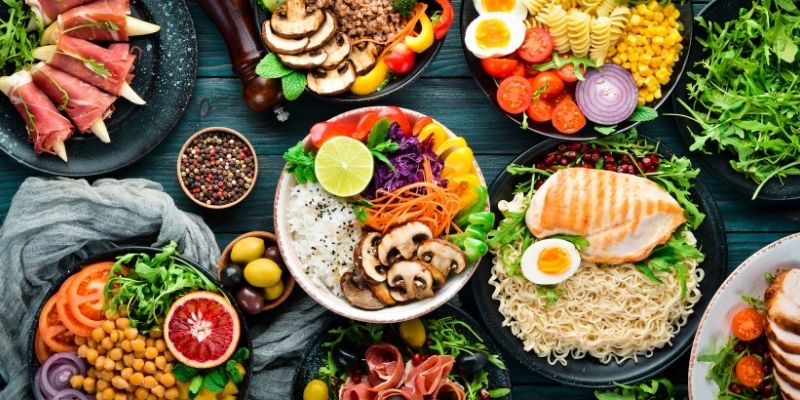
If you are looking for a quick delivery to your door, or if you’re running a company or business and want a practical and quick way to have your meals every day, MyFoodPlace can help. This company offers their service as the very first Cloud Kitchen in Prague, Czech Republic. What makes the concept behind a Cloud Kitchen interesting, is that a company usually takes multiple chains of restaurants and food services under their wing, and in general, lets them work from the same location. This concept is both pragmatic, efficient, and also innovative. MyFoodPlace, as an example, collaborates with many different restaurants, to give their customers a plethora of options, such as Corleone, Smíchovna, Namaste India, Žebírkov, and their very own pizza brand Raketou, to deliver a variety of different dishes to your door or place of work. All these food brands work under one roof and are at their customers’ service. MyFoodPlace deliveries have an eclectic range of different foods, from pasta to burgers, salad bowls to Asian cuisine, to even Indian and Czech Food. If you want to expand your taste palette with the different delicacies this company has to offer, then taking advantage of this multicultural...
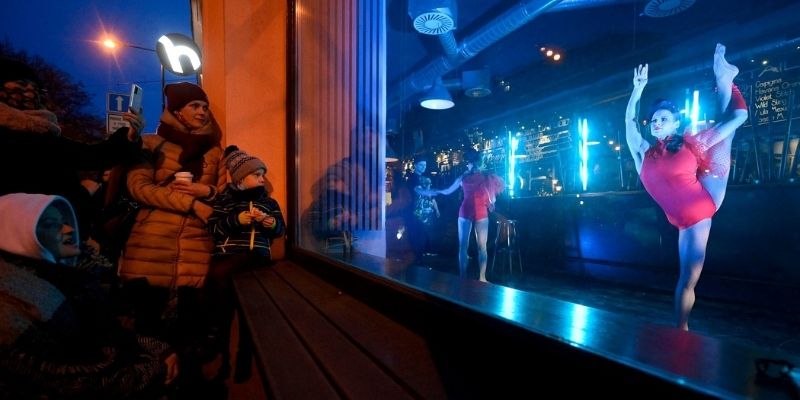
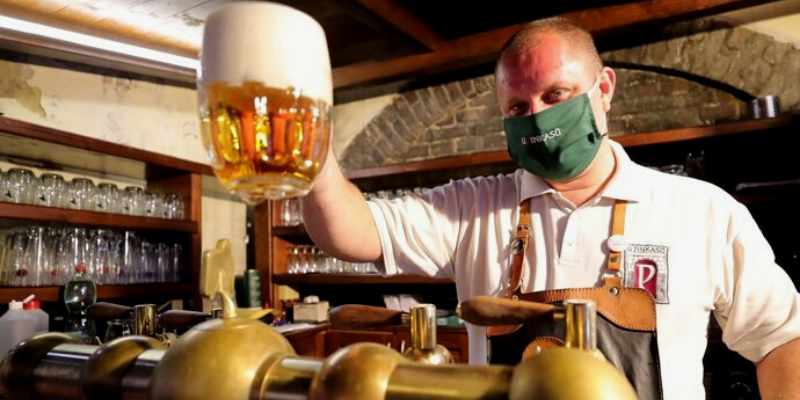
On January 21, artists of the Cirk La Putyka circus performed in front of the closed bar window, while the audience watched outside. The aim of the Cirk La Putyka events in Prague during Covid-19 pandemic is to get live art back to people during theatres-closed-time. From mid of October 2020, all theatres across the country have been closed to visitors due to measures adopted by the Czech government to counter a surge in new coronavirus.
The lower house of the Czech parliament on Thursday extended the country’s state of emergency until February 14, a week less than the government had wanted as it seeks to keep in place measures to tamp down coronavirus infections. The extension, pushed through with the support of the Communist party, provides the government with a legal basis for some measures such as limits on assembly and movement or temporarily shuttering businesses. The Czech Republic has been one of the worst-hit globally with 14,973 deaths so far and over 150 deaths most days this month as many hospitals are filled to capacity. Health Minister Jan Blatny has called on the public to observe limits on social interactions to help break the trend, with the aid of stricter social distancing rules and the closure of most shops that came into force on December 27. Officials have also said the number of those hospitalized with Covid-19 needs to fall by more than half to below 3,000 patients for the government to consider lifting some restrictions.
In the past year, the real estate market was expected to take a financial hit due to government measures. This was not the case however as made evident by data from the real estate server Bezrealitky.cz which services the Czech Republic and Slovakia. Data from their report found that there was no significant loss of revenue and they even experienced a high margin of profits during 2020 as last year alone they leased 47000 properties at a 35 percent increase for from the previous year. The company is known for the direct sale and leasing of properties which benefits the consumer because it cuts out the middle man and avoids any intermediary parties. Those seeking housing can use Bezrealityky.cz to avoid paying agency fees. The company has seen massive growth because of its intuitive and user-friendly website. The site includes virtual tours, online contracts, and digital signatures making buying and leasing a property a much less complicated process. It is an ordeal that has now been made entirely digital and remote. Because of enforced border restrictions and lack of tourism, rental prices in cities like Prague have generally stagnated. Many flats intended for tourism have stood empty and companies like...
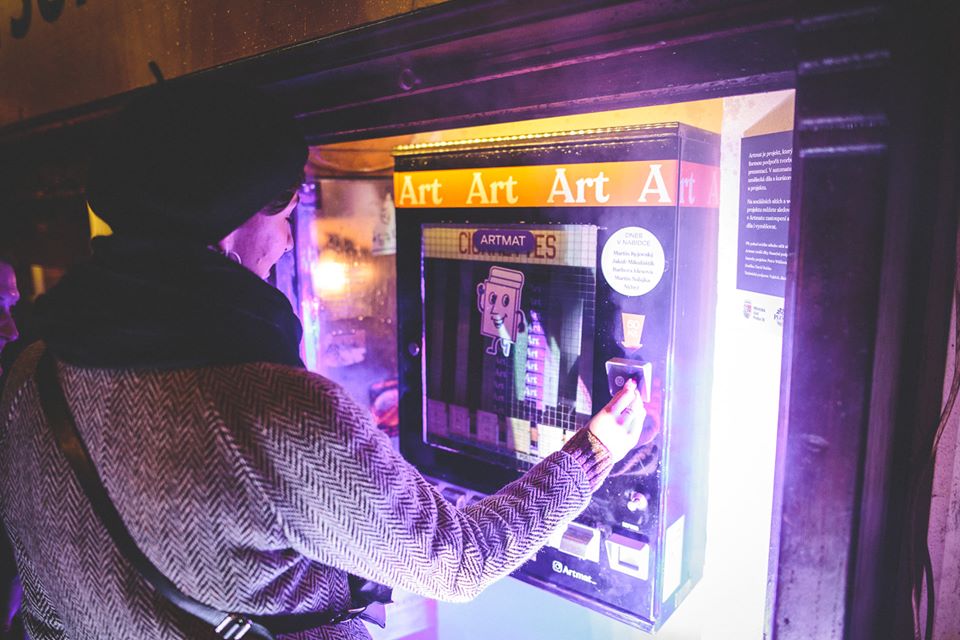
Although theaters, cinemas, exhibitions, and music clubs are closed due to the spread of coronavirus, you can also come across culture in public. And we don’t just mean sculptures or historical buildings… KnihoBudka The KnihoBudka project was created in the summer of 2013. Its aim was to transform seven disused telephone booths into small free public libraries positioned in public spaces in Prague and its surrounding areas. The opening of the first KnihoBudka library took place on 9 January 2014 in the IKEM hospital in Prague. There are currently more than 40 official KnihoBudka libraries all over the Czech Republic and dozens of similar mini-libraries. KnihoBudka libraries are used for free loan or swapping of books. People who are interested can borrow a book of their choice, swap a book, or take one without needing to return it, or on the contrary, they can leave their own books for another reader. If they want, users can subsequently return the books they borrow to any KnihoBudka library. Individual businesses or organizations can adopt a KnihoBudka library so to speak, by financing the transformation of an old telephone booth into a functional KnihoBudka library, and thus create a new mini-library in their...
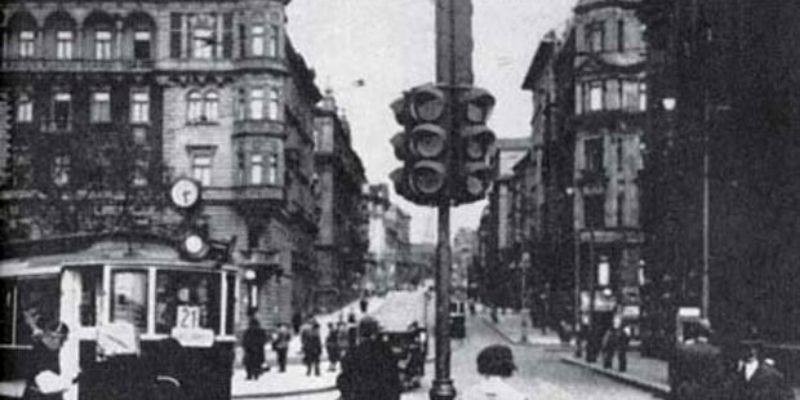
Some sources state that the very first traffic lights were first installed in Prague on the crossroads in the middle of Wenceslas Square between Vodičkova and Jindřišská Streets on the 21st January 1930. At that time, almost 19,000 cars passed through the junction at peak hours. The same sources state that the first light signalling facility in Prague was manufactured in ČKD Praha and was installed at the crossroads of Hybernská, Dlážděná and Havlíčkova streets by Masarykovo Railway Station as early as 1927. Traffic control in Prague The control of traffic on the busiest crossroads in Prague began on 2nd September 1919; in those days a policeman simply stood in the middle of the crossroads controlling traffic on Můstek and on the other four crossroads assisted with a cosh. He was using a ‘pendrek’ (baton) to direct traffic. Praguers were staring at him and found it all strange. They began calling him ‘pendrek’, and to this day, traffic guards are called that. Traffic lights were not to arrive on the scene until later on. Initially, a quadrilateral semaphore was hung in the center of the crossroads and used for cars coming in from all directions as well as for pedestrians....
Frustrated with the ongoing Covid-19 restrictions imposed by the Czech government, a group of restaurateurs are attempting to form their own political party. This past weekend Interior Minister Jan Hamáček took to Twitter to state that pandemic restrictions imposed on the general public do not apply to political parties. This statement prompted many struggling restaurant owners to form a coalition formally known as Chcipl PES. This loophole would essentially mean political cells being formed inside restaurants and pubs. It is through this political party exemption, that mass gatherings of people would likely occur in the name of political party meetings. Organizers from the group gave a press conference on Tuesday. Among the group, a spokesman named Jiří Janeček stated, “the measures of this government are not working and impoverishing this country and taking people’s hope.” The group also says they are frustrated with a government provision called the Covid-Gastro program which currently provides financial assistance only to businesses that are following government rules and restrictions. A spokeswoman for the Ministry of Industry and Trade Štěpánka Filipová has restated that businesses that violate government restrictions in regard to Covid-19 will not receive financial compensation. Businesses that do adhere to these restrictions...
Throughout the course of 2020, a total of 3,665,871 passengers passed through the gates of Václav Havel Airport Prague. The operation of the airport was unprecedented due to the COVID-19 pandemic, in particular the related restrictions on travel and the worldwide decline in demand for flying. As a result, 79% fewer passengers were handled in Prague compared to 2019. In January and February 2020, there were direct flights serviced from Prague to a total of 111 destinations around the world. In the following months, the offer was limited and continued changing based on the epidemiological situation. Passengers were offered flights to up to 87 destinations on an ongoing basis. Last year, the routes to the United Kingdom were, traditionally, the most popular, with the greatest number of passengers flying to/from London. Václav Havel Airport Prague is ready for a gradual return of air carriers and passengers expected during this year. Currently, passengers can take direct flights to over twenty destinations from Prague. The offer of additional direct connections will primarily depend on the development of the epidemiological situation, which will determine the possible relaxation of the rules for travel. The rate and speed of vaccination of the European population and...
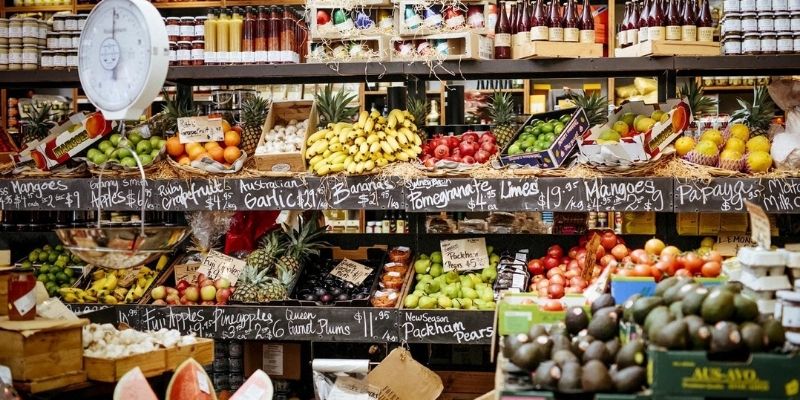
The lower house of the Czech Parliament approved on Wednesday a requirement that supermarkets carry a minimum share of local food, a move to be less dependent on imports. MEPs have approved mandatory quotas for Czech food in shops. From 2022, more than 50 percent of Czech products should be sold in stores. Some EU countries warn Czechia against quotas that the adoption of the law is very likely to make food more expensive. The share of Czech food in stores that are bigger than 400 sq. meters should be at least 55% in 2022 and increase to at least 73% in 2028, according to the bill. It was drafted by the opposition populist Freedom and Direct Democracy party that pushed it through the house with the help from the ruling coalition of Prime Minister Andrej Babis. The controversial move still needs to be approved by the upper house, the Senate, which is controlled by the opposition, and then by the president. The lower house can override a possible Senate or presidential veto by a simple majority. Those who voted in favor of the bill argued that the coronavirus pandemic showed that it is important for the country to be...
Don’t have an account? Register
Already have an account? Log In
How Would You Like to Promote Your Business? PR ArticleDisplay bannersVideo productionNewsletter adsJob ListingsInfluencer Marketing
Your Email
We will come back to you within 24 hours with our proporsal