It’s been 17 years since “Love, Actually” first hit theaters, but the scene in which Andrew Lincoln silently confesses his love to Keira Knightley with a bunch of poster boards still gets a lot of mileage. The latest example: Prague Mayor Zdeněk Hřib using this unique method of communication to deliver a New Year message to all the citizens of the Czech metropolis. Přeji krásný nový rok všem lidem dobré vůle. Ať je lepší než ten loňský. Věřím, že bude! ☺️ pic.twitter.com/wSBUxQUpIT — Zdeněk Hřib (@ZdenekHrib) January 1, 2021
We are now very familiar with robots – machines that possess artificial intelligence and perform tasks that humans find arduous or simply unattractive. What you might not know is that the word robot comes from the Czech for “forced labour”. It was first used to mean an artificial humanoid in the stage play R.U.R. written in 1920 by Karel Čapek, which premiered on January 2, 1921, by the Unity of Klicper Theater Amateurs in Hradec Králové, and the official premiere was at the National Theater in Prague on January 25, 1921. The acronym stands for Rossumovi Univerzální Roboti and translates to English as Rossum’s Universal Robots. The title refers to the creations of Mr. Rossum, a Frankenstein-like inventor and possible inspiration for Metropolis’s Rotwang (who was himself an inspiration for Dr. Strangelove). Čapek told the London Saturday Review after the play premiered that Rossum was a “typical representative of the scientific materialism of the last [nineteenth] century,” with a “desire to create an artificial man—in the chemical and biological, not mechanical sense.” While others credit Karel Čapek, as the author of R.U.R., with coining the term, he insists it was in fact his older brother Josef, best known as a painter, but also noted as a writer and a...
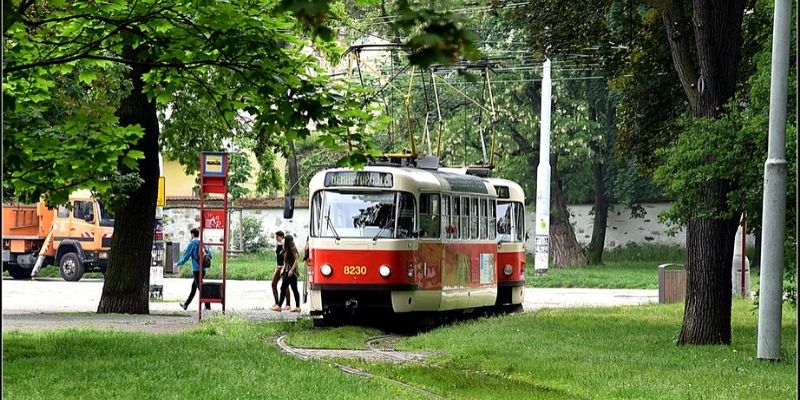
Prague is planning to grass over some of its tram lines as part of a program to make the city greener. Green tram rails are becoming more and more popular in Europe, and Prague wants to follow this trend. As part of the project Gene Funds for Cities and Landscapes, the Prague Public Transport Company is testing new unique mixtures of plants for evergreen tram tracks. Not only are grass tracks aesthetically pleasing, but they also go some way to supporting town landscapes that lack green space. This can have significant benefits for health and well-being, making cities more attractive. Moreover, grass tracks can reduce traffic noise, improve air quality, and cool the summer heat. “Embedding rails in grass acts as a better absorber of sound and vibration than traditional light rail embedment materials such as concrete and other hard surfaces,” said Prague’s Deputy Mayor for Mobility Adam Scheinherr One more benefit is the fact that the repair of the tram line on the grassy surface can be carried out faster than the repair of the paved line, which takes significantly more time, is more expensive, noisier, and duster. The researchers, in cooperation with the transport company, sowed the first three test...
On January 1st, 1993, Czechoslovakia split into the Czech Republic and Slovakia. A multi-ethnic nation born at the end of World War I in the glow of pan-Slavic brotherhood, Czechoslovakia survived dismemberment by the Nazis and more than four decades of Communist rule only to fall apart after just three years of democracy. Both countries divided their common “goods” (embassies, military equipment, etc.) on a two-to-one ratio to reflect their populations. The split “was not entirely inevitable, but the political and economic costs of keeping the country together would have been extremely high”, pointed out Jiri Pehe, political analyst and former advisor to Vaclav Havel. The split was cheered in Prague and Bratislava, by bonfires and joyous speeches in the main square. “Two states have been established,” Vladimir Meciar, Prime Minister of Slovakia, said at that time. “Living together in one state is over. Living together in two states continues.” Take a look at these photos and how Czechs and Slovaks celebrated the dissolution of the Czechoslovak Federal Republic (CSFR).
From Thursday, December 31, passengers in the Prague metro can use the high-speed LTE mobile network at Náměstí Míru, Hůrka, and Lužiny, reports Mobilenet.cz. As of today, 39 stations out of 61 are covered with LTE services. According to the previous plan, the entire metro should be covered with a mobile signal by early 2022. Construction works and cable installation in Prague Metro were performed in phases and during night hours when the metro is closed to the public (1:00 to 3:00 a.m.). The total distance between the four new stations where the cable will be installed in both directions is 11.6 km. The costs of covering the Prague metro stations and the tunnels amount to CZK 12 million and CZK 18 million, respectively. The Prague metro began operation in 1974 and now has three lines with 61 stations. It currently has a transit network 65.2 kilometers long. This does not include the long-planned Metro D line. It takes at least 50 hours to establish a 4G LTE network in one station; and, to install the network cables in both directions of the tunnel between any two stations takes approximately 2 months. Expanding WiFi coverage is part of a long-term city project not only...
Czechs have long been the reigning world champions in beer consumption. Now it appears that pedigree has spread to teen use of alcohol… The European School Survey Project on Alcohol and Other Drugs (ESPAD) has found that 95% of 16-year-olds in the Czech Republic tried beer or hard liquor at least one time, compared to a European average of 79%. Nonetheless, asked if they had ever drunk alcohol, 82 percent of students said yes. This means Czech’s rates remain higher than the European average. When asked about alcohol consumption in the past 30 days, 79% of Czech students said they’d had a drink, well above the European average of 57%. Since the early 2000s, a continuous decline in alcohol use among adolescents from the Western European and Scandinavian countries was recorded. However, the widespread decrease was not equally present in all countries of Central and Eastern Europe. In the Czech Republic, a continuous increase in adolescent alcohol use between 1995 and 2011 was documented, with no signs for a decline. This increasing trend was apparent, particularly among the Czech adolescent girls. Data is collected every four years from 15- to 16-year-old students using an anonymous questionnaire. In 2019, just under...
Deaths on the road have plunged to the lowest point since 1961 thanks to reduced traffic during the coronavirus lockdown. Accidents have also fallen significantly. According to preliminary figures, there were 465 accident victims in 2020, compared to 547 in the same period last year. The number of accidents and serious injuries also decreased year-on-year. The final statistics will be presented at a press conference on 8 January. “We only saw an increase in the number of traffic fatalities in January and February. The coronavirus pandemic and associated lockdowns have led to far fewer cars on the roads. However, traffic increased significantly during the summer holidays, because people mostly spent holidays in the Czech Republic,” Traffic Police director Jiri Zly told CTK today. Total accidents fell to 93,300 — 14% fewer than 2020 while the number of seriously injured decreased by about a fifth to about 1,700. The police recorded alcohol in more than 4,400 traffic accidents, which is about 4% less than last year. Speeding and the lack of attention are the two main causes of traffic accidents in the Czech Republic and claim the highest number of fatalities. Moreover, a growing number of young drivers are involved. A fourth...
City Sightseeing is one of the world’s leading open-top bus, boat, and guided walking tour company. Established in 1999, the global brand provides hop-on hop-off services. City Sightseeing operates in over 100 locations across 5 continents which includes cities such as London, Rome, New York, Edinburgh, Seville, Moscow, Cape Town, and Prague. The lack of tourists in the Czech capital forced City Sightseeing Prague to file for insolvency. COVID-19 pandemic is mentioned by the company in the declaration of insolvency as the main reason for the current situation. “Due to the nature of the business, it is not possible to continue operating this type of activity, nor can we expect a change and possible improvement of the situation in the near future,” the company wrote in the proposal. According to the proposal, the company has liabilities in the amount of 14 million CZK. He mentions four buses, two of which are double-decker. According to the proposal, Unicredit Leasing, City Sightseeing Support (a British company, the Czech branch operates as a franchise) and the city of Prague are among the carrier’s largest creditors. In 2019, according to official documents, the company had sales of almost fifty million CZK, but the net...
The Prague Public Transport Company (DPP) launched a real-time tram location function both in the Lítačka and IDOS mobile apps. Deputy Minister for Transport Adam Scheinherr announced on social networks that the two apps now display the tram live locations and the arrival time in a beta version. V aplikacích Lítačka a IDOS konečně najdeme online polohy tramvají a časy, kdy přijedou do zastávky. Spustili jsme testovací provoz v aplikacích, které používá nejvíce Pražanů. Konečně budeme moct pohodlně zjistit, jestli tramvaj, na kterou čekáme, už jela, nebo teprve přijede. — Adam Scheinherr (@Adam_Scheinherr) December 30, 2020 Passengers can see if the tram left earlier than planned or if is late for a few minutes. The app will also automatically displays the estimated waiting time. The new function will be launched in January.
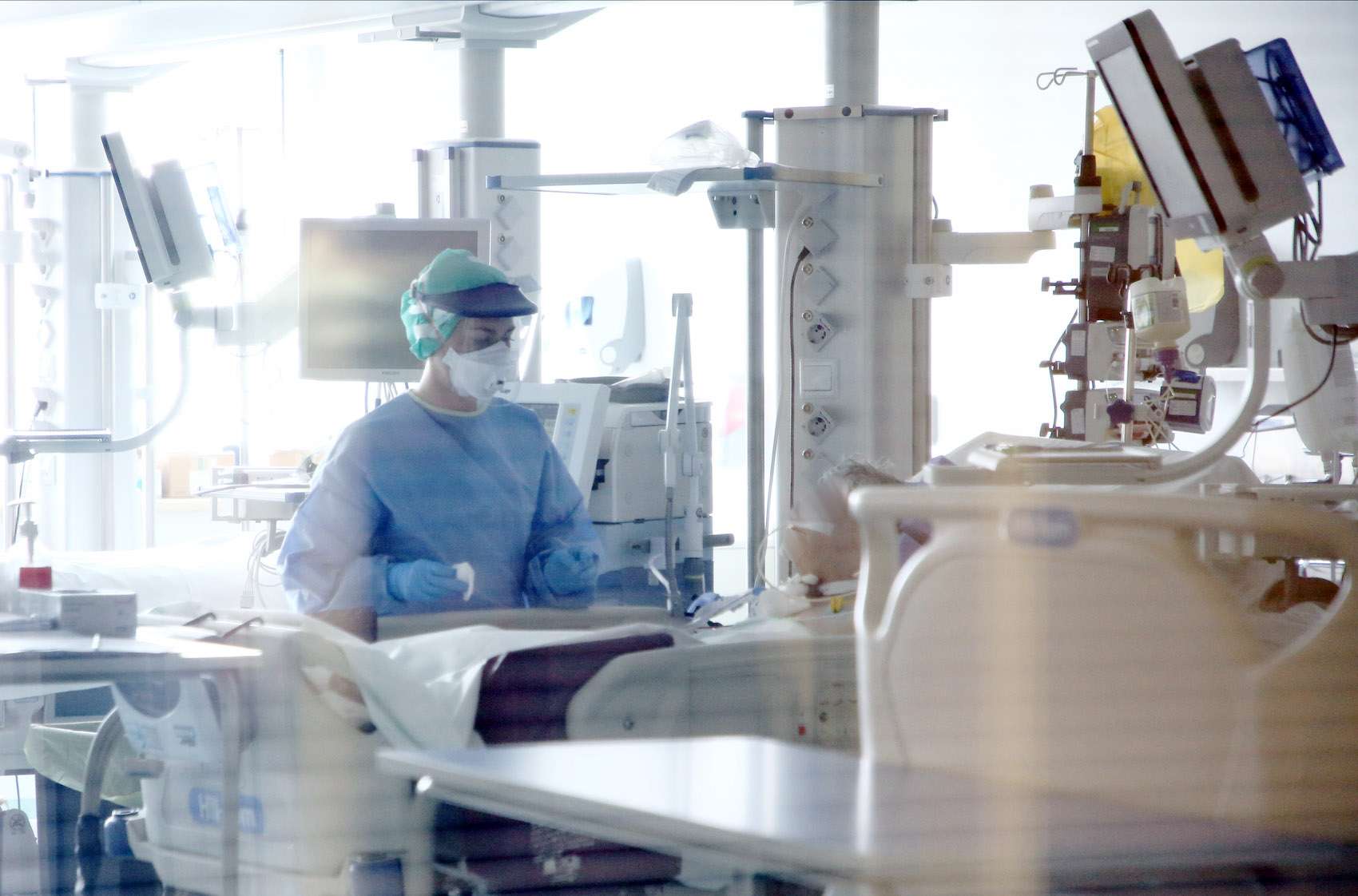
The Czech Republic reported a record high 16,939 daily cases of COVID-19 for the past 24 hours, the Health Ministry said on Thursday. Almost 52 percent of tests performed were positive. ThePES risk index is again at the highest, 5th level. The index is the same as on Tuesday, 80 points out of 100. Deaths have reached 11,580 deaths by Thursday, up 151 from the day before. Some of the new deaths were assigned to Wednesday and others to previous days. The country had slightly relaxed restrictions on business after a previous peak of cases and hospitalisations in November, but has had to tighten again this month. As of Sunday, a 9 p.m. curfew has been in place, and shops selling non-essential goods closed. Schools are expected to reopen after Christmas break next week only for the first two grades. The Health Ministry ordered hospitals on Wednesday to halt taking in patients for planned procedures and raise capacities for COVID-19 patients, including intensive care. The number of people with COVID-19 in hospitals was at 5,893 as of Wednesday, including 845 in intensive care, the ministry reported on Thursday. That was still below the November peak of 8,164 but the numbers...
Czechs aren’t known for being the most optimistic bunch, but most are satisfied with their lives, a poll conducted in November by CVVM showed. Some 71% are mostly satisfied with their personal relationships, the feeling of security and the standard of living. Uncertainty for the future remains a significant concern for Czech citizens, the study has found, with over 70% of respondents claiming that 2020 did not amount to a strengthening of justice in Czech society. Satisfaction with life received a rating of 7.13 among Czechs, on a scale from zero to ten. In June, the same evaluation reached a total of 7.38, in May 7.33. The highest level of satisfaction is expressed by people over the age of 65, while young people aged 18 to 24 value their lives the worst. Similar polls have been conducted monthly since 2003 and have mainly shown overall satisfaction. The current economic situation in the Czech Republic is assessed as good by 23 percent of people, 33 percent perceive it as bad and 42 percent do not consider it either good or bad. Praguers, respondents from the South Moravian Region, ANO movement voters, and those who trust the government are relatively more optimistic...
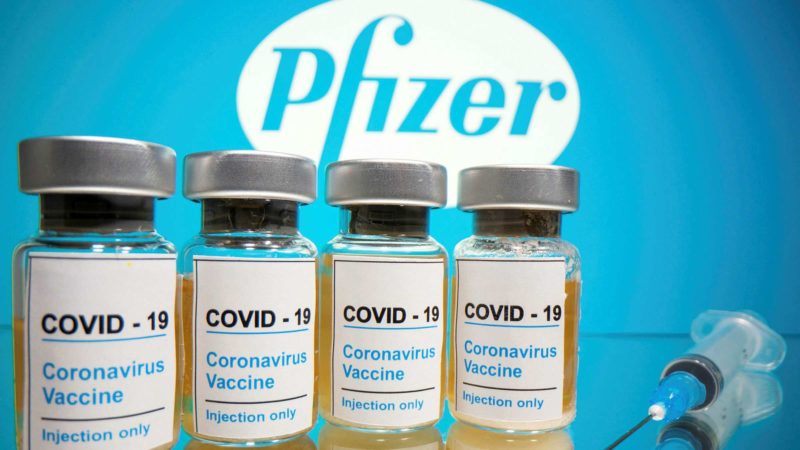
The Czech Republic has allowed squeezing an extra dose from COVID-19 vaccine vials supplied by Pfizer and BioNTech, taking advantage of an extra reserve amount put into the vials by the maker, the Health Ministry said. Under standard rules, five doses can be drawn from each vial of the vaccine, but experts have said it is possible to obtain a sixth or even seventh dose from the vials. PM Andrej Babis had asked the European Commission earlier this week to allow using the extra amount. The vaccine, made by Pfizer of the United States and the German biotech startup BioNTech, is the only one to win EU approval so far. The Health Ministry said in a ruling dated December 29 that it was, in divergence from the vaccine’s EU registration, temporarily allowing to extract the extra dose, if there is enough material for it in the vials and under the condition that the regular volume of each dose is strictly observed. “With regard to the limited amount of accessible doses… the ministry allows using one vial of this medical product for up to six people in order to increase the number of people who can be protected by vaccination with...
Don’t have an account? Register
Already have an account? Log In
How Would You Like to Promote Your Business? PR ArticleDisplay bannersVideo productionNewsletter adsJob ListingsInfluencer Marketing
Your Email
We will come back to you within 24 hours with our proporsal