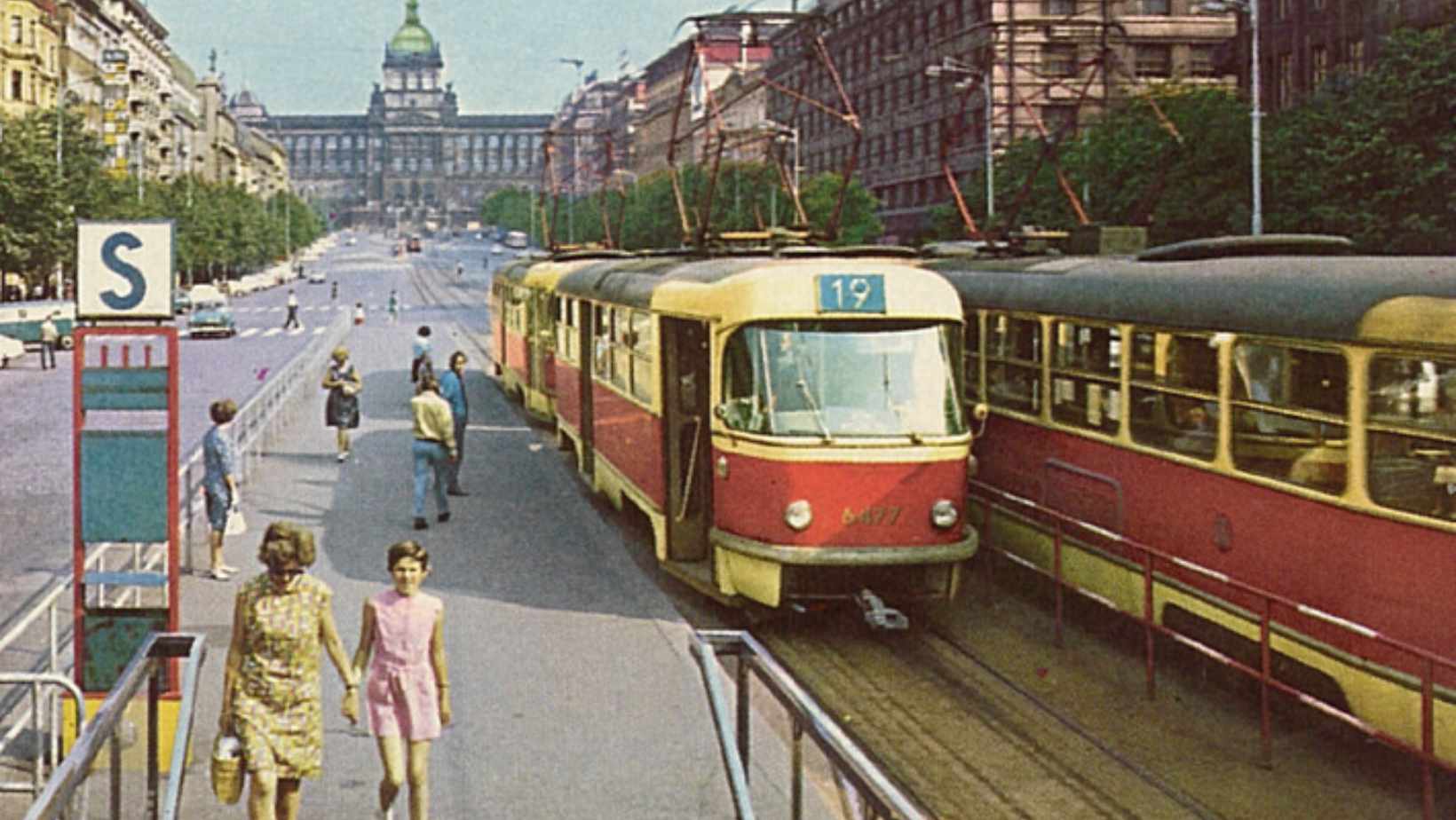
The long-running dispute over Prague’s vintage-car sightseeing rides has reached its end. The Constitutional Court has upheld earlier rulings that classify these tours as taxi services — meaning operators must follow the same rules as any other paid transport provider. The complaint was filed by Leitha, a company offering rides in retro-style vehicles around the historic center. The court rejected the company’s arguments and left the existing decisions in place. Dispute Began With 2021 Inspections The conflict dates back to inspections carried out by Prague authorities during the summer of 2021. Officials concluded that Leitha was offering paid passenger transport without meeting the basic requirements for taxi operators. They found that the cars used for the tours were not registered for taxi service and that drivers did not hold the necessary authorisation. Based on the Road Transport Act, the city identified this as an administrative offence and imposed a fine of 200,000 CZK. From the start, Leitha insisted that its rides do not count as transportation. Its central argument was that the tours begin and end at the same location, meaning passengers are not taken from one place to another. According to the company, this makes the service fundamentally different...
The Czech economy has moved into the European spotlight after several difficult years marked by inflation and weak household spending. According to new Eurostat data, Czechia now ranks among the fastest-growing economies on the continent, driven mainly by stronger domestic demand. The turnaround has been gradual. Inflation has eased, real wages are rising again, and people are returning to normal spending habits. This renewed confidence is pushing household consumption up, while companies are increasing investment after months of caution. Although exports remain slower, domestic demand has been strong enough to lift overall growth. Czechia now sits in third place in Europe, behind only two countries. Spain, with growth of 2.8%, continues to benefit from a resilient tourism sector and a strong expansion of technology and service industries. Close behind is Portugal, also at 2.4%, where higher real incomes are helping support steady consumer activity. Sweden is growing at the same pace, helped by rising household spending and gradually improving wages. Further east, Lithuania is maintaining a 1.9% growth rate. Its economy started the year strongly but slowed slightly in the third quarter. Even so, higher wages have supported consumer confidence, keeping the trend stable. The Netherlands, growing at 1.6%, is...
As Prague prepares for its winter season, city officials have confirmed that this year’s Christmas markets will operate with stricter hygiene rules. The decision comes amid a rise in hepatitis A cases, prompting authorities to expand preventive measures at the city’s largest holiday venues. The markets at Old Town Square and Wenceslas Square will install disinfectant dispensers at all stalls, giving visitors easy access to hand sanitizing throughout the event. Organizers also noted that food and drinks will again be served only in disposable, eco-friendly containers. Reusable cups, commonly used in the past, will not be offered this year. The city’s hygiene service said it is not implementing emergency restrictions but continues to advise residents and tourists to prioritize basic prevention. Officials highlight vaccination and regular handwashing as the most effective ways to reduce the risk of infection. This year’s markets open on November 29 and continue through January 6. Alongside the food stands and traditional crafts, visitors can expect a full cultural program running daily. Would you like us to write about your business? Find out more
Pinoys Groceries & Bistro is Prague’s new cultural and culinary hub, offering authentic Filipino cuisine and original Asian products. For the growing Filipino community in the Czech Republic, the recently opened Pinoys Groceries & Bistro isn’t just a place to eat; it feels like home. Founded by Crisjel Dablo and her husband Daniel Kuklovský, the grocery and bistro represent a shared dream to bring authentic Filipino flavors and warm hospitality to Prague. What began as a modest grocery store in Palmovka seven years ago — serving Filipino and Asian products to expatriates — has now expanded into a new location just off Wenceslas Square, at Štěpánská 626/63. On November 1, Pinoys celebrated the grand opening of their bistro, attended by the Philippine Ambassador to the Czech Republic Eduardo Martin Meñez, Philippine Migrant Workers Office labor attache Atty. Llewelyn Perez, and other staff from the Philippine Embassy in Prague. Every dish served at Pinoys Bistro reflects the heart of Filipino cooking: fresh, homemade, and deeply rooted in tradition. Its chef, Dario Lleva, a Filipino with years of experience in a four-star hotel restaurant, crafts each plate to remind diners of home. A staple of Filipino cuisine, adobo — chicken simmered in...
Kirill Postovit isn’t a household name for everyone in Prague, but within the art world, he’s long been considered one of the most distinctive Czech voices of his generation. Born in 1964, he has built a career that stretches far beyond the country’s borders, with his sculptures and paintings now present in more than seventy countries. His work appears in museums, foundations, and private collections, including the Soros Foundation in the United States, the National Embassy of Jerusalem ICEJ, and the AAMI Corporation. Postovit is best known for his public memorial sculptures and for paintings that blend surrealism, modernism, and biblical references. His palette is calm and balanced, his shapes immediately recognisable. That quality has led several critics to compare him to Marc Chagall, a reference that appears again and again in academic writing about his work. Prague has become a key hub for one recurring tradition connected to his name. Since 2014, the Katie Feygie Art Gallery has hosted a one-night exhibition called Episodes. Each year, the gallery selects a set of works from Postovit’s long-running collection of the same title. The show has become something of a ritual within the local art community: a single evening when viewers...
From sweets to warming svařák and Christmas markets, the Czech capital offers many ways to embrace the holiday spirit. Here’s a guide to help you savor the best of Advent in Prague this year. Where to Order Luxury Christmas Sweets in Prague If you’re not planning to bake this year but still want something special for your holiday table, Prague’s bakeries and cafés have you covered. Myšák For classic holiday sweets, Myšák’s e-shop (mysakdomu.cz) has you covered. Order a 500g box of traditional Christmas sweets for 1150 CZK. You can also pair it with a Christmas cake, their signature Věneček egg liqueur, or a homemade syrup for mulled wine. Skála Known for its craftsmanship, Skála offers a 1kg assortment of 12 different Christmas sweets for 1,670 CZK. Pre-orders are available for specific dates, with slots still open during the festive season. Etapa in Karlín Etapa’s 450g Christmas box (970 CZK) combines Linzer cookies, caramel shortbread, chocolate hazelnut balls, and their signature beehives. A few holiday dates are still open, or you can stop by the café for extras. Gluten-Free Christmas Sweets For those avoiding gluten, Mezi Srnky provides both classic and gluten-free options. Their 400g boxes include gingerbread, rum balls,...
Prague will welcome a new arrival on November 27, 2025, when Nordic lifestyle brand ARKET opens its first Czech store on Na Příkopě. The launch marks the company’s debut in the country and adds a new international name to one of the capital’s busiest retail streets. The flagship will occupy two levels inside a historic building at Na Příkopě 6. The roughly 416-square-meter space has been designed around ARKET’s recognizable aesthetic: a muted color palette, clean architectural lines, natural materials and solid oak features, all softened with abundant greenery. The store will offer the brand’s full selection of clothing for women, men and children, along with curated home items. The decision to expand to Prague reflects the brand’s growing focus on Central Europe. ARKET’s Brand Director, Pernilla Wohlfahrt, said the team is eager to meet local customers and share the company’s approach to what she described as “a more beautiful everyday life.” A central element of the store will be the ARKET Café, inspired by the principles of new Nordic cuisine. Led by chef Martin Berg, the café highlights plant-based ingredients, seasonal produce, and simple, natural flavors. Visualizza questo post su Instagram Un post condiviso da ARKET (@arketofficial)...
The Christmas market on Náměstí Míru opened last week with a larger layout, new food stalls, and a wider drinks menu — but visitors quickly noticed that prices have climbed again. Vendors this season are offering more options than usual. Stallholders have introduced drinks such as cherry, blueberry, and currant wine alongside the classic svařák and mead. A new stand selling a Ukrainian cherry drink has also found its place among the crowd. The food section has expanded as well. Visitors can now find Vietnamese dishes, burgers, and freshly sliced prosciutto. Popular sweets that were missing in previous years — including chocolate-covered strawberries — have returned, even though the long-standing stall selling weighed candy boxes is no longer there. People can still buy smaller packaged sweets from several other vendors. Traditional items remain a draw: potato spirals, langoš, sausages, buns with šodó, trdelník, and carp fries, which are especially tied to Czech holiday traditions. Yet these staples also reflect the higher pricing trend seen across Prague’s winter markets. A cup deposit is 50 CZK. Langoš costs 90 CZK, potato spirals 80 CZK, churros with dip at 180 CZK. Warm mead is priced at 100 CZK, Christmas punch at 80 CZK,...
As temperatures drop, Prague is preparing expanded winter shelters for its homeless population. Starting December 1, the city, in partnership with the Social Services Center (CSSP) and non-profit organizations, will increase its capacity to provide safe, warm spaces for those in need. The initiative includes field programs, hygiene centers, and hospital crisis beds, extending support through the harsh winter months until March 31. Like in previous years, day centers will extend their hours, and emergency facilities will operate continuously to ensure round-the-clock care. Prague will enhance its field programs, deploying teams to assist homeless individuals on the streets. These workers will provide medical assistance and transport individuals to appropriate facilities, especially during freezing conditions. The initiative also emphasizes stronger collaboration with social workers, police, and emergency services. Crisis Beds and Hygiene Centers Hospitals will again offer crisis beds to those in need. Last winter, Na Františku Hospital and the aftercare hospital in Vysočany hosted several such beds, which are expected to be available again this year. Hygiene centers will also operate, enabling individuals to wash, change clothes, and receive essential care. Support from Non-Profit Organizations Key non-profit organizations, including Naděje, the Salvation Army, and the Archdiocesan Charity, play a vital...
Temperatures across Czechia dropped sharply overnight on Sunday, with some of the coldest readings of the season recorded in the Šumava Mountains and parts of the Ore Mountains. Meteorologists from the Czech Hydrometeorological Institute (ČHMÚ) reported that the temperature in several areas in Šumava fell close to minus 25 degrees Celsius, making it the coldest area in the country on Sunday morning. While western Czechia experienced clear skies and intense freezing, the situation differed in the east. A thick layer of cloud cover left Moravia and Silesia with milder conditions, with morning temperatures most often ranging from minus one to minus six degrees Celsius. The frost was accompanied by ongoing snowfall in the northeast. ČHMÚ had issued a warning a day earlier for Moravia and Silesia, where fresh snow was expected through Sunday. Several districts received five to ten centimeters, while higher elevations of the Beskydy Mountains saw accumulations of up to 15 centimeters. According to meteorologists, the snowfall should ease later in the afternoon. Clear skies in Bohemia contributed to the deep freeze, with most areas dropping to minus six to minus eleven degrees Celsius, and the lowest readings reported in the west. Only isolated patches of freezing fog...
Poland’s Ministry of Foreign Affairs has urged citizens to avoid all travel to the Czech Republic amid the country’s worst hepatitis A epidemic in nearly half a century. The warning follows a surge in infections that has already reached more than four times last year’s total. According to the Czech State Institute of Public Health, 2,597 cases have been recorded since January, compared with just 636 in all of 2024. By Wednesday, iDNES reported that the number had climbed to 2,640, confirming that this year’s epidemic is the largest in 46 years. The virus is spreading across all age groups, though people aged 30 to 45 and children aged five to nine are most commonly affected. Prague remains the epicenter, with 1,108 confirmed cases, followed by the Central Bohemia region with 418. Hospitals have admitted most of those infected, but at least 322 patients could not be hospitalized due to a shortage of beds. Since the start of the year, 29 people have died, mostly men with pre-existing health problems such as chronic liver disease, alcoholism, or drug addiction. Doctors say infections in the capital have now moved well beyond traditional risk groups and are circulating widely in the general...
A new survey of English skills in the Czech Republic reveals that progress has stalled for the fifth consecutive year. According to the EF English Proficiency Index 2025, published on Wednesday by Education First (EF), Czechs still struggle with speaking English, although Brno residents score higher than those in the capital. The Czech Republic rose one position to 23rd place globally, gaining 15 points to reach a total score of 582. Despite this, the country remains in the B2 proficiency category, considered “upper-intermediate,” while neighboring countries such as Slovakia and Germany now reach the C1 level, representing very high proficiency. Brno Leads the Way in the Czech Republic Regional differences are clear. Brno scored an average of 620 points, outperforming Prague, where residents averaged 576 points. Among Czechs, reading is the strongest skill, followed by listening and writing, while speaking remains the most challenging area. Age also plays a role: participants between 26 and 30 years old achieved the highest scores. Gender differences were minimal, although men performed slightly better, in line with global trends. Global Leaders and Laggards Internationally, the Netherlands ranks highest with 624 points, while Copenhagen leads among capital cities with 644 points. At the lower end...
Don’t have an account? Register
[swpm_registration_form level=”6″]
Already have an account? Log In
How Would You Like to Promote Your Business? PR ArticleDisplay bannersVideo productionNewsletter adsJob ListingsInfluencer Marketing
Your Email
We will come back to you within 24 hours with our proporsal