Residents of Prague 1 have approved a local referendum addressing urban quality of life, alongside the parliamentary elections. The vote, which saw over 45% participation, covered seven questions ranging from e-scooters to accessible toilets, with the majority supporting each measure. The results are now legally binding for the district. A striking 80% of participants backed a ban on the operation and parking of electric scooters within Prague 1, while over 82% want the district to actively enforce restrictions on e-scooters in public spaces. The referendum also tackled noise and short-term accommodation. More than 72% of voters called for regulations to mitigate the impact of short-term rentals on permanent residents. Similarly, 72% supported legislative measures to penalize sources of public noise, including human voices or modified car engines, aiming to reduce disturbances from so-called “alcohol tourism.” On the issue of alcohol, over 60% of local residents favored banning alcohol sales after 10 p.m. in convenience stores to limit nighttime drinking in public areas. Noise from outdoor music venues and other amplified productions, such as rooftop bars, restaurant gardens, boats on the Vltava River, or concerts, was highlighted by more than 70% of voters as needing stricter regulation. Accessibility was also a...
Prague Shakespeare Company (PSC) will present the European premiere of Muse of Fire, a new play by American playwright Lauren M. Gunderson. The production marks Gunderson’s first appearance on a European stage. Performances will take place on October 10, 11, 17, and 18, 2025, at Divadlo Na Pradle. Get your tickets here. Directed by Evren Odcikin, Muse of Fire is a two-person play that explores the life and marriage of William Shakespeare and Anne Hathaway during the period of his retirement from London. The story focuses on the personal and creative challenges Shakespeare faced, as well as the dynamics of his relationship with Anne Hathaway. Gunderson stars as Anne Hathaway, with Casey Murphy portraying Shakespeare. Following each performance, audiences are invited to participate in a Talk-Back session with the artists, offering a chance to discuss the play and its themes directly with the creators. In addition to the performances, PSC will host a three-day workshop from October 14-16, 2025, on writing and developing new plays. Led by Gunderson and Odcikin, the workshop provides a limited number of participants—writers, directors, and actors—with mentorship and practical guidance in creating new theatre work. The program will culminate in a professional New Work Showcase...
As the Czech parliamentary elections reshape Central Europe’s political map, European media are following developments in Prague closely. Outlets in Hungary, Poland, and Slovakia describe the return of Andrej Babiš as a potential turning point that could redefine alliances and challenge Czechia’s current pro-Western orientation. Hungary’s pro-government daily Magyar Nemzet, which supports Prime Minister Viktor Orbán, called Babiš’s victory a possible revival of the Visegrád Four’s influence. “Babiš and Orbán have long shared views on migration, opposition to Brussels-style centralization, and resistance to Western war pressures,” the paper wrote, suggesting that a Babiš-led government could “reinvigorate patriotic cooperation” in the region. By contrast, Hungary’s left-leaning Népszava wrote that the Czech Republic—until now seen as “an island of calm in turbulent Central Europe”—may be changing direction. Under President Petr Pavel and Prime Minister Petr Fiala, the country has been among Ukraine’s strongest European supporters. “But even here,” Népszava noted, “war fatigue is setting in.” Polish Concerns Over Foreign Policy Poland’s Rzeczpospolita questioned whether a Babiš government would “turn Czech foreign policy upside down and drift toward Moscow.” It recalled that Babiš recently joined the far-right Patriots for Europe group in the European Parliament—alongside Orbán and Marine Le Pen—but this time avoided...
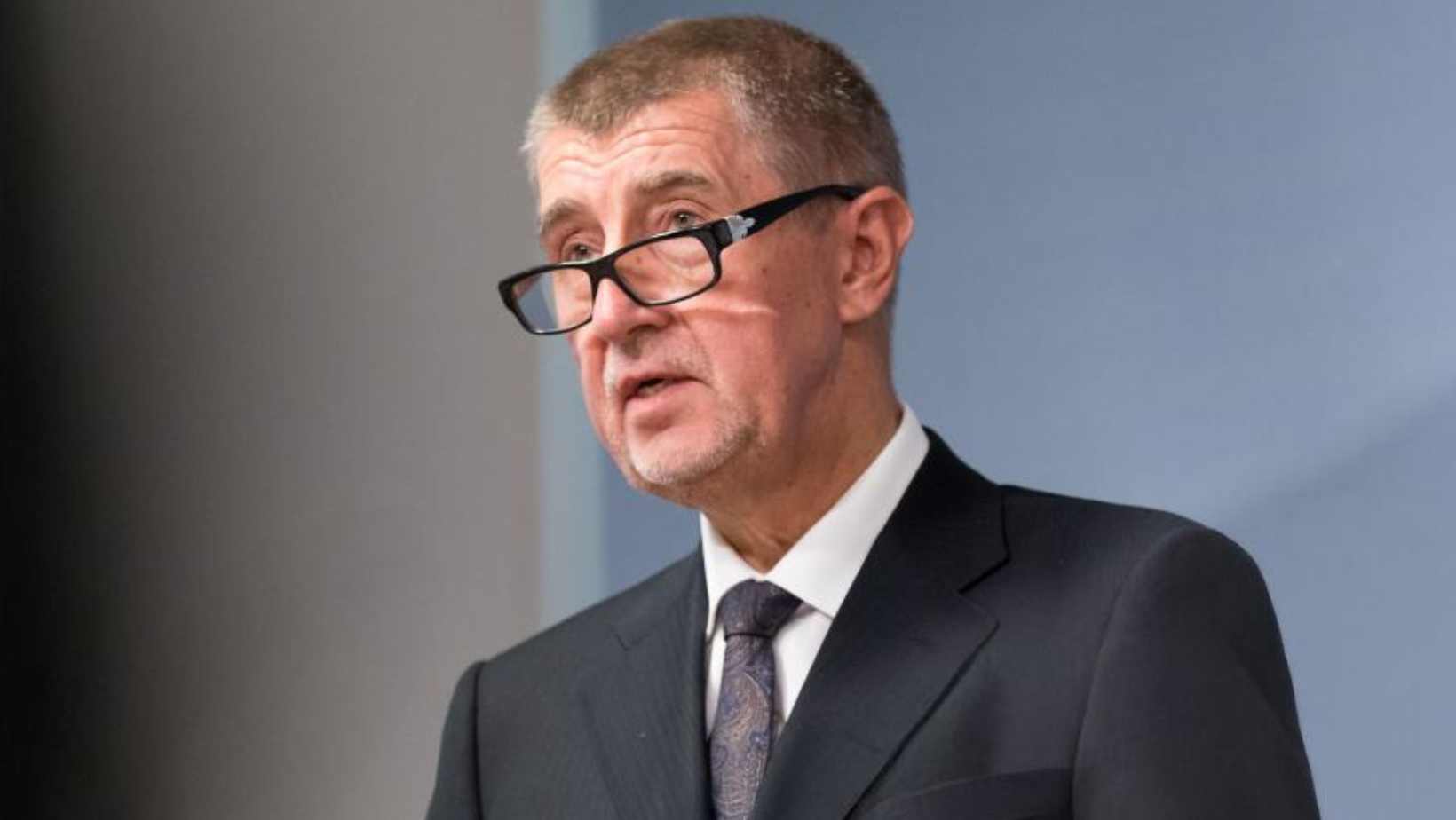
After his ANO movement secured victory in the Czech parliamentary elections, Andrej Babiš described the result as the highlight of his political life. Speaking on Saturday evening, he thanked voters who turned out across the country and promised that his party would focus on improving life in the Czech Republic. “We want our country to be the best place to live in the European Union. We will do everything we can to achieve that—believe me,” Babiš told supporters. “We are incredibly happy and grateful to everyone who voted. That’s what democracy is about—people deciding freely.” Babiš called the election campaign “a ride,” adding that the victory marked a “historic success” for the ANO movement. He thanked his campaign and PR teams for their work and assured his voters: “We will never betray you. You can count on us to deliver on our promises.” Looking ahead, Babiš said he plans to begin coalition talks with the SPD and the Motorists party, aiming to form a single-party-led government under ANO. Meanwhile, Prime Minister Petr Fiala, head of the SPOLU coalition (Civic Democrats, TOP 09, and Christian Democrats), reacted to the result by acknowledging defeat. “The outcome is clear and must be accepted...
Andrej Babiš looks on course to become the Czech prime minister again as votes are counted following the country’s general election on Friday and Saturday. Partial results released on Saturday afternoon put Babiš’s ANO party on 37% ahead of the Spolu governing coalition on 21.5% with ballots in almost 75% of the voting precincts counted. The full result is expected to be known on Sunday. The election has been cast as choice between East and West for Czech voters. It comes against a backdrop of a turbulent security situation in Europe, fears of Russian interference and intense speculation over the Czech Republic’s foreign policy orientation if ANO secures victory. ANO and Babiš, who was prime minister between 2017-2021, will probably replace Petr Fiala’s pro-Western Spolu center-right coalition government, which has been an ardent and active supporter of Ukraine. Babiš has expressed a more dovish stance on the Ukraine war, calling, for example, an end to an international scheme spearheaded by the Czech government that has supplied around 1.5 million artillery shells to Ukraine. He has, however, rejected suggestions by Fiala that he intends to move the Czech Republic towards Russia and away from the West and membership of the EU...
A man was fatally shot on Friday evening in Prague’s Jarov district, prompting a large-scale police response and an internal investigation into the conduct of an off-duty officer. The shooting occurred shortly before 8 p.m. on Pod Lipami Street, where emergency responders found the victim in critical condition. Despite resuscitation efforts, the man was pronounced dead at the scene. According to police spokesman Jan Daněk, officers received an emergency call reporting a fight involving three men, followed by what the caller described as gunshots. “Upon arrival, the police found a man shot at the scene,” Daněk told Novinky.cz. The suspect, identified as a police officer who was not on duty at the time, was detained and his weapon seized. Initial findings suggest the officer may have fired a warning shot before the fatal incident. Investigators are working to determine whether he acted in self-defense, as early reports indicate he was allegedly attacked by two men during the altercation. The Prague Rescue Service dispatched two ambulances, a doctor, and a traffic inspector to the scene. “We had a man in our care with gunshot wounds to the chest. Before our arrival, resuscitation was being guided over the phone,” said Karel Kirs, a...
A growing number of Czech parents are unable to cover the cost of school lunches for their children. The non-profit initiative Lunches for Children (Obědy pro děti), run by Women for Women, cites divorce, job loss, or serious illness as the primary causes driving families to apply for help. Even state food subsidies are proving insufficient. At the start of this school year, demand for support is especially steep. Between January and September, the program aided nearly 16,000 pupils through cooperation with more than 1,150 schools and cafeterias nationwide. Participation rose by about 15 percent compared with the same period last year, with sharp increases in Prague and the Ústí nad Labem region. A typical lunch costs 30–50 crowns, but for older students, monthly totals can exceed 1,000 crowns. Under Women for Women’s rules, schools help identify children in need. Class teachers, principals, and canteen managers evaluate applications based on factors such as low income, single-parent status, or sudden financial crisis. Schools apply on behalf of families; funding is granted under donation agreements and routed directly to the schools (not to parents). The heaviest wave of applications arrives each September, when the new school year begins. In more strained regions,...
The Dancing House Gallery in Prague has announced that Robert Vano’s final retrospective exhibition will remain open until April 6, 2026, following overwhelming public interest. The exhibition, originally scheduled to end this autumn, has been expanded to include a selection of rare platinum photographs from the artist’s private archive. The exhibition offers a comprehensive view of Vano’s career spanning more than five decades. Visitors encounter his work across continents and decades, from New York in the 1980s, where his career began, through Paris and Milan, to Prague, the city he eventually made his home. One of the major additions is ten platinum prints, half of which have never been shown publicly before. The rest were last exhibited more than fifteen years ago. Platinum printing is a highly demanding and expensive technique, practiced by only a handful of photographers worldwide. Vano first encountered it in the 1960s at an exhibition of American photographer Irving Penn and began experimenting with it in the early 1990s. Platinum photographs are known for their depth and durability, retaining their quality for centuries. “I found a 150-year-old recipe for platinum printing. It said: apply a mixture of iron, salt, and platinum to paper with a brush,...
Since the start of Russia’s invasion, tens of thousands of young Ukrainians have arrived in Czechia. The debate is no longer about whether they will remain, but how well they can be integrated into Czech schools, companies, and communities. If managed effectively, their arrival could strengthen the country’s economy and ease pressure on its labor market. Experts point out that this wave of migration differs from previous ones. Ukrainians are generally closer in language and culture, often have higher levels of education, and show a strong willingness to work. Many are entering professions where Czechia has long struggled to fill vacancies, including healthcare, IT, and skilled trades. The government’s role will be decisive. Analysts stress the need for faster and more efficient administration, particularly in processing residence permits and work visas. Language support is another critical area, requiring sustained funding for Czech-language courses, both in schools and online. Regional coordination also matters, since local labor market needs vary widely. Without a clear national plan, integration risks becoming fragmented and uneven. Employers are already adapting to the new workforce. Some firms have begun offering Czech lessons directly in the workplace, while others encourage mentoring systems to help young Ukrainians adjust. Flexibility...
Prague’s Holešovice district has welcomed trams back to U Výstaviště Street after months of reconstruction, marking a major shift in how the area will function in the future. While tram service has been restored ahead of schedule, cars will no longer be allowed to enter this stretch. According to the Prague Public Transit Company, six tram routes—lines 1, 6, 14, 17, 25, and night service 93—resumed operation this week. Since late January, these lines had been rerouted due to extensive construction. The renovation is part of a broader project linking citywide upgrades to roads, sidewalks, lighting, and underground utilities. At the Výstaviště stop, the tram track itself has been straightened: where the line once curved into an elongated “S,” it now runs directly through. The work is not yet finished—paving stones are still being laid, the iconic green kiosk known as Ferdinand remains closed, and construction crews are completing pedestrian areas. A key change is the introduction of a pedestrian zone under the new railway viaduct. “Cars will no longer be able to use U Výstaviště Street,” said Martin Vokuš, spokesperson for Prague 7 City Hall. “Only trams, cyclists, emergency vehicles, and access to the planetarium will remain.” City officials...
Airfares from Prague are dropping to levels not seen in years, with some long-haul destinations now cheaper than ever before. The fall in prices comes as international carriers compete for Czech passengers with aggressive discounts, expanded routes, and new connections from Václav Havel Airport. Travel industry experts say that in some cases, the cost of flying abroad has fallen by half compared to last year, marking the lowest real prices in modern history once inflation is taken into account. One of the main drivers of the price drop is the entry of new airlines into Prague. Etihad Airways, Condor, Asiana Airlines, Air Canada, and Air Arabia are among the carriers now operating routes that were previously dominated by just a few competitors. Their arrival has triggered fare wars on popular connections. According to Josef Trejbal, director of the booking platform Letuška.cz, this is especially visible on the Prague–Frankfurt route. “The average price of a return ticket has dropped to around CZK 4,500, which is about half of what passengers paid a year ago. With inflation taken into account, we are currently traveling at the cheapest rate in history,” Trejbal explained. Long-Haul Flights at Bargain Prices While cheaper flights to Germany...
From October 7 to 12, Prague shoppers will be able to try their luck at a new retail experiment: buying “lost packages” without knowing what’s inside. The event takes place at the Centrum Černý Most shopping center, where up to 10 tons of unclaimed parcels will be available during the six-day pop-up. The concept, already a hit in Paris, Rome, Madrid, Vienna, Amsterdam, Copenhagen, Stockholm, and Berlin, now makes its Czech debut. Buyers could walk away with anything from mobile phones and designer clothes to cosmetics, home appliances, or even luxury watches. How It Works The project is run by French start-up King Colis, which specializes in giving unclaimed shipments a second life. Parcels are priced by weight in two categories: Standard – 50 CZK per 100 grams Premium – 75 CZK per 100 grams Customers get 10 minutes to select packages, which they can only open after paying at the counter. The thrill comes from the mystery: it could be a small gadget, or in rare cases, a high-value item. “It’s always unpredictable. In France, someone found a gold bar. In Italy, another person came across a used Rolex,” says Killian Denis, co-founder and CEO of King Colis. “Luck...
Don’t have an account? Register
[swpm_registration_form level=”6″]
Already have an account? Log In
How Would You Like to Promote Your Business? PR ArticleDisplay bannersVideo productionNewsletter adsJob ListingsInfluencer Marketing
Your Email
We will come back to you within 24 hours with our proporsal