Czechia disagrees with the International Olympic Committee recommending on Thursday that Russian and Belarusian athletes can compete in international competitions as neutral competitors. The recommendation published Tuesday by the International Olympic Committee (IOC) recommends that athletes with Russian or Belarusian passports must compete as Individual Neutral Athletes while suggesting that team sports should be banned for both countries. “I am disappointed with the IOC recommendation. We must not close our eyes to reality. Russian sport is centrally controlled from the Kremlin,” Czech Foreign Minister Jan Lipavský said. The IOC has not yet decided whether it will allow athletes from Russia and Belarus to participate in the 2024 Olympic Games in Paris and the 2026 Winter Olympics in Milan and Cortina d’Ampezzo. However, Lipavský is convinced they should be banned from all international sports events, including the Olympics. Meanwhile, the Czech Olympic Committee launched an expert group that must look into legal arguments to ensure Russian and Belarusian athletes do not participate in the upcoming Olympics. But political matters should not interfere with sports, said IOC President Thomas Bach. “If governments took over the decision of which athletes can participate in which competitions, it would be the end of world sport...
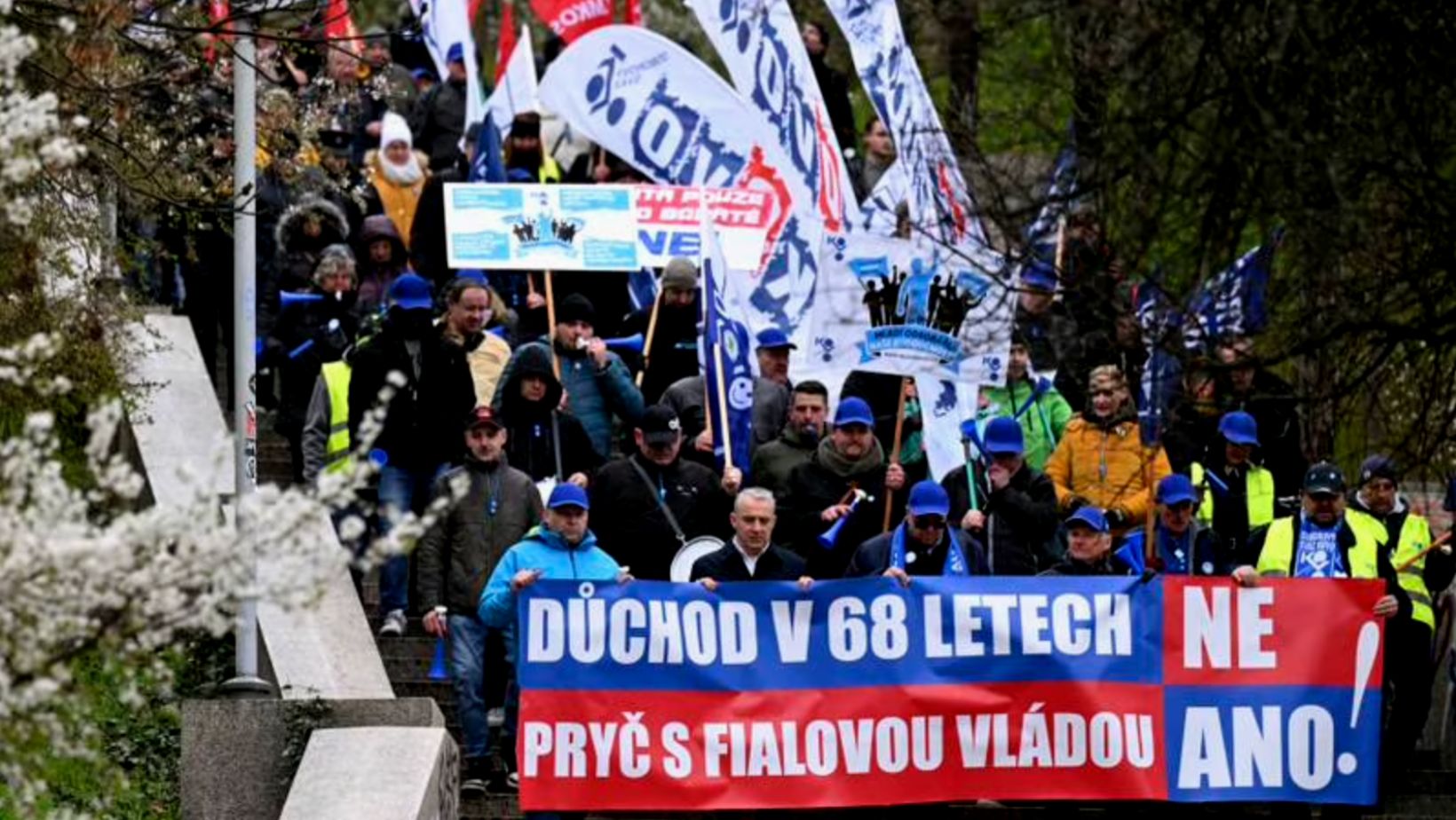
Czech labor unions on Wednesday joined with opposition parties to protest the government’s proposed bid to raise the retirement age by four years to 68. Some 2,000 protesters gathered Wednesday in front of government offices in the capital Prague to voice their opposition to the plan. “We definitely don’t agree,” read a letter ratified at the gathering. “We will defend ourselves,” Roman Durco, the head of the KOVO labor union group that organized the rally told the angry crowd. Labor and Social Affairs Minister Marian Jurecka recently appeared to backpedal on the original pension reform proposal but his ministry said in a statement said that the retirement age raise remains on the negotiating table. The government has yet to finalize the pension reform plan it says is necessary to make the system viable. Leaders from opposition parties with and without seats in parliament took part in the demonstration, including Andrej Babis, the populist billionaire chief of the centrist ANO (YES) party, the anti-migrant Direct Democracy Party and the far-left Communist party. Andrej Babis, the former prime minister, called on unions to stage large protests, pledging his support. A recently approved plan in France raising the retire age from 62 to...
The major cryptocurrency Bitcoin is losing momentum as its prices are seen to be close to their top for this year. Bitcoin prices surged in the middle of March amid a raging banking crisis in the United States and Europe. The market cap of Bitcoin has jumped by 65% to over $536 billion since the beginning of 2023, commented Martin Marsovsky, chief manager of Finmex Academy. The collapse of the start-up host in California, Silicon Valley Bank, happened because it failed to sustain its business due to a lack of liquidity. Soon after the crypto friendly Signature Bank was shut down by New York state regulators followed by Silvergate Capital Bank. Even after the dust is beginning to settle on this situation, there are still some major questions that need to be answered related to these shut downs. Federal Deposit Insurance Corporation (FDIC) announced that Flagstar Bank would acquire the assets of Signature Bank with the exception of $4 billion in crypto-related deposits. FDIC said it will dispose of these assets on its own, while it was rumoured that potential bidders had asked to buy the bank’s crypto assets, but were told they could not bid for this part of Signature’s business. Federal Home Loan Bank of San Francisco has allegedly forced Silvergate...
The restriction will be in effect at least until March 31, 2024. The measure concerns both citizens of Russia and citizens of Belarus. The portal of the Czech Cabinet of Ministers states that until March 31, 2024, a ban on issuing visas and permits for long-term residence in the country to citizens of both countries. The ban also extended to Russians and Belarusians with other citizenship. They will not be able to apply for a Czech visa or residence permit, except for humanitarian and a number of special cases. The Ministry of Culture of the Czech Republic proposed the Foreign Ministry to expand the list of exceptions for trips that benefit the country from a cultural point of view. The proposal was rejected because it could contradict the directives of the European Union, and the Czech embassies would have problems with the interpretation of the vague term “benefit from a cultural point of view”. At the same time, the Vietnamese authorities are going to extend the visa-free stay in the country for Russian tourists from 15 to 30 days. Since the opening of the country to foreign tourists after the pandemic, the recovery of the tourism industry and the economy...
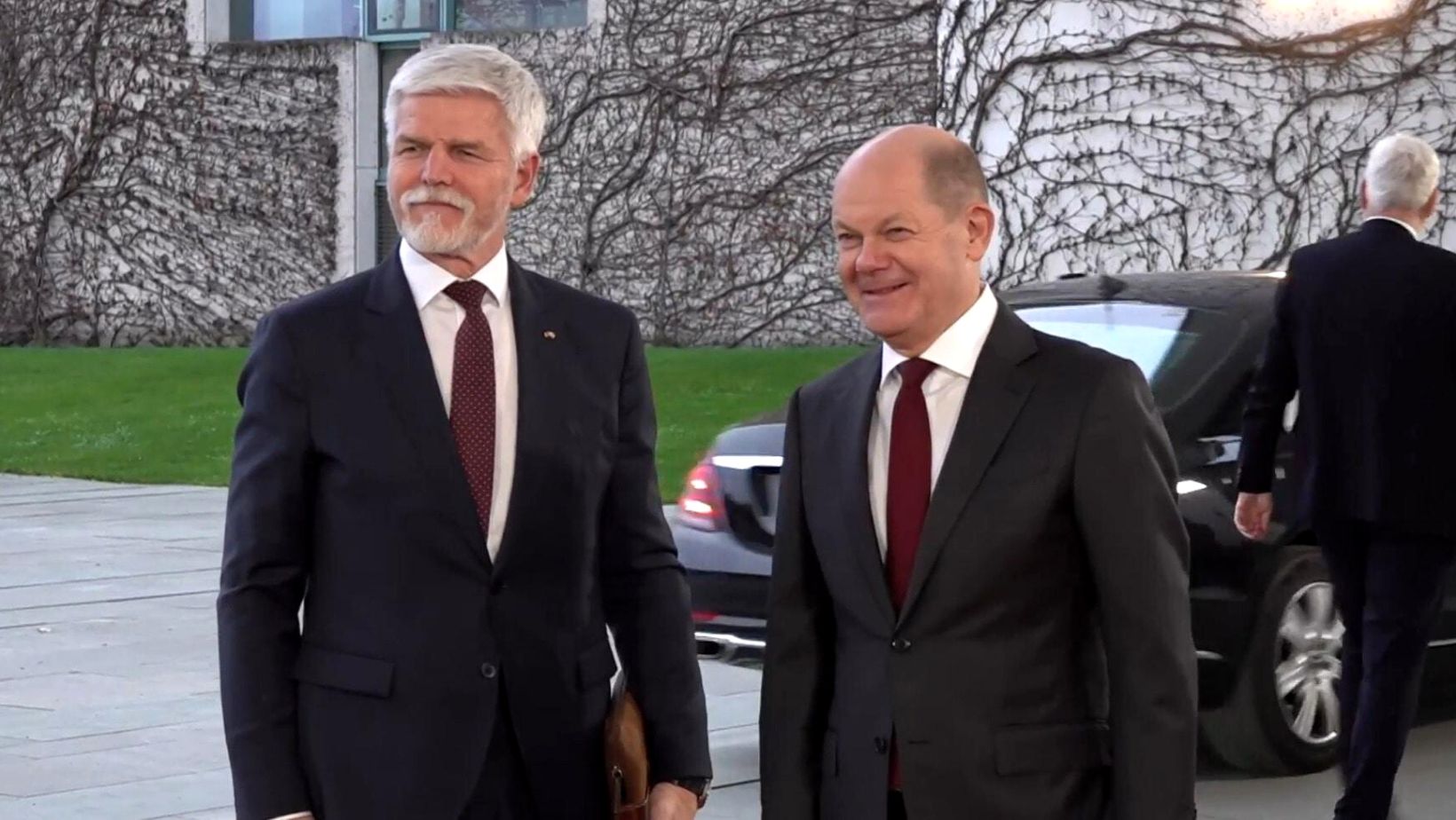
Czech President Petr Pavel has called on Germany to take on a leadership role in European security efforts that would inspire other countries as he visited Berlin on Tuesday. According to Pavel, Germany should take the leadership position and “initiating role” in several areas, including the economy, the security and military efforts and the reconstruction of Ukraine. “We are beginning to write a new chapter in European history, and I am convinced that a country like Germany can play a decisive role in this phase,” said Pavel after meeting his German counterpart Frank-Walter Steinmeier. His comments, however, come after weeks of intense pressure from European partners was needed for Berlin to lift its blockage of providing Leopard II tanks to Ukraine. Since the tanks are German-made, other countries or private companies willing to send them to Ukraine needed the German government’s approval. According to FAZ, the Czech president recommended speaking of German responsibility instead of leadership. There is often talk of “German leadership,” Pavel said, which would be a “sensitive issue” in some countries. He pointed out that his counterpart Steinmeier had spoken of German responsibility and said: “I would be happy if we could call that German responsibility.” “Germany can demonstrate its...
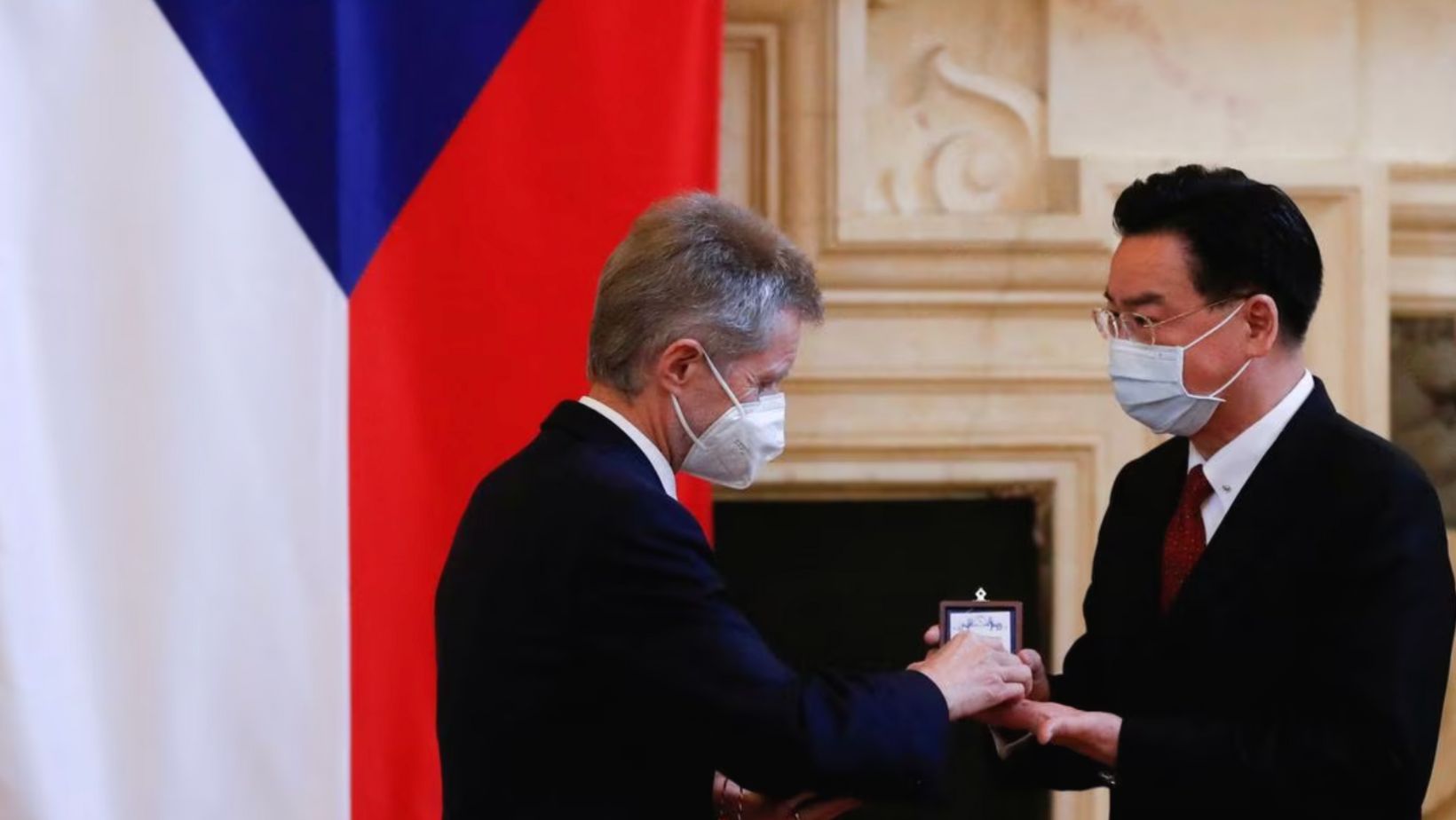
Czech Chamber of Deputies Speaker Markéta Pekarová Adamová is scheduled to lead a delegation of more than 160 officials, reporters, and experts to visit Taiwan this weekend. It will be the biggest delegation to visit Taiwan since Czech Senate President Miloš Vystrčil visited Taiwan in 2020. The delegation’s itinerary also includes speaking at the legislature and attending a meeting on economic cooperation and a forum on net-zero cities. The Czechs’ centre-right government has sought to develop relations with Taiwan which has become one of the leading foreign investors in the EU member state. Newly elected Czech president Petr Pavel drew a sharp rebuke from Beijing in January after taking a call from Taiwanese President Tsai Ing-Wen, a clear shift from his predecessor’s attempts to win Chinese business. The Foreign Ministry says Taiwan and the Czech Republic are partners with similar principles and interactions between the two countries have been increasing. China, which claims Taiwan as its own, has called lower house speaker Marketa Pekarova Adamova’s planned trip, due take place on March 25-30 after a stop in South Korea, a “wrongful decision”. “From Taiwan’s perspective, this is the largest foreign visit in its modern history, and from our perspective it is the...
New statistics reveal the influx of self-employed Ukrainians and Russians within the Czech Republic over the course of 2022 and 2023. Between 2019 and 2021, 207 Ukrainian entrepreneurs registered a new business per month, while in 2022, the average grew to 710 per month. A similar trend is apparent with Russian entrepreneurs as well, with 63 businesses registered each month in 2022 – an increase from the 51 per month before the Russian invasion of Ukraine. These trends were reflected in recent analysis by the Czech Credit Bureau (CRIF). “The largest number of Ukrainians started business here from last August to November, when more than a thousand entrepreneurs of Ukrainian nationality started their activities every month. In some months, this was as much as 18 percent of the total number of new entrepreneurs in the Czech Republic. For January and February this year, the monthly average is already lower, i.e. 708, which is still a lot compared to the years before the war,” said Věra Kameníčková, CRIF analyst. Since March 2022, 15% of new businesses registered were in the manufacturing and construction industries, with nearly a third of these businesses founded and operated by Ukrainian entrepreneurs. Russian entrepreneurs on the...
Czech President Petr Pavel said on Wednesday he would sign a bill slowing down an inflation-linked pension hike, a bill the ruling coalition pushed through to relieve pressure on budget at the time of soaring inflation. The centre-right government of Prime Minister Petr Fiala has said the bill would save around 20 billion crowns worth of spending in the central budget, currently planned with a 295 billion-crown deficit this year. The change has to be implemented by late March in order to prevent the faster pension hike which would kick in automatically in June. The bill is the government’s first tangible move to rein in the exploding budget deficit. The central state budget showed a record gap of 119.7 billion crowns in the first two months of 2023, due to soaring welfare payments and energy price subsidies. The pension adjustment bill was approved in a rushed procedure earlier in March and after a fight from opposition lawmakers. The main opposition party said it will challenge it at the Constitutional Court if signed by the president. The bill limits the rise in the average monthly pension to 750 crowns in June in the next round of hikes to be triggered by...
Deputy Foreign Minister of Ukraine Yevhen Perebyinis discussed Czech Republic’s patronage of the restoration of Dnipropetrovsk region with the delegation of the Czech Republic headed by the Governmental Envoy for the Reconstruction of Ukraine Tomáš Kopečný. Perebyinis expressed gratitude for military, financial, and humanitarian assistance provided by the Czech Republic to Ukraine, in particular, within the Government program for 2023-25 framework that was adopted in October last year. “The implementation of a number of specific projects was discussed, including prospects for the interaction of two sides in the context of the Czech patronage over the reconstruction of Dnipropetrovsk region,” reads the statement by the Ministry of Foreign Affairs of Ukraine. In addition to focusing on the region, Czechia also wants to be involved in the reconstruction of specific sectors where it has know-how and experience, such as energy, transport, infrastructure, healthcare, and demining. The parties also exchanged views on a number of topical issues of the bilateral relations, including the development of the Ukrainian-Czech political dialogue as well as cooperation in Ukraine’s path towards accession to the EU. In a report issued in January, the Kyiv School of Economics estimated that as of December, the war had damaged or destroyed 149,300 residential buildings, including 131,400 private houses;...
Petr Pavel, Czechia’s president-elect, reportedly intends to meet with President Volodymyr Zelensy in April. The recently inaugurated Czech president agreed on this during a phone call with his Ukrainian counterpart Volodymyr Zelensky on Sunday, which according to Pavel’s spokeswoman was requested by president Zelensky so he could congratulate Pavel on taking office. The visit will be part of a wider diplomatic trip abroad, including to Brussels, after Pavel’s official inauguration into office on March 9. “Czech support is crucial for Ukraine in fighting against [the Russian Federation]’s aggression,” Zelenskiy tweeted. Pavel earlier said that Ukraine’s membership in NATO has to be considered after the war with Russia ends. Since the full-scale war began, Pavel has been known for his steadfast advocacy of military support for Ukraine, saying in February that Kyiv should be given any and all conventional weapons necessary for victory. Speaking with Ukrainian publication Suspilne, the retired general and former senior NATO commander said that Ukraine has “done its homework” on common values, long-term interests, and technical interoperability with the alliance. However, admitting Ukraine now, would make NATO a party to the conflict, which may lead to nuclear war, he said. Nevertheless, Pavel added that he believes Ukraine deserves to be...
Czech headline inflation eased to 16.7% year-on-year in February, reinforcing the view that surging price growth is moving past a peak as the central bank seeks to maintain stable interest rates. Inflation around central Europe has surged in the past year, more than elsewhere in Europe, as food prices have jumped alongside energy costs. Central banks in the region started battling price pressures in 2021, sooner than other European Union policymakers, and have thus ended hiking cycles even as global central banks like the ECB and U.S. Federal Reserve continue to tighten. Central Bank Policy The Czech central bank has held steady on policy since mid-2022 despite criticism it needs to do more to secure inflation returning to its 2% target. Inflation slowed in February, after hitting 17.5% in January amid repricing actions at the start of the year. Analysts in a Reuters poll had expected the headline rate at 16.6% in February. On a monthly basis, prices rose 0.6%. Signs Of Discounts Inflation “only symbolically neared the inflation target,” Banka Creditas chief economist Petr Dufek said, adding the first signs of discounts on goods were starting to appear. “Weaker demand, which is seen in falling household consumption and retail sales, should increasingly limit the scope...
After two five-year mandates, Czech President Miloš Zeman’s term in office ends at midnight on Wednesday, March 8. Zeman, who was first a member of the Social Democratic Party but later switched to the centre-left Party of Civic Rights, was one of the defining figures in Prague after the Velvet Revolution of 1989, along with his predecessors Václav Havel and Václav Klaus. But in the commentaries, there is not much mourning over his departure. He did more harm than good “His dark side far outweighed his light one. We joined Nato when Zeman was prime minister, but after that he never stopped torpedoing our Western alliances. Zeman conceived his entire presidency as representing the interests of China and Russia. … When our first post-revolutionary president died, parliament paid him tribute by saying: ‘Václav Havel did a great service to freedom and democracy.’ With regard to this outgoing president it should say: ‘Miloš Zeman endangered freedom and democracy’,” wrote Erik Tabery, editor-in-chief of Respekt. A striking but controversial personality Deník is also ambivalent about the outgoing president: “Miloš Zeman is a conspicuous personality of the post-revolutionary era. For many years he held the pen with which history was written. He did...
Don’t have an account? Register
Already have an account? Log In
How Would You Like to Promote Your Business? PR ArticleDisplay bannersVideo productionNewsletter adsJob ListingsInfluencer Marketing
Your Email
We will come back to you within 24 hours with our proporsal