The average income in euros in the Czech Republic is €1,368 (CZK 34,932), the highest among the Visegrad Four countries. The nation with the highest average wage in Central and Eastern Europe is Germany, specifically with €3978 (101,578 CZK), followed by Austria with €3108 (79,363 CZK). The lowest average wages are €400 (CZK 10,214) in Kosovo and €432 in Ukraine (CZK 11,031). These calculations are the result of an annual study by the consulting company Mazars, which compares the tax systems of 21 countries in Central and Eastern Europe. According to the study, the average level of wages in euros has increased the most in the private sector. In Germany, the increase is by 14 percent, and in Slovakia, Croatia, Latvia, and Northern Macedonia, by 5-10 percent. In Poland, the average wage is €1331, in Hungary €1147, and in Slovakia €1113. The study also states that taxes and compulsory employers’ contributions related to people’s employment have tended to fall this year in 21 European countries. On average, the ratio of employer’s costs to gross wages for taxes and compulsory levies is 15 percent. However, there are differences between countries. While in Romania the levies are less than 5 percent of...
The European Commission approved on Wednesday the Czech Republic’s 7 billion euro plan to recover from the pandemic and transform the economy to become greener and more digitalised. The scheme will be financed from EU grants until 2026. Once the plan is also approved by EU finance ministers, Czechia will get 910 million euros in pre-financing for projects foreseen under the plan. The funding is part of an initiative under which all the bloc’s 27 nations are to get money from an EU recovery scheme worth 800 billion euro. The Commission, which has concluded that Czech Prime Minister Andrej Babis is in conflict of interest as final owner of a business empire that receives EU funding, said the Czech Republic needs to improve transparency and preventing conflict of interests when distributing the funds. “(The Czech side) has received a qualified audit opinion due to the absence of effective measures targeting the prevention, detection and correction of cases of conflict of interest,” the Commission said in a proposal for the European Council, without mentioning any concrete people or companies. “Dedicated milestones shall be established to ensure that those weaknesses will have been addressed before the first payment request,” the proposal said....
Commission President Ursula von der Leyen will be in Prague today, July 19, to present the Commission’s assessment on the national recovery and resilience plan under NextGenerationEU. On Monday morning, President von der Leyen will meet Prime Minister Andrej Babiš, together with Vice-President Věra Jourová. She will also visit the Prague State Opera and the State Opera and National Museum, and discuss investments in energy efficiency. The Czech Republic will receive CZK 180 billion from the European Union emergency fund to revive the economy after the coronavirus crisis. The country will probably receive the first money in September after it has been approved by the finance ministers of the EU member states. The Commission received the Czech investment strategy at the beginning of June and had two months to evaluate it. von der Leyen’s experts did not find any major mistakes in the plan that would force Brussels to exceed the deadline and demand redress, as was the case in Hungary. The Czech Republic has met all the key criteria, according to which, for example, 37 percent of the money is to be earmarked for climate-friendly projects and 20 percent for digitization. Von der Leyen, who has already covered more than...
On 13 July, the European Investment Bank (EIB) announced that it has invested EUR 191 million for the development of regional and municipal infrastructure projects in the Czech Republic. The funds will be given as a loan that will support the Czech-Moravian Guarantee and Development Bank (ČMZRB): the main provider of financial instruments in the country. According to a press release by the EIB, ČMZRB is funded by both national resources and EU funds. As such, it works with the EIB group to contribute to the economic and social development of the country and its regions. It is a well-known fact that the past year has caused severe damage to various industries and the economy. Now, part of the EUR 191 million loans is expected to help the Czech economy recover from the negative impact of the pandemic. In addition to this, financing will be provided for the renovation, upgrade, replacement, and reorganization of urban infrastructure in the entire country. This will include the modernization of social, cultural, and administrative buildings. Beyond this, the environmental and energy efficiency of public buildings will also be improved. Finally, the projects will further focus on the improvement of transportation and healthcare infrastructure. In this way, EIB...
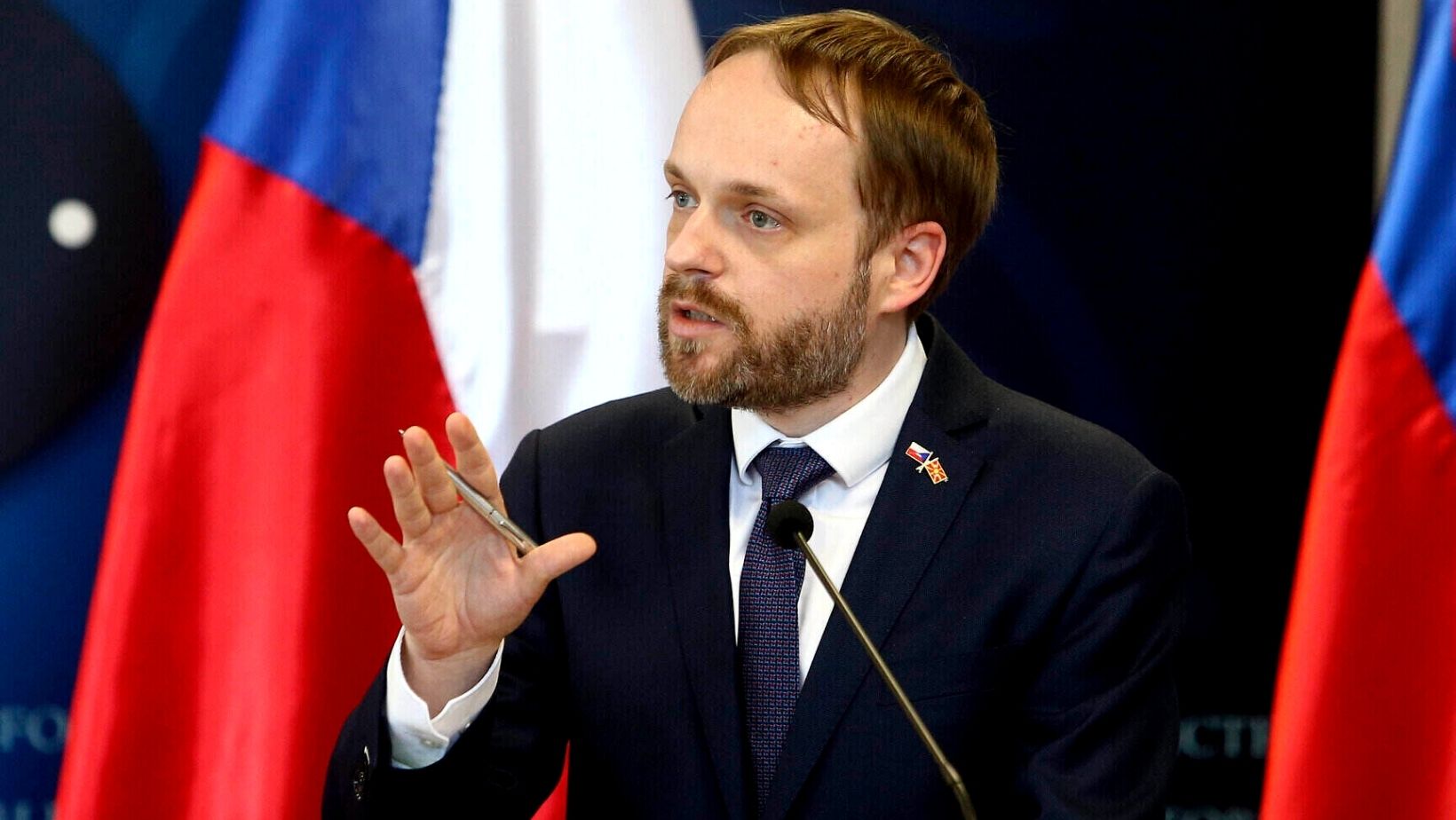
The Czech Republic will not take part in this year’s UN conference against racism taking place in September in New York. “I’ve taken this decision due to historic concerns regarding antisemitism and the misuse of the platform for attacks against Israel,” stated Czech Foreign Minister Jakub Kulhánek, adding that the country will continue to fight against racism and discrimination. The so-called Durban conference will mark the 20th anniversary of the World Conference Against Racism, Racial Discrimination, Xenophobia and Related Intolerance and the adoption of the Durban Declaration and Programme of Action. Austria and the Netherlands have already decided to boycott the event. Last week, the UK said it was joining the US, Canada and Australia in boycotting Durban IV this September, “following historic concerns regarding antisemitism.” France is also expected to pull out, a diplomatic source said last month, but it has not yet issued an official statement. A German Foreign Ministry official said Berlin had yet to decide on the matter. Kulhánek announced his decision on Monday in Brussels, where he met with his EU counterparts and Israeli Foreign Minister Yair Lapid. According to Kulhánek, a large part of EU countries supported the idea of enhanced cooperation with Israel. The Czech minister...
Unemployment in the Czech Republic fell for the fourth month in a row. It fell to 3.7 percent in June, which is two-tenths of a percentage point less than in May and the same as last June. The decline is mainly due to the start of the economy following the release of measures against the spread of coronavirus. According to analysts and the Labor Office of the Czech Republic, the unemployment rate will not rise significantly and may continue to decline slightly in the coming months, unless the epidemic situation worsens and the measures become stricter. The situation in the labor market should not be negatively affected by the suppression of the Antivirus program, through which the state contributed to companies’ wages. Compared to the previous month, the number of jobseekers in the register of labor offices decreased by approximately 12,500 to 273,302, while the number of job vacancies increased by 9,000 to 355,612. Compared to last year, 3,665 more people were looking for work in June this year, but the number of vacancies also increased year on year, by more than 20,000. According to experts, the reason for the further decline in unemployment is mainly the improving pandemic situation and...
House prices in the European Union rose by 6.1% in the first quarter of this year from the same period of 2020, their biggest gain since 2007, the bloc’s statistics office said on Thursday. The House Price Index for countries in the euro area rose by 5.8% in the first three months from a year earlier, its largest increase since the fourth quarter of 2006, Eurostat said in a statement. Compared with the fourth quarter of 2020, house prices rose by 1.3% in the euro area and 1.7% in the EU in the first quarter of 2021. Among EU member states for which data were available, the highest annual increases in house prices in the first quarter of 2021 were recorded in Luxembourg (+17.0%), Denmark (+15.3%), Lithuania (+12.0%), the Czech Republic (+11.9%) and the Netherlands (+11.3%), while prices fell only in Cyprus (-5.8%). The house price issue has also become a lightning rod for criticism of the ECB’s ultra-loose monetary policy. Its president Christine Lagarde was questioned about it in the European Parliament at the end of June. “Young people and middle-class families are forced to participate in a rat race, overpaying in an overheated housing market,” said Michiel Hoogeveen,...
The leaders of the Visegrád Four (V4) countries of Hungary, Slovakia, Czech Republic, and Poland stressed that they must work together to become a winner in a world transformed by the COVID-19 pandemic. The political bloc needs investments to succeed and, therefore, will not support tax increases, said Hungarian Prime Minister Viktor Orbán after the meeting of the prime ministers of the V4 in Katowice on Wednesday. Hungary now takes over the annual presidency from Poland. Orbán also identified the rejection of the possible compulsory EU quotas on redistribution of migrants and the integration of the Western Balkans countries into the EU as soon as possible priorities of the Hungarian presidency of the V4. “We discussed the strategy on migration in detail. This topic is part of the future of Europe. The Schengen and Western Balkans strategies are also connected with that. The EU’s internal market, which is not working, is also very important. We are still failing in removing obstacles for our companies,” said Prime Minister Andrej Babiš after the meeting. He named V4 support for nuclear energy as another topic of discussion. “We are in a good position. It is great that Slovenia will take over the EU...
At the end of May, the former leader of the TOP 09 party Karel Schwarzenberg defended MP Dominik Feri, who has resigned in May following accusations by several women of inappropriate sexual behavior. “What is sexual harassment? That a 25-year-old guy was trying to get a girl to bed? Vice versa was always considered normal. So please, don’t be hypocrites,” Schwarzenberg said to Lidovky. “It is strange that this story emerged right before the elections,” he added. Mr. Zeman said he had the same view of the matter as ex-TOP 09 leader Karel Schwarzenberg, who said it had always been considered normal for a 25-year-old man to try to get girls into bed. Today, Mr. Zeman said to iDNes that he had the same view of the matter as Karel Schwarzenberg: “I may surprise you, but I also consider this nonsense. Although I differed many times with Schwarzenberg in my views, I have to admit that my idea to this alleged sex scandal is very close to his.”. Feri had previously denied allegations of sexual violence. He will contest the accusations in court. Some women claim that he had sex with them, even though they explicitly refused. Others said that...
The relations would be built on the basis of mutual respect and would be pragmatic if possible, Jakub Kulhanek noted. The decision on how to develop relations with Russia should be made by the Czech Republic’s government, which will be established after the October elections to the lower house of parliament, the Chamber of Deputies, Foreign Minister Jakub Kulhanek said on Sunday. “I don’t think that it is possible to allow an idea that we won’t have relations with Russia,” Kulhanek told the Czech News Agency. “The relations would be built on the basis of mutual respect and would be pragmatic if possible. A decision on how they will be built, in my view, is up to the future government [of the Czech Republic, which will be set up after the parliamentary polls]. It should say how to build our relations,” he said. According to the Czech side, one of conditions for launching dialogue between Prague and Moscow is removing the Czech Republic from the Russian list of unfriendly states, where it was included along with the US. Kulhanek says this decision runs counter to the 1961 Vienna Convention on Diplomatic Relations. On April 22, the two sides agreed that...
Czech President Milos Zeman, commenting on a Hungarian law that bans LGBT material from schools, told a television interview on Sunday that he finds transgender people “disgusting”. Mr. Zeman then remarked that if he was younger, he would convene a giant demonstration of heterosexuals in Prague, which would allegedly be attended by millions of people. “I can understand gays, lesbians, and so on. But do you know who I don’t understand at all? The transgender,” Zeman said. “If someone undergoes a sex-change operation, he commits a crime of self-harm. Every operation is a risk. And these transgender people are really disgusting to me,” he added. Zeman commented made the comments in response to a question about a dispute in the EU over a controversial Hungarian law banning LGBTQ references in school materials. The law has already been condemned by 17 countries of the European Union, but the Czech Republic is still silent. According to Zeman, these countries “should not interfere in the affairs of Hungary”. The letter doesn’t name Hungary explicitly, but the country is the clear target, after its parliament passed a bill that bans portrayals of homosexuality or of transgender people in content shown to minors. “A member state makes laws...
The Russian veterinary and phytosanitary service have banned the import of feed and its ingredients from the Czech Republic, the Russian news agency TASS announced. The Czech Ministry of Agriculture responded today by announcing that feed in the Czech Republic is produced per European Union regulations and is safe. “This decision was made by the Office based on unsatisfactory results of an inspection of Czech companies that are authorized to supply feed and additives to Russia,” said Rosselchoznadzor (Federal Service for Veterinary and Phytosanitary Surveillance). In its report, it also states that the inspections focused on confirming the guarantees to which the Czech State Veterinary Administration undertook that the relevant establishments would meet the requirements of the Eurasian Economic Union. “The results of the joint work of the Rosselkhoznadzor and the Veterinary and Food Service of the Republic of Belarus have shown that the competent authority of the Czech Republic does not carry out systematic inspections of establishments exporting feed and feed additives to the Eurasian Economic Union. According to the Russian veterinary and phytosanitary service, the Czechs also, among other things, “do not carry out a full-fledged investigation into detected irregularities” and the Russian-Belarusian inspection found “several violations” in...
Don’t have an account? Register
[swpm_registration_form level=”6″]
Already have an account? Log In
How Would You Like to Promote Your Business? PR ArticleDisplay bannersVideo productionNewsletter adsJob ListingsInfluencer Marketing
Your Email
We will come back to you within 24 hours with our proporsal