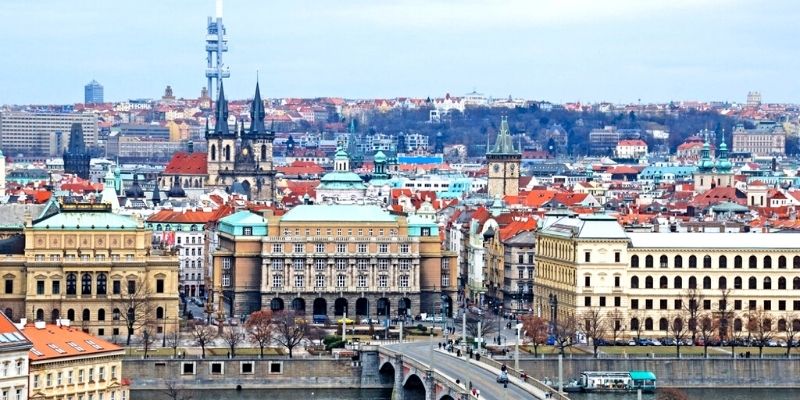
In terms of per capita economic performance, Prague was the third-wealthiest region in the European Union in 2019. According to a report issued by Eurostat on Wednesday, the Czech capital performed better than Bratislava, Vienna and Stockholm. Eurostat compared 281 regions of the European Union according to GDP against the EU average. The statistics are based on a recalculation of GDP according to purchasing power parity, thus taking into account the local prices of goods and services. The map shows the distribution of wealth in the European Union and also includes some of the most relevant changes in recent years. The leading regions in the ranking of regional GDP per capita in 2019, after Luxembourg (260% of the EU average), were Southern (240%) in Ireland, Prague (205%), Brussels in Belgium and Eastern & Midland in Ireland (both 202%) as well as Hamburg (195%) in Germany. What explains Luxembourg’s high rating? According to Eurostat, the ‘high inflow of commuting workers’, alongside the assets of multinational companies domiciled in the Grand Duchy, are responsible. Luxembourg also ranks third for productivity, with a GDP per person employed of €136,600, behind only the Southern and Eastern-Midland regions of Ireland. The high GDP per capita...
Many small businesses, restaurants, various shops, and hotels are greatly suffering from the consequences of the lockdown, and the recent decision of the Czech government to further prolong it will evidently bring more complications and devastation to the economy. Prague Morning has recently interviewed Penta Hotel’s general manager Johannes Schuschu, to discuss and spread awareness on the financial losses and problems that the hotel chain has had to overcome amidst the pandemic’s restrictions. Operating in Prague 8’s Karlín, Penta Hotel, like many other hotels and tourist-based businesses, has suffered heavy losses in revenue since the first wave around March and April 2020. The hotel only managed to have a surge in business again during the summer in 2020, evidently because of the temporary halt of the implemented state of emergency. Today, the hotel continues to be negatively impacted by the reinstated lockdown. Business operations have decreased to 20%. Moreover, since October 2020, Penta Hotel has had to rely on foreign guests traveling to Prague for work-related matters. However, they have accommodated Czech travelers as well. Monthly revenue has decreased so much that the revenue Penta Hotel used to generate in a day in 2019, now takes the duration of a...
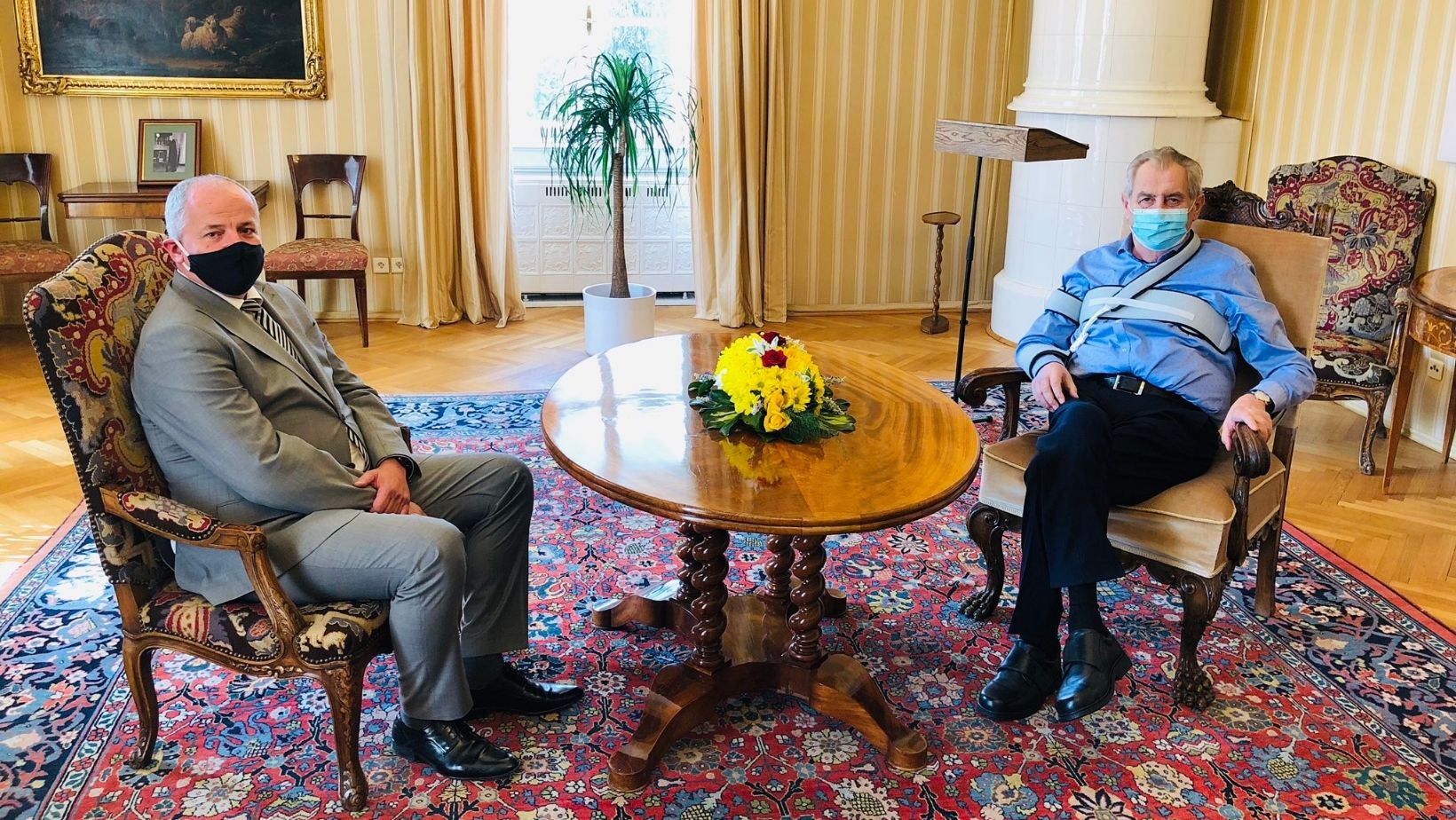
The former Minister of Health and ex-adviser to Prime Minister Andrej Babiš appeared on the list of advisers to President Miloš Zeman. On Sunday, during the program Partie on TV Prima, the Czech President announced that he would like to accept Prymula as his advisor for an unpaid position. The president stated that the ex-minister could “become an unpaid reinforcement in his team of advisers.” “As the Prime Minister rightly says, he lacks social intelligence. But as an epidemiologist, he is excellent,” said Zeman. After attending a European League football match between Slavia Prague and Leicester City on February 18, Prymula was fired from his role as an adviser to Prime Minister Andrej Babiš. “Mr. Prymula is a great expert on epidemics, but he lacks social intelligence. This is again simply wrong, towards football fans who can’t go to the stadium, as well as the people we want to be at home now. We have agreed to end our cooperation because it is untenable,” said Babiš. Only a few hours before the match in Prague, Prymula expressed his support for a harsher lockdown in the Czech Republic. Zeman’s advisers include, for example, former CSSD deputy chairman Michal Hašek and businessman...
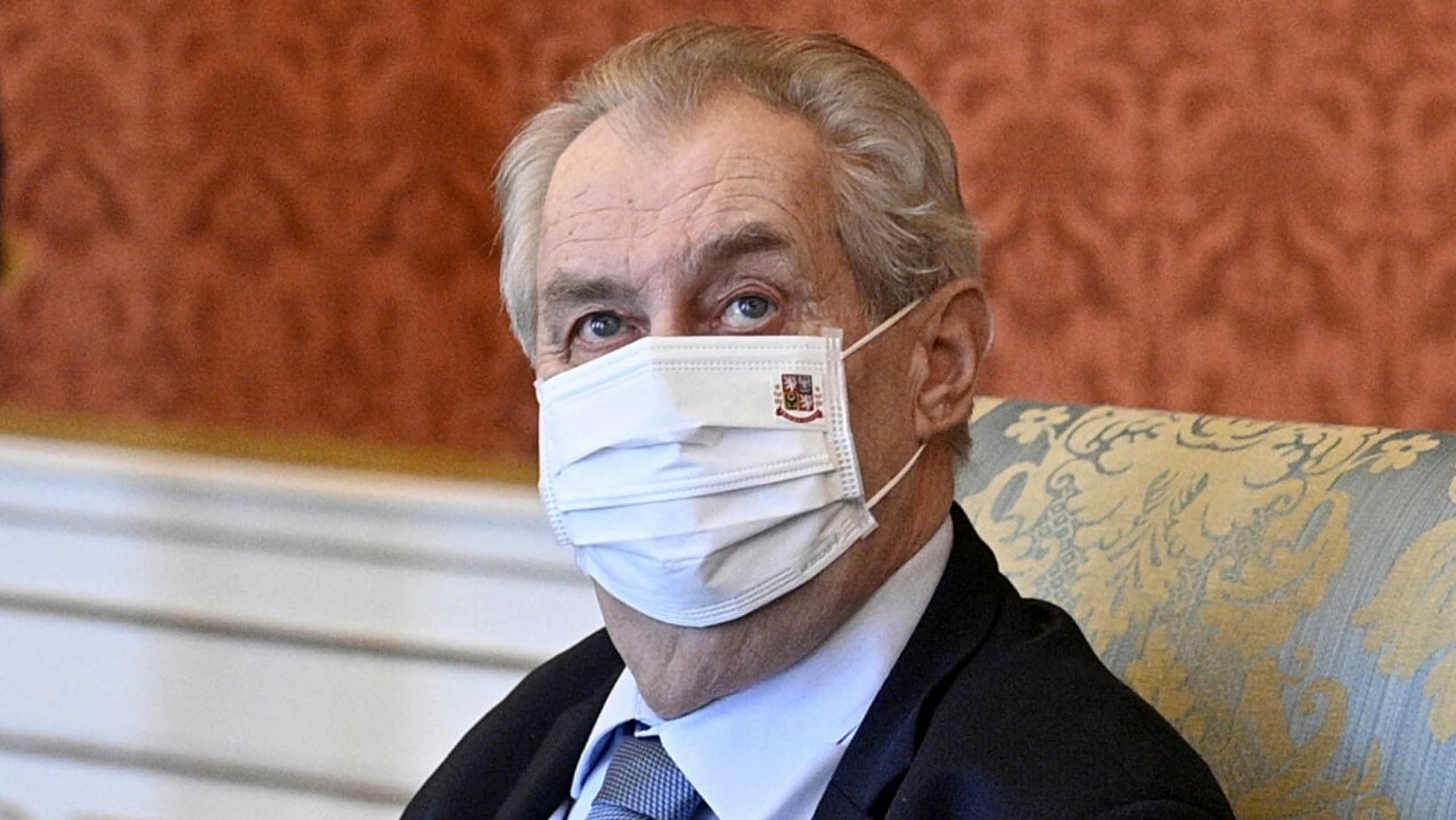
Czech Republic’s President Miloš Zeman claims that he thinks that the majority of the population could be vaccinated by September, according to an interview he was on for Czech television. More strict lockdown measures have been implemented from Monday (March 1), restricting people from visiting relatives in other cities outside of Prague for example, and encouraging people not to visit relatives in the same city if they are in a different household. “This disaster is gradually coming to an end. By September at the latest, the majority of the population could be vaccinated – basically, everyone who is interested. And I believe that a slightly demented group of people who don’t want it will change their minds. I believe the epidemic will be over by September and so far, all previous cases have ended successfully. We had tuberculosis, whooping cough, smallpox, and polio. For all these diseases, vaccination worked. And that’s why vaccination should work on Covid”, commented President Zeman. Zeman also called on everyone to abide by the tightened measures from Monday, stating that he thinks the Czech Republic has a maximum of six months ahead to bear until everything calms down and there might be a return to...
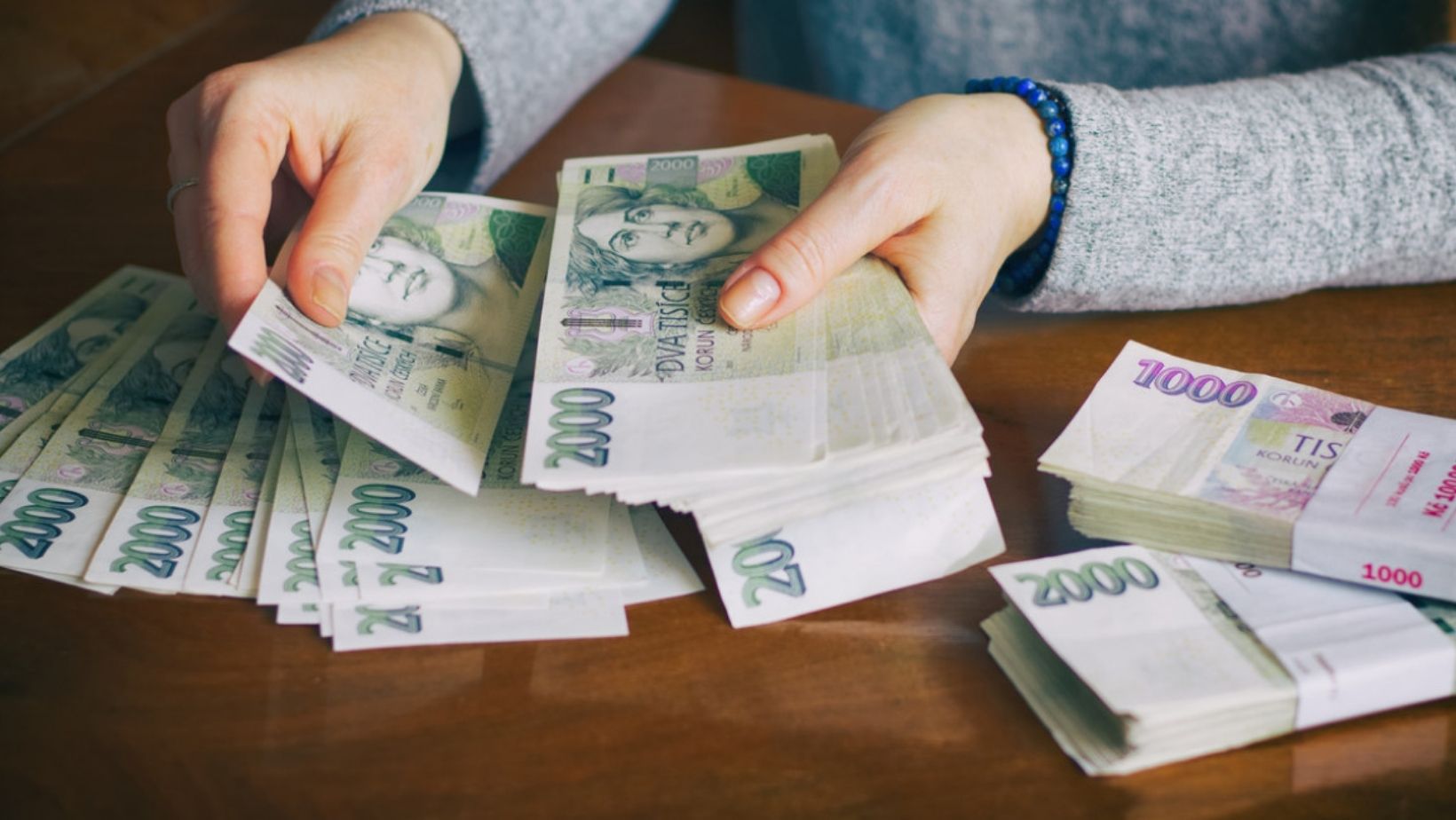
An amendment will be signed by President Miloš Zeman that will grant financial aid in the form of a bonus bill for small business owners and their associates 1000 CZK per day, while employees will be given 500 CZK per day. Moreover, those whose sales have decreased by at least 50% will receive support as well. On that note, applicants must present Czech health insurance to receive it. This bonus is not linked to the state of emergency and will be paid for the months of February and March. The government will also be mandated by law to introduce additional bonus periods corresponding to one additional calendar month at the most by the end of the year 2021. The new bonus bill will technically be a refundable tax on income from dependent activities. Czech’s Ministry of Finance Alena Schillerová estimates that the impact of this new bonus bill on public finances will be 19.4 billion CZK in the months of February and March, of which 18 billion CZK will be on the state budget, 1.1 billion CZK on municipal budgets and 0.4 billion CZK on regional budgets. “Of course they will have to prove that their income has been harmed,...
This evening at 18.00, the Czech government will discuss and possibly decide whether issue a stricter lockdown or not, since a hearing held on Wednesday had not produced an official decision. New rules and restrictions can only be known if the government successfully negotiates later tonight. However, from what was gathered at Wednesday’s hearing, kindergartens in the Czech Republic could be closed, and only facilities for the children of paramedics and emergency workers would continue to operate. Pupils in the first and second grades of primary schools should also stop going to schools. The cabinet is also considering restricting movement between regions or within a certain distance of residence. Some shops that were still open could also close. According to PM Andrej Babiš, lockdown needs to be tightened up, because the current rules are not preventing the Covid-19 pandemic from worsening. Opposition groups have requested that the cabinet submit the forthcoming measures with a specific justification. The cabinet has agreed on the scope of the measures, and on Thursday the relevant departments will prepare definitive texts, which ministers will present to the opposition. According to Hamaček, the government will also ask the House not to end the state of emergency...
Former Czech president Vaclav Klaus, who has recently made a splash by publicly defying government restrictions to stem the Covid-19 spread, has caught the disease, his spokesman said Tuesday. “He wasn’t feeling well and he tested positive for Covid this afternoon,” said Petr Macinka, spokesman for the Vaclav Klaus Institute think tank. “He underwent a scan and left for treatment at home,” he added. A former liberal economist and staunchly eurosceptic Czech prime minister, Klaus served as president in 2003-2013 after succeeding the late Czech anti-Communist hero and former dissident playwright Vaclav Havel. During his term, he became famous for being the last politician in the EU to sign the bloc’s crucial Lisbon Treaty. Since the pandemic began, the 79-year-old Klaus has repeatedly appeared in public without the mandatory face mask, and in January he was handed a fine worth CZK 10,000 for that. In the same month, he delivered a speech at a rally against the restrictions, saying the government should know that “we have had enough of restrictions and instructions harming our lives”. He also stood up against Covid vaccination, prompting a response from his successor Milos Zeman, a veteran leftwinger and Klaus’s former political foe. “Get the...
The government has reached an agreement on new pandemic law. The Minister of Health now has the power to order lockdown measures (with the exception of restricting freedom of movement) without the State of Emergency. It’s a step to end a political crisis that started last week after the lower house refused the minority government’s request to extend the state of emergency, a powerful tool that gives the Cabinet the extra powers needed to impose nationwide restrictions and limit people’s rights. In defiance, the government re-declared the state of emergency at the request of the leaders of all 14 Czech regions, who said they do have not enough powers to fight the pandemic. The Minister of Health praises the new law. “I consider this solution essential for an effective fight against the current epidemic,” said Blatný. “The purpose of the proposal is to provide adequate tools for managing the epidemic, even in the post-emergency period. The current legal regulation in the Act on the Protection of Public Health appears to be insufficient,” added the Minister of Health. “The agreement is a big step towards moving from the endless prolongation of the state of emergency towards a more normal life,” said...
This year, the Czech Republic will send 140 million CZK from the On-Site Assistance program mainly to the Western Balkans and Jordan to relieve these countries from strong migratory pressures or to assist refugees in their countries of origin. Central European countries like the Czech Republic and Hungary have long advocated sending aid to countries where migrants come from to reduce the pressure on Europe’s borders. In addition, the Medevac health and humanitarian program with aid totaling 55 million korunas (€2.14 million) will go to international organizations that help in Iraq, Mauritania, and Nigeria, according to Eurozpravy.cz. As the Czech Ministry of Interior stated in a press release, the goals of both programs include sending medical teams to problematic areas, building medical infrastructure, providing direct assistance to refugees, and fighting against illegal migration. A total of 50 million CZK will go to Bosnia and Herzegovina, North Macedonia, and Serbia this year. The aim is to strengthen the countries’ capacities in asylum policy, receiving migrants, and their integration or return to their home countries. The Czech Republic plans to donate another 25 million CZK to Jordan on stabilizing the situation of Syrian refugees in the country. The same amount will go...
The Czech government re-declared a state of emergency for two weeks to tackle the coronavirus pandemic. The decision comes in defiance of the lower house of Parliament, which has refused the minority government’s request to extend the powerful tool that gives the Cabinet the extra powers needed to impose nationwide restrictions and limit people’s travel and rights. Despite the dire situation, some lawyers and politicians, including Milos Vystrcil, the Senate speaker, say the government’s move violates the country’s Constitution. The government denies that, saying its legal advisers support such a solution. “I’m really glad that common sense has won,” the country’s prime minister Andrej Babiš said. The current state of emergency would have expired on Sunday. The government could use other legal options to reimpose some coronavirus restrictions but not all of them. Without the state of emergency, service businesses could resume, the nighttime curfew would end and a ban on more than two people gathering in public would be cancelled. “We can’t afford that to happen,” Babiš said. The government warned that the restrictions are needed to keep the country’s outbreak from getting worse and causing the health system to collapse. Sunday’s move comes at the request of the...
The regional governors agreed to extend the state of emergency for 14 more days. Interior Minister Jan Hamáček (CSSD) said that the priority will be the return of children to school. “Today we agreed that all governors will ask for a state of emergency. At the moment, it is the only way to manage the crisis situation in our country,” said the Moravian-Silesian Governor Ivo Vondrák (ANO). The current state of emergency expires on Sunday, February 14. In the morning, the governors discussed the conditions under which they would request the declaration of a new state of emergency with the Minister of Health, Jan Blatný (ANO). The South Bohemian governor and chairman of the Association of Regions Martin Kuba (ODS) stated that “the governors are asking the children to return to school on March 1.” The governor of Pardubice Martin Netolický remarked that the regions require the government to communicate to the public a plan for the coming days and weeks regarding the release of certain measures. “We want to have a clear timetable for gradual release at further negotiations. We also require self-testing in companies and large employers.” The governors want regular meetings every ten days of the association...
The Czech lower house of parliament on Thursday rejected the government’s request to extend a state of emergency underpinning pandemic measures beyond February 14. The Chamber of Deputies rejected the extension of the state of emergency in force in the Czech Republic due to the coronavirus epidemic. The minority government said the decision would mean the end of nationwide limits on movement, including a night-time curfew, the lifting of a ban on public gatherings, and a reopening of retail stores. Some other measures may still be extended under different legislation. The government of PM Andrej Babiš (ANO) asked to extend the state of emergency for another 30 days. The entire opposition did not support the government’s request. At least 54 parliamentary votes were required for its adoption. Babiš told MPs that” anyone who voted against extending the state of emergency would be directly responsible for the loss of human lives.” Early today, Interior Minister Jan Hamacek said that “the refusal to prolong the state of emergency implies a tremendous risk of collapsing healthcare and a negative development of the coronavirus pandemic in the Czech Republic”. “We will make history as a country that demobilized in the middle of a war,”...
Don’t have an account? Register
Already have an account? Log In
How Would You Like to Promote Your Business? PR ArticleDisplay bannersVideo productionNewsletter adsJob ListingsInfluencer Marketing
Your Email
We will come back to you within 24 hours with our proporsal