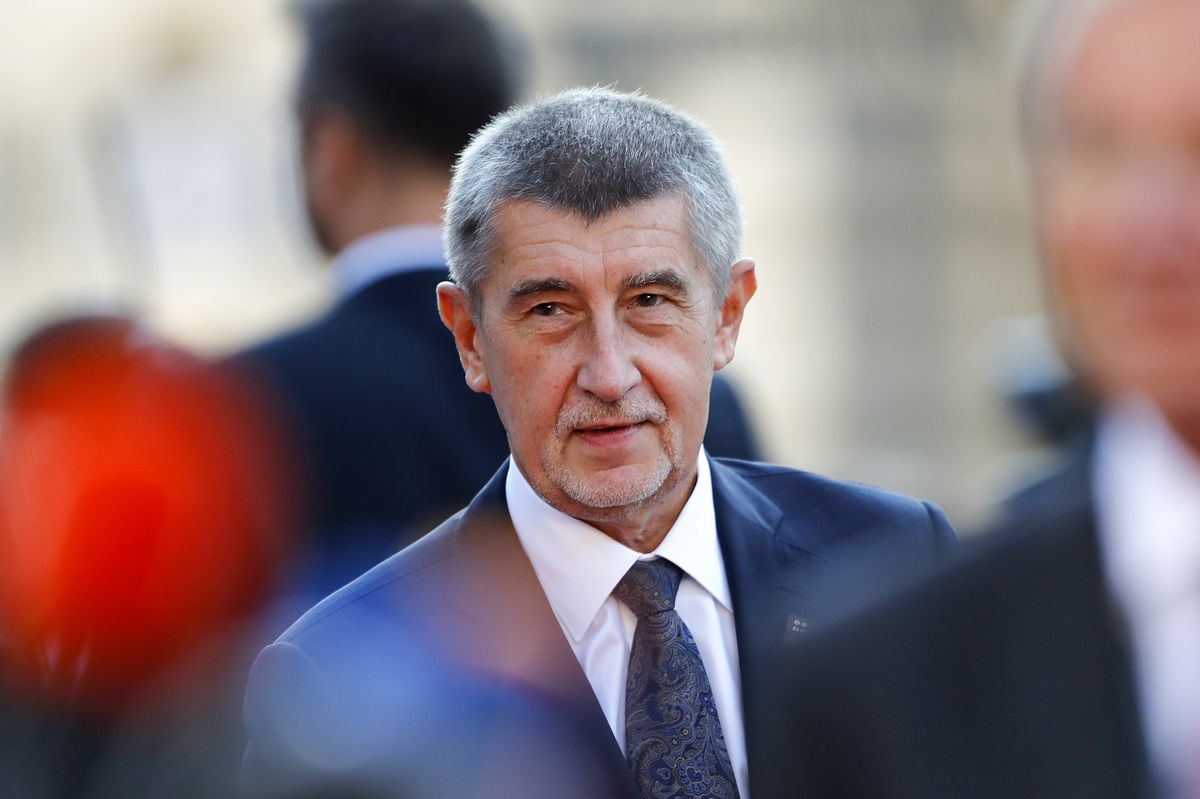
The Czech government coalition today agreed to raise all monthly base pays in the public sector by 1500 crowns next year and to cancel the lowest base pay level concerning the least paid professions such as cooks. The pay decision, which covers about 290,000 state employees, will allow the government to complete its draft budget for next year. “The last question of the 2020 budget is solved,” said Finance Minister Alena Schillerova on Twitter. Prime Minister Andrej Babis (ANO) told journalists that teachers will be the only group with a percentage increase, while all the others will get a fixed sum. The non-teaching staff of schools will have their salaries raised by more than 7 percent since the lowest base level will be cancelled, Babis said. The government planned a pay rise of 10 percent for teachers and 7 percent for the non-teaching professions. The Finance Ministry expects economic growth to slow to 2.2% in 2020 from 2.4% this year and it sees downside risks to the outlook. The Czech economy, like others in central Europe, has held up amid a global slowdown thanks to strong domestic demand fuelled by low unemployment and rising wages.
Prague prosecutors have decided to drop charges against Czech Prime Minister Andrej Babiš, who was charged with fraud with EU subsidies. Prosecutors announced their decision on Friday after evaluating a police recommendation to charge Babiš. Their decision may be reversed by the Prosecutor General. The case concerns a farm that received EU subsidies after its property was transferred from the Agrofert conglomerate, which belonged to Babis, to 250 companies owned by members of the Czech prime minister’s family. Subsidies were intended for medium and small enterprises, and Agrofert would not have been entitled to them. Later, Agrofert again became the owner of the farm. “The evidence gathering led to the conclusion that the Stork’s Nest Farm met the definition of a small and medium-sized business,” attorney Martin Erazim said in a statement. The EU’s anti-fraud body OLAF had found multiple breaches of national and EU legislation in the project. Babiš denies any allegations.
The percentage of employed persons aged 15 to 64 in the European Union (EU) who usually work from home stood at 5.0% in 2018. This figure was highest in the Netherlands (14%), followed by Finland (13.3%) and Luxembourg (11%), and lowest in Bulgaria (0.3%) and Romania (0.4%). Working from home was slightly more common in the euro area (5.7% of employed persons) than in the EU as a whole. In the Czech Republic, there are about 206,000 home office workers. “Working from home or at a distance is increasingly common among Czechs. Ten years ago, there were less than 85,000”, said Jan Krupicka from Europe in Data. According to Deloitte, home office is more frequent among experienced people in managerial positions (69 percent) than among middle-aged (40 percent) and lower-level workers (36 percent), said Pavel Šimák, Strategy and Operations manager. The percentage of employed persons in the EU who sometimes work from home has increased steadily over the years, from 7.7% in 2008 to 9.6% in 2017, although the figure in 2017 was down slightly from 2016 (9.8%). In the EU, more self-employed persons usually worked from home (18.1%) than employees (2.8%). This was true in all Member States. ...
Czech President Milos Zeman dislikes Kosovo, a former Serbian province whose declaration of independence Serbia does not recognize. As he landed in the Serbian capital of Belgrade on Tuesday, greeted by Serbian President Aleksandar Vucic, Zeman said in English: “I like Serbia and Serbian people.” He then added in a lower voice: “And I dislike Kosovo”, reported AP. Vucic responded with “Thank you.” The Czech Republic is among 23 European Union nations that have recognized the independence of the former Serbian province of Kosovo after it split from Serbia in 2008 following a bloody war in 1998-99 that ended with NATO airstrikes. The U.S. also backs Kosovo’s statehood, while Russia and China have sided with Serbia and refused to recognize it. The 74-year-old Czech president is known for his offensive statements and diplomatic gaffes.
In the latest in a string of moves reportedly aimed at embarrassing the Taiwan-friendly mayor of Prague, China announced that it had canceled a scheduled performance by a musical trio from Prague. Ivan Klansky, a classical pianist and a member of the Guarneri Trio Prague, said he already had a feeling that the group would encounter the same problem as the Prague Philharmonia, which also faced cancellation of their performance in China this month. According to Czech media reports in April, such actions by China are aimed at humiliating Prague Mayor Zdenek Hrib, who visited Taiwan in March and has been a vocal critic of China’s human rights record. Hrib, who took office last November, said a few months later that in a twin-sister agreement between Prague and Beijing, he wanted to remove the clause that stated “Taiwan is a part of China” because of concerns that it would be unfair to Taiwan. During his visit to Taiwan in March, Hrib praised Taipei’s metro system and said he hoped to cooperate with Taipei in the area of building smart cities. Subsequently, news surfaced in August that China canceled a scheduled performance by the Prazak Quartet and another by the Prague...
The Czech Finance Ministry submitted plans to start taxing global internet giants from the middle of 2020, proposing a 7% rate on targeted advertising, multilateral digital interface use and user data sales, it said on Thursday. The tax will apply to revenues from online advertising, the sale of user data, and intermediation services, and will only target companies with a global turnover of 750 million euros or more with sales in the Czech Republic of at last 50 million crowns (1.9 million euros) per year. The tax could raise state revenue of 2.1 billion crowns for the 2020 budget and 5 billion crowns annually after that. “Internet giants do not pay taxes in our country to an extent that would match their profits, which is unfair to other companies in the Czech Republic that pay taxes,” said Finance Minister Alena Schillerová. “We have long supported the search for a common international solution, but unfortunately negotiations at EU and OECD levels will take some time. And because we can no longer wait and see the unequal competition of global giants with other entrepreneurs, we come up with our own temporary digital tax adjustment until an international compromise will be found.” The Czech Republic...
Czech Prime Minister Andrej Babiš said on Tuesday that he would withdraw the nomination of Michal Smarda and propose a new Cultural Minister to President Milos Zeman immediately after the coalition Social Democratic Party has the new name, according to local media reports. Zeman previously said Smarda is not competent for the post of cultural minister. On Monday, Smarda decided to give up the nomination. Babiš said he had asked President Zeman to quickly solve the problem concerning the nomination of Culture Minister so that the cabinet could be complete and functional. Communication preceding the proposal of the new candidate must be better than it was in the case of Smarda, Babiš added. The dispute over the replacement of the Culture Minister has been lasting for more than three months in the country. In April, former cultural minister Antonin Stanek dismissed National Gallery head Jiri Fajt and Olomouc Art Museum head Michal Soukup, triggering criticism from cultural fields. In May, Babis proposed that Stanek be dismissed and Smarda as his successor. Zeman was reluctant to dismiss Stanek at first but eventually did so at the end of July without accepting the nomination of Smarda.
The European Commission has accused Czech mobile phone operators O2 and T-Mobile as well as the Czech telecom infrastructure provider CETIN of breaching EU antitrust rules. The move by the European Commission could make it more difficult for telecoms operators to do similar deals to share networks, seen as key to saving costs and reducing time in the face of regulatory barriers to mergers. The European Commission said the deal, which the country’s two biggest mobile operators and Cetin struck in 2011 and subsequently expanded, may breach the bloc’s competition rules. The network sharing agreement now covers all mobile technologies including 4G and 85% of the Czech population. “We have concerns that the network sharing agreement between the two major operators in Czechia reduces competition in the more densely populated areas of the country,” European Competition Commissioner Margrethe Vestager said in a statement. The EU competition enforcer, which opened an investigation in October 2016 and can hand out fines up to 10% of a company’s global revenue, said the deal may remove the incentives for the two operators to improve their networks and services. T-Mobile CZ, O2 CZ which is a unit of Czech investment group PPF, and Cetin can ask...
The Czech Republic had by far the lowest unemployment rate in the European Union in June, at just 1.9 percent. Next was Germany with a rate of 3.1 percent. According to Eurostat, all of the countries of emerging Europe boasted unemployment rates lower than the EU average of 6.3 percent, except Latvia, where 6.5 percent were unemployed. The region’s best performers aside from the Czech Republic were Hungary (3.4 percent), Poland (3.8 percent) and Romania (4 percent). Greece had the highest unemployment in the EU, at 17.6 percent. In the last decade, the highest annual unemployment rate in the EU was seen in 2013 (10.9%). Youth unemployment rate — under-25s — fell in both the EU28 and EA19. The EU28 has 3.17 million young unemployed persons, of whom 2.25 million were in the EA19. “In June 2019, the youth unemployment rate was 14.1% in the EU28 and 15.4% in the euro area, compared with 15.2% and 17%, respectively, on June 2018,” Eurostat said. Meanwhile, the preliminary flash estimate for July 2019 showed euro area annual inflation at 1.1% downed from 1.3% in the previous month, it said.
President Milos Zeman will leave for another part of his summer holiday on Thursday, from which he will come back in mid-August, spending the time mostly at the presidential chateau in Lany, central Bohemia, his spokesman Jiri Ovcacek said. The holiday is to begin on August 1 and will last “approximately until mid-August,” Ovcacek said. Zeman already took holiday in late June, early July this summer when he stayed in his house in Nove Veseli, south Moravia, after visiting the Vysocina Region. He interrupted his holiday because of the dispute around the replacement of the culture minister. Early in May, Mr. Babiš and the Social Democrats requested the removal Mr. Staněk, whom they accused of being ineffective. At the same time, they asked to replace him with the Social Democrats’ pick Michal Šmarda. The delay led the Social Democrats to threaten to leave the government coalition. President Zeman thanked Mr. Staněk for his good work and for having unveiled corruption in the field of culture but has not so far agreed to make any new appointment, saying he would decide on Staněk’s successor in mid-August. Author: red
The City of Prague has undertaken an inventory of its housing fund and the apartments it owns. The analysis showed that the city, along with the city districts, manages over 31,000 apartments. Of these 31,000 municipal dwellings, nearly 8% are currently unoccupied. The analysis also showed that the municipal housing fund in Prague is relatively small compared to other cities. For the first time ever, complete data was obtained on the city’s housing stock in all 57 municipal districts through an initiative led by the City Councillor for Housing, Adam Zábranský. An analysis by the Prague Institute of Planning and Development (IPR) showed that out of a total of 31,456 municipal apartments, 2,409 are unoccupied. Many of these empty apartments are in poor condition and would require renovation before they could be rented. Only 266 apartments are currently ready for tenants to move in without renovations. “Apartments that have not been repaired, regardless of whether they are managed by the city districts, need to be improved as soon as possible. The Affordable Housing Fund has 500 million crowns in subsidies for reconstruction, and we can offer another 500 million to city districts as interest-free loans,” said Adam Zábranský. “It is good that we are...
Don’t have an account? Register
[swpm_registration_form level=”6″]
Already have an account? Log In
How Would You Like to Promote Your Business? PR ArticleDisplay bannersVideo productionNewsletter adsJob ListingsInfluencer Marketing
Your Email
We will come back to you within 24 hours with our proporsal