The City of Prague has undertaken an inventory of its housing fund and the apartments it owns. The analysis showed that the city, along with the city districts, manages over 31,000 apartments. Of these 31,000 municipal dwellings, nearly 8% are currently unoccupied. The analysis also showed that the municipal housing fund in Prague is relatively small compared to other cities. For the first time ever, complete data was obtained on the city’s housing stock in all 57 municipal districts through an initiative led by the City Councillor for Housing, Adam Zábranský. An analysis by the Prague Institute of Planning and Development (IPR) showed that out of a total of 31,456 municipal apartments, 2,409 are unoccupied. Many of these empty apartments are in poor condition and would require renovation before they could be rented. Only 266 apartments are currently ready for tenants to move in without renovations. “Apartments that have not been repaired, regardless of whether they are managed by the city districts, need to be improved as soon as possible. The Affordable Housing Fund has 500 million crowns in subsidies for reconstruction, and we can offer another 500 million to city districts as interest-free loans,” said Adam Zábranský. “It is good that we are...
The Czech Telecommunication Office has published draft conditions governing its forthcoming sale of frequencies suitable for 5G mobile services, noting that reserve prices on the available spectrum mean the process should net upwards of quarter of a billion euros for government coffers and that the conditions of the sale are designed to facilitate the entry of a new player to the market. The regulator aims to auction off spectrum in the 700 MHz and 3.5 GHz bands in January next year with a view to handing over the airwaves to operators by April for use by mid-2020. Further, any incumbent operator acquiring 700-MHz spectrum will be required to provide national roaming to the newcomer for six years. However, to take advantage of this condition the newcomer will have to cover 20% of the Czech population with its own network. The regulator also outlined a series of coverage obligations the auction participants must adhere to. Finally, it noted that it has set reserve prices based on analysis of spectrum sales elsewhere in Europe. Presuming all available frequencies are sold, the state will raise upwards of 6.3 billion koruna. At the same time, PM Babiš and new Minister of Industry and Trade Karel...
After two years of stagnating beer consumption in the Czech Republic, domestic consumer interest has gone up. Some 16.5 million hectoliters of beer were consumed in the Czech Republic last year, according to the Czech Brewery and Malt Association (ČSPS). Exports of beer in 2018 totaled 5.1 million hectoliters. The biggest markets were Slovakia, Germany, Poland, and Russia. Beer exports to EU countries in 2018 increased by 10 percent and currently amount to around 80 percent of overall exports. Czech beer exports to countries outside the European Union increased by one fifth in 2018. Russia increased its imports of Czech beer by 54 percent, mainly because of the World Championship in Football. Among the new importers of Czech beer are Antarctica, Angola, Bahrain, the Bermuda Islands, Philippines, Senegal and Ecuador. For the first year, the volume of beer in tanks and legs surpasses the amount of bottled and canned beer sold abroad. On an international basis, the Czech Republic has the highest beer consumption per capita and has held that position for 25 years, as long as the independent Czech Republic has existed. Research by Japanese beer firm Kirin again confirmed the Czech leadership. Author: red
The unemployment rate fell from 2.7% to 2.6% in May, reaching a new historic low, mainly due to seasonal work The jobless rate fell as expected and the number of vacancies reached a new record, at 346,000, which is 6,600 more than in the previous month. However, job vacancies, year-on-year, are slowing down and month-on-month increases have already been significantly lower than in the previous year. Similarly, the year-on-year decline in the number of unemployed people is slowing down, though in May it fell to 200,000 for the first time. However, this development is largely related to the already exhausted labour market and the lack of suitable workers. The current slowdown in the global economy is not yet visible in the Czech Republic’s overheated labour market, which is not too surprising because the job market has a certain momentum and responds to the economy with some delay. However, signs of a slowdown are visible in the German job market, where the unemployment rate increased in May for the first time since 2013. Although two-thirds of the increase in the number of unemployed persons was due to a methodological change, this is some indication of the impact of the global slowdown on the German market. That said, we believe that the Czech labour...
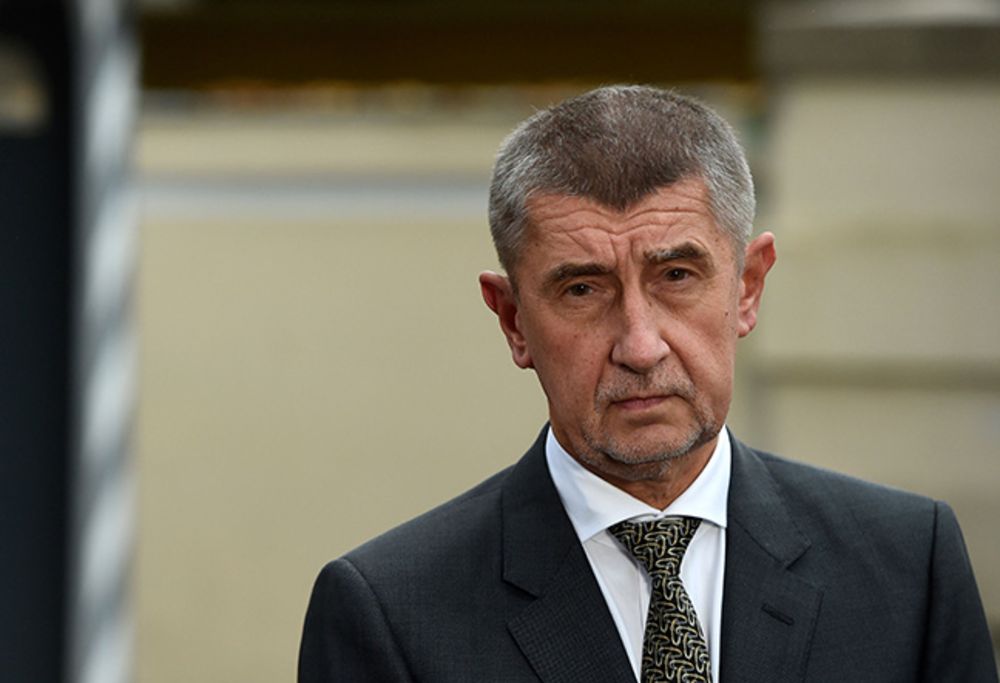
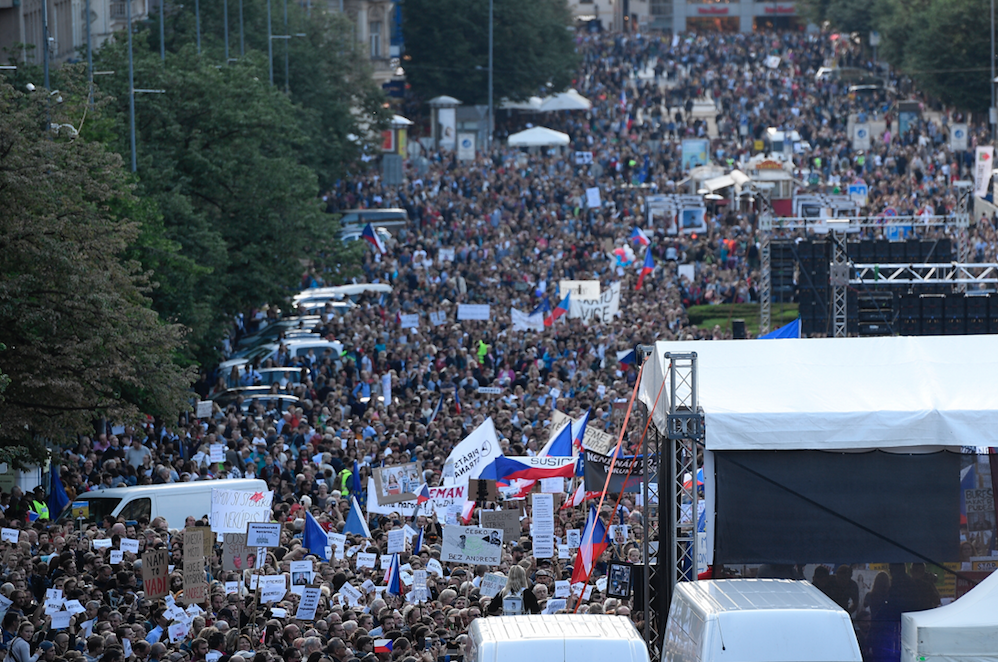
More than 120,000 citizens marched in Prague on Monday to call for the resignation of Prime Minister Andrej Babiš, following ongoing public discontent and a recent decision from the European Commission (EC) that Babiš has significant conflicts of interest related to his private businesses. The decision follows an initiative from Transparency International Czech Republic (TI-CZ), which filed a complaint to the EC last year highlighting Babiš’s conflicts of interest. The complaint resulted in an audit by EC officials in the Czech Republic, an analysis of the EC’s Legal Service and, ultimately, led to the Commission’s decision last week that Czech Republic repay 17 million euro of EU subsidies that Babiš’s company received over the last two years. “It is good news not only for us as authors of the initiative, but mainly a victory for all citizens and taxpayers in the Czech Republic and Europe. Prime Minister Babiš’s unprecedented conflict of interest has been confirmed. Now the consequences of the conflict need to be resolved immediately so that the national and European budgets recuperate the costs,” comments David Ondráčka, Director of TI-CZ and member of Transparency International’s global Board. “The EU decision highlights that the rules apply to everyone, even prime ministers,”...
Tens of thousands of protesters rallied in the Czech capital Tuesday as demands intensified for the resignation of the new justice minister. The event marked a fourth week of growing demonstrations since the sudden appointment of Marie Benesova as justice minister in April. Her nomination came one day after investigators recommended Prime Minister Andrej Babis should face criminal charges for European Union subsidies fraud. She’s a lawyer and adviser to President Milos Zeman, Babis’ close ally. Zeman has repeatedly criticized prosecutors. “We’ve had enough,” and “Shame,” the crowd chanted. The populist billionaire insists the case is part of a plot by the country’s “elite” to force him from politics. He remains defiant in the face of the demonstrations. Prosecutors, who can halt the case before it gets to court, have yet to decide on police recommendations delivered last month that Babis stand trial. Benesova’s predecessor at the justice ministry resigned one day after the police wrapped up their investigation, sparking worries that political pressure might be involved. Author: red
Prague hosted a record number of conferences and congresses in 2018. Over 4,500 events took place in its collective accommodation establishments last year – that is more than a third of all events held in the Czech Republic. The Czech metropolis welcomed almost 540,000 delegates from all over the world. At the same time, Prague occupied the ninth position in the international ranking of the most popular meeting destinations this year. According to the Czech Statistical Office (CZSO), that keeps only the records of meetings held in the collective accommodation establishments and with the attendance over 50 persons, 4,534 conferences and congresses took place in Prague in 2018. That is by 2.2 % more than in the record year of 2016 and by 3.3% more than in 2017. At the same time, it is also 36% of all events held in the Czech Republic. The number of delegates has remained around 540,000 since 2013, while the average number of participants per meeting has been on decline. These facts only confirm the long-term trend when the organizers prefer to hold more events for a smaller number of participants. The total number of meeting participants who arrived in Prague in 2018 was 536,232 – by 1.4% more...
Do you plan to relocate to the Czech Republic but you don’t have much information about the Czech Labour Market yet? The recruitment agency Grafton Recruitment has collected some useful information about average wage, desired employee benefits or possibilities of opening bank accounts. The Czech economy is still developing according to a current forecast published by the Czech National Bank. Even though its last prognosis originally showed a higher number, the estimated growth of the Czech economy for this year should be about 2.9 percent. Also, an average exchange rate of the Czech crown will present about 25 crowns to 1 Euro and neither should its growth be halted next year, as its value should increase to 24.20 crowns to 1 Euro on average. Foreigners living and working in the Czech Republic account for more than half a million of the population and make up 10.7 percent of the overall employment rate, as reported by the Czech Statistical Office. They mostly seek jobs in the Finance or Accounting sectors, HR, Customer operations, IT or Technical support, Procurement, Logistics, and Sales. Average Salary and Attractive Benefits The Czech Statistical Office disclosed information about the average salary in the Czech Republic in...
Support for remaining in the EU stands at well over 80 percent in the majority of member states, a new continent-wide poll has found – with Britain’s political crisis apparently a poor advert for leaving. The survey by Kantar asked people how they would vote in an in-out referendum and found that Luxembourg (94 percent), Portugal (92 percent), Ireland (91 percent), and the Netherlands (91 percent) had the highest support for EU membership out of the 28 countries in the bloc. Apart from the UK, the highest level of support for leaving was in the Czech Republic, where 66 percent supported Remain and 34 percent Leave. Italy was close behind as the next most Eurosceptic country, with 72 percent Remain and 28 percent Leave. Austria and France were the third and fourth most Eurosceptic. It’s not surprising that Czech skepticism or opposition to the European Union is strongest amongst the unemployed and self-employed. Those living in small towns as opposed to the capital, Prague, and bigger cities are also more critical. And those with basic or elementary education are also more likely to be opposed. And a strong majority of Czechs believe they are being given an overly positive view of...
Czech GDP growth was 2.9 percent last year, which means that Czechia is the 13th fastest growing economy in the European Union. In this regard, the Czech economy surpasses the original EU Member States, including Germany, and the EU average as a whole. The Irish, Maltese, and Polish economies grew the fastest last year, while the economies of Italy, Denmark, Great Britain, and Germany slowed down. Surprisingly, the Czech economy grew even though it is strongly linked to the underperforming countries. “New member countries are growing faster, except for Ireland and Malta. Old member states have been weaker,” said Marek Rojíček, head of the Czech Statistical Office. However, the growth of the Czech economy slowed down in 2018 compared to 2017, from 4.5 percent to 2.9 percent of GDP. Consumption and investment activity were the main drivers of the economy last year. On the other side, it was weakened by the decline in foreign demand and also by the labor shortage. Based on the development of economic growth, the Czech economy is probably already behind its peak, according to Rojíček. From an economic point of view, the Czech Republic reached 89 percent of the EU level in 2017, so the...
Czech police said on Wednesday that Prime Minister Andrej Babis and others should stand trial for alleged fraud involving the handling of a 2 million euro European Union subsidy – charges that could see him jailed for up to 10 years. The probe against Babiš focuses another spotlight on the EU’s eastern wing, a region that’s been rocked by scandal. Babis rejected the allegations on Wednesday, denouncing them as “an organized plot” designed to ruin his political career. The case involves a farm that received EU subsidies after its ownership was transferred from the Babis-owned Agrofert conglomerate of some 250 companies to Babis’ family members. The subsidies were meant for medium and small businesses and Agrofert would not have been eligible for them. Later, Agrofert again took ownership of the farm. Babiš denies any wrongdoing. Author: red
Employers with a higher number of employees should be obliged to make public the information on the pay-gap between their male and female employees, Czech ombudswoman Anna Šabatová has said, adding that if they did not comply, they could be banned from public tenders. Women in the Czech Republic receive on average 22 percent less pay than men. Šabatová explains why: “One reason is that women never find out about certain [lucrative] jobs. Not only is it customary not to talk about money: in many companies it’s forbidden. Whereas in the past equal pay for equal work was what protests were all about, today that’s impossible because of the confidentiality clause. Companies oblige workers not to tell anyone how much they earn. Everyone is expected to negotiate their salary for themselves. As statistics show, that systematically puts women at a disadvantage. But women also need decent wages. Flowers they can buy for themselves.” Women in the Czech Republic earn on average 80,000 crowns less per year than men do and the gap is wider in the Czech private sector than in the public sector. In the EU, on average women are paid 16 percent less than men, according to Eurostat....
Don’t have an account? Register
Already have an account? Log In
How Would You Like to Promote Your Business? PR ArticleDisplay bannersVideo productionNewsletter adsJob ListingsInfluencer Marketing
Your Email
We will come back to you within 24 hours with our proporsal