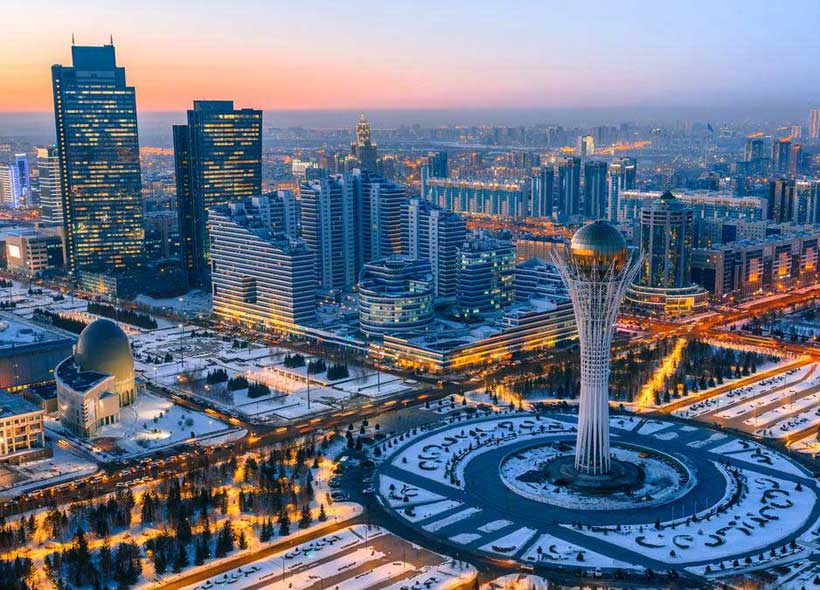
SCAT Airlines has confirmed that the carrier will launch a new regular scheduled connection between Prague and Astana. Effective 2 June 2019, the airline will service the capital city of Kazakhstan twice a week, every Thursday and Sunday, using Boeing 737. Based on Prague Airport’s estimates, the new route will be used by approximately 24 thousand passengers a year in both directions. “The launch of regular scheduled flights on the Prague – Astana route is the result of over a year-long negotiation which involved, alongside Prague Airport, the representatives of Embassies of both countries involved and CzechTourism. For quite some time, we have recognised the growing potential of Kazakhstan as one of the most important markets within the post-Soviet state. The new route will primarily be used by Kazakh tourists. However, we have a reason to believe that it will also support the outbound tourism from the Czech Republic and help enhance business relations between the countries,” Vaclav Rehor, Chairman of the Prague Airport Board of Directors, said. The route has suitable connections with five cities of Kazakhstan: Almaty, Shymkent, Taraz, Ust-Kamenogorsk, and Pavlodar. The days of the flights are Thursday and Sunday. “We are sure, that the connecting of two...
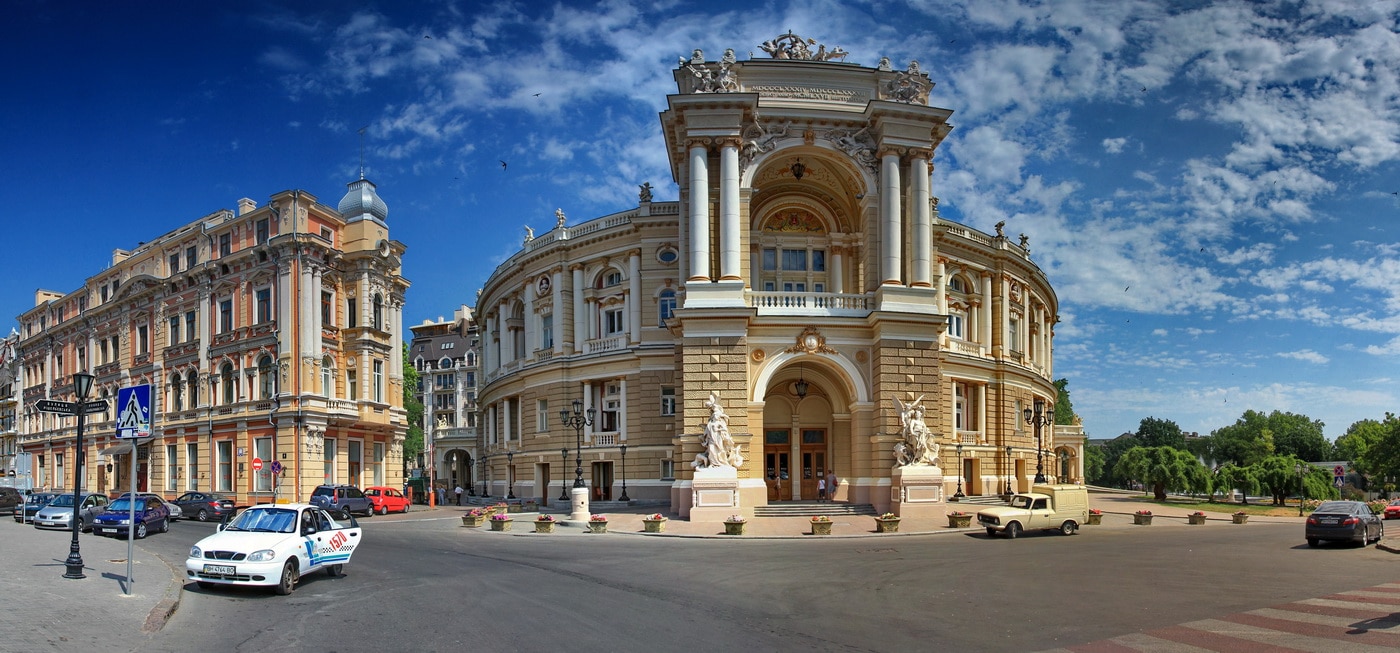
According to the press service of Odessa International Airport, from May 30 Czech Airlines flights from Prague to Odesa will be operated twice a week on Mondays and Thursdays. From June 17 a flight on Saturday will be added, and from July 1 – on Wednesdays. The departure time is 22:45 local time. The travel time is 2 hours. Aircraft from Odessa from May 30 will depart on Tuesdays and Fridays; from June 18 also on Sundays, and from July 2 on Thursdays. The departure time is 05:00 local time. 6.3 million tourists visited Odessa region in 2018. The majority of visitors are Ukrainians who come primarily from Kiev and Lviv. Foreign visitors are mostly from Moldova, Belarus, as well as Romania, Israel, Turkey, Germany, Georgia, and Philippines.
The railway line between Prague’s Smíchov and Řepy is rightly considered the most beautiful on the capital territory. The trains have run since 1872, and because of its profile and the surrounding natural sceneries, the railway soon earned the sign of Prague Semmering, according to the Austrian mountain railways registered on the UNESCO list. Leading it to be protected as a cultural monument. The section was built in the years 1872 (of which the viaducts were built in the last two years) by the Buštěhrad Railroad as part of a line connecting the former Smíchov Common Station and Hostivice. The operation at Prague Semmering was launched on 3 July 1872 for freight transport (mainly coal and wood). Passenger trains started here on September 16, 1872. The Buštěhrad Railways were nationalised on 1 January 1924. In the seventies, the modernisation of this track started, which consisted mainly of it becoming a double track, with plans for it to be electrified. However, at the end of the 1990s, reflections on its abolition appeared, and connections were reduced. During the floods in 2002, the track served as a form of substitute transport for the non-functional route B of the Prague metro, while it was...
You would be hard put to find another place offering so much charm in such a small space. Holašovice, situated in the middle of the harmonious landscape of Southern Bohemia, is one of the most charming village in the whole of the Czech Republic. This small community is a perfect representation of the traditional villages that used to dot the countryside of Central Europe. Most of them – almost all of them, in fact – have now disappeared. Holašovice is one of the few that remain and the only one that hasn’t been dramatically changed. It’s why UNESCO has included it on the World Heritage List. The town has experienced two crippling blows over the years. The first was in the 16th century, when almost all of the original Czech inhabitants of the village were wiped out through plague, following which it was almost immediately occupied by German settlers. The Second World War dealt another blow when the attempts made by the German inhabitants to join the village to the Reich were successful. After the war, in 1946, the enforced withdrawal began which affected the majority of the German inhabitants. The empty buildings were then inhabited by Czechs from the inland,...
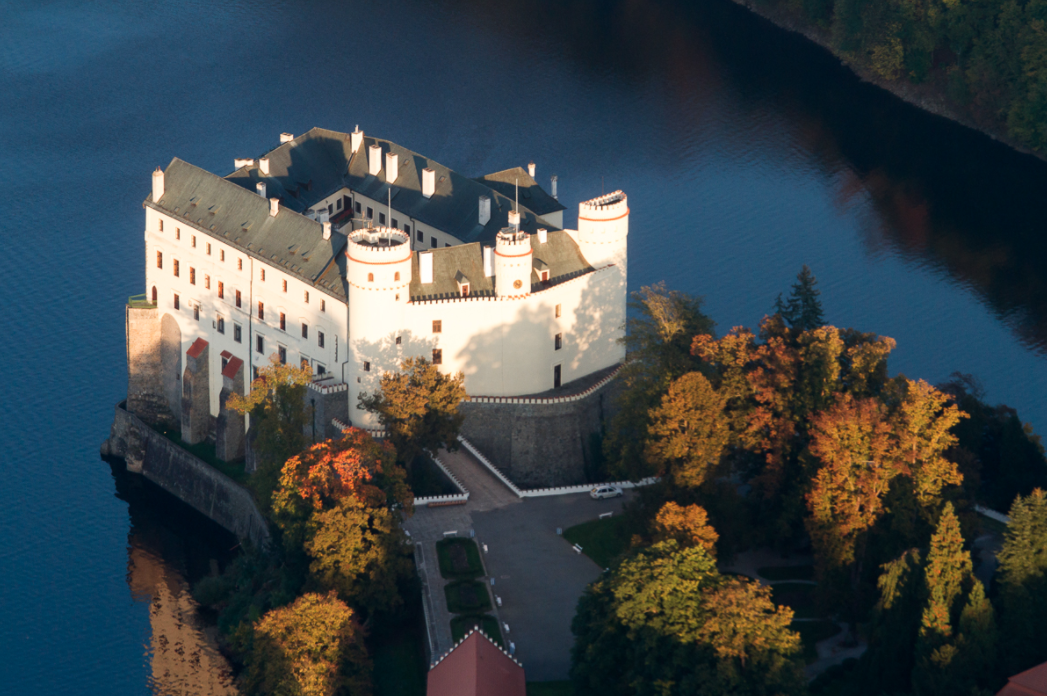
Orlík takes its name from ‘orel’, the Czech word for an eagle; and indeed for many centuries this rocky outcrop rising 200 feet above the river Vltava must have made a dramatic eyrie for the original fortified manor. Its appearance today — a neo-gothic fantasy floating only just above water-level — is the result, prosaically, of the construction of Czechoslovakia’s largest hydroelectric dam in the 1950s. Orlík Chateau is located on the border of South and Central Bohemia. The castle was expanded in the 16th century after a fire that destroyed Orlík. Under the stewardship of the famous field-marshall Karl Philipp Schwarzenberg (1771-1820) and his descendants, the house and park began to take on their current romantic appearance. A fourth floor was added, and the grounds were extensively planted with trees in the English fashion. Finally, between 1850 and 1861, the entire house was remodelled in neo-gothic style under the Prague academician Bernhard Grueber. When visiting the castle, you can expect to see the following: Artwork depicting historical events and personalities. Schwarzenberg family trees spanning centuries. Medals and orders relating to military victories. Empire style furnishings from revolutionary Paris. The unique Teskas Hall with ornately hand-crafted wooden ceiling. The knights hall and armory with weapons dating from the...
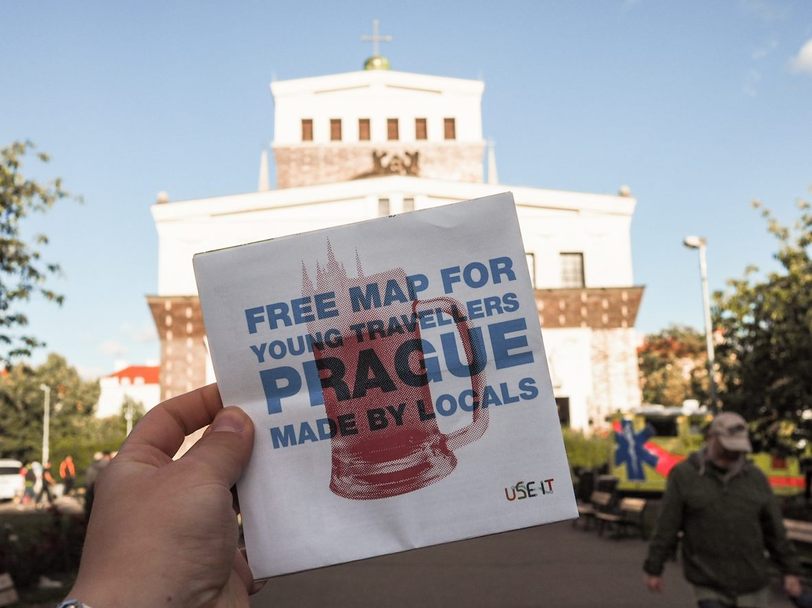
The eighth edition of the unconventional USE-IT map of Prague designed especially for young travellers by locals has been published by Czech NGO Jůzit. The new edition of the USE-IT Prague map shows you the city through the eyes of local people and allows young travellers to escape from the tourist bubble and instead see the real Prague. “The essence of the USE-IT map is that it has been created by those who have been born in or have lived in the city for a very long time,” said Anna Horáčková, a member of the USE-IT Prague team. The map features more than 80 tips on where to go in the city, including parks, monuments, galleries, sightseeing spots, and local businesses, which, according to locals, are definitely worth a visit. “We have to include museums, galleries, bars and cafes, of course, but we also pay attention to the desires of the jazz listener, traditional kitchen fan, and vegetarian,” said Horáčková. The map was created in 9 months, and from the set of tips, a two-sided square map of the city was designed, framed by the advice and insights of the people who call Prague home. In addition to the classic...
ČSA Czech Airlines is satisfied with 2018 so far. In the first half of the year, the airline increased passenger numbers to 1.174 million, a 22% increase. However, management not only wants to grow with its own routes but also emerge in the wet-lease business. Eurowings will lease up to five A319s from ČSA next year. The agreement will run, depending on the aircraft, between 12 and 18 months. One base for the ČSA aircraft will be Stuttgart. Overall, ČSA currently owns nine Airbus A319s. However, the A319s should gradually disappear from the fleet of the Czech Airlines starting from December 2018. Ján Tóth, a spokesman of the airline confirmed, “The plan is to phase out the Airbuses from the end of 2018. In time, the group will soon have sixty to seventy airplanes and fly to a hundred destinations in Europe.” On regional routes, ČSA continues to fly the ATR, while A330s rented from Korean Air are used on scheduled services to South Korea. “[The A330] contract is still running until the end of summer season 2020,” said Tóth. Airbus A319s are going to be replaced by Boeing 737-800 and Boeing 737MAX aircraft coming from new CSA owner Travel Service. The Czech charter company...
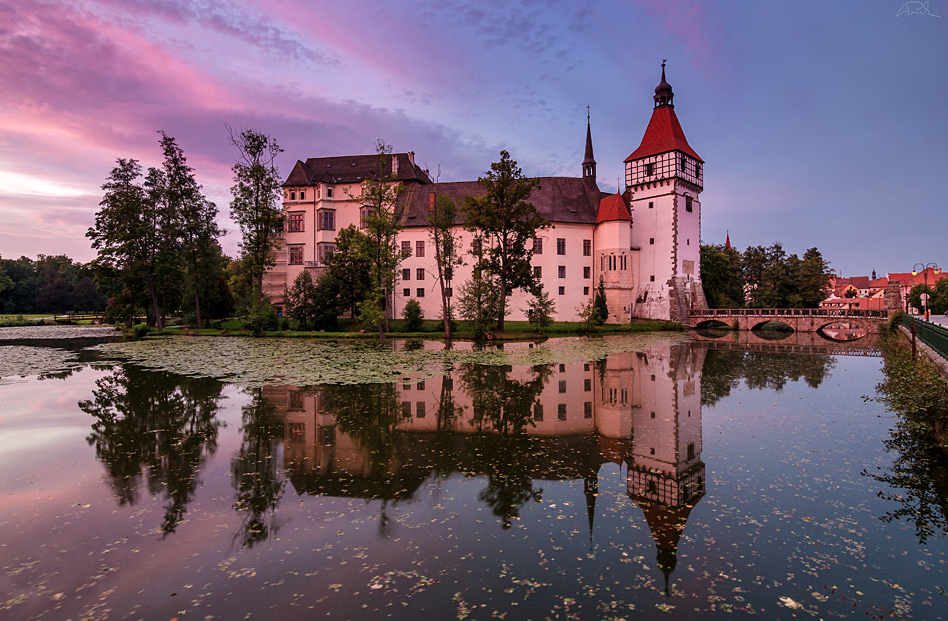
Walk into a fairytale at Blatná Castle. Located in a small town in Southern Bohemia, the castle is next to an artificial lake with plenty of nature that accents the bright red roofs and white structure. The first written record of the castle is from 1235, when it was most likely a wooden fortress. It’s built in the middle of a marsh, so it gets its name “blata” from the old Czech word for marshy place. Over a century later in 1391, the castle belonged to the house of Lvové (lions) of Rožmitál and the marshes transformed into water trenches and the castle was rebuilt in stone. This U-shaped castle is described as “a swan sitting in a lake” because it is white and surrounded by a moat.The first floor of the tower is the Green Chamber because the prevalent color of the medieval paintings on that floor are green. A large tower in the east at the main entrance dominates the castle. The Romanesque Chapel is the oldest part of the castle dating back to the 13th century. It is in the western part of the courtyard and has two distinct arches to mark the spot. Various other parts...
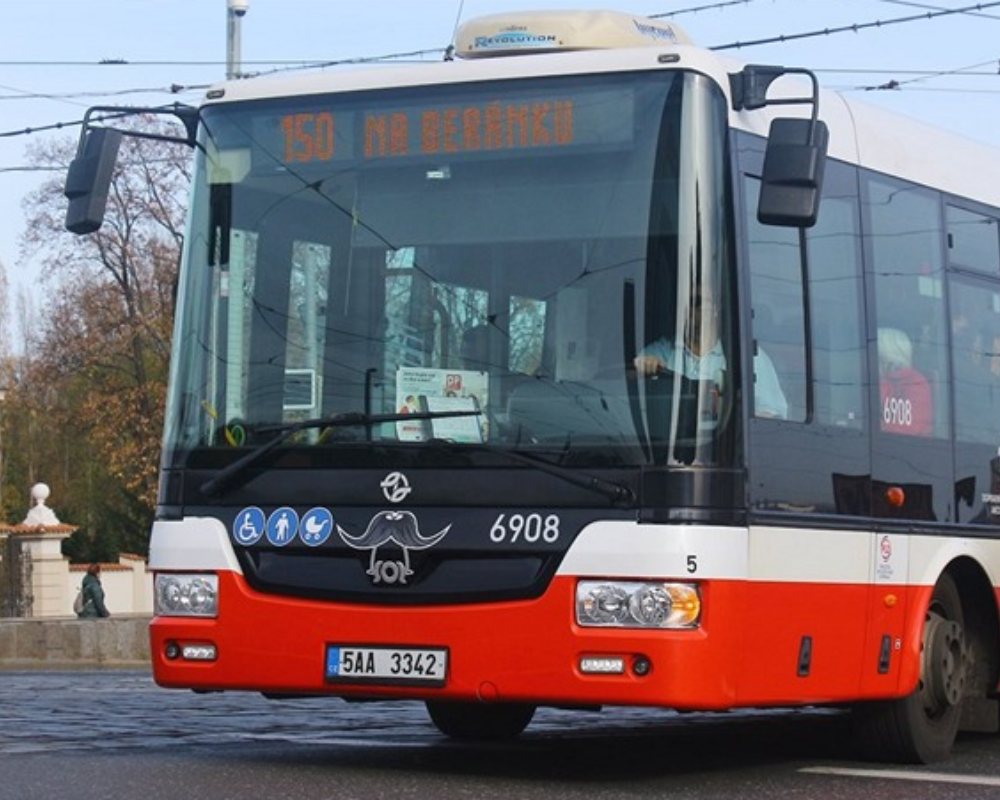
As seen in Klíčov, Kačerov, and also in the city centre, some buses and trams have been spotted sporting handsome moustaches in recent days. “According to traffic information, there are fifteen buses and fifteen trams” says the Ropid transport organiser on Facebook. Since November 1st, the public transport company has been involved in the “Movember” project. In Prague, as well as twelve other cities in the Czech Republic, buses and trams have been decorated with moustaches in support of the cause. “We want to promote Movember and help raise awareness for men’s health. The aim is to be seen by as many people as possible in the city streets,” the press department representative of the transport company stated, adding that this is another joint project under the patronage of the Association of Transport Companies of the Czech Republic. The gentlemanly means of transport are very popular with the people of Prague. According to social media, some people have not hesitated to venture to the complete other side of the city simply to see the moustached trams and buses. Some people wish that the metros were taking part as well. “It is a shame that the front metro cars are not...
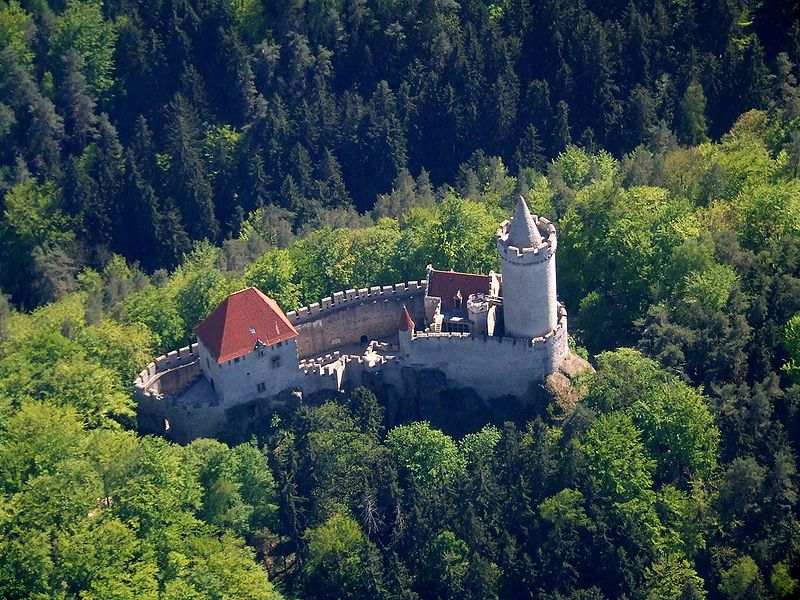
Bouzov Step into a movie set at Bouzov castle in the heart of Moravia. The castle that looks like it’s magically floating on a sea of green trees is sought-after by many filmmakers. The rooms have been restored and are open for the general public. The Gothic castle was built in the 13th and 14th centuries, and the Lords of Vildenberg, Haugviens of the Bishops and many masters lived here. However, the castle housed prisoners after the Thirty Years’ War and served as both an imperial fortress and political prison. Kokořín Built in 1320 by Prague bourgeois Hynek Berka from Dubé, Kokorin still stands tall in the town of Melnik. It is surrounded by towering green trees for breathtaking nature scenes. This castle is really off the beaten path and only recently was allowed to have reconstruction. During the Hussite wars, the castle was damaged badly and swapped between multiple owners. In 1544, it became quite desolate and Emperor Ferdinand put it on the “cursed castle” list after the Thirty Years’ War. This meant they were not maintained and became an occasional house for wandering artists, knights, and travelers. Trosky Castle While there are only ruins of Trosky Castle left,...
Students up to age 30 may be able to use Prague’s public transit for just Kč 1 a day, getting an annual pass for Kč 365. Deputy Mayor Petr Dolínek (ČSSD), responsible for transportation, has made the proposal, which still needs to be approved by the full City Council. It is expected to gain approval. He also wants to increase metro service on weekends and allow for installment payments on adult annual metro passes.Currently, people under the age of 18 and students under 26 can get a pass for Kč 260 per month. There are also quarterly, five-month or 10-month tickets, the latter Kč 2,400 crowns. All-year student fares are not available at this time. Read the full article here (Prague.TV)
The tunnel on the proposed high-speed railway between Prague and Dresden is set to be designed by the German passenger rail company Deutsche Bahn and could shorten the travel time to one hour as well as reduce heavy traffic through the Elbe valley. The Erzgebirge-Krušné Hory base tunnel, 15.10 km long on the German side and 11.43 km on the Czech side, was one of a number of detailed recommendations outlined by Saxony’s State Transport Minister, Mr. Martin Dulig, as he unveiled the findings of the Dresden-Prague Corridor Feasibility Study. The project envisages the construction of a new railway line between Dresden and Prague via Ústí nad Labem that would include a 26-km-long cross-border tunnel. On Czech territory, the route would run along the existing motorway. Passenger trains would use the new line, thus easing capacity of the existing line for cargo trains. Freight trains will continue to use the existing double-track lines, increasing capacity for freight as passenger trains are moved across. This will concurrently have the effect of reducing travel times for passengers, with journey times between Dresden and Prague set to fall from 2 hrs 15 mins to just 52 mins. The common goal is the advancement...
Don’t have an account? Register
Already have an account? Log In
How Would You Like to Promote Your Business? PR ArticleDisplay bannersVideo productionNewsletter adsJob ListingsInfluencer Marketing
Your Email
We will come back to you within 24 hours with our proporsal