Up to 80 Startups to Pitch Investors at Prague's Engaged Investments Conference
Partner article


Prague Morning
 Follow us on Google Discover
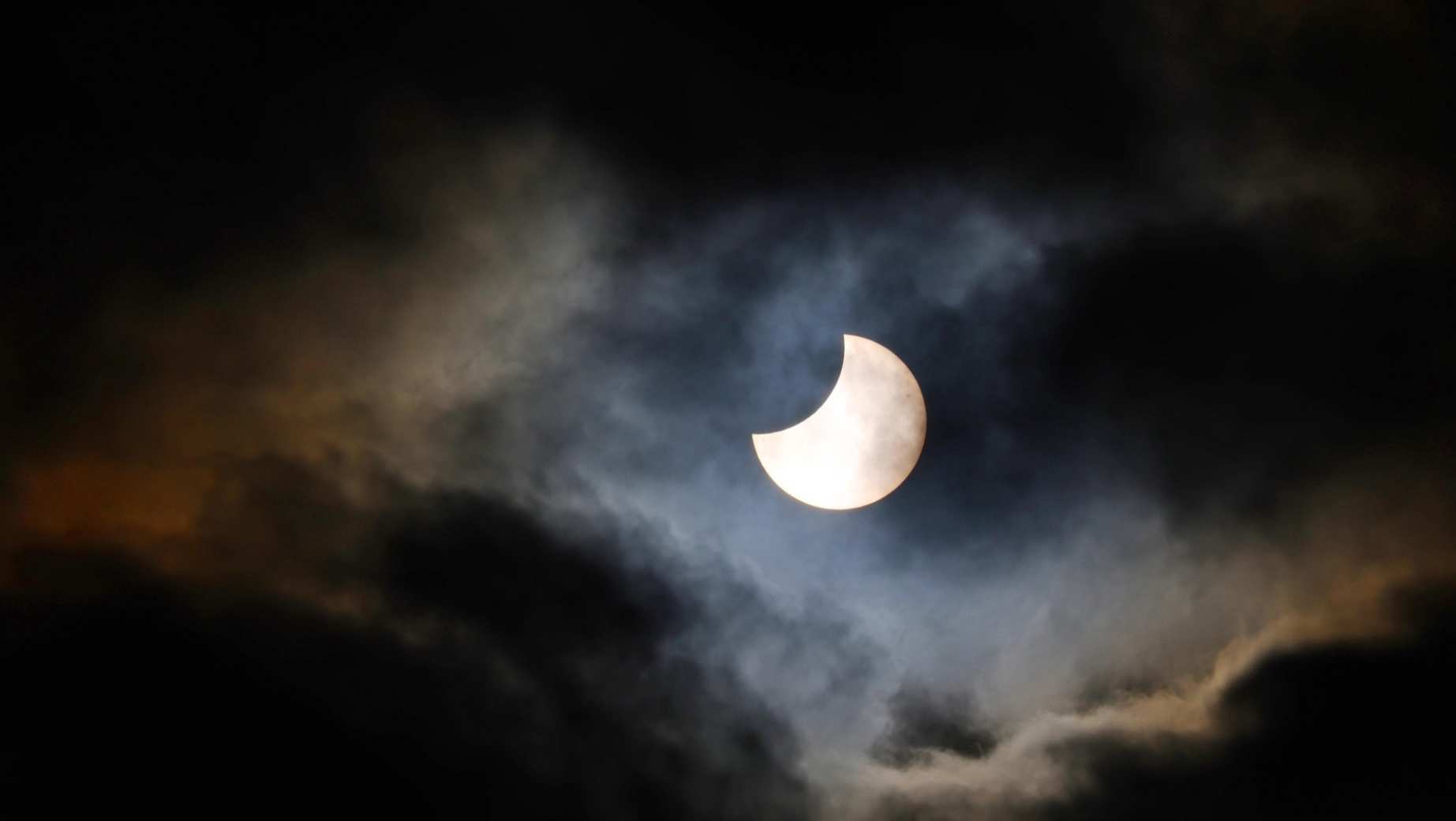

Skywatchers in the Czech Republic will have two reasons to look up on the night of August 12.
A partial solar eclipse will be visible in the evening, followed by favorable conditions for watching the annual Perseid meteor shower.
The eclipse will be visible across Czechia shortly before sunset, with the Sun low over the western and northwestern horizon. In Prague, the partial eclipse is expected to begin at about 7:19 p.m., reach its maximum at 8:12 p.m. and end around 8:27 p.m.

At the height of the eclipse, the Moon will cover about 86 percent of the Sun’s disk in Prague, making the event particularly noticeable if skies are clear.
The eclipse will look different depending on where observers are located. The farther east they are, the later the eclipse will begin and the less of it will be visible. In eastern Czechia and much of Slovakia, the maximum phase will take place after sunset, when the Sun is already below the horizon.
The event will be a partial eclipse in Central Europe, while a total solar eclipse will be visible in parts of Greenland, Iceland and Spain. Astronomers and eclipse enthusiasts are expected to travel to those areas to experience totality.
A solar eclipse occurs when the Moon passes between Earth and the Sun, blocking part or all of the Sun from view. In Czechia, the eclipse will be especially low on the horizon, so observers will need an unobstructed view toward the west and northwest.
Several Czech observatories are preparing public observing events. A list of locations and other information about the eclipse is available through the Czech astronomical website astro.cz.
The same night will also offer good conditions for watching the Perseids, one of the most prominent annual meteor showers.
The shower will reach its peak during the early hours of August 13, when the Moon will be only a few hours past its new-moon phase. With virtually no moonlight in the sky, faint meteors should be easier to spot.
The Perseids are active from July 17 through August 24, but the best opportunity this year will come during the night of August 12-13.
Under dark skies and favorable weather, observers away from cities could see between 50 and 80 meteors per hour.
Light pollution will be the main obstacle for anyone hoping to see large numbers of meteors. The best locations are well away from major cities, ideally several dozen kilometers from strong sources of artificial light.
Would you like your story featured here? Get in touch with our team at [email protected]




Already have an account? Log In