Sinatra Tribute Pairs Frank Sinatra Classics With 1930s Dining at Prague's Mánes
Partner article


Prague Morning
 Follow us on Google Discover


Housing and food prices in the Czech Republic are nearing Western European levels, while salaries continue to lag.
New data published by Eurostat highlight a growing imbalance in the Czech economy. While average price levels remain below those in much of Western Europe, some of the most important expenses facing households have nearly caught up with richer countries.
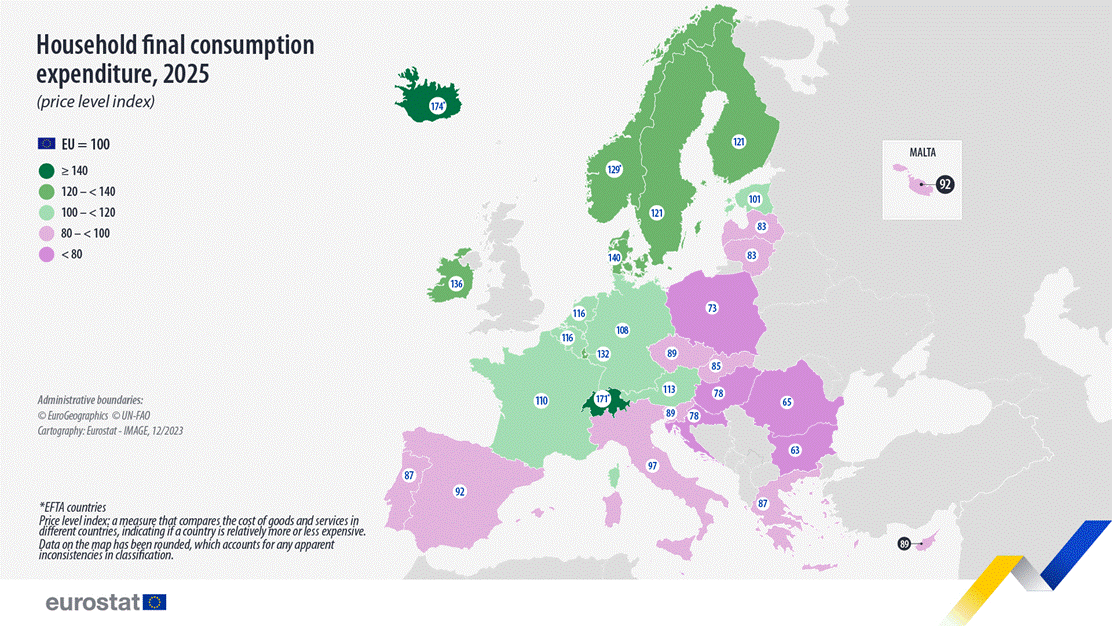
Overall, prices in the Czech Republic stand at 89.4 percent of the European Union average. That remains lower than Germany, where prices reach 108.3 percent of the EU average, and Austria at 113 percent. However, the broader figure masks substantial differences between sectors that directly affect everyday life.
Housing is the clearest example. The cost of housing, energy, and related household services in the Czech Republic has reached 107.1 percent of the EU average. Germany records 113.9 percent and Austria 113.4 percent, leaving only a relatively small gap between Czech households and those in Western Europe.
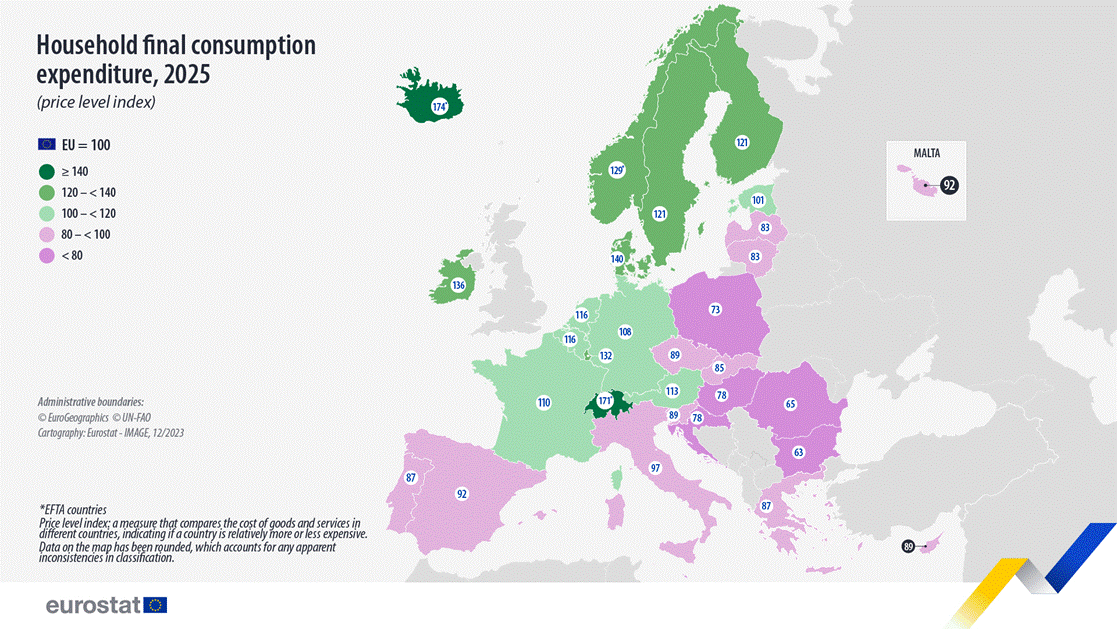
The contrast with neighboring countries to the east is striking. Housing-related costs amount to just 52.2 percent of the EU average in Poland and 80.4 percent in Slovakia. This means Czech residents now face housing expenses that are far closer to German levels than to those in many other Central European countries.
Food prices tell a similar story. Czech consumers pay prices equivalent to 89.8 percent of the EU average for food products. In Germany, the figure stands at 102.4 percent, while Austria reaches 109.5 percent. Although food remains somewhat cheaper in Czechia, the difference is considerably smaller than many consumers might expect.
The country is no longer consistently cheaper in categories traditionally associated with lower living costs in Central Europe. Prices for alcohol and tobacco have climbed to 92 percent of the EU average, exceeding levels recorded in Poland, Slovakia, and even Austria.
Not every category has followed the same trend. Services remain noticeably less expensive than in Western Europe. Restaurant and accommodation prices in the Czech Republic stand at 69.5 percent of the EU average, compared with 108.4 percent in Germany and 116.8 percent in Austria.
This discrepancy helps explain why many people feel their financial situation is worsening despite economic indicators that suggest otherwise. Households rarely judge living standards by average national price levels. Instead, they experience the cost of rent, mortgage payments, utilities, and grocery shopping on a daily basis.
Those are precisely the areas where Czech prices have risen closest to Western European levels.
According to Eurostat data, average hourly labor costs in the Czech Republic amount to €19.80. In Germany, employers pay an average of €45 per hour, while Austria reaches €46.30.
Czech employees also spend more time at work. The average workweek is 37.5 hours, compared with 33.9 hours in Germany and 34 hours in Austria. Over the course of a year, that difference translates into roughly an additional month of work.
The challenge facing the Czech economy is therefore not a lack of labor effort. Rather, it is the widening gap between wages and the rising cost of necessities. For many households, prices for housing, energy, and food have moved toward Western European levels far faster than Czech paychecks have.
Would you like your story featured here? Get in touch with our team at [email protected]





Already have an account? Log In