Sinatra Tribute Pairs Frank Sinatra Classics With 1930s Dining at Prague's Mánes
Partner article


Prague Morning
 Follow us on Google Discover
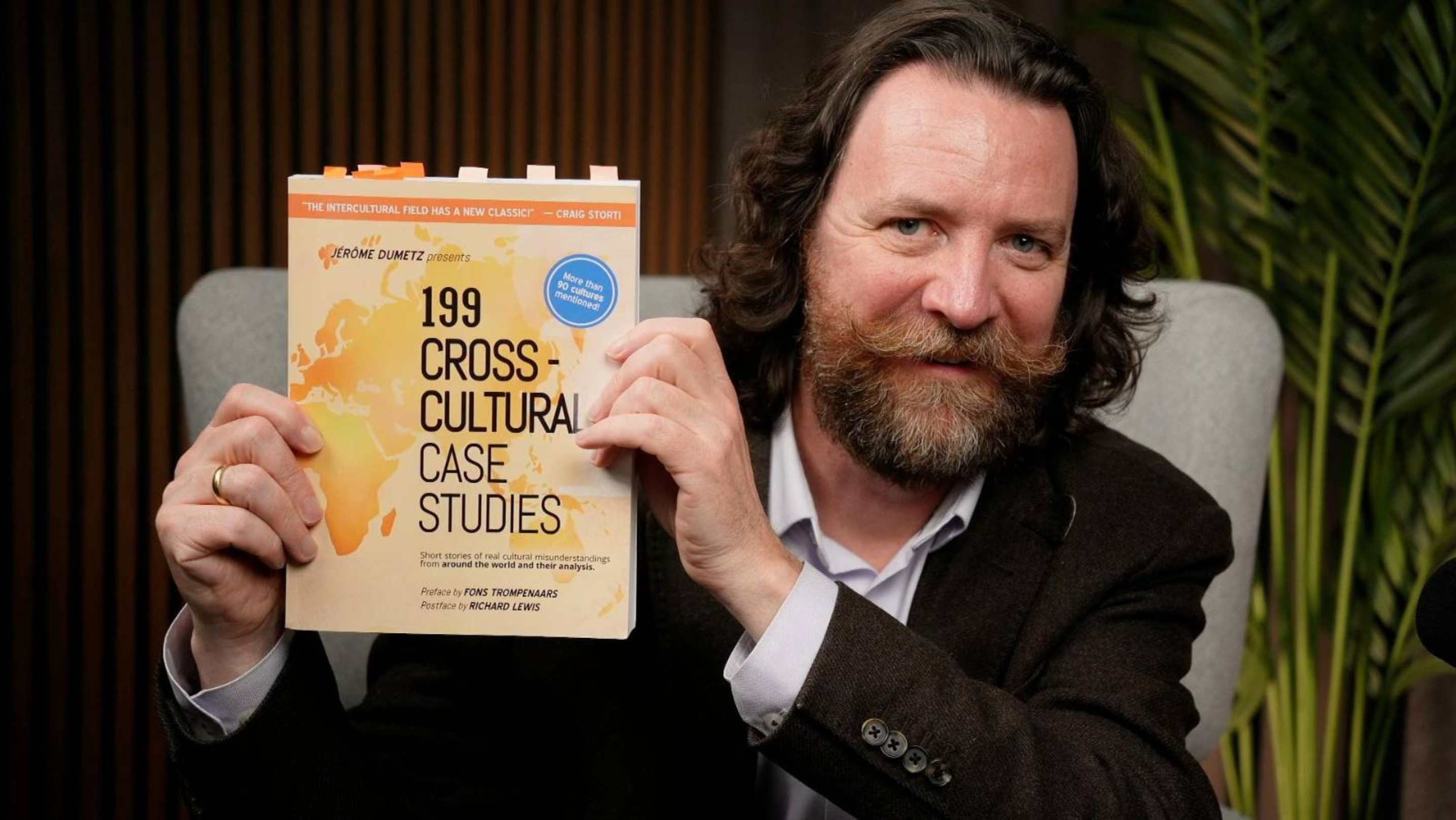

Jerome Dumetz, Vice-president for International Affairs at Unicorn University, has spent decades at the intersection of management and cross-cultural communication.
Teaching, consulting, and writing about why cultural differences still matter more than we assume. We sat down with him to talk about international education in Prague, what makes Czech culture distinctive, and why learning never really stops.
You’ve dedicated most of your career to cross-cultural communication. What drew you to this field?
It all started with my own background – studying and working across different countries, including humanitarian projects and plenty of travel for its own sake. After business school in France, I continued in the Netherlands, which is actually where many of the key authors in this field come from. I discovered it as a student, when it was still quite new, and it stuck with me. It sits at the crossroads of management and sociology, which I find endlessly interesting.
And why does it still matter today?
Because the world is not as international as we like to say. It is a bit of a cliché to say so. Regional and national cultures are still very strong. Just look at the top songs on Spotify per country – outside a handful of international stars, people mostly listen to local music. The Czech population listens to Czech singers, the French do the same, and so on. Even countries with a reputation for being international, like the Dutch or the Swedes, are largely streaming their own artists.
That said, international encounters are accelerating – through media, migration, travel, and of course the workplace. The difference now is that we don’t have the time we once did to observe, reflect, and adapt. Most people instinctively react to someone from another culture the same way they would within their own community. Sometimes that works. Often it doesn’t.
Prague is becoming increasingly international. What role do English-taught programmes play in that?
Prague is genuinely very international – I often surprise locals when I mention that roughly a third of the city’s population are foreigners. English-taught programmes naturally serve those who arrive for a shorter period and don’t yet have the Czech language skills.
But I’d push back on the idea that it’s only about foreigners. Many Czech students actively choose to study in English, either because it’s strategically useful for their careers or simply because it makes sense for their field. Our main programme is in IT, and studying that in English is a pretty logical choice. There’s also something appealing about the more diverse, mixed classroom that English programmes tend to attract. Without having to travel abroad to find it.
Teachers at Unicorn University come from very different backgrounds. Does that make a difference in practice?
Absolutely. The fact that our teachers have studied and worked in different countries means they approach education differently. Some rely heavily on case studies, others on testing, others on a more academic style. That variety of teaching styles is itself valuable.
And many of my colleagues have one foot in academia and one foot in the business world, which means the programmes stay calibrated to reality. It’s much easier to keep content relevant when part of your life is spent dealing with real projects and real clients.
In your new book 199 Cross-cultural case studies, you focus on real-life situations from international environments. What are the most common challenges people face when they come to work or study in the Czech Republic?
That could be its own interview! But a few things stand out. First is time. In the Czech business world, if a meeting is at 10AM, people are in the room and talking at 10:00 sharp. That’s not universal. In some cultures, arriving at 10:05 after stopping by the coffee machine is perfectly normal. It’s not rudeness, it’s just a different relationship with time.
Second, the way people communicate in public. In Czechia, we generally speak quietly. You see that in public transport or when you go to the opera. I regularly remind foreign students from louder environments to tone it down a little.
And third, there’s a strong tradition here of doing one thing at a time and following protocols carefully. That’s historically made the Czech Republic excellent at industry and complex, structured projects. The flip side is that sudden changes of priority or last-minute flexibility aren’t always welcomed. Stability is genuinely valued, which can clash with the international emphasis on constant growth and reinvention.
That said, my experience is that people adapt very well to the Czech environment. Prague tends to be a place where expats ask to extend their stay rather than count the days until they leave.
Why should someone choose to study in an international environment?
In a relatively short period of time, you absorb a concentration of different perspectives and opinions that would take years to gather otherwise. It doesn’t mean your own view is wrong – it means you start to see that everyone else has a perfectly coherent view of the world too, shaped by where they come from.
That kind of awareness helps you avoid the misunderstandings that are hardest to fix after the fact.
Whether you’re a foreign student or a Czech citizen, studying in English in Prague is very much possible – and we’d be glad to welcome you at Unicorn University.
Would you like your story featured here? Get in touch with our team at [email protected]




Already have an account? Log In