Sinatra Tribute Pairs Frank Sinatra Classics With 1930s Dining at Prague's Mánes
Partner article


Prague Morning
 Follow us on Google Discover
May 1 is widely known as Labor Day across much of Europe, but its origins go back to a tense industrial conflict in the United States in the late 19th century.
The date is tied to the struggle for an eight-hour working day and to events in Chicago that later became part of international labor history.
In 1886, a wave of strikes spread across the United States as workers demanded shorter working hours without wage cuts. On May 1, unions and anarchist groups called a nationwide strike. Around 300,000 workers took part. The central demand was an eight-hour workday, a standard that was not yet widely accepted.
Tensions escalated a few days later in Chicago. On May 3, clashes between workers and police led to deaths among demonstrators. The following day, during a rally at Haymarket Square, an explosion killed both police officers and civilians. The incident triggered arrests and a high-profile trial.
Several anarchist activists, including August Spies, Albert Parsons, Adolph Fischer, George Engel and Louis Lingg, were convicted. The trial has since been widely discussed for its lack of clear evidence linking all defendants directly to the bombing. Four were executed and one died by suicide while in custody.
The case became a long-standing symbol in debates about workers’ rights and political justice.
In 1889, the Second International, a federation of socialist and labor parties, declared May 1 as International Workers’ Day in memory of the Chicago events. The following year, the date was marked for the first time in the Czech lands, with a gathering on Střelecký Island in Prague. Contemporary accounts, including those of writer Jan Neruda, described the atmosphere as focused and organized, reflecting a growing labor movement.
The United States later moved its Labor Day to September, separating it from May 1, which remained more strongly associated with international labor movements in Europe and elsewhere.
In Czechoslovakia, May 1 became an official day of rest after 1919 and was declared a public holiday in 1925. Its meaning shifted over time, especially after the Second World War, when the day took on a highly organized political form.
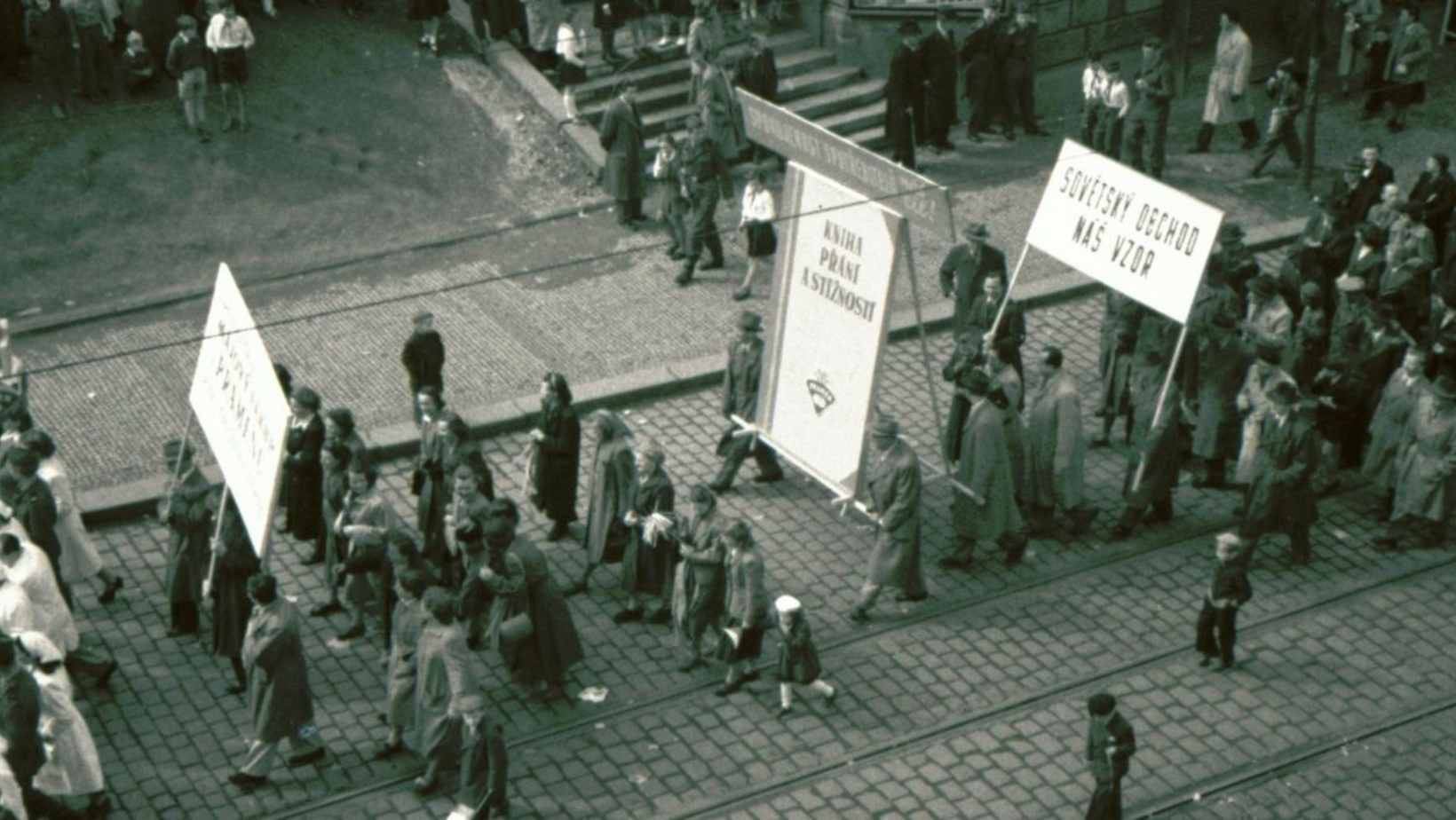
During the socialist period, cities were filled with mass parades involving workplaces, schools and state organizations. Participation was often expected rather than voluntary. Marches featured banners, floats and coordinated displays, ending with official speeches from political representatives. Attendance was frequently monitored in practice, even if not formally required.
Similar forms of pressure to take part in state-organized events were seen in other authoritarian systems. In Berlin in 1933, for example, participants in public demonstrations were reportedly checked against lists, according to contemporary accounts.
After 1989, the character of May 1 in the Czech Republic changed. Large state-organized parades disappeared, and the day lost its compulsory structure. It became primarily a public holiday and a day off work.
Today, May 1 in Czechia carries two parallel meanings. It still serves as a reminder of the historical struggle for labor rights, rooted in the Chicago events of 1886. At the same time, it is widely observed as the start of spring, traditionally associated with love and the custom of kissing under blooming trees.
Would you like your story featured here? Get in touch with our team at [email protected]





Already have an account? Log In