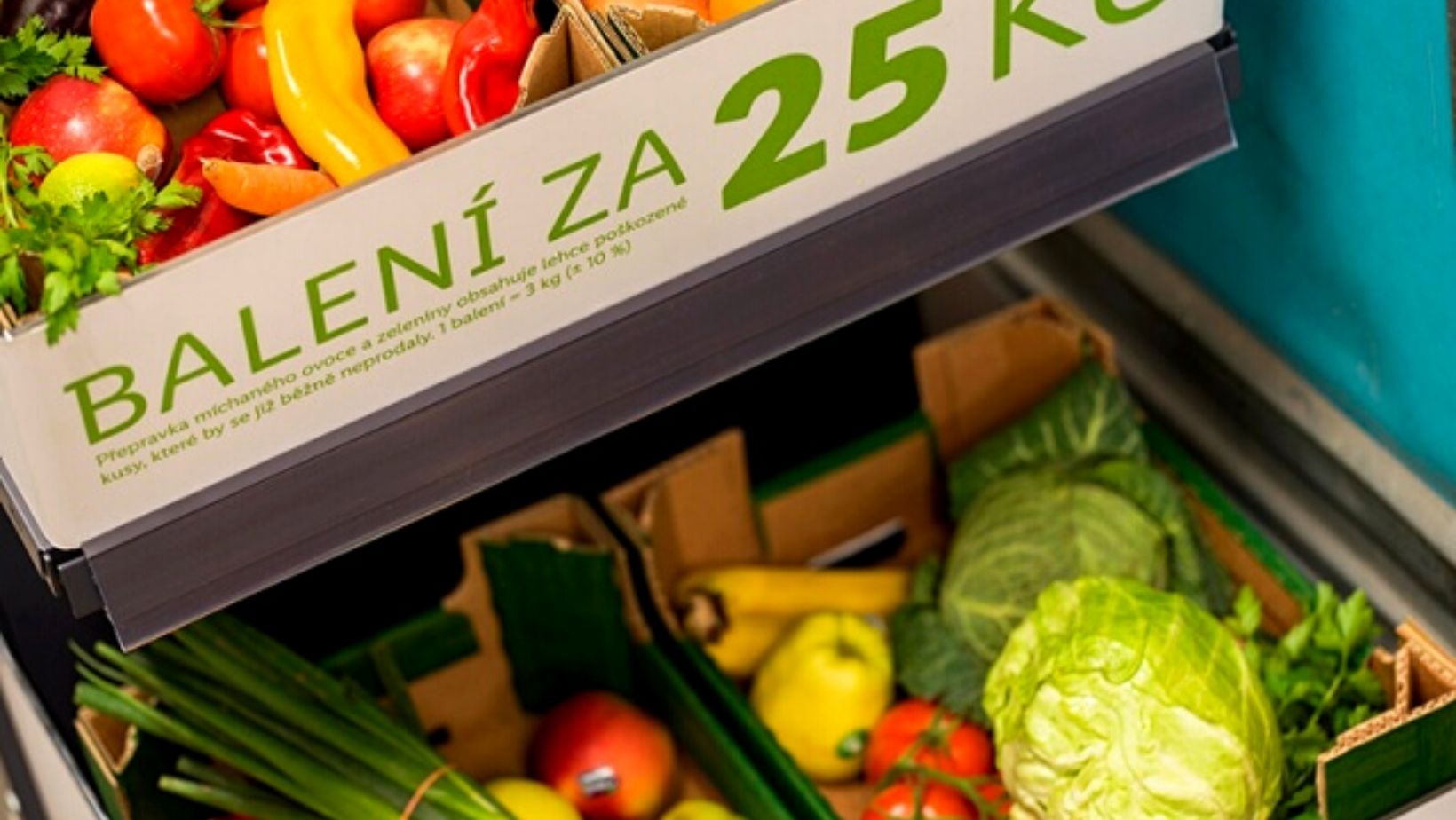
Lidl officially launched today its special vegetables and fruit boxes. It wanted to prove that unattractive produce is just as edible. These special boxes are put on the shelves every day, with various “ugly” – but still edible – vegetables and fruits. The weight of one box is about three kilograms. Vegetables and fruit have been selected from farmers’ crops because they are misshapen, have growth cracks or are smaller or larger than average. The produce is washed but the discount reflects the fact that customers may need to spend extra time peeling it or they might not be able to use the whole vegetable. “The positive feedback that we have received off the back of our trial has been incredible; from our colleagues who are showing so much passion for them, to our customers who were getting in touch from the get-go asking where they could get one,” Eliška Froschová Stehlíková, head of CSR projects at Lidl, commented. The average Czech throws away about 40 kilograms of food a year. People in housing estates waste the most food, while in rural areas, waste is less, which is related, among other things, to the fact that in these localities there...
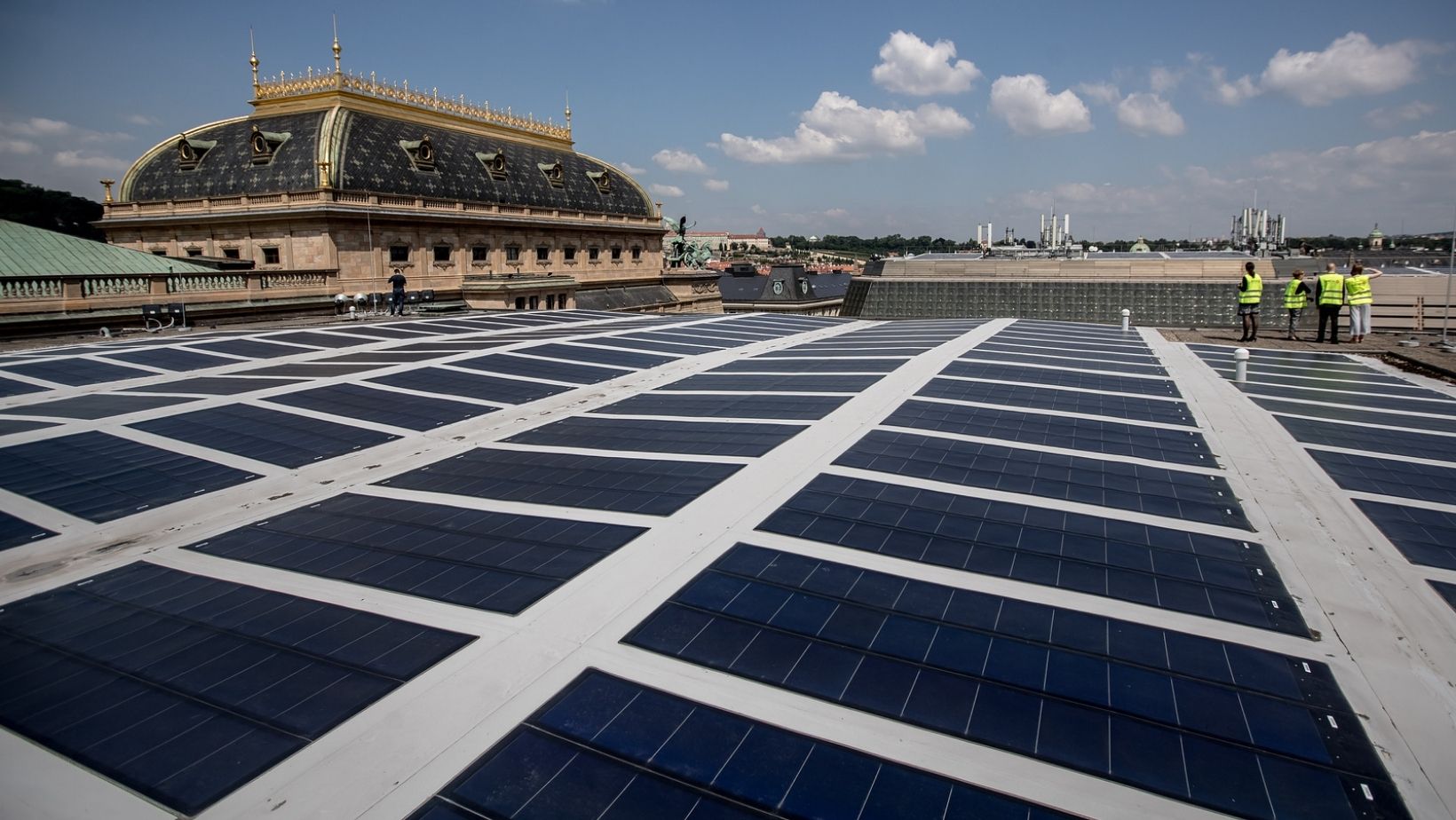
In a mission to fight the sharp rise in energy prices and strengthen Prague’s energy self-sufficiency, there are new plans in place for the municipality to help with the installation of solar panels and subsidies in the capital. According to the approved climate strategy, the city’s goal is to install panels on 20,000 Prague buildings by 2030 and gain hundreds of megawatts of power- which will be made possible through the introduction of new initiatives. Soon, a new city company called the Prague Renewable Energy Community (PSOE) will be offering a subsidy for the installation of a solar panel on their roof, and another city company – Technology of the Capital City of Prague (THMP) – will also help with the installation under advantageous conditions. Residents in Prague can start applying from 1 December. “In the case of private individuals, they will use the Green Savings grant program, and public organizations will then be able to use money from the newly established Modernization Fund,” explained the director of the newly established organization, Jaroslav Klusák. The Prague City Council has also announced the creation of a new organization for renewable energy already in its climate commitments, which should help significantly reduce...
The Czech Republic is one of the worst in Europe in terms of carbon dioxide emissions from new cars. With emissions of 120.9 grams per kilometer, it is the sixth-worst in the European Automobile Manufacturers Association (ACEA) ranking. Arval pointed this out. The main reason for this situation is the conservative approach of companies and people to alternative drives. In Europe, emissions from new cars fell by an average of 11 percent. The average is around 108.2 g / km. According to ACEA, Norway, Iceland and the Netherlands have the lowest emissions from new cars. At the other end of the scale are the countries of Eastern and Central Europe, the worst result being Bulgaria with 133 grams of carbon dioxide per kilometer. “Czech companies still mostly buy cars with internal combustion engines, although the situation is gradually changing and 22 percent of domestic companies already have vehicles with alternative drives in their fleets,” said Tomáš Kadeřábek, a consultant for Arval, which provides operating leases. The share of companies with electric vehicles in their fleet has increased significantly, compared to last year to eight percent. “However, if there is no significant tax advantage for cars with alternative drives, a greater...
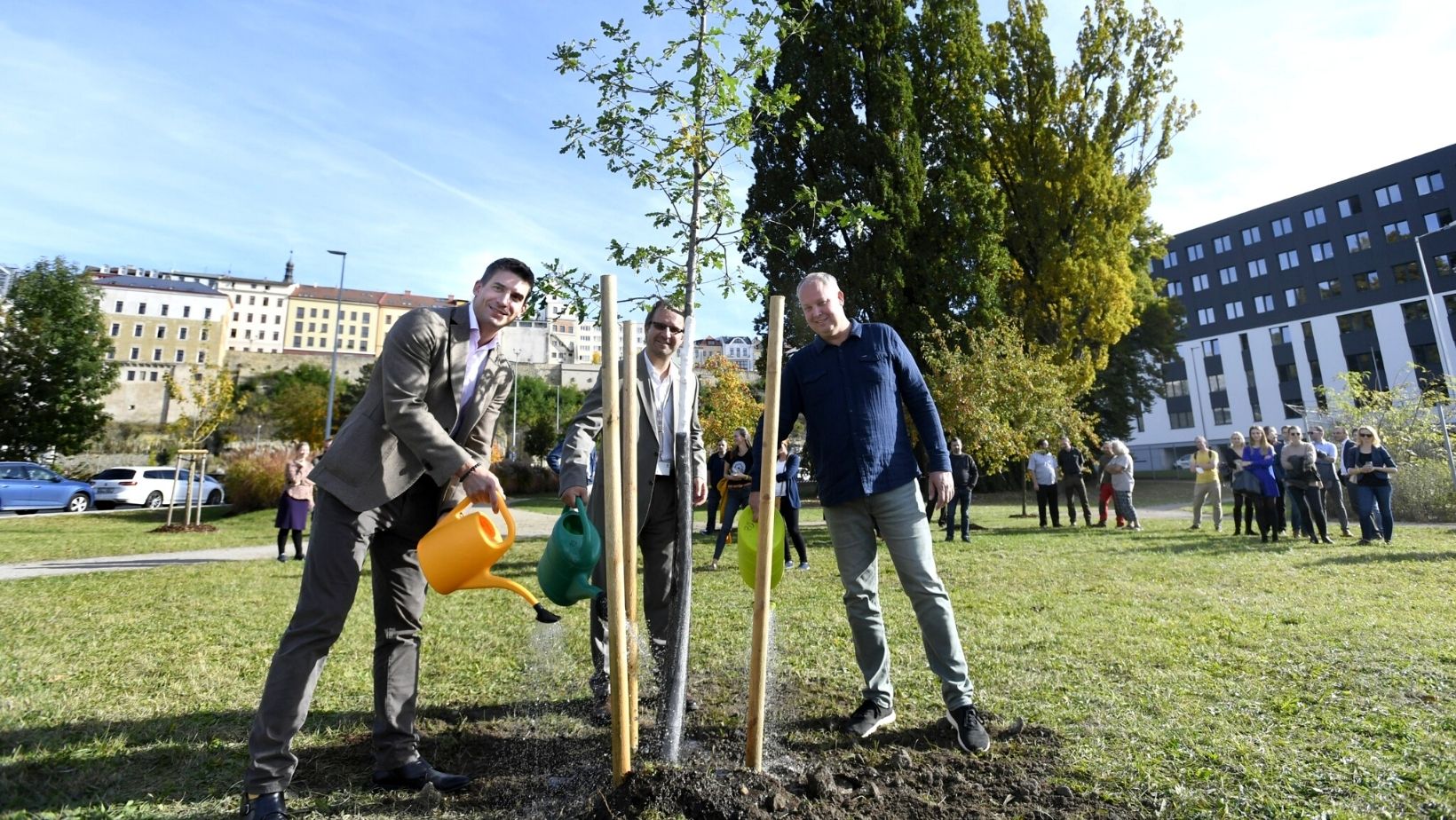
Skoda’s ‘One car, one tree’ initiative, which sees one sapling planted for every car delivered in the Czech Republic, has reached its one-millionth tree. Skoda Auto is planting its one-millionth tree as part of its ‘One car, one tree’ initiative launched in 2007, which plants a sapling for every vehicle delivered to a customer in the Czech Republic. Representatives of Skoda Auto, the city of Mlada Boleslav, as well as the partnership foundation Nadace partnerstvi were present when the millionth tree – an English oak – was planted in the Three Emperors Park in Mlada Boleslav. Over the coming days, further trees will be planted at the carmaker’s Czech sites: A Ginkgo biloba will be the initiative’s 1,000,001st tree, taking root in the Palace Garden in Vrchlabi, and horse chestnut will be the 1,000,002nd tree, to be planted in Solnice not far from the Kvasiny factory. By the end of this year, the number of trees planted across more than 170 locations amounts to 1,093,000. They cover an area the size of 347 football pitches, which is the same as 227 hectares of new forest. The project involves a total of 190 partners from all over the Czech Republic. Since 2016,...
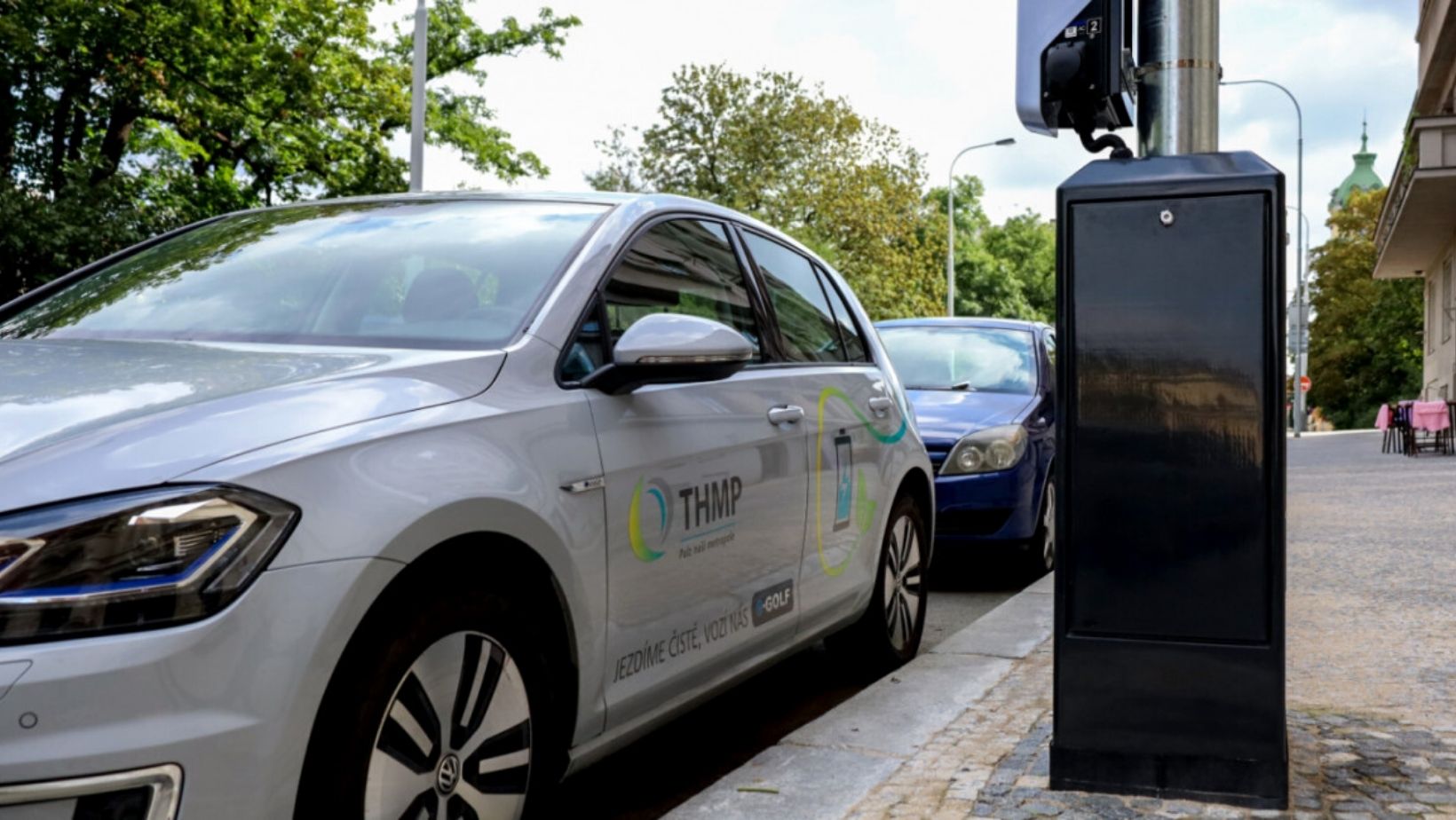
By 2025, there are plans for 3,000 charging points for electric cars to be created in the Czech Republic. According to the National Action Plan, net mobility also expects up to 500,000 fully electric vehicles to run in the country by 2030. The Deputy Minister of Industry, Eduard Muřický, said that the automotive industry is the basic pillar of industry and the economy in the Czech Republic, accounting for about one tenth of GDP and 20 percent of exports. “By 2030, 35,000 charging points should also be generated, especially fast ones,” he added. The new charging port plans follow from the Memorandum on Cooperation in the Development of Electromobility in the Czech Republic, signed by representatives of the Ministry of Transport, the Ministry of Industry and Trade, infrastructure managers, ČEZ and Škoda Auto. According to Škoda Auto, the charging stations are to be set up at railway stations and along the main roads and powered by carbon-neutral electricity from ČEZ to significantly accelerate the transition to electromobility. Among other things, decisions will be made based on data on the busiest road routes. The country is working on decarbonization and one of the possible ways to do this, and to support...
Representatives of the main political parties running in the forthcoming Czech parliamentary elections agreed the country needs nuclear energy in its future energy mix. Tomáš Ehler, Deputy Minister of Industry and Trade for Nuclear Power, stated the construction of a single new nuclear unit at Dukovany will not be sufficient to meet the Czech commitment to reduce greenhouse gas emissions, even if the share of renewables in the energy mix continues to grow after the decommissioning of the country’s coal-fired power stations. It will be necessary to build at least one more nuclear unit at Dukovany and two further units at Temelín, he said. However, the question is whether the government, which is the majority owner of ČEZ, will be able to assert its will and persuade the company’s board of directors to approve the preparation for these additional new nuclear units. Tomáš Pleskač, a member of ČEZ’s board of directors, said in the long-run ČEZ plans to commission only one new nuclear unit at Dukovany and to commission 6000 MW in solar plants to replace the output from the decommissioned coal-fired stations. The company will analyse the possible deployment of small modular reactors (SMRs) and, after they become commercially...
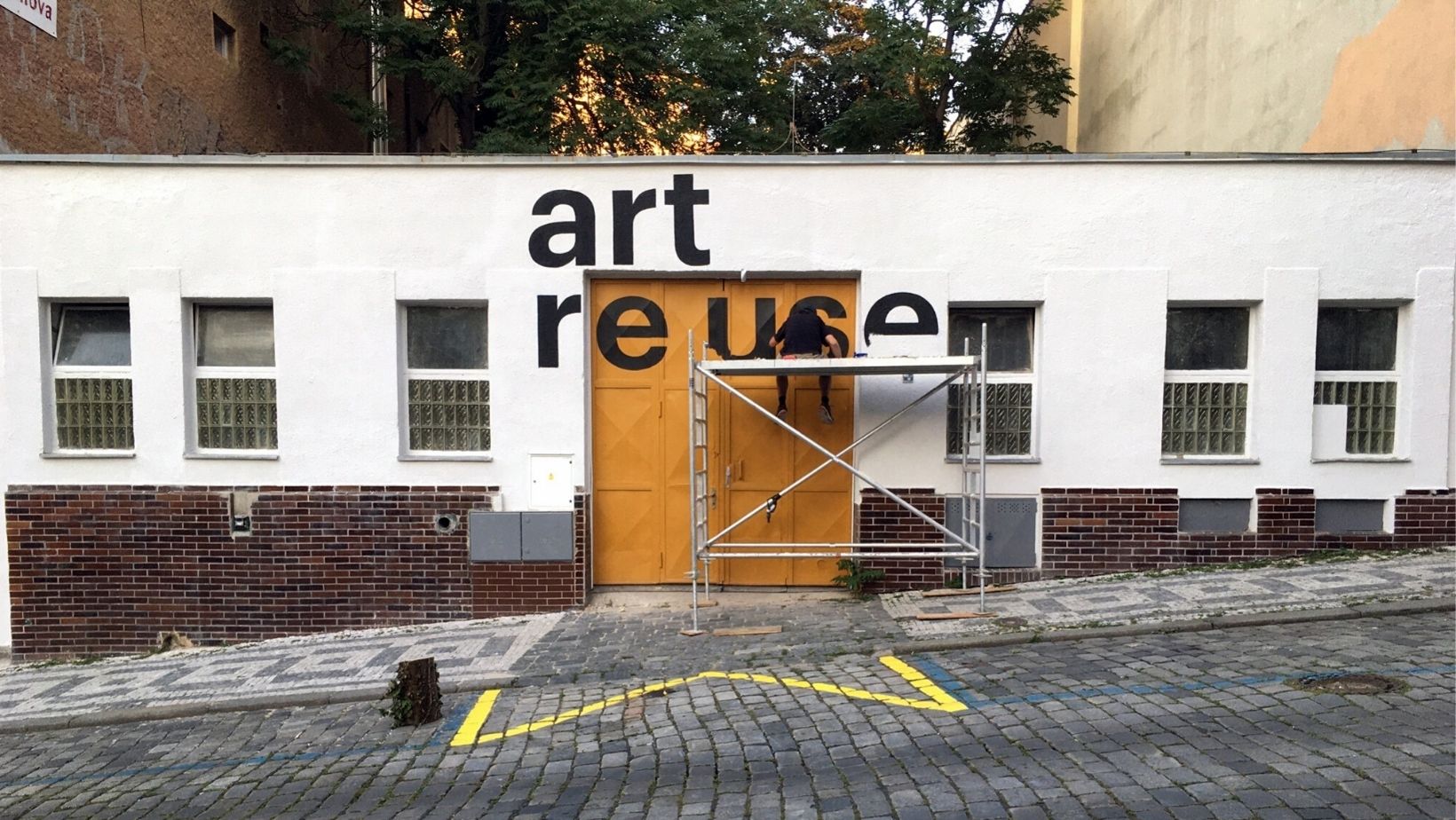
A warehouse of second-hand items material was opened in Žižkov which will have an ecological, environmental, and educational function. The non-profit project was created with the support of the city district of Prague 3 and the municipality. The Skutek association is behind the idea of creating art re use and the operator Jan Vincenec, the ArtMap association and the project coordinator, took care of the implementation. Art re use functions in the premises as a “bank” of art material, which offers artists, students, non-profit projects and galleries material and instrumental background for creation, including “know-how” support and inspiration. It will also help cultural institutions, companies, and art schools with a meaningful redistribution of used and currently unnecessary material, which they themselves can no longer store. The basic benefit is to concentrate the efforts of individuals and institutions striving for responsible access to raw materials. In the future, it will also offer workshops for the public and various educational activities focused on the topic of recycling. “There is a huge demand for objects and materials that the warehouse of art material mediates for transportation, which proves that such a project belongs in the capital,” said Hana Třeštíková, Prague City Councilor for...
The Czech Republic will demand major changes to the European Union’s plan to cut carbon emissions because the current proposal would damage its key automotive industry, Prime Minister Andrej Babis said. A proposed ban on combustion engines by 2035 is “nonsense” and the leaders of member states will have a difficult debate about the climate package, Babis said in an online debate with opposition leaders before elections next month. “I am convinced that it needs to be significantly changed,” Babis said. “It’s destroying car producers, and we are against this proposal. The next government will have to deal with it because we cannot dictate to people what kind of cars they should buy.” The proposal to ban combustion-engine cars next decade is part of the ambitious climate plan the EU rolled out in June to transform every corner of its economy. Now years of tough negotiations are expected before the bloc’s 27 members can turn the plan into reality. The fight over electric vehicles has become a worry for the country, where auto production makes up for more than a quarter of industrial output and employs almost 700,000 people directly and indirectly. The Czech Republic is home to Volkswagen Group’s...
With an enormous number of cars in Prague, experts worry about the impact it will have not only on transport but also on the climate and human health. With the issue of health and safety is at the forefront of public debate, experts are now looking for solutions to reduce emissions and improve the current unsatisfactory situation where it exceeds the limits. A new study by Atmosphere magazine warns that the number of emissions in Prague exceeds the limits recommended by the WHO and the European Union. Miroslav Šuta, a doctor and expert from the Center for the Environment and Health, told Czech Radio Plus that the measurements took place in various places in Prague, and he considers the surroundings of the Blanka tunnel or the busy V Holešovičkách Street to be the most problematic places in the city. For Dr. Radim Šrám, Chairman of the Commission for the Environment of the Academy of Sciences of the Czech Republic, the danger persists even with concentrations below the applicable European limits or below the WHO recommended values. He points out that analysis from Spain and Scandinavia show that even lower concentrations can affect the development of the nervous system in children....
The Czech Republic has joined a growing number of countries and manufacturers that oppose the EU Commission’s climate package. The Fit for 55 plan effectively bans the sale of combustion engine cars in Europe from 2035 – an unwelcomed move for some. Czech Prime Minister Andrej Babiš announced his opposition to Fit for 55 climate plan. “We will not agree to the sales ban on fossil fuel cars. We cannot implement here what green fanatics in the European Parliament have come up with,” Babiš rumbled. As reported, the Italian government also wants to soften the planned ban on internal combustion cars – in favour of domestic sports car manufacturers. On a larger scale than potential sales of Ferrari or Maserati, Renault is also rebelling against the EU plans. The French carmaker fears for the future of brands like Dacia, which aims to bank on hybrid technology for some time. According to the non-profit organization Ember, Czech plans for green energy are still one of the least ambitious in the EU. In 2030, coal could still account for at least a third of total electricity production. The current Czech government plans to add very limited wind and solar capacities and the country is expected to be well...
“Safe and Healthy with Sustainable Mobility” — this is the motto of this year’s mobility week, which begins on September 16 and ends with the International Car Free Day on Friday 22 September. In 2021, the European Mobility Week annual theme is ‘Safe and Healthy with Sustainable Mobility‘, in line with the wishes of local campaigners to contribute to mental and physical health and the overall well-being of residents. The aim is to encourage Prague’s residents to think more about what mode of transport to choose, to try something new and to change how they get around in the city for a week. During the event, Prague residents and visitors to the Czech capital can look forward to trying out historical trains, buses, and trams, visit the Museum of Public Transport, and avail of a free mobile bicycle service, which will take place in two different places every day. “I would like to invite all Praguers to the European Mobility Week, which is full of activities and an interesting program. This campaign has been organized with the aim of promoting environmentally-friendly forms of transport and thus contributing not only to a more pleasant environment in the city but also to the...
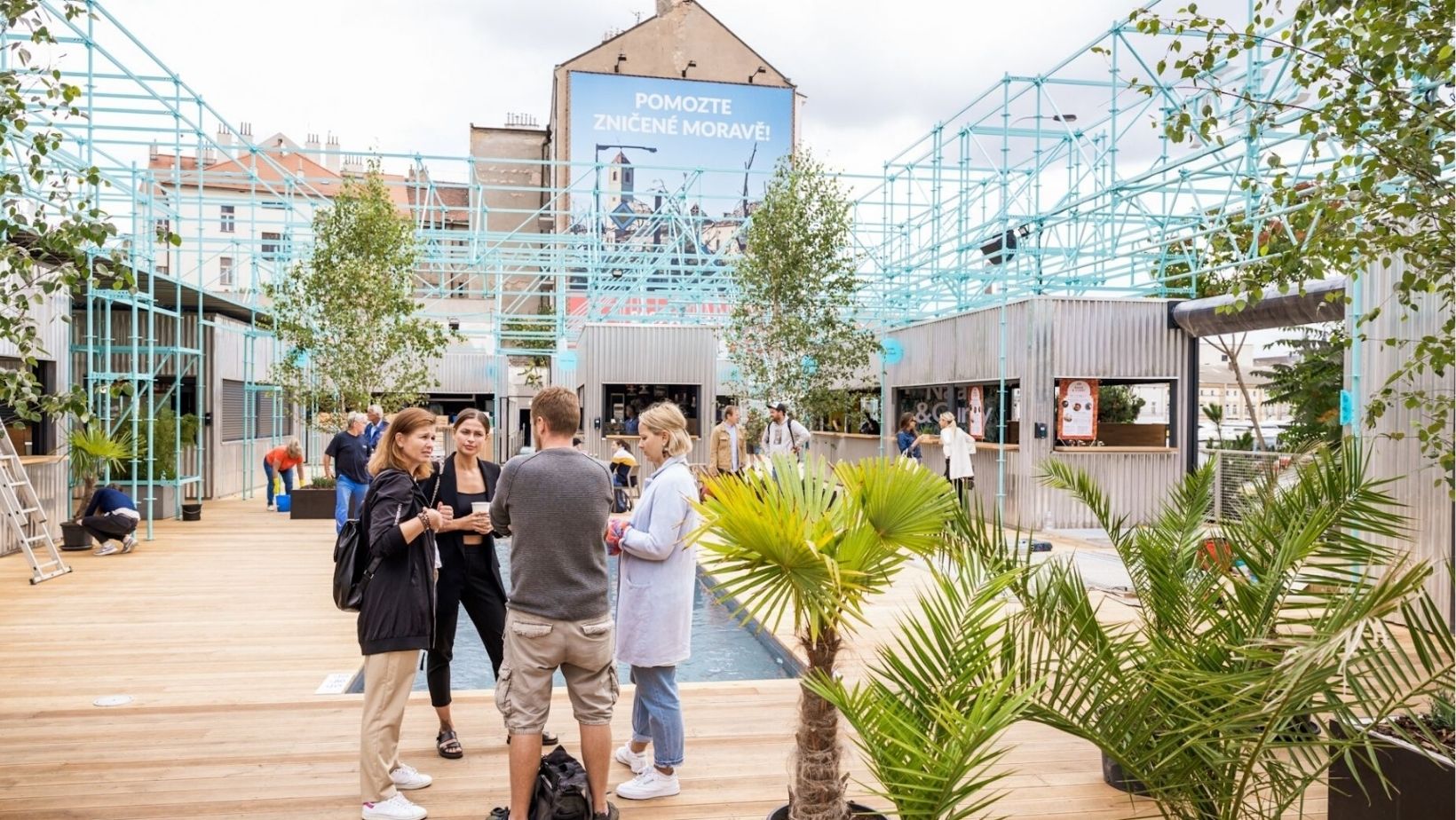
Manifesto is revamping the Sustainability Festival from September 10-12 to continue the momentum built from last year’s event at Smíchov. Manifesto Anděl’s 3-day Sustainability Festival will boast a rich array of twenty panelists, including leaders from Reknihy + Knihobot, Yord, GreeenTech, Noseno, Kokoza, who will discuss how visitors can integrate sustainability into their everyday lives. The festival will be moderated by eco-ambassador and NOSENE founder Katarína Hutyrová, who was recently featured in Forbes’ “30 under 30” ranking. The festival is free to attend and will provide diverse cultural experiences for visitors to enjoy; including yoga, a film screening, pop-ups, workshops, and DJs throughout the three-day event. “We are all constantly searching for new ways we can position our lifestyle towards more sustainability. Thus, we decided to bring some of the most inspiring examples from the Czech community across diverse disciplines and professions to inspire each other towards brighter, more sustainable ways of living and doing business,” said Šárka Tošnarová, Marketing Director, Manifesto. What to expect “Sustainability is the sum of our day-to-day decisions. Decisions made by brands, manufacturers, suppliers and consumers. It’s a collective responsibility.” – Katarína Hutyrová, Nosene. Visitors attending the Sustainability festival on Saturday 11th and Sunday 12th...
Don’t have an account? Register
[swpm_registration_form level=”6″]
Already have an account? Log In
How Would You Like to Promote Your Business? PR ArticleDisplay bannersVideo productionNewsletter adsJob ListingsInfluencer Marketing
Your Email
We will come back to you within 24 hours with our proporsal