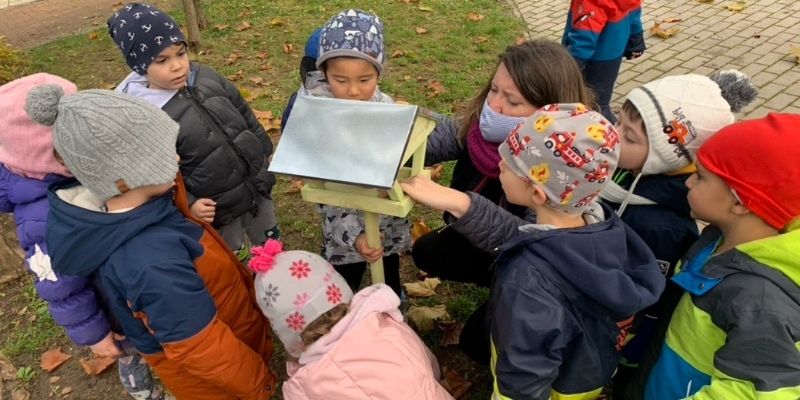
Article written by Dr. Cindy Gause-Vega, Elementary Principal at International School of Prague. Studies of early childhood education show that strong programs increase a child’s cognitive and social-emotional development, as well as nurturing rich language and numeracy skills. There are different types of early childhood programs based on different teaching philosophies. Many early childhood centers are primarily daycare programs in which children are well cared for and are engaged in free, unstructured play. Some early childhood programs follow well-known educational philosophies and educators are trained in the pedagogies of these approaches. Montessori, Waldorf, Reggio Emilia-inspired are the most well known. Montessori and Waldorf preschools are often accredited by official organizations. Reggio-inspired preschool programs are informed by the pedagogy and philosophy of the Reggio Emilia approach while also reflecting the cultural context of each location. Preschools are likely to focus on a particular philosophy in how they describe themselves in promotional materials and in school tours. While it’s important to know what the school’s educational philosophy is and whether this is a good fit for your child, it is also important to know that many preschool programs do not need any accreditation to use the names of those educational methods. Using...
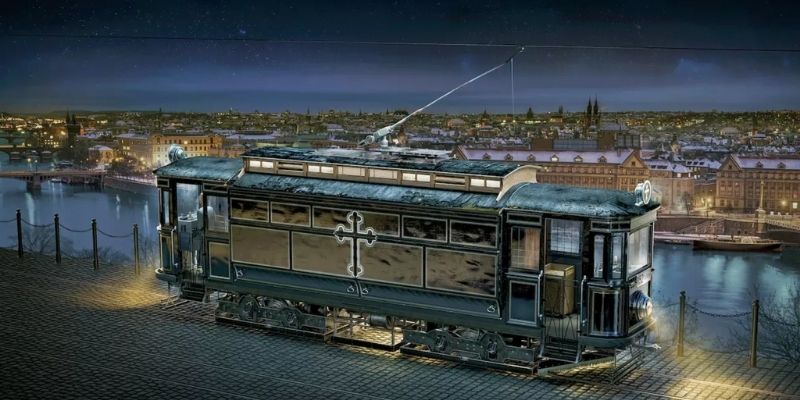
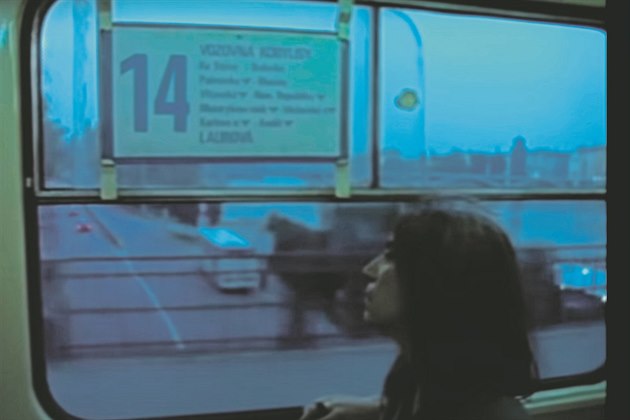
When distant suburban cemeteries had been built by the turn of the 20th century, Prague’s Electric Company, the local public transport operator, devised a plan to connect them with central residential areas using special “funeral trams”. Not only to carry coffins but also to host funeral rites during the journey to the cemetery – a truly futuristic notion combining the new electric current and old catholic faith, 19th-century ritual, and 20th-century efficiency. The proposed Kafka-esque tram consisted of two separate compartments, each for one ceremony: there was space for eight mourners, the coffin, funeral wreaths, and a separate coupé for the clergyman. Once World War I broke out, the plans have been put on hold. For the time being, ambulance tram-cars appeared in Prague to connect railway stations with nearby hospitals as soon as shell-shocked front-line soldiers started flowing into the ancient capital. But the city got its funeral tram after all: on October the 22nd at 3 pm, the first tram-car departed from the military hospital at Karlovo náměstí to carry two coffins of deceased soldiers to the infamous Olšany cemetery. The tram was designed to carry four coffins in two compartments accessible from the sidewalls of the vehicle,...
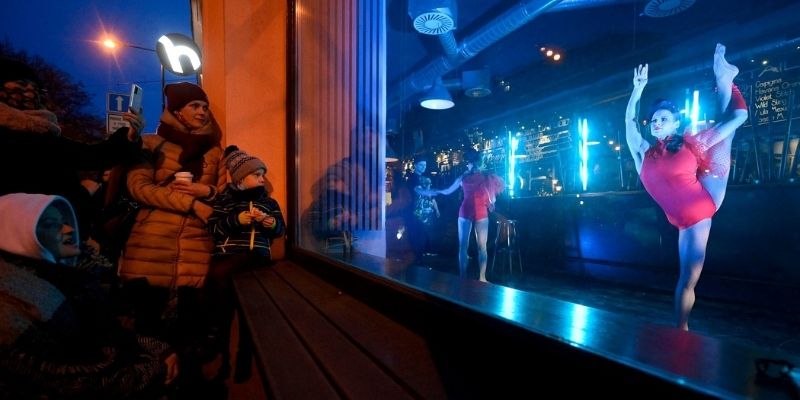
On January 21, artists of the Cirk La Putyka circus performed in front of the closed bar window, while the audience watched outside. The aim of the Cirk La Putyka events in Prague during Covid-19 pandemic is to get live art back to people during theatres-closed-time. From mid of October 2020, all theatres across the country have been closed to visitors due to measures adopted by the Czech government to counter a surge in new coronavirus.
Although theaters, cinemas, exhibitions, and music clubs are closed due to the spread of coronavirus, you can also come across culture in public. And we don’t just mean sculptures or historical buildings… KnihoBudka The KnihoBudka project was created in the summer of 2013. Its aim was to transform seven disused telephone booths into small free public libraries positioned in public spaces in Prague and its surrounding areas. The opening of the first KnihoBudka library took place on 9 January 2014 in the IKEM hospital in Prague. There are currently more than 40 official KnihoBudka libraries all over the Czech Republic and dozens of similar mini-libraries. KnihoBudka libraries are used for free loan or swapping of books. People who are interested can borrow a book of their choice, swap a book, or take one without needing to return it, or on the contrary, they can leave their own books for another reader. If they want, users can subsequently return the books they borrow to any KnihoBudka library. Individual businesses or organizations can adopt a KnihoBudka library so to speak, by financing the transformation of an old telephone booth into a functional KnihoBudka library, and thus create a new mini-library in their...
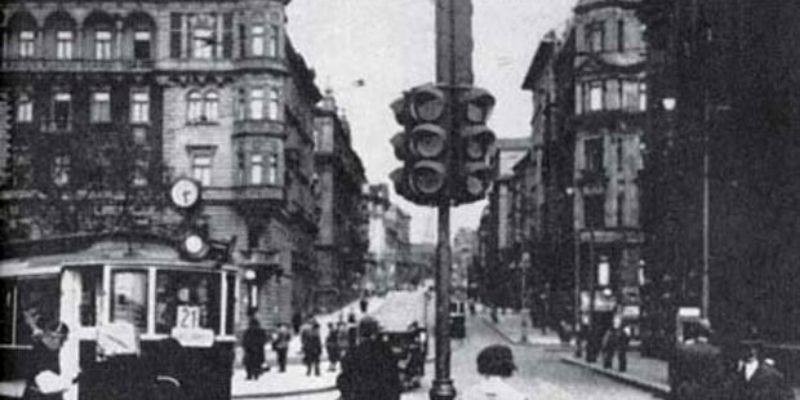
Some sources state that the very first traffic lights were first installed in Prague on the crossroads in the middle of Wenceslas Square between Vodičkova and Jindřišská Streets on the 21st January 1930. At that time, almost 19,000 cars passed through the junction at peak hours. The same sources state that the first light signalling facility in Prague was manufactured in ČKD Praha and was installed at the crossroads of Hybernská, Dlážděná and Havlíčkova streets by Masarykovo Railway Station as early as 1927. Traffic control in Prague The control of traffic on the busiest crossroads in Prague began on 2nd September 1919; in those days a policeman simply stood in the middle of the crossroads controlling traffic on Můstek and on the other four crossroads assisted with a cosh. He was using a ‘pendrek’ (baton) to direct traffic. Praguers were staring at him and found it all strange. They began calling him ‘pendrek’, and to this day, traffic guards are called that. Traffic lights were not to arrive on the scene until later on. Initially, a quadrilateral semaphore was hung in the center of the crossroads and used for cars coming in from all directions as well as for pedestrians....
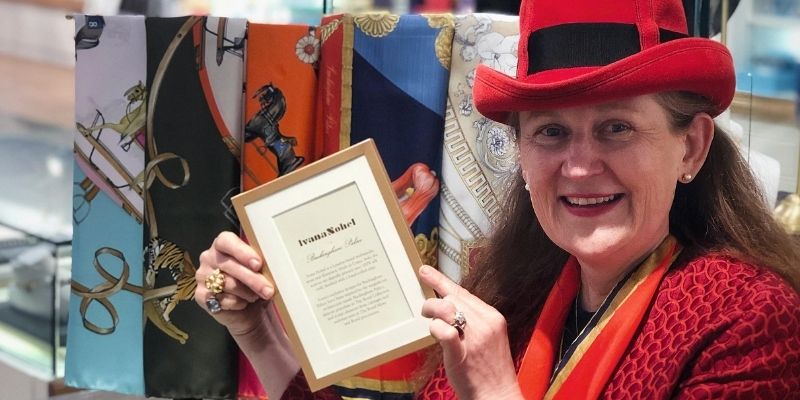
During the Soviet occupation of then Czechoslovakia, Ivana Nohel was seven-years-old when she and her family left Prague and emigrated overseas to settle in Canada. Years later, though relatively unknown in the Czech Republic, Nohel finds herself a well-established and successful designer whose creations can be found in Buckingham Palace. One of her most impressive career accolades is seeing her designs worn by Queen Elizabeth II. Some of the Queen’s frequently worn headscarves are pieces designed by the Czech-born Nohel. The Queen has been spotted sporting a silk headscarf that is olive green in color and depicts vintage-looking rocking horses. This is one of several Ivana Nohel Studio designs that can be bought on her website and in the Buckingham Palace souvenir shop. Before having her designs worn by British royalty, Nohel was instrumental in the production of Disney princess dolls like Cinderella. After working in toy design for companies like Hasbro, Nohel earned a job with the Walt Disney Company Europe division and became the head of the consumer products design team. During her time in the toy development department she would design different aspects of Disney princess dolls like dresses, purses, and all sorts of other accompanying accessories....
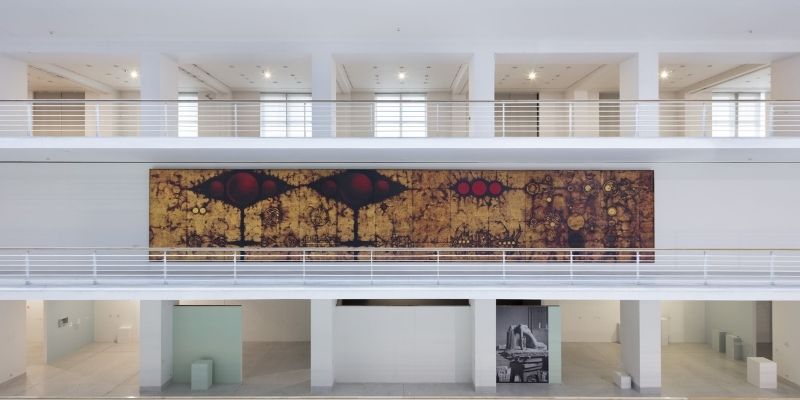
Written by Kristyna Jandova, in cooperation with Anglo American University The National Gallery of Prague should still be showcasing a retrospective of the modernist painter Mikuláš Medek, whose works were banned under Communism in the 1970s. The exhibition “Naked in the Thorns” opened in September with the most extensive showings of the artist’s works ever, and it is in three locations: the Waldstein Riding School, the Trade Fair Palace, and the Convent of St.Agnes of Bohemia. Unfortunately, due to Covid-19 restrictions, Czechs are again not allowed to see his most monumental artworks. The main exhibit in Waldstein Riding School highlights the artist’s personal development, which was strongly influenced by Cubism (Picasso), Surrealism (Salvador Dali and Joan Miro), and Abstract Expressionism, while personally impacted by the totalitarian regime that suppressed and restricted artists who were not Communist Party members. The exhibit also includes Surrealistic photographs by his wife Emilia Medková, and other notable Czech Surrealists such as Toyen, Libor Fara, and Karel Teige. Since Medek enjoyed a brief respite during the political liberalization of the 1960s, the exhibit seeks to celebrate his legacy as one of the country’s most prolific and important post-war artists who had his works banned after the...
As most residents and visitors can attest, Prague is a city brimming with old-world charm and fantastic imagery set against a gothic fairy-tale backdrop. The Czech capital has inspired many notable pieces of literature and continues to do so. What follows is a collection of literary works that attempt to capture the magic of a city that’s history is steeped in the occult, alchemy, and folklore. 1. The Metamorphosis 1915 by Franz Kafka Monuments honoring Fanz Kafka can be seen around Old Town Prague as well as an entire museum dedicated to the author. Kafka’s short story The Metamorphosis contains elements of the supernatural as traveling salesman Gregor Samsa wakes up one morning to discover himself morphed into a large insect or “monstrous vermin”. Both The Metamorphosis and The Trial are among his most famous stories which are both set in the city of Prague. 2. Melmoth 2018 by Sarah Perry Since the publication of Melmoth, Perry has emerged as one of the giants of the post-modern gothic genre. Melmoth portrays Prague’s gothic aesthetic while setting the backdrop for protagonist Helen Franklin who works in Prague as a translator. Helen soon learns about the legend of “Melmoth the Witness”, a...
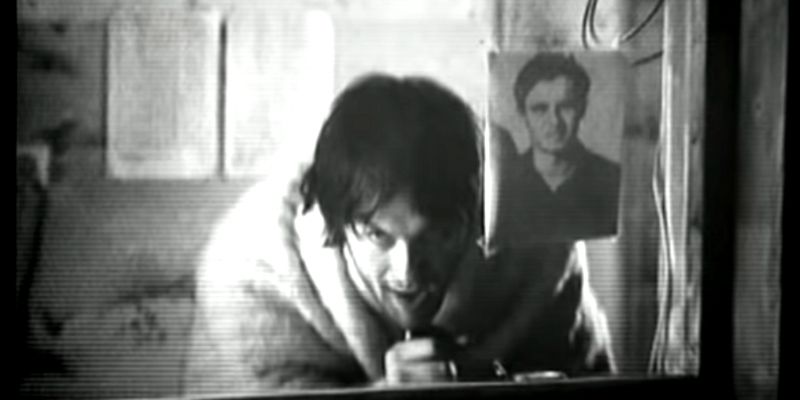
Club Foot is a song by English indie rock band Kasabian, featured on their 2004 debut album, Kasabian. It was released on 17 May 2004 in the UK. The video of this song, directed by W.I.Z, is dedicated to Czech student Jan Palach who in 1969 set himself on fire in protest against renewed Soviet suppression of Czechoslovakia. The video also refers to the Soviet government’s intervention in the Hungarian Revolution of 1956 on a banner showing the text in Hungarian (Szabad Európa Rádió) which translates as “Radio Free Europe/Radio Liberty”. In the scene where they are recording the radio broadcast, the camera lingers over a picture of Jan Palach. East-Central Europe has three symbolic dates when it comes to freedom: 1956 for Hungary, 1968 for Czechoslovakia and 1989 for the system changes to democracy as well as the Romanian Revolution. The scene with the inspector girl who stands before the tank harks back to the young man who stood in front of the line of tanks in 1989 in Tiananmen Square, which itself has become an icon for resistance. In the middle of the video, we can also see a picture of Nicolae Ceaușescu, Romania’s feared dictator who was overthrown and executed during the Romanian Revolution. The song...
Prague is undoubtedly a city with a very rich historical background. Simultaneously, it also has a wonderful and vibrant artistic and cultural scene. The city’s general attractiveness has been a magnet for many world-renowned artists and musicians to come flocking and to use the city’s spots and impressive facilities. Prague’s metros, club scenes, and diverse aesthetically-pleasing spots have been shot on video and utilized by many different household names over the past decades. Here are some noteworthy examples: Radiohead, the famous British rock-band hailing from the 1980s, used Prague’s metro announcement, in the opening of their song A Reminder, released in 1998. The song comes from their ‘EP Airbag/How Am I Driving?’, and was reportedly recorded from Jiřího z Poděbrad. Additionally, their main vocalist Thom Yorke, shot a short film partly in Prague, while riding an underground train. The film is available on Netflix, featuring three of Yorke’s songs from a new album named ANIMA, and was directed by Paul Thomas Anderson. On top of that, the wildly successful and iconic Rihanna, also shot two music videos in Prague. Her single Don’t Stop the Music was filmed in Radost Fx. On the other hand, her single Shut up...
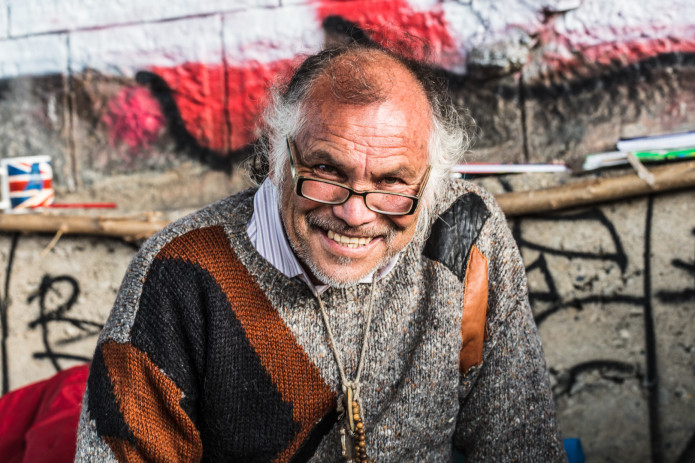
Homeless Migration is a documentary focused on the life of Carlos Davis Reséndiz and his friends living in Prague. Carlos is better known as “The Red Tiger of Sonora”. The documentary is directed by Carlos Casasola, a professional photographer from Mexico. Graduated from the Film and Television School of the Prague Academy of Performing Arts (FAMU), Casasola has developed his work as a documentary photographer and in 2019 he joined the photography department of the National Gallery of Prague. “The Red Tiger of Sonora” is a 58-year-old Mexican immigrant who lives under the Štvanice Bridge in Prague. More than 20 years ago, he traveled to Europe for the first time: from Paris, he traveled to Frankfurt and then to Prague, where he would live on the streets. “One day, I met Carlos Reséndiz (the Red Tiger) in a tram. For a migrant, it is like finding an oasis in the desert, when you meet someone who comes from the same place or speaks the same language,” said Martin, one of the guys behind the filming crew and in charge of Public Relations. “In this way “el Tigre Rojo” came into our lives and began to gather more with our group....
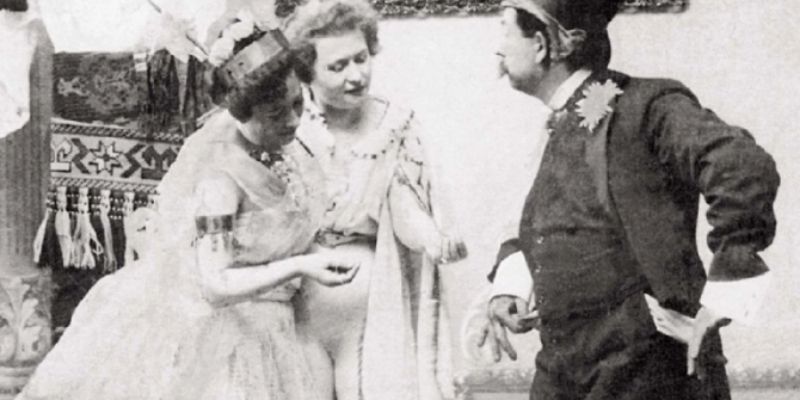
The 19th century marked the legalization of prostitution in Prague with specific laws intact. Brothels became a common entrepreneurship opportunity and prostitution was on the rise, mainly due to the higher number of students and soldiers. The anonymity and wealth of cities Prostitutes were referred to in distinctive ways, whether it be ladies of the evening, ladies of pleasure, or more demeaning variants. Each and every single prostitute had to keep a booklet documenting her health. Prostitution in the times of Josef II, around 1780, usually adhered to the countryside. However, with the forthcoming industrial age, more prostitutes began seeking a larger clientele, a stronger sense of anonymity, and further financial development in the comfort of bigger cities. The practice of the world’s oldest profession wasn’t always what these women set out to do, as it was usually women of lesser education or insufficient qualifications for employment who deemed it a last resort. Still, some girls managed to make more money working at a luxurious brothel than a professor would, teaching at a university. Prostitution was considered to belong to the streets of Prague. The same way celibacy was largely expected from brides prior to the wedding night, the sexual...
Don’t have an account? Register
[swpm_registration_form level=”6″]
Already have an account? Log In
How Would You Like to Promote Your Business? PR ArticleDisplay bannersVideo productionNewsletter adsJob ListingsInfluencer Marketing
Your Email
We will come back to you within 24 hours with our proporsal