Wren Kitchens have conducted research on 25 European countries, in order to discover the best and worst places to raise a family. Considering a variety of factors that affect the modern family in each country, the We Are Family Index takes into account: the maternity/paternity leave, the cost of living, property prices and the cost of childcare. Each of these factors has then been analyzed and combined to result in an overall ranking. Figures show that Greece, Slovakia, and the Czech Republic top the chart with affordable property prices, cost of living and childcare fees. Switzerland ranks in last place overall – with research showing it came bottom of the pile in terms of paternity leave, childcare fees and the cost of living. The United Kingdom doesn’t even make it into the Top 10 – ranked in 16th place, with some of the worst mortgages vs. income prices, and has also been ranked as the second most expensive country for childcare fees. In terms of paid maternity leave, Greece has the best offering – whereas Sweden and Portugal have fallen short, landing in places 24th and 25th. Author: red
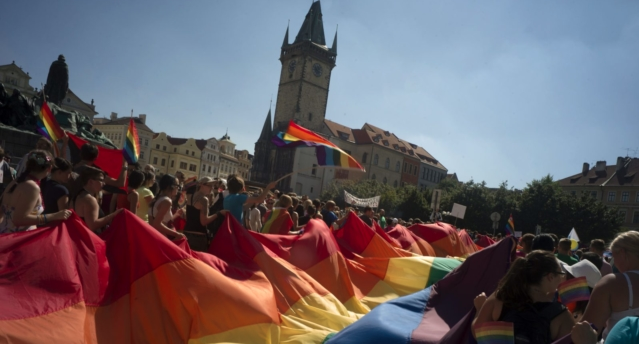
Roughly three-quarters of Czechs agree with the possibility to conclude marriage irrespective of sexual orientation and three-fifths are for the gay and lesbian couples adopting children from institutes, according to a poll conducted by the Median agency. The poll represents a shift from 2016 when support stood at 68 percent. Meanwhile, 61 percent believe same-sex couples should be able to adopt children, where just two years ago respondents had been evenly split. Same-sex couples are currently permitted to enter registered partnerships in the Czech Republic under a law passed in 2006, but gay couples are not afforded the full right of marriage. The country does not permit joint adoption by same-sex couples, although a 2016 court ruling struck down a ban on people in registered partnerships adopting as individuals. If marriage equality does pass in the Czech Republic, it would be the first post-Soviet country to embrace the measure. Author: red
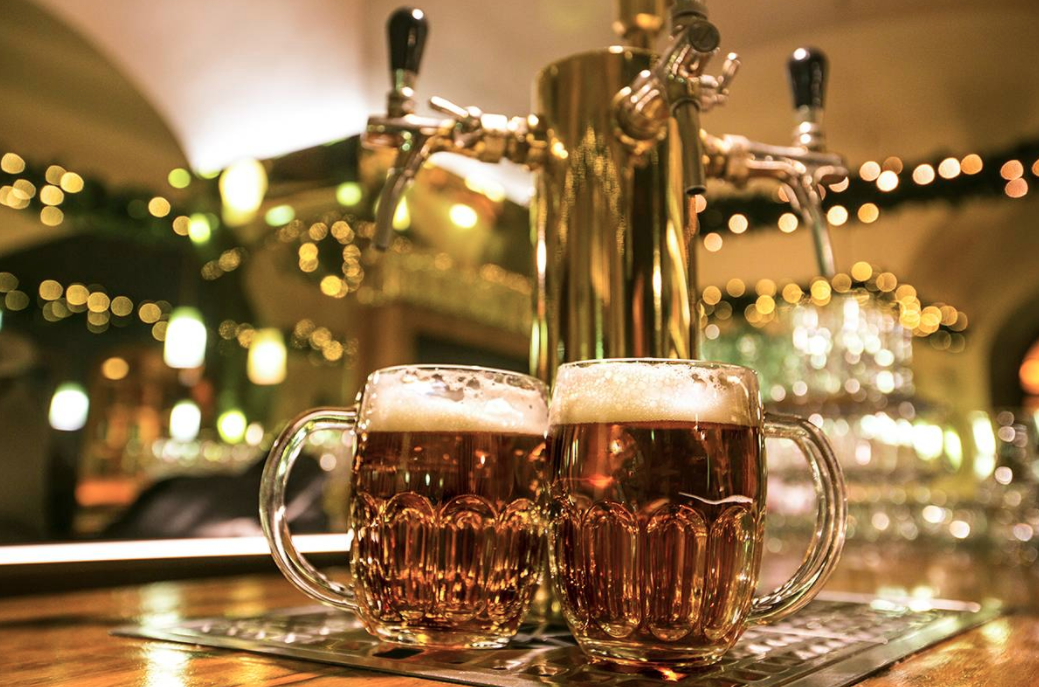
Czech beer consumption dropped by five liters per head to 138 liters per year. On the other hand, beer exports were up by 4.5 percent. In 2017, the Czech Republic produced 20.3 million hectolitres of beer, down 0.7% from the previous year. The statistic was published on Tuesday by the Czech Brewery and Malt Association (ČSPS). Exports of beer in 2017 totaled 4.6 million hectoliters, an increase of 4.5 percent year-on-year. The biggest markets were Slovakia, Germany, Poland, Russia, South Korea and the United States. “From our point of view, the year was not entirely successful, mainly because of poor results in the domestic market, excessive regulation and bureaucracy,” ČSPS chairman František Šámal said. According to him, the drop was caused by lower demand on the domestic market which the Czech Association of Malt Houses and Beer Brewers ascribes to the smoking ban in pubs and restaurants that went into effect in May of 2017. For the first time in history, sales of 11 degree and 12 degree have overtaken sales of over lower quality beers. Degrees refer to a beer’s density due to malt sugar content before brewing. This affects the alcohol content as well as the flavor and body of the beer. Import of foreign beer...
Temperatures in the Czech Republic next week should remain above average for this time of year. According to Czech Hydro-Meteorological Institute, we can expect temperatures to reach up to 25 degrees Celsius in the second half of next week. Temperatures will return to the long-term average of 18 to 21 degrees Celsius in the next three-week period. Monday will be sunny. The temperature will hit 18°C during the day and around 10°C at night. Tuesday will be partly cloudy to cloudy with a chance of rain in the afternoon. The temperature during the day will be around 22°C, 8-10°C at night. Wednesday will be partly cloudy. The temperature during the day will reach 21°C, 6-8°C at night. Thursday will be sunny, with occasional showers and storms. Temperatures will rise to 21-23°C, 9-10 at night. Friday’s weather will be partly cloudy. The temperature will hit 23-25°C during the day and 9-10°C during the night. Saturday will be partly cloudy to cloudy. The temperature during the day will be 23-25°C, 9-10°C at night. Author: red
Oscar-winning Czech-born film director Miloš Forman, known for One Flew Over The Cuckoo’s Nest and Amadeus, has died aged 86. His third wife Martina confirmed the sad news to Czech news agency CTK. “His departure was calm and he was surrounded the whole time by his family and his closest friends,” she said, adding that he died in the US after a short illness. Born in the town of Čáslav east of Prague on February 18, 1932, Forman lost both parents in Nazi concentration camps. In the 1960s, he joined the New Wave of filmmakers standing up against the Communist regime in former Czechoslovakia, making himself famous with Black Peter, Loves Of A Blonde and The Firemen’s Ball. Some of his best-known films are considered modern classics, including his adaptation of the rock musical Hair in 1979, and the Oscar-nominated The People vs Larry Flint in 1996. But it was his film about a psychiatric institution, One Flew Over the Cuckoo’s Nest, and his biopic of composer Mozart that cemented his legendary director status, as both films won 13 Oscars between them – including both of the Best Director gongs. One Flew Over the Cuckoo’s Nest (1975), adapted from Ken Kesey’s 1962 novel, dealt with life inside an...
A recent survey of 16- to 29-year-olds found the Czech Republic is the least religious country in Europe, with 91% of that age group saying they have no religious affiliation. Between 70% and 80% of young adults in Estonia, Sweden and the Netherlands also categorize themselves as non-religious. The most religious country is Poland, where 17% of young adults define themselves as non-religious, followed by Lithuania with 25%. In the Czech Republic, 70% said they never went to church or any other place of worship, and 80% said they never pray. In the UK, France, Belgium, Spain and the Netherlands, between 56% and 60% said they never go to church, and between 63% and 66% said they never pray. The figures are published in a report, Europe’s Young Adults and Religion, by Stephen Bullivant, a professor of theology and the sociology of religion at St Mary’s University in London. They are based on data from the European social survey 2014-16. “The new default setting is ‘no religion’, and the few who are religious see themselves as swimming against the tide. In 20 or 30 years’ time, mainstream churches will be smaller, but the few people left will be highly committed,” he said. Author:...
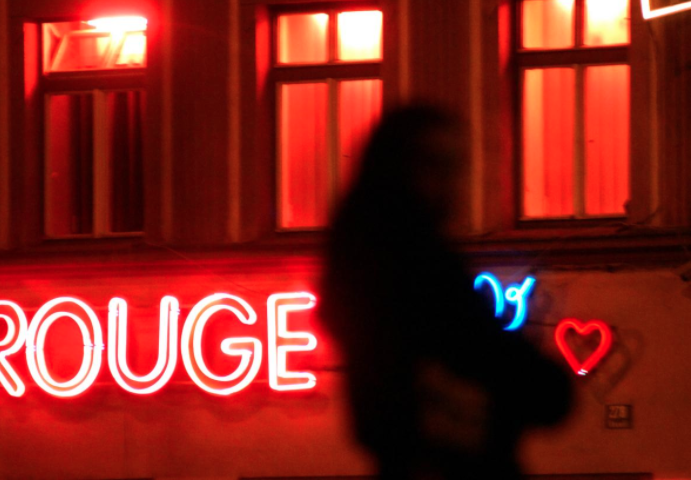
According to statistics from Rozkoš, 60% of prostitutes in the Czech Republic are mothers. Most of these women are single-parents. There is an estimated 10,000-13,000 prostitutes in the Czech Republic. The research, which was conducted over a number of years also showed that the number of prostitutes with two or more children increases year-on-year. During an interview, a mother of two children, over 40, spoke about how both children attend school. She also explained how she got into this line of work, beginning with the children’s father, who allegedly never cared about them. She says she worked several low paying jobs to try to pay the bills and look after her family but realizing it would not be enough she became desperate. “I was forced to take a loan and take on debt, just to survive,” she says, adding, “I’m now working at a nightclub, there are about 10 women. The average age, I would say, is about 30 years old, and they are more or less self-sufficient with young children.” “Before that, I worked at the factory and made just 12,000 gross per month. And now I’m able to earn this in a week. In addition, it is very...
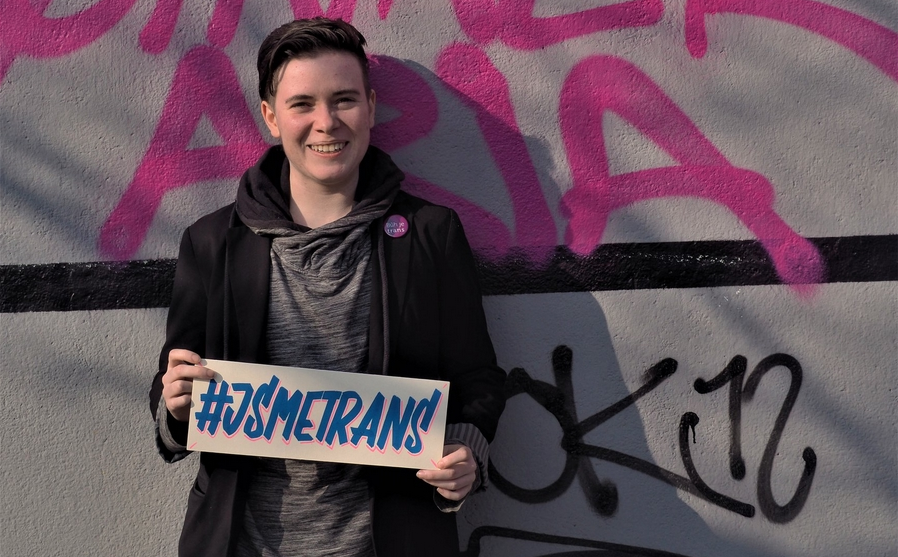
“The world would be much easier if parents listened to their (not only) trans children,” one of the Czech trans people writes to their picture, proudly showing their faces during the The International Transgender Day of Visibility, where trans people around the world share their photos and stories on social networks this day. They are trying to show that they exist and that they are the people we commonly meet on the street, we just might not know. They also show their faces in the Czech Republic under the hashtags #jsemtrans and #jsmetrans. They attached personal comments and messages to other members of the community and the public to pictures or short videos. “Last year I changed my name! I’m no longer in front of the authorities! “, Writes one of the campaign participants. “Never give up, we are exceptional people,” adds more encouragingly. The International Transgender Day of Visibility was born in 2009 as a holiday celebrating transgender identity, as well as a counterweight to the November Transgender Day of Remembrance. “Thanks to day visibility, we can show the world that we want to be seen and that we are not shy about our trans identity. It is often very...
What happened to Miro? He was a brave reporter in Slovakia dealing with energy: had he discovered something big? Is his disappearance linked to the killing of Kuciak and his girlfriend? The same press officers who, in 2005, had managed for the Slovak government the damage of image that the splatter movie, “Hostel”, had caused the small central European country, are now desperately intent on resizing the wave of revelations that risks unearthing hidden truths; not only on the murder of the Slovak journalist Ján Kuciak and his girlfriend Martina Kušnírova, but also on the disappearance of another young journalist of whom nothing is known since 2015: Miroslav Pejko. Thanks to the unsustainable pressure of the public opinion of the country, shocked by the execution of the two young people and disgusted by the revelations of possible connections between Prime Minister Robert Fico and the Calabrian entrepreneur Nino Vadalà, the Ministry of the Interior reopened the investigation concerning the disappearance of Miroslav Pejko, another very young colleague who vanished three years ago. Miro was working for the economic daily Hospodarske Noviny for whom he wrote mostly articles related to the energy sector. The parents describe him as an ambitious boy, the...
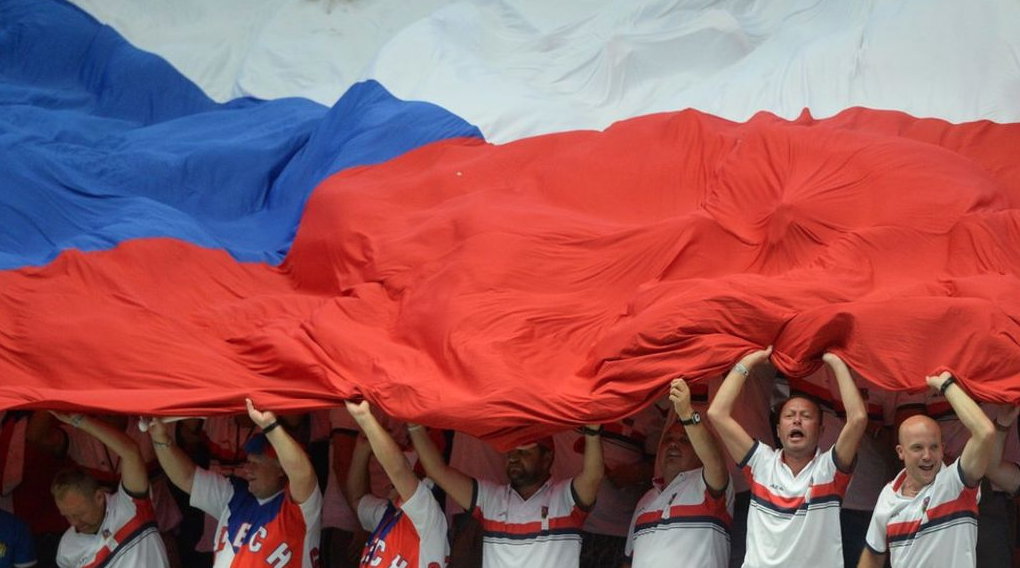
The Czech Republic’s Olympic Committee has suggested an overhaul of the country’s national anthem to mark the 100th anniversary of the founding of Czechoslovakia. They have commissioned several new arrangements of the anthem, including a vocals-free version specifically for sporting events. Kde domov můj (Where is my home), was adopted as Czechoslovakia’s anthem in 1918, with one verse in Czech, followed by a second verse with a different melody in Slovak. According to the initiators, the Czech national anthem, which was composed by František Škroup in 1834, should sound more dignified and patriotic. The new arrangement re-instates a largely forgotten Czech-language second verse by original lyricist Josef Kajetán Tyl, and features a more complex orchestral style to that of composer František Škroup’s original. Author: red
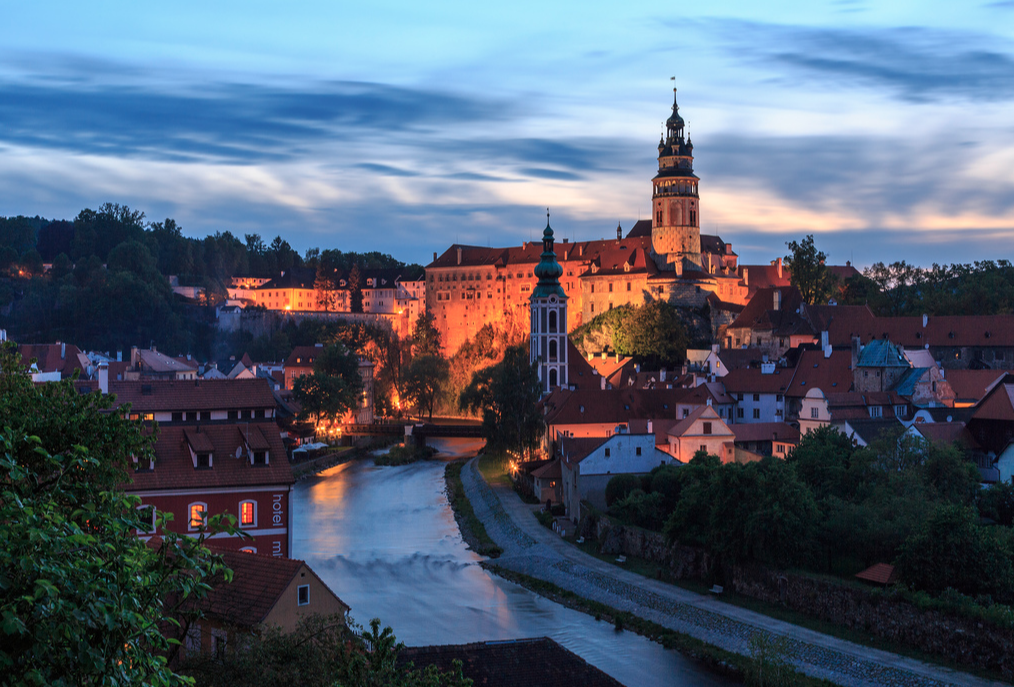
A Czech artist is hiring families to spend the summer in one of the country’s busiest tourist destinations as part of a new project exploring displacement and the changing face of mass tourism. Český Krumlov is one of the Czech Republic’s most visited destinations: with 13,000 inhabitants – this city is visited by around two million tourists every year. Brno-based artist Kateřina Šedá is searching for “normal people” to spend three months living rent-free in the centre of Český Krumlov. Participants will be paid to carry out their everyday activities in the historic city centre, which has seen many residents forced out to the suburbs amid growing waves of visitors. “I will offer residents starter apartments, which are usually provided to young families and the socially excluded. I’m also offering them jobs on the basis of what Krumlov most needs – and that is the pursuit of normal life. They will do this in the centre during the high tourist season and we’ll pay them for it,” said the artist. Šedá says that the project — titled UNES-CO — doesn’t criticise the tourism industry, but seeks solutions to calm tensions between locals and visitors by inviting tourists to pause and experience the town like a native. The application, in Czech, is here Author:...
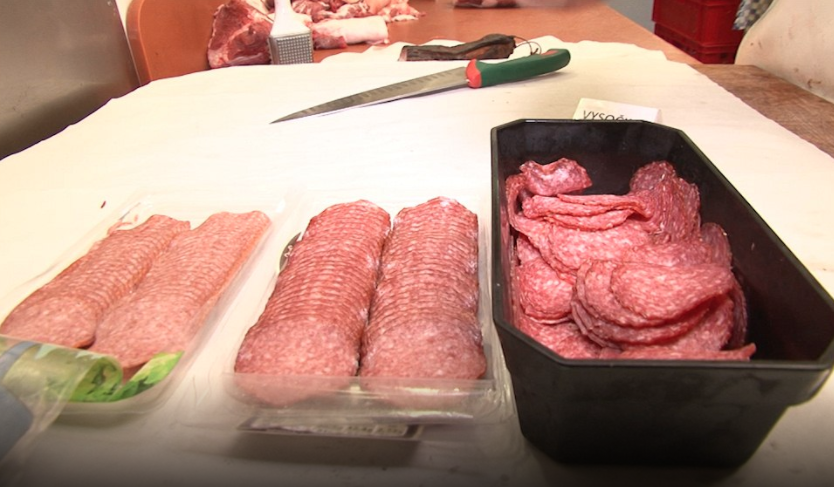
Meat products such as ham sausages, canned foods, sausages are comprised mainly of meat substitutes in the Czech Republic. One-fifth of the products received an inadequate mark. “We tested a total of 88 samples, 21 of them scrawled. The reasons for the lack of stamps were in all cases the same – non-compliance with the declared values, ie deceiving customers with untrue data on the packaging, and failure to meet the requirements of valid legislation,” said Hana Hoffmann, editor-in-chief of dTest. The consumer usually consumes less meat than he thinks or a substitute in the Czech Republic. The actual meat content tends to be 20 percent. “The biggest difference between what you get and you want is shared in Tesco Herkules, which lacks 20 percent of the meat. Interestingly, the fact that quite often the producers don’t keep the declaration at 16 percent, like Krahulík, Masokombinát Polička, Tesco ham and Pork Luncheon Meat Guding,” said Hoffmann. Using meat-substitutes instead of meat shows non-compliance with the minimum content of pure muscle proteins and the presence of foreign proteins. This is the second common problem. Proven presence of foreign proteins has tainted ham sausages. Several times poultry protein was discovered and the consumer was unaware since labels have been misleading. Such...
Don’t have an account? Register
Already have an account? Log In
How Would You Like to Promote Your Business? PR ArticleDisplay bannersVideo productionNewsletter adsJob ListingsInfluencer Marketing
Your Email
We will come back to you within 24 hours with our proporsal