A new product from Lidl promises to simplify snack preparation. The Ham on a Rohlík, shaped to fit perfectly into a standard roll, eliminates the need for slicing or trimming. The product, launched on the Czech market, is made by MP Krásno, a meat producer from Valašské Meziříčí. For parents, preparing school snacks is a daily routine, and ham rolls are a common choice. Lidl’s new approach aims to make this process even easier. “We created theHam on a Roll based on an idea from our purchasing department. We wanted something original that would also fill a gap in the market, as no other manufacturer offers ham specifically tailored to fit a roll,” said Eliška Froschová Stehlíková, Lidl spokesperson. However, some customers have voiced concerns about the ham’s composition. The current version contains 80% pork, which some social media users feel is too low. They have suggested introducing a higher meat content or an alternative version under Lidl’s Pure line, which avoids preservatives, phosphates, artificial colors, and flavor enhancers. Lidl May Expand the Product Line Lidl has confirmed that theHam on a Roll is currently in a trial phase. “We will evaluate customer interest and may expand the range to include...
A new website, Climate Change, developed by CzechGlobe, provides a detailed look at the future climate of the Czech Republic based on scientific models. The platform visualizes how the country could evolve by the end of the century, using measured data and projected greenhouse gas emissions. Since the exact trajectory of emissions remains uncertain, the website presents both average estimates and alternative scenarios that account for different emission levels. Visitors to the site can explore interactive maps, graphs, and text-based insights on past and future climate trends. The data covers key periods: 1961–1990, 1981–2010, and projections for 2030, 2050, 2070, and 2085. Users can examine climate indicators such as average annual temperature, growing season length, annual precipitation, heat wave risks, and the number of tropical days. Understanding Impacts and Solutions One of the key features of the Climate Change website is its structured approach to impacts and solutions. “An experienced user may go straight to the maps and graphs, but the site also provides detailed information on how climate change will affect different sectors,” said Miroslav Trnka, project coordinator from CzechGlobe. The impact section is particularly detailed, covering forestry, agriculture, water management, and urban areas. Instead of daily updates, the...
A cold front will bring a temporary chill to the Czech Republic early this week, but temperatures are expected to rise gradually. By the weekend, spring-like weather will finally arrive. Meteorologists predict that a cold front will sweep in from the north on Monday, bringing morning snow showers in some areas. Nighttime temperatures will drop below zero, while daytime highs will range between 2°C and 6°C. The coldest night of the week will be Tuesday, with temperatures plunging to -3°C to -7°C, and in some places even as low as -10°C. The daytime forecast remains similar to Monday, with temperatures hovering between 3°C and 7°C. Another freezing night is expected on Wednesday, with lows between -2°C and -6°C, potentially dropping to -9°C in some areas. However, daytime temperatures will gradually rise, reaching 6°C to 10°C. On Thursday night, temperatures will be slightly milder, ranging from -1°C to -5°C, though some regions could still experience lows of -8°C. But there’s good news—daytime highs will climb to 8°C to 13°C, allowing people to swap heavy coats for lighter spring jackets. Spring Weather by the Weekend The real warming trend will arrive between Friday and Sunday, with milder nights and pleasantly warm days....
The U.S. government has decided to end funding for Prague-based Radio Free Europe/Radio Liberty (RFE/RL) as part of President Donald Trump’s broader effort to reduce the United States Agency for Global Media (USAGM) to its legal minimum. The move, announced on Friday, also affects the operations of Voice of America (VOA), with many employees placed on administrative suspension. According to an executive order issued by Trump, several agencies, including USAGM, must limit their activities “to the greatest extent permitted by applicable law.” The directive states that these organizations should function only as required by law, citing the need to reduce federal bureaucracy. Reuters reported that it had reviewed internal USAGM letters confirming the termination of funding for RFE/RL, which provides news coverage in Eastern Europe, and Radio Free Asia, which primarily targets China and North Korea. RFE/RL confirmed the decision, with its chief, Stephen Capus, calling the move “a huge gift to America’s enemies.” “Up to fifty million listeners in closed societies who rely on us for accurate news and information will lose access to independent reporting,” Capus said. “The closure of RFE/RL after 75 years would be welcomed by autocrats in Moscow and Minsk.” Meanwhile, The New York Times...
Czechia has successfully launched the 2021-2027 European funding period, with 13% of the available funds already reimbursed—far exceeding the European average of 7.5%. By the end of 2024, more than half of the allocated funds had already been contractually secured. This means that beneficiaries—businesses, municipalities, and institutions—have committed to using these resources for specific projects aimed at economic growth, sustainability, and innovation. Environmental Protection EU funds have played a crucial role in reducing air pollution, improving water purification, and promoting energy efficiency, leading to a better quality of life for residents. Key achievements (2014–2020): The percentage of people living in areas with high air pollution dropped from 26.5% to just 1.4%. Annual energy consumption fell by 3.2 million GJ, equivalent to 3.5% of Czechia’s total heat consumption. Composting increased by 70%, preventing over 305,000 tons of waste from ending up in landfills. More than 88,800 households replaced solid fuel boilers with environmentally friendly alternatives. Modernizing Transport Infrastructure EU funds have helped expand and modernize roads, highways, and railways, making travel faster and safer across the country. Key achievements (2014–2020): 357 km of new roads and highways were constructed, while 1,500 km were reconstructed. One in four municipalities improved connections to...
The Czech government has committed to phasing out coal-fired power generation by 2033, a step in line with Europe’s broader push for cleaner energy. Some of the country’s oldest coal-fired power plants are already making the transition, with the Opatovice lignite power plant aiming to end coal use by 2030 at the latest. However, the chosen alternative—natural gas—has sparked debate. Although natural gas produces fewer emissions than coal, it remains a fossil fuel. Critics argue that relying on gas only prolongs dependency on carbon-based energy sources, contradicting the goal of reducing greenhouse gas emissions. The European Union aims for climate neutrality by 2050, with a milestone of cutting emissions by at least 55% by 2030 compared to 1990 levels. The EU’s “Fit for 55” policy drives this transition, mainly through emissions trading, making coal power increasingly unprofitable. Funds generated from emissions trading are channeled into the EU’s Modernisation Fund, which supports lower-income member states in shifting towards cleaner energy. Since 2021, the fund has distributed €15.5 billion, with Czechia, Romania, and Poland receiving the largest shares. In December, the fund allocated another €130 million for Czechia’s coal phase-out, with much of the money going toward natural gas projects and waste-to-energy...
A new undercover video has revealed disturbing animal abuse at dairy farms supplying milk to Mlékárna Kunín. The footage, released by the organization Zvířata nejíme, documents brutal mistreatment of calves and their mothers across 12 different farms in the Czech Republic. The video shows farm workers engaging in extreme cruelty. A newborn calf is kicked in the head and stomach, while another is violently beaten with a fist. One worker stomps on a calf’s head, and another is seen standing on its neck for several seconds. The abuse extends to adult cows, who are struck in the head, stabbed in the stomach with a pipe, and shocked with an electric prod when they are unable to walk. The farms documented in the footage are located in Suchdol, Perná, Horní Tošanovice, Nižní Lhoty, Kelč, Poruba, Starý Jičín, Košatka, Luboměř, Jindřichov, Libhošť, and Skalice. Repeat Cases of Animal Cruelty This is the fourth time Zvířata nejíme has uncovered serious abuse in the Czech dairy industry. Following previous exposés aired by Czech Television, Agriculture Minister Marek Výborný (KDU-ČSL) ordered emergency farm inspections. However, activists argue that government oversight remains ineffective. Despite past reports submitted to veterinary authorities, punishments have been minimal. One farm...
Spring-like warmth will be short-lived as temperatures drop this week, falling below 10°C, according to the Czech Hydrometeorological Institute (ČHMÚ). Monday Expect partly cloudy skies, with increasing cloudiness from the southwest throughout the day. Rain or showers may develop in the afternoon and evening, particularly in Bohemia. Nighttime lows will range from 9 to 5°C, with temperatures possibly dropping to 0°C in areas where winds weaken. Daytime highs will reach 14 to 18°C, with some parts of Moravia and Silesia experiencing up to 21°C. Winds will be light and variable (up to 4 m/s), but in the east, a moderate southeast to south wind (3 to 7 m/s) may bring gusts around 15 m/s. Later in the day, winds in Bohemia will shift to southwest to west and strengthen slightly. Tuesday A cloudy to overcast day awaits, with occasional breaks of partly cloudy skies. Expect scattered rain showers. Nighttime temperatures will range between 8 and 4°C, while daytime highs will be 13 to 17°C, though northern and western regions may only reach 11°C. Winds will be light from the southwest (2 to 6 m/s), weakening in the evening. Wednesday Another cloudy to overcast day, with sporadic rain showers. Nighttime temperatures...
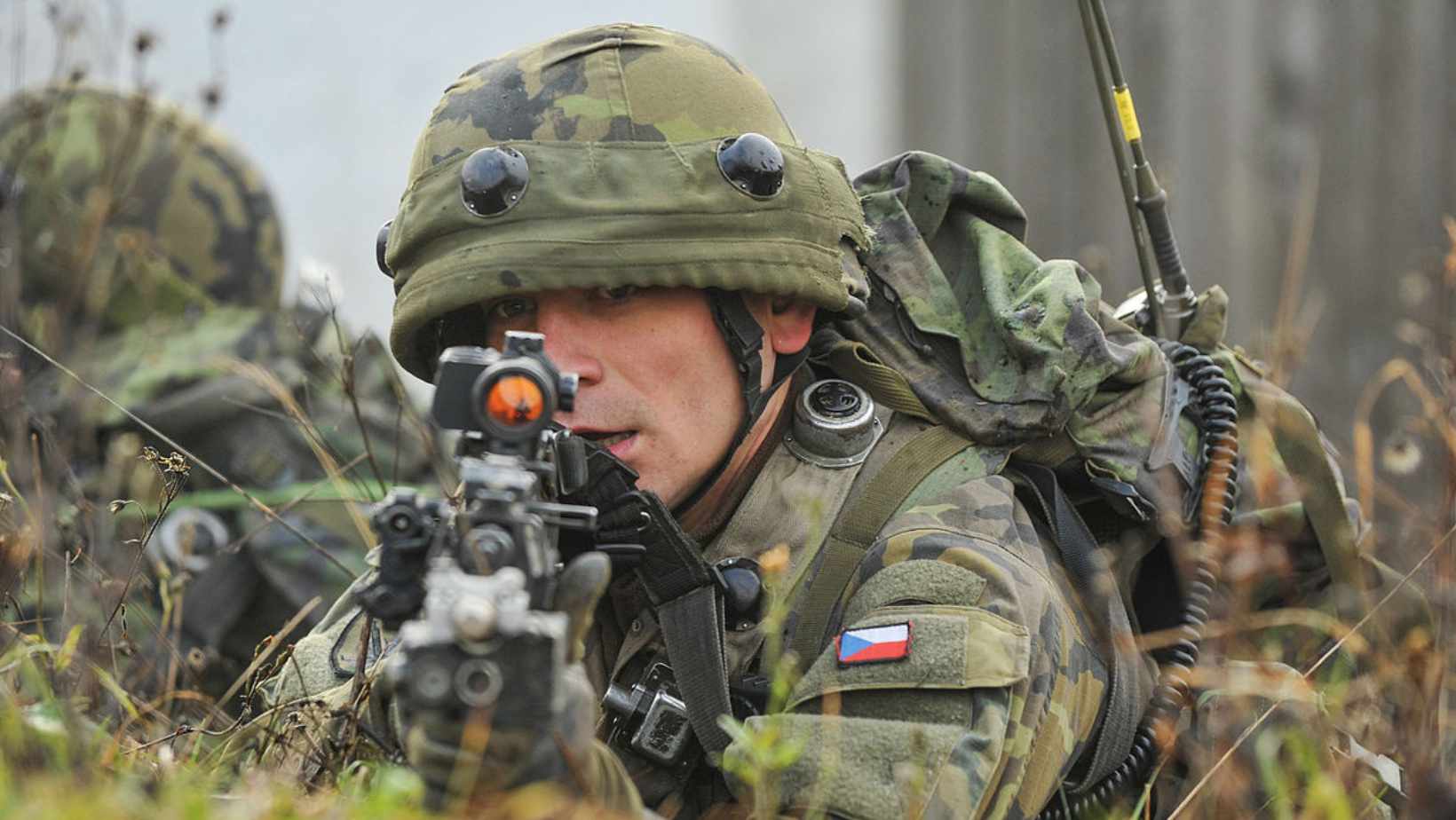
Despite increasing tensions in Europe and widespread efforts to bolster military forces, the Czech Republic managed to grow its army by only 176 soldiers last year amid considerable recruitment challenges. While European nations are ramping up defense spending and expanding their forces, Czechia’s struggle to attract new recruits raises concerns about its long-term military preparedness. The Czech Army currently has around 24,000 personnel, but the government aims to increase that number to over 37,000 by 2030. However, as Chief of General Staff Karel Řehka pointed out last week, recruitment remains a major obstacle. “We currently have fewer than 24,000 soldiers under my command. Our plan by 2030 is targeting 30,000, and despite this, we received so few soldiers to the army last year that the total increase is only 176,” he admitted. Recruitment issues in the Czech military are part of a broader European trend. A Gallup poll from last year found that the willingness of citizens to defend their country with a weapon in hand has declined. In 2014, 61 percent of respondents in select countries expressed readiness to fight; by 2023, that figure had dropped to 52 percent. While countries like Finland, Poland, and Sweden maintain relatively high...
The initiative, called “A Gift for Putin,” began crowdfunding for the Black Hawk helicopter in November 2023, with more than 20,642 donors contributing to the cause. According to the initiative’s website, Ukraine’s military intelligence (HUR) will use the helicopter for evacuating soldiers and conducting special operations. Kyrylo Budanov, head the military intelligence service of the Ukrainian government, expressed gratitude for Czech support throughout the war with Russia, calling the fundraiser “an unprecedented event.” The organizers wrote: “We did it! Czechs are sending a Black Hawk helicopter to Ukraine. We managed to get a cheaper and newer machine that Ukraine needs.” “Let’s finish what we started together and send Čestmír to fight against the dark Empire,” they added, referring to the helicopter’s symbolic name ‘Čestmír,’ which means ‘one who values honor’ in Czech, while likening Vladimir Putin’s regime to a ‘dark empire.’ The statement continued: “Ukraine cannot win the war with drones or ammunition alone. It also needs tanks, aircraft, howitzers—and helicopters for special operations.” Czechs have now become the first nation to purchase a military helicopter for Ukraine. Would you like us to write about your business? Find out more
Czechia, Slovakia, and other Central European countries could face serious economic setbacks as the United States plans to impose 25% tariffs on imports from the European Union, according to a report from S&P Global. The German auto sector, a key driver of Central Europe’s economy, is expected to be particularly affected. Although the Trump administration has yet to confirm the start date for these tariffs, their implementation could hamper economic growth across the region and exacerbate existing budgetary issues, S&P Global warned on Monday. Czech and Slovak Economies at Risk Despite limited direct trade exposure to the U.S., the economies of Czechia, Slovakia, Hungary, Slovenia, and Romania are heavily tied to the German auto industry, which would suffer from reduced American demand, S&P Global said. Machinery and transport equipment exports to Germany account for over 10% of total exports in these countries, making them vulnerable to any downturn in the sector. Central European economies are among the most export-dependent in the EU. According to Eurostat’s 2023 data, exports make up 92% of Slovakia’s GDP and 69% of Czechia’s GDP—both well above the EU average. Romania is the only exception, with 39%. Growth Slowdown Expected According to Nicholas Farr, an analyst...
The European Union has begun operation of five state-of-the-art prototyping lines for the production of cutting-edge chips, including one of the most advanced in the world. This initiative will enable startups, corporations, and universities to produce test samples of their chip designs locally, eliminating the need to outsource to custom manufacturers like TSMC in Taiwan. The project, with a budget of €3.7 billion (over CZK 92 billion), includes a new semiconductor hub in the Czech Republic, set to launch in March. The center will be led by a key figure in the local semiconductor industry and will also contribute to developing a European processor. Czech Semiconductor Center to Open in March The newly established Czech Semiconductor Center, based in Brno, will be part of the EU’s Chips Act, an initiative designed to strengthen Europe’s position in semiconductor development and production. The center will operate in collaboration with the Brno University of Technology (BUT), Czech Technical University (CTU), the South Moravian Innovation Center (JIC), the National Semiconductor Cluster, and companies like Onsemi and Codasip. The center’s primary mission is to provide access to five European prototyping lines and specialized chip design software. These resources will help accelerate the development of new...
Don’t have an account? Register
[swpm_registration_form level=”6″]
Already have an account? Log In
How Would You Like to Promote Your Business? PR ArticleDisplay bannersVideo productionNewsletter adsJob ListingsInfluencer Marketing
Your Email
We will come back to you within 24 hours with our proporsal