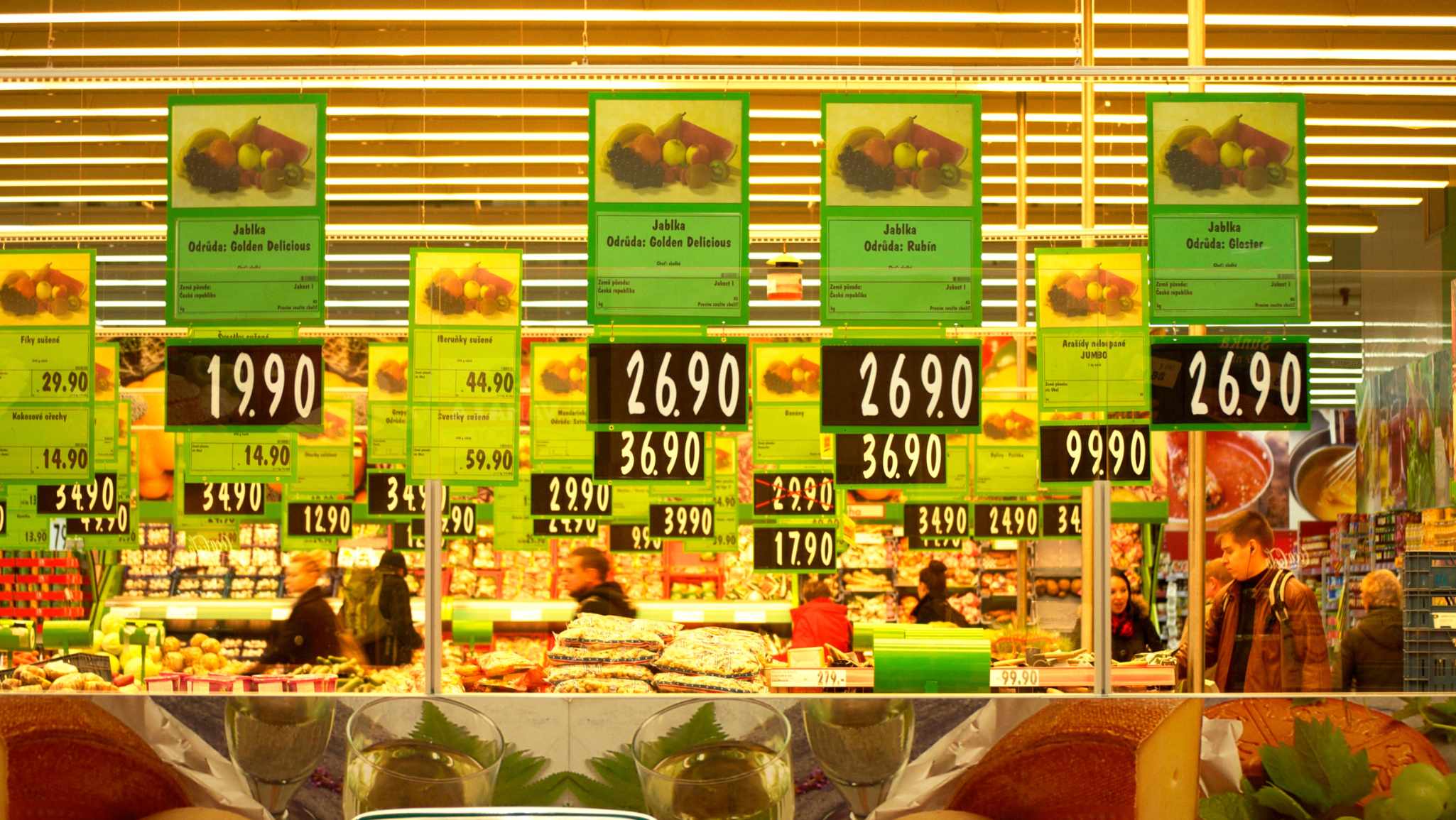
Czech restaurant prices continue to rise, with an increasing focus on healthier food choices. The average lunch menu in Czech restaurants now costs 193.90 CZK, marking an annual increase of nearly 4%. Surprisingly, Prague is not the most expensive region—that title goes to South Bohemia, followed by Central Bohemia, Pardubice, and Liberec. The cheapest lunches can be found in Olomouc and Zlín. According to the Barometer FOOD survey, 65% of Czechs have recently shifted towards healthier eating habits. Lunch Prices on the Rise, but Growth Slows According to the latest data from Edenred, the cost of a lunch menu has risen by up to 4% compared to 2023. “Between August and November, the average price fluctuated between 191 and 192 CZK. Another trend worth noting is the increase in transactions, with restaurants recording the highest number in December since September 2020,” said Aneta Martišková, a member of Edenred’s management team. Regional Differences – South Bohemia Leads in Prices Regional variations in lunch prices are noteworthy. South Bohemia has the highest lunch prices, with an average of 213.60 CZK—an increase of over 20 crowns since the beginning of the year. This is significantly higher than the 5 to 10 crown increase...
With an average temperature of 2.8°C, this past meteorological winter in Prague’s Klementinum ranked among the warmest 13% of winters since temperature records began in 1775. Compared to the 1991–2020 average, this winter was 0.5°C warmer, according to the Czech Hydrometeorological Institute (ČHMÚ). However, February itself was relatively typical, with an average temperature of 2°C, ČHMÚ stated in a press release. This year’s winter at Klementinum ranked between 30th and 32nd out of 250 recorded winters. The warmest winter ever recorded at the site was in 2006/2007, when the average temperature reached 5.8°C. In contrast, the coldest winter occurred in 1829, with an average temperature of -6.1°C. More recently, the winter of 2010/2011 was slightly colder than usual, averaging 0°C. “That was the last winter when the average temperature remained at or below freezing. This winter ranked between 99th and 102nd coldest overall,” ČHMÚ reported. Looking at this February, meteorologists ranked it between 101st and 104th out of 251 Februarys recorded since 1775, placing it in the warmer half of historical data. However, it was still 0.7°C colder than the 1991–2020 average for the month. The warmest February ever recorded at Klementinum was last year, with an average temperature of...
Spring is arriving in the Czech Republic, and this week’s temperatures could surpass those in Spain. While the start of the week will still be relatively cool, meteorologists do not rule out the possibility of this year’s first 20°C day by the second half of the week, according to the Czech Hydrometeorological Institute (ČHMÚ). On Monday, daytime temperatures will range between 5°C and 9°C, followed by 6°C to 10°C on Monday. By Tuesday, the mercury is expected to rise to 8°C to 12°C, with a continued warming trend throughout the week, ČHMÚ forecasts. “Daily highs will exceed 15°C in the second half of the week, and reaching 20°C is not out of the question,” meteorologists wrote on X. Next week is also expected to be mostly sunny and dry, with clear skies. For comparison, parts of Spain will see temperatures peaking at around 14°C, accompanied by rain. Meteorologists note that the outlook for next week is unusually stable. “It’s rare to have such a clear forecast a week in advance, but this time, it looks that way,” they stated. They added that until at least the weekend—and likely into early next week—there is little chance of a significant shift in weather...
The Czech government is considering a substantial investment of 300 million crowns to support the return of MotoGP racing to Brno. The proposal could lead to public funding surpassing half a billion crowns, with additional contributions from local authorities. The championship is set to return to the iconic Masaryk Circuit this July after a five-year absence. Prime Minister Petr Fiala confirmed the revival of the event last summer, initially suggesting state support in the “higher tens of millions.” Beyond its economic benefits, the event is also seen as an important part of Czech cultural heritage. The South Moravian Region has already committed CZK 35 million annually for the next five years, amounting to 175 million crowns in total. Brno city is expected to match this figure, pending approval from the city council. With public expenditure potentially reaching CZK 650 million, the Grand Prix’s organization will be managed by Autoklub in partnership with Automotodrom Brno. Private entities are expected to cover a large portion of the overall costs, with the licensing fee alone set at around CZK 162 million. Would you like us to write about your business? Find out more
Czech police detained 22 people and carried out 46 searches linked to suspected corruption at the country’s biggest hospital involving 1.2 billion CZK (160 million euros) in European Union funds, authorities said on Monday. Charges were brought against 16 people for corruption, subsidy fraud, damaging the EU’s financial interests and laundering, the European Public Prosecutor’s Office (EPPO) and Czech police said in separate statements. The European Public Prosecutor’s Office (EPPO) is overseeing the corruption case tied to the reconstruction of Motol’s “Blue Pavilion.” Authorities said 16 unnamed suspects manipulated public procurement processes by demanding and receiving illicit payments for contracts at Prague’s Motol University Hospital, including the hospital’s director, Miloslav Ludvik. The hospital could not be immediately reached for comment. The Czech Health Ministry said it had no further details on the investigation, but was ready to cooperate or take appropriate action. More than 350 police officers carried out searches at the hospital, companies and a law firm. Czech police said the investigation into the group of people started in 2023. The main suspects face sentences of up to 12 years if found guilty, police said. The Czech Republic ranks higher than peers in central Europe in Transparency International’s rankings,...
The final days of February are here. Will the cold and frost persist, or can we look forward to warmer spring-like weather? Here’s what meteorologists predict for this week. According to the Czech Hydrometeorological Institute (ČHMÚ), Monday will bring cloudy to overcast skies, with rain, snow, and even freezing precipitation expected in the northeast and east. In contrast, western Bohemia will see clearer skies. Fog, possibly freezing, is likely in some areas. Nighttime temperatures will drop to between -2°C and 2°C, while daytime highs will reach 8°C to 10°C in sunnier regions. Winds will be light, coming from the south at speeds of up to 4 m/s. On Tuesday, daytime highs will again range between 5°C and 10°C, though the Bohemian-Moravian Highlands may see slightly cooler temperatures, around 3°C. Nighttime lows will drop to -1°C to -3°C in Moravia and Silesia. The day will be mostly cloudy, with occasional fog—some of it freezing. Winds from the southeast to south will remain weak to moderate, reaching speeds of 2 to 6 m/s. Midweek: Snow Returns? By Wednesday, expect cloudy skies with occasional rain or showers. Snowfall is expected at elevations above 900 meters, mainly in the afternoon and evening. Nighttime temperatures...
The Czech Republic has disposed of more than 17 million expired COVID-19 vaccines worth around CZK 7.5 billion, nearly half of the total ordered. The primary reason is their expiration dates. According to Deputy Minister of Health Jakub Dvořáček, the country continues to receive updated vaccines tailored to new variants of the virus, leading to a cycle where older doses become obsolete. “In November, the last batch was adjusted to the latest strain, and another update is expected in the fall,” Dvořáček stated. Reports from Seznam Zprávy in 2023 indicated that the Health Ministry had already discarded 12 million doses worth 4.7 billion CZK at that time. In just over a year, the figure has increased by another five million doses. By the end of 2024, the Czech Republic will have ordered over 40 million doses at a total cost of nearly 18 billion CZK, according to Ministry of Health spokesperson Ondřej Jakob. Of these, only four million doses have been donated to other countries. New Shipments Until 2026 The Czech Republic is set to continue receiving vaccine shipments until at least 2026. However, as new strains emerge and new vaccines are introduced, demand for older doses diminishes. “Once you...
Going out for lunch at a restaurant used to be a daily habit for many workers in Czechia. Now, it’s increasingly seen as a luxury. The average price of a restaurant lunch has climbed to 192 CZK this year—excluding drinks. Surprisingly, Prague is no longer the most expensive city for dining out. Rising Costs Are Changing Lunch Habits Rather than dining with colleagues at a nearby restaurant, more and more people are bringing food from home or opting for buffets and self-service cafeterias, which tend to be more affordable. The days when a decent meal cost just 100 CZK are long gone—today, it can be twice as much. Lunch Prices Surpass 200 CZK Finding a lunch menu for around 100 CZK is now a rarity. The only exceptions might be hot buffets at butcher shops, but even these are becoming scarce. Lunch prices in Prague first surpassed 200 CZK in November 2022, and other regions followed shortly after. In recent months, restaurant lunch prices have remained relatively stable, with slight fluctuations. “Last year, the average lunch price hovered around 190 CZK, with small spikes during the summer months,” said Jan Michelfeit from Pluxee, the company behind the survey. Price Isn’t...
The Czech Republic is set for a gradual temperature rise in the coming days. While night temperatures will remain below freezing over the weekend, daytime highs could reach up to 7°C. Next week, thermometers may climb to 12°C, accompanied by occasional rainfall, according to the Czech Hydrometeorological Institute (ČHMÚ). “On the back side of a high-pressure system over Eastern Europe, warmer air will begin moving toward us from the southwest, particularly in the upper layers of the atmosphere,” meteorologists explained. Following a frosty night, temperatures will hover slightly above freezing during the day. On Friday, skies will cloud over, with the possibility of light freezing rain in some areas. Western Bohemia could see icy conditions, as nighttime temperatures dip between -1°C and -5°C, and as low as -9°C in Moravia and Silesia. During the day, temperatures will rise to 1°C–6°C, except in northwestern Bohemia, northern Moravia, and the Bohemian-Moravian Highlands, where it may stay around -1°C. Saturday is expected to be mostly clear, while Sunday will bring more cloud cover. Mornings on both days could see patchy freezing fog or low clouds. Night temperatures will remain between -1°C and -6°C, while daytime highs will reach up to 7°C. Colder conditions...
Two women have died in a knife attack on Thursday at a shopping center in the Hradec Králové, officials said. Police say they detained a teenage suspect in connection with the stabbings in a store in the city of Hradec Kralove, some 100 east of Prague. Reports initially said the victims had been injured, one of them seriously, but police later said both had died. They were not identified. Authorities confirmed that both victims worked as shop assistants, and the motive behind the attack is under investigation. A 16-year-old Czech national was detained by police about one 1 kilometer from the scene, shortly after the attack. A knife was found nearby. Prime Minister Petr Fiala offered his condolences to the relatives of the dead. “What has happened in Hradec Kralove today is an absolutely incomprehensible and horrible act,” he posted on X. Police say the situation was under control and there was no danger to the public. No other details were immediately available. The store was surrounded by police tape, but according to local reporters, the shopping area is still in normal operation. “We are investigating the attacker’s motivation through the National Center for Combating Terrorism, Extremism and Cybercrime and...
The Czech government has expanded the list of non-EU countries whose citizens can work in the country without a permit. Starting in March, people from Taiwan will no longer need a work permit or employment card to be legally employed. The cabinet approved the change on Wednesday as part of an effort to attract more skilled foreign workers. The measure aims to ease hiring for Czech businesses while making it simpler for professionals and managers from Taiwan to relocate. According to the Ministry of Labor and Social Affairs, as of last June, 185 Taiwanese nationals—80 men and 105 women—were employed in Czechia. The decision comes after an amendment to the Employment Act, which allows the government to designate certain non-EU countries as eligible for work without additional permits. Since July 2023, this list has included Australia, Japan, Canada, South Korea, New Zealand, the United Kingdom, the United States, Israel, and Singapore. Taiwan was originally part of the proposal but was later removed because Czechia does not officially recognize it as an independent state. However, a separate legislative change now allows Taiwan to be treated as an independent jurisdiction, clearing the way for its inclusion. Security concerns were also considered before...
The STEM Agency has published the results of its latest survey on Czech attitudes toward various nationalities and ethnic groups living in the country. The research, conducted from January 16-25, 2025, surveyed 1,034 Czech citizens aged 18 and over through a combination of in-person and online methods. Respondents were asked, “How would you feel if your neighbor was from this nationality?” As anticipated, Czechs showed the greatest warmth toward Slovaks, with 93% of respondents saying they would feel “very well, without problems” living next door to them. The English came in second, with 83% of respondents expressing a welcoming attitude. Americans ranked third, with 81% of Czechs saying they would be comfortable with them as neighbors. The Ukrainians followed closely, with 46% of respondents expressing no issues with having them as neighbors, while 35% of Czechs would accept Russians in their neighborhood. Notably, this dynamic had shifted dramatically since the full-scale Russian invasion of Ukraine, when attitudes were reversed. Both Jews and Vietnamese people garnered equal support, with 71% of respondents expressing no objections to having them as neighbors. On the other end of the spectrum, Czechs indicated that Arabs and Syrians were the least desirable neighbors, with 20%...
Don’t have an account? Register
[swpm_registration_form level=”6″]
Already have an account? Log In
How Would You Like to Promote Your Business? PR ArticleDisplay bannersVideo productionNewsletter adsJob ListingsInfluencer Marketing
Your Email
We will come back to you within 24 hours with our proporsal