Spring-like warmth will be short-lived as temperatures drop this week, falling below 10°C, according to the Czech Hydrometeorological Institute (ČHMÚ). Monday Expect partly cloudy skies, with increasing cloudiness from the southwest throughout the day. Rain or showers may develop in the afternoon and evening, particularly in Bohemia. Nighttime lows will range from 9 to 5°C, with temperatures possibly dropping to 0°C in areas where winds weaken. Daytime highs will reach 14 to 18°C, with some parts of Moravia and Silesia experiencing up to 21°C. Winds will be light and variable (up to 4 m/s), but in the east, a moderate southeast to south wind (3 to 7 m/s) may bring gusts around 15 m/s. Later in the day, winds in Bohemia will shift to southwest to west and strengthen slightly. Tuesday A cloudy to overcast day awaits, with occasional breaks of partly cloudy skies. Expect scattered rain showers. Nighttime temperatures will range between 8 and 4°C, while daytime highs will be 13 to 17°C, though northern and western regions may only reach 11°C. Winds will be light from the southwest (2 to 6 m/s), weakening in the evening. Wednesday Another cloudy to overcast day, with sporadic rain showers. Nighttime temperatures...
Despite increasing tensions in Europe and widespread efforts to bolster military forces, the Czech Republic managed to grow its army by only 176 soldiers last year amid considerable recruitment challenges. While European nations are ramping up defense spending and expanding their forces, Czechia’s struggle to attract new recruits raises concerns about its long-term military preparedness. The Czech Army currently has around 24,000 personnel, but the government aims to increase that number to over 37,000 by 2030. However, as Chief of General Staff Karel Řehka pointed out last week, recruitment remains a major obstacle. “We currently have fewer than 24,000 soldiers under my command. Our plan by 2030 is targeting 30,000, and despite this, we received so few soldiers to the army last year that the total increase is only 176,” he admitted. Recruitment issues in the Czech military are part of a broader European trend. A Gallup poll from last year found that the willingness of citizens to defend their country with a weapon in hand has declined. In 2014, 61 percent of respondents in select countries expressed readiness to fight; by 2023, that figure had dropped to 52 percent. While countries like Finland, Poland, and Sweden maintain relatively high...
The initiative, called “A Gift for Putin,” began crowdfunding for the Black Hawk helicopter in November 2023, with more than 20,642 donors contributing to the cause. According to the initiative’s website, Ukraine’s military intelligence (HUR) will use the helicopter for evacuating soldiers and conducting special operations. Kyrylo Budanov, head the military intelligence service of the Ukrainian government, expressed gratitude for Czech support throughout the war with Russia, calling the fundraiser “an unprecedented event.” The organizers wrote: “We did it! Czechs are sending a Black Hawk helicopter to Ukraine. We managed to get a cheaper and newer machine that Ukraine needs.” “Let’s finish what we started together and send Čestmír to fight against the dark Empire,” they added, referring to the helicopter’s symbolic name ‘Čestmír,’ which means ‘one who values honor’ in Czech, while likening Vladimir Putin’s regime to a ‘dark empire.’ The statement continued: “Ukraine cannot win the war with drones or ammunition alone. It also needs tanks, aircraft, howitzers—and helicopters for special operations.” Czechs have now become the first nation to purchase a military helicopter for Ukraine. Would you like us to write about your business? Find out more
Czechia, Slovakia, and other Central European countries could face serious economic setbacks as the United States plans to impose 25% tariffs on imports from the European Union, according to a report from S&P Global. The German auto sector, a key driver of Central Europe’s economy, is expected to be particularly affected. Although the Trump administration has yet to confirm the start date for these tariffs, their implementation could hamper economic growth across the region and exacerbate existing budgetary issues, S&P Global warned on Monday. Czech and Slovak Economies at Risk Despite limited direct trade exposure to the U.S., the economies of Czechia, Slovakia, Hungary, Slovenia, and Romania are heavily tied to the German auto industry, which would suffer from reduced American demand, S&P Global said. Machinery and transport equipment exports to Germany account for over 10% of total exports in these countries, making them vulnerable to any downturn in the sector. Central European economies are among the most export-dependent in the EU. According to Eurostat’s 2023 data, exports make up 92% of Slovakia’s GDP and 69% of Czechia’s GDP—both well above the EU average. Romania is the only exception, with 39%. Growth Slowdown Expected According to Nicholas Farr, an analyst...
The European Union has begun operation of five state-of-the-art prototyping lines for the production of cutting-edge chips, including one of the most advanced in the world. This initiative will enable startups, corporations, and universities to produce test samples of their chip designs locally, eliminating the need to outsource to custom manufacturers like TSMC in Taiwan. The project, with a budget of €3.7 billion (over CZK 92 billion), includes a new semiconductor hub in the Czech Republic, set to launch in March. The center will be led by a key figure in the local semiconductor industry and will also contribute to developing a European processor. Czech Semiconductor Center to Open in March The newly established Czech Semiconductor Center, based in Brno, will be part of the EU’s Chips Act, an initiative designed to strengthen Europe’s position in semiconductor development and production. The center will operate in collaboration with the Brno University of Technology (BUT), Czech Technical University (CTU), the South Moravian Innovation Center (JIC), the National Semiconductor Cluster, and companies like Onsemi and Codasip. The center’s primary mission is to provide access to five European prototyping lines and specialized chip design software. These resources will help accelerate the development of new...
Czech restaurant prices continue to rise, with an increasing focus on healthier food choices. The average lunch menu in Czech restaurants now costs 193.90 CZK, marking an annual increase of nearly 4%. Surprisingly, Prague is not the most expensive region—that title goes to South Bohemia, followed by Central Bohemia, Pardubice, and Liberec. The cheapest lunches can be found in Olomouc and Zlín. According to the Barometer FOOD survey, 65% of Czechs have recently shifted towards healthier eating habits. Lunch Prices on the Rise, but Growth Slows According to the latest data from Edenred, the cost of a lunch menu has risen by up to 4% compared to 2023. “Between August and November, the average price fluctuated between 191 and 192 CZK. Another trend worth noting is the increase in transactions, with restaurants recording the highest number in December since September 2020,” said Aneta Martišková, a member of Edenred’s management team. Regional Differences – South Bohemia Leads in Prices Regional variations in lunch prices are noteworthy. South Bohemia has the highest lunch prices, with an average of 213.60 CZK—an increase of over 20 crowns since the beginning of the year. This is significantly higher than the 5 to 10 crown increase...
With an average temperature of 2.8°C, this past meteorological winter in Prague’s Klementinum ranked among the warmest 13% of winters since temperature records began in 1775. Compared to the 1991–2020 average, this winter was 0.5°C warmer, according to the Czech Hydrometeorological Institute (ČHMÚ). However, February itself was relatively typical, with an average temperature of 2°C, ČHMÚ stated in a press release. This year’s winter at Klementinum ranked between 30th and 32nd out of 250 recorded winters. The warmest winter ever recorded at the site was in 2006/2007, when the average temperature reached 5.8°C. In contrast, the coldest winter occurred in 1829, with an average temperature of -6.1°C. More recently, the winter of 2010/2011 was slightly colder than usual, averaging 0°C. “That was the last winter when the average temperature remained at or below freezing. This winter ranked between 99th and 102nd coldest overall,” ČHMÚ reported. Looking at this February, meteorologists ranked it between 101st and 104th out of 251 Februarys recorded since 1775, placing it in the warmer half of historical data. However, it was still 0.7°C colder than the 1991–2020 average for the month. The warmest February ever recorded at Klementinum was last year, with an average temperature of...
Spring is arriving in the Czech Republic, and this week’s temperatures could surpass those in Spain. While the start of the week will still be relatively cool, meteorologists do not rule out the possibility of this year’s first 20°C day by the second half of the week, according to the Czech Hydrometeorological Institute (ČHMÚ). On Monday, daytime temperatures will range between 5°C and 9°C, followed by 6°C to 10°C on Monday. By Tuesday, the mercury is expected to rise to 8°C to 12°C, with a continued warming trend throughout the week, ČHMÚ forecasts. “Daily highs will exceed 15°C in the second half of the week, and reaching 20°C is not out of the question,” meteorologists wrote on X. Next week is also expected to be mostly sunny and dry, with clear skies. For comparison, parts of Spain will see temperatures peaking at around 14°C, accompanied by rain. Meteorologists note that the outlook for next week is unusually stable. “It’s rare to have such a clear forecast a week in advance, but this time, it looks that way,” they stated. They added that until at least the weekend—and likely into early next week—there is little chance of a significant shift in weather...
The Czech government is considering a substantial investment of 300 million crowns to support the return of MotoGP racing to Brno. The proposal could lead to public funding surpassing half a billion crowns, with additional contributions from local authorities. The championship is set to return to the iconic Masaryk Circuit this July after a five-year absence. Prime Minister Petr Fiala confirmed the revival of the event last summer, initially suggesting state support in the “higher tens of millions.” Beyond its economic benefits, the event is also seen as an important part of Czech cultural heritage. The South Moravian Region has already committed CZK 35 million annually for the next five years, amounting to 175 million crowns in total. Brno city is expected to match this figure, pending approval from the city council. With public expenditure potentially reaching CZK 650 million, the Grand Prix’s organization will be managed by Autoklub in partnership with Automotodrom Brno. Private entities are expected to cover a large portion of the overall costs, with the licensing fee alone set at around CZK 162 million. Would you like us to write about your business? Find out more
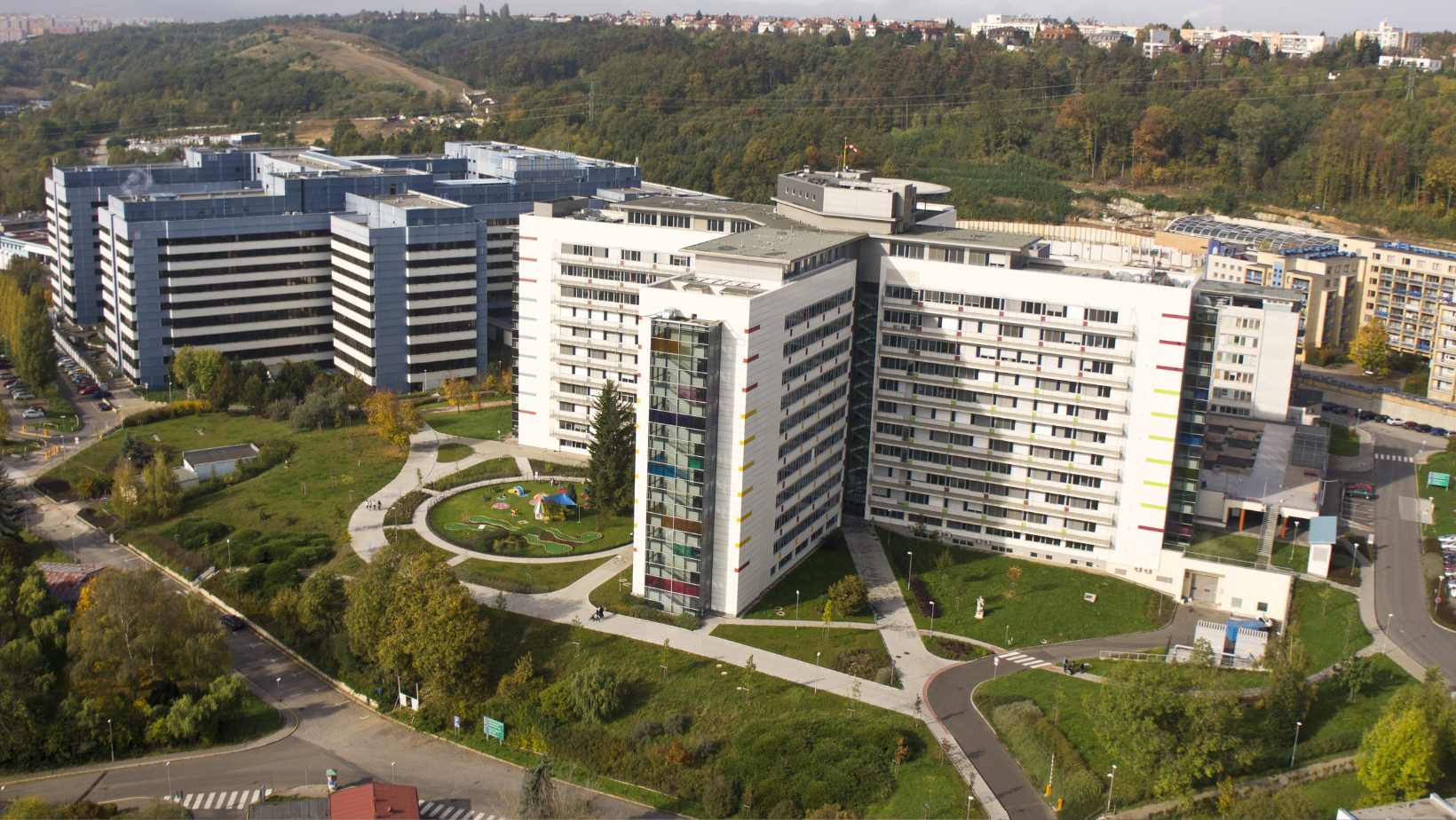
Czech police detained 22 people and carried out 46 searches linked to suspected corruption at the country’s biggest hospital involving 1.2 billion CZK (160 million euros) in European Union funds, authorities said on Monday. Charges were brought against 16 people for corruption, subsidy fraud, damaging the EU’s financial interests and laundering, the European Public Prosecutor’s Office (EPPO) and Czech police said in separate statements. The European Public Prosecutor’s Office (EPPO) is overseeing the corruption case tied to the reconstruction of Motol’s “Blue Pavilion.” Authorities said 16 unnamed suspects manipulated public procurement processes by demanding and receiving illicit payments for contracts at Prague’s Motol University Hospital, including the hospital’s director, Miloslav Ludvik. The hospital could not be immediately reached for comment. The Czech Health Ministry said it had no further details on the investigation, but was ready to cooperate or take appropriate action. More than 350 police officers carried out searches at the hospital, companies and a law firm. Czech police said the investigation into the group of people started in 2023. The main suspects face sentences of up to 12 years if found guilty, police said. The Czech Republic ranks higher than peers in central Europe in Transparency International’s rankings,...
The final days of February are here. Will the cold and frost persist, or can we look forward to warmer spring-like weather? Here’s what meteorologists predict for this week. According to the Czech Hydrometeorological Institute (ČHMÚ), Monday will bring cloudy to overcast skies, with rain, snow, and even freezing precipitation expected in the northeast and east. In contrast, western Bohemia will see clearer skies. Fog, possibly freezing, is likely in some areas. Nighttime temperatures will drop to between -2°C and 2°C, while daytime highs will reach 8°C to 10°C in sunnier regions. Winds will be light, coming from the south at speeds of up to 4 m/s. On Tuesday, daytime highs will again range between 5°C and 10°C, though the Bohemian-Moravian Highlands may see slightly cooler temperatures, around 3°C. Nighttime lows will drop to -1°C to -3°C in Moravia and Silesia. The day will be mostly cloudy, with occasional fog—some of it freezing. Winds from the southeast to south will remain weak to moderate, reaching speeds of 2 to 6 m/s. Midweek: Snow Returns? By Wednesday, expect cloudy skies with occasional rain or showers. Snowfall is expected at elevations above 900 meters, mainly in the afternoon and evening. Nighttime temperatures...
The Czech Republic has disposed of more than 17 million expired COVID-19 vaccines worth around CZK 7.5 billion, nearly half of the total ordered. The primary reason is their expiration dates. According to Deputy Minister of Health Jakub Dvořáček, the country continues to receive updated vaccines tailored to new variants of the virus, leading to a cycle where older doses become obsolete. “In November, the last batch was adjusted to the latest strain, and another update is expected in the fall,” Dvořáček stated. Reports from Seznam Zprávy in 2023 indicated that the Health Ministry had already discarded 12 million doses worth 4.7 billion CZK at that time. In just over a year, the figure has increased by another five million doses. By the end of 2024, the Czech Republic will have ordered over 40 million doses at a total cost of nearly 18 billion CZK, according to Ministry of Health spokesperson Ondřej Jakob. Of these, only four million doses have been donated to other countries. New Shipments Until 2026 The Czech Republic is set to continue receiving vaccine shipments until at least 2026. However, as new strains emerge and new vaccines are introduced, demand for older doses diminishes. “Once you...
Don’t have an account? Register
Already have an account? Log In
How Would You Like to Promote Your Business? PR ArticleDisplay bannersVideo productionNewsletter adsJob ListingsInfluencer Marketing
Your Email
We will come back to you within 24 hours with our proporsal